Abstract
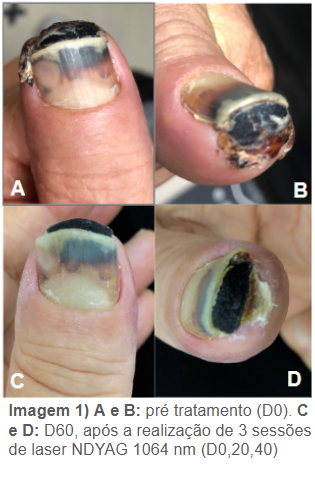
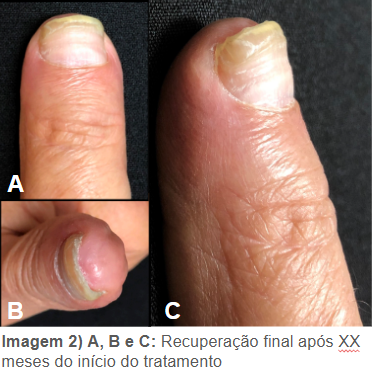
Introduction:Cutaneous necrosis is characterized by irreversible tissue injury and cell death, occurring in a variety of conditions. It results from harmful extracellular stimuli associated with inflammation, leading to the release of interleukins and disruption of lysosomal membranes, with subsequent release of proteolytic enzymes within cells. These processes compromise the plasma membrane and promote leakage of intracellular contents, resulting in damage to the surrounding tissue. The causes include drug-related etiologies (e.g., warfarin, heparin), vascular/thrombotic disorders, metabolic conditions, infectious/toxic processes,autoimmune/inflammatory diseases, neoplastic causes, and trauma. Diagnosis is primarily clinical; however, histopathological and laboratory analyses may assist in determining the underlying etiology. Treatment should be initiated promptly and tailored according to the cause.Reports of cutaneous necrosis with favorable outcomes following intervention with Nd:YAG laser therapy are scarce. Therefore, we report the case of a patient treated with this modality, achieving satisfactory functional and aesthetic outcomes.Case report: An 81-year-old White male underwent elective surgery for advanced-stage colon cancer. The procedure was complicated by intraoperative events leading to cardiopulmonary arrest (CPA) and subsequent necrosis of the first digit of the left hand. Amputation of the affected finger was initially recommended by the surgical team; however, after dermatologic evaluation, treatment with a 1064-nm Nd:YAG laser (microsecond mode) was chosen.Four treatment sessions were performed at 20-day intervals (D0, D20, D40, D60) (Figure 1). Crust removal was carried out after the third session, without additional interventions. After each session, the patient experienced mild erythema lasting less than two days and a single episode of discomfort. Complete resolution of the lesion was achieved, with satisfactory aesthetic and functional outcomes (Figure 2).Discussion:The management of cutaneous necrosis depends on the underlying cause, as well as patient and lesion characteristics, including location, extent, and duration. In the present case, the patient experienced a surgical complication with cardiopulmonary arrest, leading to hypoxia and ischemia in a peripheral area particularly susceptible due to the presence of small-caliber vessels. Surgical management with amputation may be required in severe cases, especially in the presence of hemodynamic instability or extensive tissue involvement. Although it provides immediate resolution, it is associated with disadvantages such as risk of wound dehiscence, infection, pain, and functional and aesthetic impairment. Therefore, whenever feasible, noninvasive alternative therapies are desirable. Hyperbaric oxygen therapy increases tissue oxygen delivery, stimulates angiogenesis, and promotes collagen synthesis, being useful in ischemic necrosis with impaired healing. However, it requires specialized equipment and trained personnel, increasing costs and limiting availability to hospital-based centers.Low-intensity 1064-nm Nd:YAG laser therapy promotes angiogenesis and tissue regeneration. By reaching a depth of approximately 5–6 mm, it induces controlled thermal injury, resulting in coagulation of damaged microvessels, reduction of fluid extravasation, and enhanced tissue repair. This modality is minimally invasive, well tolerated, accessible in outpatient settings, and may preserve functional and aesthetic outcomes in cases of cutaneous necrosis, as demonstrated in this report.Nevertheless, the technique is operator-dependent, cannot be used in emergency settings or in cases with deep tissue involvement, and carries potential risks such as iatrogenic necrosis, bleeding, and post-inflammatory hyperpigmentation. In lesions with crust formation, as in the present case, supervised removal may reduce the risk of secondary infection.The 1064-nm Nd:YAG laser represents a safe, minimally invasive, and relatively accessible option that can provide satisfactory functional and aesthetic outcomes in the treatment of cutaneous necrosis.
Keywords
Cutaneous necrosis; Nd:YAG laser; Laser therapy; Ischemic injury; Case report
Introduction
Cutaneous necrosis is the state of death of a tissue or part of it caused by an injury or disease. In this process, there is a decrease in oxygen and blood supply, which leads to cell death. Skin necrosis should be considered a syndrome because it is a clinical manifestation of different diseases. Its manifestation depends on the extent and depth of impairment of blood circulation and oxygen supply to tissues. The diagnosis and adequate management of skin necrosis are essential to avoid serious complications, such as infections and amputations, in addition to allowing the functional and aesthetic preservation of the patient. (1)
The causes of skin necrosis can be divided into local and systemic factors. Among the local factors, ischemia stands out, which can occur due to trauma, infections or vascular obstruction, such as venous and arterial thrombosis. Additionally, conditions such as pressure ulcers or burns are also common causes of necrosis. (2)
From a systemic point of view, several conditions can predispose to the development of necrosis, including thrombophilias, which increase the formation of clots and the obstruction of blood vessels, and purpuras, which result from capillary fragility and the formation of hematomas. Embolism, which can be caused by septic or thrombotic emboli, can also compromise blood perfusion of skin areas, leading to necrosis. A thrombotic embolus is a blood clot (thrombus) that breaks off and moves
in the bloodstream, which can block an artery and cause an embolism. Septic embolism is an obstruction of a blood vessel, usually by a thrombus infection that travels through the bloodstream from a distant infectious source and blocks a blood vessel that can result in infective endocarditis. (3)
Furthermore, shock states, especially septic shock and hypovolemic shock, result in low tissue perfusion and can precipitate skin necrosis due to reduced oxygen supply to tissues. A severe mismatch between oxygen supply and demand is the common feature of all types of shock. Septic shock is defined according to current Sepsis-3 criteria as a dysregulated response of the body to an infection that results in life-threatening organ dysfunction. Hypovolemic shock is a condition of inadequate organ perfusion caused by loss of intravascular volume, usually acute. The result is a drop in cardiac preload to a critical level and a reduction in macro and microcirculation, with negative consequences for tissue metabolism and the triggering of an inflammatory reaction. (4)
Treatment of skin necrosis is multifaceted and depends on the stage of the lesion and of its extension. Despite the severity of necrosis, the most commonly used available treatments pose challenges as they are very invasive, such as surgical techniques. However, there are less invasive treatment modalities that deserve attention.
Discussion
Tissue necrosis causes tissue death. Early treatment and correct diagnosis of this pathology is crucial for a good prognosis. However, there is a great therapeutic difficulty, as most doctors opt for more invasive treatments that lead to mutilation of the patient, leading to psychological and functional stigma. Thus, less invasive treatment options would bring a range of benefits. Among the least invasive treatment options using Conservative methods include hyperbaric therapy, and some surgical techniques such as skin grafts, flaps and, in extreme cases, amputations.
1. Hyperbaric Chamber: Hyperbaric oxygen therapy (TOHB) is an effective option in the treatment of ischemic necrosis, as it increases the availability of oxygen in affected areas, promoting regeneration cellular and tissue healing. Studies show that TOHB can reduce the need for amputation, especially in cases of necrosis of distal parts, such as fingers and toes. (5)
2. Grafts and Flaps: When necrosis affects a large area, the use of
Grafts or flaps may be necessary to restore skin coverage and promote healing. The skin graft can be autologous or allogeneic, depending on the patient's condition, while the flaps offer a viable solution for larger areas, with good viability and lower risk of failure.
3. NDYAG 1064 nm laser: used in low intensity mode, it promotes angiogenesis (formation of new blood vessels) and increases tissue oxygenation.
4. Amputation: When necrosis is irreversible and the function of the affected limb is not can be restored, amputation may be indicated to avoid systemic infection and major complications.
Case report
We report the case of a male patient who, after a cardiorespiratory arrest during surgery to approach the gastrointestinal tract, evolved with necrosis of the first pododactyl. Initially, the surgery team indicated the amputation of the affected finger due to severe impairment of blood circulation and evident necrosis. However, in a subsequent dermatological evaluation, we decided to adopt an alternative therapeutic approach, using a 1064 nm NDYAG laser (microsecond mode) to stimulate skin regeneration and improve local circulation.
The choice of laser was based on scientific evidence demonstrating the effectiveness of low-intensity lasers in promoting angiogenesis (formation of new blood vessels) and increasing tissue oxygenation. The protocol adopted consisted of four laser sessions, with 20-day intervals between them. During the treatment, supervised removal of the necrotic scab was carried out after the third session, which allowed the regeneration of the skin tissue without the need for additional
invasive interventions. At the end of the treatment, we observed a complete resolution of the necrosis, with total recovery of skin integrity and excellent aesthetic and therapeutic satisfaction on the part of the patient. The use of the 1064 nm laser has proven to be an effective alternative to amputation, promoting healing and preserving the function of the affected limb.
Conclusion
Skin necrosis is a complex condition that can have different causes, both local and systemic, requiring an accurate diagnosis and a therapeutic approach adapted to the patient's needs. While surgical interventions such as amputation are often necessary in severe cases, treatments such as hyperbaric therapy and the use of technologies such as the 1064 laser nm, have shown promising results in tissue regeneration and preventing the need for amputation. This case report demonstrates the success of a non-invasive approach in a patient with pododactily necrosis post-cardiorespiratory arrest, highlighting the importance of multidisciplinary assessment and treatment personalization.
References
- 1- Molgó MN, Arriagada CE, Salomone CB, Vera CK, Giesen LF, Solar AG, González SB. Necrosis cutánea: un desafío para el médico [Skin necrosis: report of eleven cases]. Rev Med Chil. 2014 Jan;142(1):118-24. Spanish. doi: . PMID: 24861125. DOI ↗ Google Scholar ↗
- 2- Karimi K, Odhav A, Kollipara R, Fike J, Stanford C, Hall JC. Acute Cutaneous Necrosis: A Guide to Early Diagnosis and Treatment. J Cutan Med Surg. 2017 Sep/Oct;21(5):425-437. doi: . Epub 2017 May 4. PMID: 28470091. DOI ↗ Google Scholar ↗
- 3-Elsaghir H, Al Khalili Y. Septic Emboli [Internet]. PubMed. Treasure Island (FL): StatPearls Publishing; 2023. Available from: DOI ↗ Google Scholar ↗
- 4- Standl T, Annecke T, Cascorbi I, Heller AR, Sabashnikov A, Teske W. The nomenclature, definition and distinction of types of shock. Deutsches Aerzteblatt Online [Internet]. 2018;115(45):757–68. Available from: DOI ↗ Google Scholar ↗
- 5-Vishwanath G, Bhutani S. Hyperbaric oxygen and wound healing. Indian Journal of Plastic Surgery [Internet]. 2012 [cited 2019 Sep 28];45(2):316. Available from: DOI ↗ Google Scholar ↗