Abstract
This study investigates how job seekers in Khulna, Bangladesh perceive online recruitment, focusing on trust, fairness, and transparency. Using responses from 100 candidates who used platforms like Bdjobs, LinkedIn, and corporate portals, the research draws on Equity, Signaling, and Organizational Justice theories to assess candidate perceptions. Reliability tests confirmed strong measurement scales (Cronbach’s Alpha: 0.79–0.84). Descriptive statistics showed trust (M=3.82) rated highest, followed by fairness (M=3.51) and transparency (M=3.27). Regression analysis revealed fairness (β=0.52, p<0.001) and trust (β=0.34, p<0.001) significantly influenced overall perceptions, while transparency (β=0.11, p=0.113) did not. Findings suggest that job seekers value authenticity, but overall satisfaction is driven more by perceived fairness and trust in the process. The study concludes that to strengthen employer branding and candidate confidence in Bangladesh’s online hiring landscape, organizations should prioritize equitable and trustworthy recruitment practices.
Keywords
Human resource management (HRM) Transparency Trust Fairness E-recruitment Traditional Recruitment
Introduction
The blistering development of digital technologies has reshaped the traditional recruitment patterns, as organizations are more and more moving towards the online methods of attracting, screening, and employing talent. Recruitment has been dominated by online recruitment, which is often conducted via online company websites, job portals, and professional networking sites, as it is more efficient, able to reach a wider base, and less expensive. Nevertheless, although the adoption of these technologies by organizations has been extensive, the attitude of job applicants, who are the end users of the recruitment exercise, is crucial in dictating the overall success of these online recruitment systems. Candidate perceptions entail the way the applicants assess their experiences in the recruitment process, and these are ease of use, fairness, transparency, and responsiveness. Favorable impressions have the potential to promote employer brand, boost the attraction of applicants, and promote longevity of involvement of employees, whereas negative experiences can drive away qualified candidates and tarnish the reputation of an organization. Online recruitment, as opposed to the classic face- to-face recruitment diminishes the face-to-face interaction, and this aspect casts doubts on the trust, inclusiveness, and perceived genuineness of employer-employee relationships. Those who study and work in the field have maintained that how candidates perceive a particular recruitment platform is not just determined by the technical features of the site but also by larger-scale psychological and societal influences, including fairness expectations, the adequacy of communication, and the perception of organizational support. Furthermore, artificial intelligence, automated screening tools, and other technologies introduce new dimensions of perception on the applicants, including bias issues, personal privacy, and individualization. Such perceptions also play a very important role to consider because they directly influence the willingness of job seekers to apply, accept the offers, or recommend other people to the organization. Considering these developments, there is a necessity to investigate the way the candidates perceive the online recruitment procedures and the factors that can affect these perceptions. This study seeks to provide insights that can guide organizations in the process of developing efficient yet user-friendly recruitment systems by analyzing the inter play of technology, organizational practices, and the experience of applicants. Finally, the alignment of recruitment technologies to the expectations and experiences of the applicants is the primary concern to establish stronger relationships between the employer and the employees in the digital era.
1.1 Background of the Study
Human resource management (HRM) is one of the functions whose recruitment is one of the most important since it makes certain that the organizations are able to attract, evaluate, and hire the right talent. As digital technologies rapidly evolve, older recruitment options like newspaper advertisements and physical applications are gradually phased out in favor of online recruitment options. In Bangladesh, Bdjobs, LinkedIn, as well as the company career portal have emerged as channels of preference among recruiters and applicants. Although online recruitment is efficient, cost-effective, and has a greater reach, the perception of candidate towards this process is critical in evaluating their level of trust and readiness to engage in the process. Some of the most important factors that affect the perception of digital hiring systems by the candidates include trust, fairness, and transparency. When candidates feel that the process is biased, non-transparent, or unreliable, they may lose out on good candidates and tarnish their employer brand. Bangladesh, being a developing economy where the number of young workers is increasing at a high rate, offers its own setting to investigate the perception of the candidates. The unemployment rate is also high, and a good number of them use the internet to find jobs. Nevertheless, the fake job advertisements, the inability of recruiters to communicate, and the ambiguity of selection criteria tend to diminish the confidence of online recruitment. Therefore, the analysis of the perception of trust, fairness, and transparency of digital recruiting by the applicants is timely and important.
1.2 Statement of the Problem
Whereas online recruitment is gradually becoming a common practice in Bangladesh, concerns are raised regarding its fairness, openness, and the level to which candidates are confident in such platforms. Reports regarding job scams, communication failures, and unfair selection practices have thrown some shade on the efficacy of internet recruitment tries. Organizations are likely to struggle to build credibility and attract top talent without a clear understanding of the perceptions of the candidates. So the research question that will be answered in this study is as follows: What are the perceptions of job seekers in Bangladesh towards trust, fairness, and transparency of online recruitment procedures?
1.3 Research Objectives1.3.1 Main Objective:
Explore the candidate perceptions of online recruitment in Bangladesh with a focus on trust, fairness, and transparency.
1.3.2 Specific Objectives:
-
To examine the level of trust candidates place in online recruitment platforms in Bangladesh.
-
To evaluate candidate perceptions of fairness in digital hiring practices.
-
To determine how much transparency candidates have in online recruitment.
-
To make recommendations on enhancing trust, fairness, and transparency in online hiring procedures.
1.4 Research Questions1.5 Significance of the Study
This study holds significance for several stakeholders:
1. Employers and Recruiters: The insights of this study could be used to enhance digital hiring and employer brand.
2. For Job Seekers: Knowledge of frequently held perceptions may help the candidates cope better with online recruitment.
3. For HR Practitioners and Policy makers: Discoveries could be used to formulate reasonable and clear recruitment guidelines in Bangladesh.
4. For Academia: The research contributes to the existing body of literature on digital hiring, namely within the South Asian and Bangladeshi setting.
1.6 Scope of the Study
The study serves online recruitment as perceived by the candidates in Bangladesh, with particular attention given to the trustworthiness, equity, and openness attained through the digital recruitment process. The area spans the following:
1. Study Population: Fresh graduates and experienced employees, who have undergone online job recruitment processes (through job portal, company web sites, LinkedIn, posting in social media etc.).
2. Recruitment Platforms: The research considers all the big groups of internet-based recruiting industry platforms, including specialized job websites (e.g., Bdjobs), professional networking websites (e.g., LinkedIn), corporate career websites, and recruitment programs based on social media.
3. Geographic Coverage: The broader theme covers the whole of Bangladesh, but the empirical evidence used was on the candidates of the city of Khulna, and therefore is a case study, which can be used to represent national trends.
4. Core Focus: The article brings out three of the most critical areas of digital hiring:
-
How much trust do candidates have in online recruitment platforms in Bangladesh?
-
What do the candidates think of equity in online recruitment?
-
How is the process of online recruiting viewed by candidates?
-
What can be done to enhance corporate trust, equity, and transparency in internet recruitment?
-
Trust: Measurement of trust which the successful candidates have attached themselves to online recruitment systems.
-
Fairness: Are the candidates satisfied that the recruitment process is fair and merit based?
-
Transparency: ticket-transparency in online hiring process, standards and communication.
5. Timeframe: The study will capture the perceptions of the candidates during the survey period (trends in 2025) because the perceptions could change over time as a result of technological and policy shifts.
1.7 Limitations of the Study
1. Geographic Limitation: The survey was done in Khulna city alone, which might not be an entirely accurate representation of how candidates in other regions of Bangladesh, especially Dhaka or Chattogram, where the online recruitment is more prevalent, perceive the same.
2. Sample Size: The sample size of 100 participants will be helpful to the study, but might not be representative of the entire range of candidate experiences in the country.
3. Candidate-Only Perspective: The research only gives the perception of the job applicants. It does not accommodate recruiters/employers' insight, which would give the online hiring a more balanced perspective.
4. Platform-Specific Differences: The study includes all kinds of platforms and does not attempt to compare the differences in candidate perception across individual platforms (e.g., Bdjobs vs. LinkedIn) in a detailed manner.
5. Temporal Limitation: The perception of the candidate may also change with the ongoing development of online recruiting technologies (AI-based screening, chatbots, video interviews, and so on). The results can therefore be of the greatest applicability at the time of data collection.
Literature Review
Human resource management has always been known to execute one of the most significant functions through recruitment. Organizational approach to attracting, selecting, and involving candidates has over the years changed significantly due to technological development, market forces, and expectations of the candidates. The issue of trust, fairness, and transparency in the context of online recruitment as opposed to the traditional method of hiring has also emerged in the case of Bangladesh where digital adoption is also uneven across the country. The literature review studies the past body of knowledge about conventional recruitment practices, describes the recent trends in digital recruitment worldwide and in first-world countries, and determines deficiencies that support the need to focus on the study of candidate perceptions in Khulna city.
2.1 Traditional recruitment practices in earlier studies
Previous studies on recruitment in developing nations, including Bangladesh, all suggest that the conventional recruitment was based on offline means, such as newspaper ads, campus recruitment, referrals, and recruitment firms (Rahman and Chowdhury, 2012). Newspaper classifieds had long been the most popular way to post job ads, especially in Dhaka and other large cities. Informal networks and employee referrals are also reported to be important, which explains the importance of social capital in labor markets [20]. Another significant actor was recruitment agencies and head-hunters who served the middle and high- level jobs as indicated in the early HR management literature [2]. Graduate hiring was a popular process with on-campus career fairs that exposed organizations to the students (Khaleque, 2009). The most common methods to local jobs in smaller cities, particularly in small cities, were walk-ins and direct submission of CVs to the company offices. Though they sometimes included some kind of human connection, these conventional systems were usually opaque to applicants: they seldom told them about any kind of feedback, and they could rarely see how decisions were made. This is what Breaugh (2008) has noted as lack of transparency which later paved the way to further discussions about fairness and trust as the recruitment became online.
2.2 Emergence of online recruitment and global transformations
As the internet became more prolific in the early 2000s, the online recruitment or e-recruitment model became one of the dominant models. Newspapers were soon ousted and replaced by job portals and company career websites as sources to advertise vacancies (Stoneetal. 2015). The candidates had access to more opportunities and the organizations also had access to less expensive and quicker processing (Sylva and Mol, 2009).
2.3 New channels and tools
Recent literature identifies several technological shifts:
2.4 Trust, fairness, and transparency challenges
Online recruitment increased efficiency, but it also posed new dangers. The lack of trust is created when the applicants question the legitimacy of job advertisements or the safety of their personal information [12]. Issues of fairness have been aggravated in the context of increasing the use of algorithmic decision-making: researchers find that applicants tend to view AI-based systems as less human and possibly biased (Raghavan et al., 2020). It suggests the solution of transparency, and the researchers should disclose the criteria, steps, and logic used to make choices (Strohmeier, 2020).
2.5 Global case studies
Such issues are presented in several cases across the globe. In 2014, Amazon developed an artificial intelligence-based recruitment assistant, which was scrapped as it was found to discriminate against women since it was trained on gendered patterns of previous CVs (Dastin, 2018). Facial-expression analysis was also alleged in the video-based interview platform Hire Via, which, after being leveled with criticism by privacy and civil rights advocates, shut the feature down [8]. What some might consider more up-to-date is the regulatory action in the United States against AI provider companies such as Work day, which shows that there is more legal attention in the aspect of the fairness of the hiring tools (EEOC, 2024). These instances reveal that the issues that are lodged by candidates with regard to fairness and transparencies do not exist in theory but are practically relevant to the organizations.
2.6 Online recruitment in Bangladesh
In Bangladesh, e-recruitment has been associated with the development of the largest job portal in the country, Bdjobs.com, company websites, and the rise in the use of LinkedIn. The shifting landscape has been reported in several studies:
A survey of Bangladeshi graduates conducted by Rahman et al. (2020) revealed that social media recruitment had an impact on perceptions of fairness and ethics, but candidates had issues with privacy.
Kibria and [9] examined the e-recruitment in Dhaka-based organizations and found that, although it minimized costs and time, a significant number of applicants did not trust the authenticity of their postings, and many also complained of no feedback.
The study by Islam & Rahman (2017) revealed that the implementation of e-recruitment in banks led to enhanced efficiency, although it was essential to make the communication more explicit to achieve justice.
In these studies, there are three themes that are consistent. First, trust is definitely weak because of the fear of employment authenticity and the privacy of data. Second, equity is doubted when applicants feel that they are still being discriminated against by hiring through referrals or in- house job platforms, even after going online. Third, there is a lack of transparency: applicants are not often notified about the process of the application or rejection.
2.7 Khulna-specific findings
Most e-recruitment research in Bangladesh has concentrated on Dhaka, but limited research has looked at Khulna city. Small-scale surveys and university theses indicate that Bdjobs, social media groups, and local company portals are among the tools used by Khulna job seekers (Haque, 2021). Nevertheless, the issues of bad internet connection, lower awareness of professional networks like LinkedIn, and employer responsiveness are frequently mentioned by respondents.
According to a Khulna-based survey of 80 respondents, the trust in job portals was mediocre, and there were worries regarding the older postings [10].The other study stated that a significant number of candidates felt that there was a problem with fairness, and they reckoned that employers would sometimes post jobs online just to meet the procedural obligation, but hire them via internal networks (Akter, 2020). It was also rated low on transparency, as most candidates were not given any feedback after their application.
These local researches are in line with the national results but give focus to infrastructural and literacy issues peculiar to the city of Khulna. Khulna, being a secondary city with even less penetration of digital recruitment, makes a good case study on the perceptions of candidates on online recruitment in the context of the more saturated labor market in Dhaka.
2.8 Research gaps
The literature leaves several gaps that this study aims to address:
Research Framework & Methodology
3.1 Research Framework
The research framework provides the conceptual and theoretical foundation for this study, which investigates candidate perceptions of online recruitment in Bangladesh, focusing specifically on trust, fairness, and transparency. By establishing this framework, the study ensures that the research questions are aligned with existing literature and theoretical models, providing a strong foundation for interpreting the survey results.
3.2 Theoretical Foundation
The study is anchored in several key theories that explain how candidates perceive recruitment processes:
1. Equity Theory (Adams, 1965)2. Signaling Theory (Spence, 1973)
3. Organizational Justice Theory (Greenberg, 1987)
-
Job portals and career pages: This is becoming a mainstream practice across most parts of the world with job centralization and applicant tracking [13].
-
Social media recruiting: LinkedIn, Facebook, and Twitter have turned out to be very essential in professional and informal job search [14].
-
Mobile-first access: In some of the emerging markets, e.g., South Asia, when visiting the contents of job adverts, most often, the applicants use smart phones, which influences the architecture of the platforms (Ahmed & Taneem, 2018).
-
Automation and AI tools: Companies begin to use automation and AI systems, starting with keyword-driven parsers of the CVs to advanced machine-learning systems to select candidates (Black & van Esch, 2020).
-
Video interviews and online assessments: A synchronous video interviews and AI- aided testing are becoming a front runner during the COVID-19 pandemic and become normalized (Chamorro-Premuzic et al., 2016).
-
Integration of trust, fairness, and transparency: Although research in Bangladesh has explored facets of e-recruitment, not many of them have investigated these three constructs collectively from the side of a candidate.
-
Secondary city evidence: The majority of Bangladeshi studies are concentrated on Dhaka; not much is written about the experiences of candidates in other cities, such as Khulna, where the infrastructural and cultural background is different.
-
Platform heterogeneity: Previous studies hardly differentiate the perception of job portals, social media, and company websites; however, the perception of trust and fairness may differ considerably depending on the type of platform.
-
Concentratesontheaspectofequityinsocialtransactionsimplyingthattheonline recruitment activities are considered by the applicants in that regard.
-
Thispapergivesapointofviewonhowfairnessinonlinerecruitmentisperceived.
-
Implicates that organizations deliver information by signal (e.g. job description, transparency of criteria, feedback) that influence the trust of the candidates.
-
Reasons as to why trust and transparency are so important on online recruitment platforms.
-
Discusses the effect of procedural, distributive and interactional justice on candidate satisfaction and attitudes.
-
Helps to focus on the study problem, which is the influence of trust, fairness, and transparency, as a whole, on the perception of the candidate.
3.3 Variables and Relationships
Based on these theories and the methodology used in the study, the research identifies:
Independent Variables (IVs):
-
Trust (T): The faith of the applicants in the credibility and the authenticity of online employment sites.
-
Fairness (F): Felt equality when it comes to selection and evaluation.
-
Transparency (TR): The process of recruitment, criteria, procedures, and feedback are transparent and clear.
Dependent Variable (DV):
-
Candidate Perception of Online Recruitment: The general feeling about the recruitment process is based on trust, fairness, and transparency.
The framework hypothesizes that higher levels of trust, fairness, and transparency will result in more positive perceptions of online recruitment.
3.4 Research Techniques Informing the Framework
The methodology of the study supports this conceptual framework:
1. Survey Questionnaire: Measured trust, fairness, and transparency using Likert-scale items.
2. Data Analysis in SPSS: Examined relationships between IVs and DV using descriptive and correlation analysis.
3. Reliability Check (Cronbach’s Alpha): Ensured the instrument consistently measured the intended constructs, reinforcing the validity of the framework.
4. Pilot Test: Verified clarity of questions, ensuring that the operationalization of the variables accurately reflects candidate perceptions.
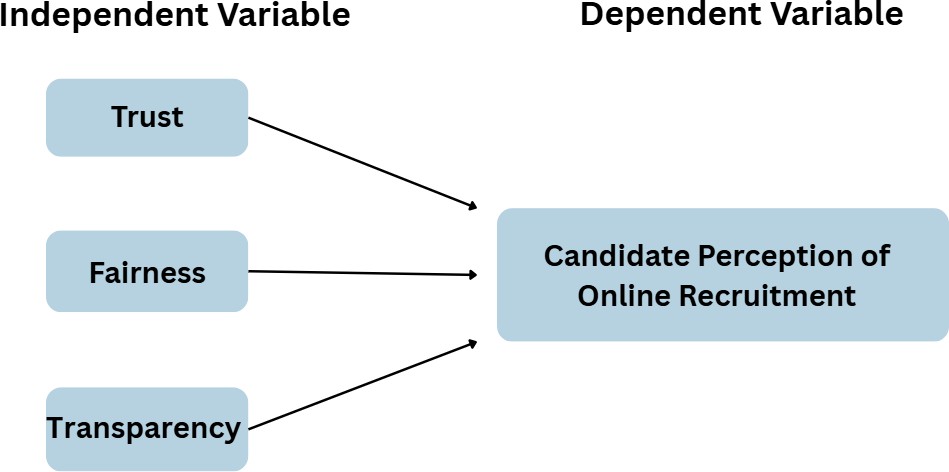
The diagram visually represents the direct relationships being tested in the study. Each independent variable (Trust, Fairness, and Transparency) is expected to influence the dependent variable (Candidate Perception).
Research Methodology
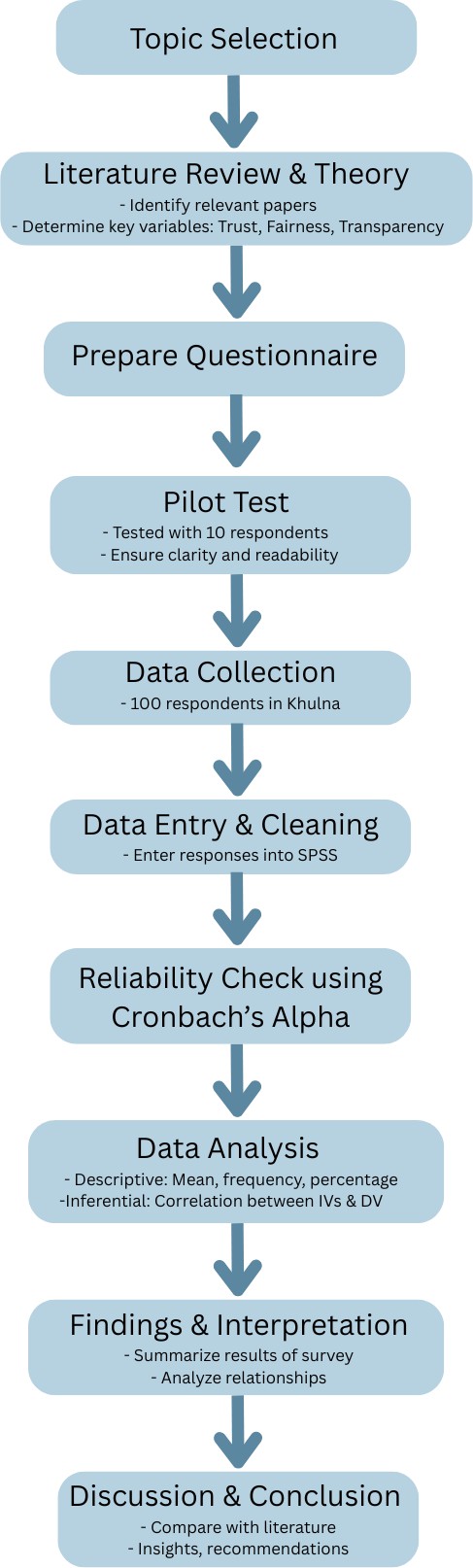
The research methodology describes the practical steps of data collection and analysis. This section outlines the research design, population and sampling, data collection methods, measurement instruments, and analysis techniques used in the study. Since there search focuses on candidate perceptions of online recruitment in Bangladesh, the methodology is structured to capture quantitative data through a survey questionnaire and analyze it statistically.
4.1 Research Design
This study adopts a quantitative, descriptive research design. A survey method was used to gather data from job seekers who have experience applying through online recruitment platforms in Bangladesh. The descriptive design was chosen because it helps measure perceptions and attitudes across a sample population using numerical data.
4.2 Population of the Study
The population of the study consists of job seekers in Khulna city who have applied for jobs using online platforms such as Bdjobs, LinkedIn, and company career portals. This includes both fresh graduates and experienced professionals across different sectors.
4.3 Sampling Technique and Sample Size
A convenience sampling technique was employed, targeting job seekers who were easily accessible via social media, career groups, and online job platforms.
-
Samplesize:100 respondents
-
Rationale: A sample of 100 is sufficient to identify trends and provide meaningful insights while keeping the study manageable within time and resource constraints.
4.4 Data Collection Methods
Data were collected using a structured questionnaire. The survey was conducted by reaching people directly. The questionnaire was divided into two parts, and the second part was divided into four sections:
Part A: Demographics and Organizational Information (age, gender, education, employment status, field of work).
Part B: Candidate Perception of Online Recruitment in Bangladesh Section A: Candidate Perceptions on Trust (5 items).
Section B: Candidate Perceptions on Fairness (10 items). Section C: Candidate Perceptions on Transparency (5items).
Section D: Overall Perception of Digital Hiring for Supporting Hypotheses Validation (5 items).
A 5-point Likert scale was used for perception items: 1= Strongly Disagree (SD), 2=Disagree (D), 3 = Neutral (N), 4 =Agree (A), 5 = Strongly Agree (SA).
4.5 Research Instrument
The research instrument was a questionnaire designed to measure candidate perceptions across three dimensions:
-
Trust (T):e.g., “I trust that job advertisements on digital platforms are authentic.”
-
Fairness (F):e.g., “I feel confident that my application will be reviewed fairly by online recruiters.”
-
Transparency (TR):e.g., “Job descriptions and requirements are clearly stated in online postings.”
The instrument was reviewed by one academic expert to ensure content validity, and a pilot test with 10 respondents confirmed the clarity of questions.
4.6 Data Analysis Techniques
Data collected from the 100 respondents were analyzed using descriptive and inferential statistics:
-
Descriptive Statistics: Mean, frequency, and percentage to describe demographic information and perception levels.
-
Inferential Statistics: Correlation analysis to test the relationship between trust, fairness, transparency, and overall candidate perception.
Analysis was conducted using SPSS software (Version26).
4.7 Reliability and Validity of the Instrument
The reliability of the questionnaire was measured using Cronbach’s Alpha:
-
Trust= 0.82
-
Fairness=0.79
-
Transparency=0.81
-
Overall=0.84
Since all values are above0.70, the instrument is considered reliable.
4.8 Findings & Interpretation
The survey data was then analyzed, and a summary of the data was provided. It was reported in descriptive statistics (mean, frequency, percentage). Correlation analysis was used to analyze the relationships between trust, fairness, transparency, and the overall perception of the candidates. The trends and patterns were then identified by interpretation of the numerical results.
4.9 Discussion & Conclusion
The results were matched and compared with the current literature to examine the consistency and inconsistency of the study results with the other previous studies. This analysis also determined practical implications of online recruitment platforms and the ways to enhance trust, fairness, and transparency to enhance candidate perceptions. In addition, the study also identified its limitations and suggested the potential methods of how future studies should be conducted in order to continue with the findings.
Analysis & Discussion
5.1 Data Analysis5.1.1 Reliability Test (Cronbach’s Alpha)
| Scale | Cronbach’s Alpha | No. of Items |
| Trust | 0.82 | 5 |
| Fairness | 0.79 | 10 |
| Transparency | 0.81 | 5 |
| Overall Perception | 0.84 | 5 |
Cronbach’s Alpha values ranged from 0.79 to 0.84, exceeding the recommended threshold of
0.70. This indicates that the scales measuring trust, fairness, transparency, and overall perception demonstrated strong internal consistency, making the data reliable for further analysis.
5.2 Descriptive Statistics (Mean & Standard Deviation of Scales)
| Scale | Mean | Std. Deviation | N |
| Trust | 3.82 | 0.56 | 100 |
| Fairness | 3.51 | 0.61 | 100 |
| Transparency | 3.27 | 0.63 | 100 |
| Overall Perception | 3.69 | 0.58 | 100 |
The mean scores revealed that respondents perceived Trust (M = 3.82, SD = 0.56) most positively, followed by Fairness (M=3.51, SD=0.61) and Overall Perception (M=3.69, SD
=0.58). Transparency scored the lowest (M=3.27, SD=0.63), suggesting that candidates feel less informed about recruitment criteria and processes compared to their perceptions of trust and fairness.
5.3 Correlation Analysis
| Variables | Trust | Fairness | Transparency | Overall Perception |
| Trust | 1 | 0.55** | 0.41** | 0.60** |
| Fairness | 0.55** | 1 | 0.48** | 0.67** |
| Transparency | 0.41** | 0.48** | 1 | 0.45** |
| Overall Perception | 0.60** | 0.67** | 0.45** | 1 |
Note: ** Correlation is significant at the 0.01 level (2-tailed).
The correlation matrix showed that all three independent variables (Trust, Fairness, and Transparency) were significantly and positively correlated with Overall Perception. The strongest relationship was observed for Fairness (r = 0.67, p < 0.01), followed by Trust (r = 0.60, p < 0.01) and Transparency (r = 0.45, p < 0.01). This suggests that candidates’ overall satisfaction with online recruitment is particularly dependent on whether they perceive the process as fair.
5.4 Regression Analysis
Table4: Model Summary
| R | R Square | Adjusted R Square | Std. Error of the Estimate |
| 0.662 | 0.438 | 0.421 | 0.44 |
The regression model was statistically significant (F=24.98,p<0.001) and explained 43.8% of the variance (R²=0.438) in candidate perception. Among the predictors, Fairness (β=0.52, p<0.001) and Trust (β=0.34,p<0.001) were significant determinants of overall perception, whereas Transparency (β = 0.11, p = 0.113) was not statistically significant. This implies that while transparency plays a role, candidates’ perceptions of fairness and trust are much stronger drivers of satisfaction with online recruitment platforms.
5.5 ANOVA Test
Table5: ANOVA (Overall Perceptions Dependent Variable)
| Model | Sum of Squares | df | Mean Square | F | Sig. |
| Regression | 14.03 | 3 | 4.68 | 24.98 | 0.000** |
| Residual | 18.00 | 96 | 0.19 | ||
| Total | 32.03 | 99 |
Note: p<0.001indicates the regression model is significant.
| Predictor | B | Std. Error | Beta | T | Sig. |
| Constant | -0.84 | 0.56 | – | -1.52 | 0.133 |
| Trust | 0.44 | 0.11 | 0.34 | 4.07 | 0.000** |
| Fairness | 0.63 | 0.09 | 0.52 | 7.24 | 0.000** |
| Transparency | 0.14 | 0.09 | 0.11 | 1.60 | 0.113 |
Note: p<0.05=significant
The findings highlight that fairness and trust are the critical dimensions shaping candidate perceptions, with fairness emerging as the strongest predictor. Transparency, though positively related, requires further improvement by recruitment platforms to strengthen candidate confidence. These insights align with prior studies on digital hiring, but the stronger emphasis on fairness reflects the local context of Khulna, where candidates are highly sensitive to whether they are treated equally in competitive job markets.
Discussion
The findings of this research are useful in learning how job-seekers in Bangladesh perceive online recruitment and particularly trust, fairness, and transparency. Based on the analysis, the variables of candidate perceptions that were most predictable, fairness, trust, and transparency, were positively correlated, but they did not produce a significant effect on overall satisfaction. These results are theoretical and practical and shed some light on the localities of digital hiring in Khulna. Of the three variables, fairness was the strongest variable in perception of the candidate (b = 0.52, p < 0.001). This is in accordance with the Organizational Justice Theory (Greenberg, 1987) that posits people evaluate recruitment processes using procedural and distributive justice. Another issue that was of great sensitivity to the applicants in this research was whether they received equal opportunities and were treated equally in the recruitment process. This emphasis of fairness is associated with previous studies carried out in Bangladesh. Indicatively, Akter (2020) pointed out that in Khulna, there are so many job seekers who believe that online job advertisements are a formality in relation to hiring, and the truth is that hiring is based on internal contacts or referrals. This form of hiring is a subject of concern in that hiring on the web is not really merit based. The present study holds up these concerns, and it implies that the general satisfaction of the candidates is highly determined by whether or not they think the system is free of favoritism and prejudice. In practice, fairness does not just result in a moral obligation, but also a strategic one. The corresponding attitude to the perception of discrimination or unfairness can prompt qualified applicants to decline to apply, which will reduce the talent pool. Conversely, those candidates who believe that they were treated fairly will be more ready to recommend other people to the employer and apply to work.
Trust (b = 0.34, p < 0.001) was the second most important predictor that seemed to have affected the perceptions of the candidates. This kind of outcome is aligned to Signaling Theory (Spence, 1973), a theory that argues that organizations communicate their credibility through sending signals such as job descriptions and application processes, and responsiveness. In the case of online hiring, the trust will be built when the candidates are convinced that the job advertis authentic and their personal details will be taken care of in a responsible way. This is testified in a series of studies. Kibria and [9] found that a significant percentage of job seekers in Dhaka complained about job postings being fraudulent, and Khan(2022) found the same in Khulna, where job boards were distrusted because of old job postings and unverified advertisements. The existing study also reveals that trust was higher among the respondents than transparency which suggests authenticity and reliability is valued more than procedural detailed information. The practical implication of this is that recruitments its must improve verification mechanisms, become stricter in their vetting of their employers, and have more conspicuous indications of reliability to enable them build and maintain trust. Without these assurances, applicants may regard online recruitment as a risky practice which would reduce their enthusiasm to employ online staffing solutions.
Transparency positively and not significantly related with overall perception (r = 0.45, p < 0.01), but in significantly in regression model (b=0.11,p=0.113). This demonstrates that the fact that one is able to get a job description, updates and feedback is appreciated by the candidates yet does not influence their overall satisfaction significantly as compared to fairness and trust. It is a slight difference to the international research, in which transparency is typically a more defining element. To illustrate, [18] concentrated on the point that open communication of recruitment processes will make the applicants more loyal. In the Khulna environment, though, it appears that applicants are more concerned about whether the opportunities are truly fair and reliable and not the scope of the provided information. One of the reasons might be that in competitive and high unemployment markets, job seekers appreciate quite fair evaluation and true opportunities over procedural transparency.
Nevertheless, the low score in transparency (M = 3.27) is a pointer of one of the areas to be enhanced. Many of the respondents also complained that there were vague job descriptions and that they were not contacted after they had submitted their applications. This is comparable to the previous reports by Rahmanet al. (2020), who reported that job seekers were not ready to utilize the online platforms regularly in case of inadequate communication. As such, as far as the transparency may not be the best driver of the perception, more effective feedback processes and transparency can never the less enhance the overall experiences of the candidates? Lastly, fairness and trust in this paper are observed to be the most important variables influencing candidate perception of online recruitment in Bangladesh with transparency being an enabling but less influential factor. These findings support the significance of organizations and recruitment systems in improving the impartially in which they carry out the evaluation process and in developing the trust through practicing credible practices. Although the transparency per se may not become a guarantee of the contentment of the candidates, the enhancement of communication and feedback may get added to the work done to create a fair and credible recruitment environment.
Lastly, it will be fair, trusted, and transparent, making the candidate experience better, yet resulting in improved employer branding, improved quality applications, and a more sustainable digital hiring ecosystem in Bangladesh.
Findings & Recommendations
This provides a summary of the main findings from the data analysis and a discussion in previous. It combines the empirical findings with the theoretical context discussed in previous to highlight the trends in perceptions of online recruitment among candidates in Bangladesh. Practical recommendations are then given to the employers, recruitment sites, human resource practitioners, and policy makers based on the findings. These recommendations are based on the results of the study and are informed by the corresponding theories, including Equity Theory (Adams, 1965) and Signaling Theory (Spence, 1973), to propose practical solutions to increasing trust, fairness, and transparency in the process of digital hiring.
7.1 Key Findings
The research results are based on the data obtained through the analysis of the survey data obtained among 100 job seekers in Khulna, Bangladesh, who have been exposed to online job search platforms such as Bdjobs, LinkedIn, and corporate career portals. The findings give an insight into the impact of trust, fairness, and transparency on the overall candidate perceptions as statistically measured under descriptive statistics, correlation, and regression analysis. The questionnaire scales were highly reliable with Cronbach's Alpha values of 0.79 to 0.84 (Table 1), proving internal consistency of the instrument.
7.1.2 Descriptive Knowledge about Perceptions
The general perception of the candidates about online recruitment was moderately positive, with a mean of perceptions of 3.69 (SD = 0.58). Among the three dimensions:
These measures are not inconsistent with the theoretical basis of the study, as the lack of transparency can be attributed to the poorer interpersonal cues of the digital world, as the Signaling Theory suggests.
7.1.3 Relations of Variables
The analysis of correlation showed the significant positive relationships between the independent variables (trust, fairness, transparency) and the overall perception of the candidate (Table3). The most significant correlation was exhibited by fairness (r=0.67, p<0.01), then trust (r= 0.60, p < 0.01) and transparency (r= 0.45, p < 0.01). Inter correlations amongst independent variables were moderate to strong in nature (e.g., fairness and trust: r = 0.55, p < 0.01), which showed that these dimensions are interrelated but different.
These relationships were also supported using regression analysis, with the model accounting for 43.8% of variance in overall perception (R2 = 0.438, Adjusted R2 = 0.421; F = 24.98, p < 0.001) (Tables 4 and 5). It was observed that the coefficients (Table 6) were:
These results are consistent with the research objectives, showing that although, in Khulna, trust and fairness are particularly important in the job application process, probably because of the competitive job markets and the previous experiences with scams; transparency is a less powerful factor. This trend is reminiscent of the Organizational Justice Theory in which procedural fairness (e.g., selection based on merit) has a stronger impact on attitude than informational transparency.
7.1.4 Support of Research Questions
-
The perception of trust was the most desirable (M=3.82, SD=0.56), and it shows that the respondents are likely to be confident in the authenticity and reliability of online platforms.
-
Fairness was rated with 3.51 (SD = 0.61), which indicates that applicants believe that the process is moderately based on merit but leaves some room for improvement.
-
The lowest score (M=3.27, SD=0.63) was on transparency, which suggests the issue of ambiguous job descriptions, selection standards, and feedback systems (Table 2).
-
The most important predictor (b=0.52, t=7.24, p<0.001) and thus its key position in the determination of satisfaction is fairness.
-
Trust was an important and secondary predictor (b=0.34, t=4.07, p< 0.001).
-
Transparency was non-significant (b = 0.11, t = 1.60, p = 0.113), indicating that it has a lesser direct impact on the overall perceptions in such a setting.
-
Trust Levels: Candidates have moderate and high levels of trust in platforms; however, this depends on perceived authenticity, which answers Research Question 1.
-
Fairness Perceptions: Fairness is not overwhelmingly perceived, but with some concern about bias, and answering Research Question 2.
-
Transparency Views: The process is regarded as being rather opaque, and low scores reflect poor communication, according to Research Question 3.
-
Overall Implications: Perceptions are dominated by fairness and trust, which addresses a gap in the literature analyzing Khulna specifically (i.e., Akter, 2020; [10]) and brings about the necessity of direct intervention.
Overall, the results suggest that strengthening fairness and trust might help increase candidate satisfaction by the highest margin, even though increases in transparency might bring marginal benefits. The findings are especially applicable in the developing digital environment in Bangladesh, where perceptual problems are increased by infrastructural constraints in secondary cities, such as Khulna.
7.2 Recommendations
The recommendations below are based on the results, and they are designed to enhance the practice of online recruitment in Bangladesh. They are designed to suit them a jor stakeholder and include theoretical knowledge so as to provide theoretically based solutions that are practical. It focuses on the application of the Equity Theory to ensure fair transactions, Signaling Theory in order to enhance credible signals, and Organizational Justice Theory in order to enhance procedural and interactional justice.
7.2.1 To Employers and Recruiters
=0.52), use merit-based screening instruments, e.g., blind CV reviews or standardized tests, to reduce the likelihood of bias. Using the Equity Theory, make sure that the applicants feel that the ratio of inputs to outputs is equal by clearly explaining how skills coincide with the jobs. This may decrease the sense of favoritism, which, according to local research studies (Akter, 2020), has been observed, and improve the application quality.
-
Focus on Fairness in Process Design: Since fairness has a high predictive validity (b
-
Cultivate Trust by Verifying and Responding: Trust is one of the most vital motivating factors (b = 0.34), and in this case, verify jobs postings with a badge or certification of the employer on the platform. According to Signaling Theory, update signal reliability (e.g., automated acknowledgments). This may enhance the interest of the candidates and employer branding in the context of Khulna, where trust in old posts tends to be low [10].
-
Supporting Elements: Transparency: Low transparency scores (M =3.27) indicate that there can be improvement. Apply Organizational Justice Theory to the facilitation of interactional justice through the provision of detailed feedback to the applicants after the application and clear timelines. Embark on adding chat bots or frequently asked questions on career portals to explain processes, which may add to the impacts of fairness and trust.
7.2.2 In the case of Online Recruitment Platforms (e.g., Bdjobs, LinkedIn)
1. Implement AI with Equity Protections: AI platforms must examine tools for bias; following examples that global platforms such as Amazon's abandoned system do (Dastin, 2018). The Equity Theory justifies the training of algorithms on various datasets to achieve equitable results to satisfy the high-performance of fairness and perception (r = 0.67).
2. Enhance Trust-Building Elements: Introduced at a privacy seals and user reviews on job postings and use the Sign align Theory to communicate authenticity. Functions such as real-time tracking of applications may increase the trust rating, especially in areas that have security issues (Rahman et al., 2020).
3. Enhance Transparency Systems: Require employers to have detailed job descriptions and demand that employers give reasons for rejection. This is in line with Organizational Justice Theory, which gives importance to the clarity of the procedure, which can raise the importance of transparency in future perception.
7.2.3 To the HR Practitioners and Policy makers
-
Establish National Guidelines of Digital Hiring: Government policy makers are recommended to develop regulations based on U.S. EEOC initiatives (2024) and concentrate on fairness audits and transparency requirements. Policies to ensure equal access, particularly within underserved areas such as Khulna, can be informed by Organization Justice Theory.
-
Encourage Training and Awareness: HR professionals need to be trained on ethical online recruitment with special focus on trust signals (Signaling Theory). Candidates could be empowered by job seeker workshops to navigate platforms and decrease perceptual gaps that were found in the study.
-
Promote Research and Monitoring: Invest in longitudinal research to monitor the changing perceptions and overcome shortcomings, such as the Khulna focus of the study. This may investigate platform-specific variations to extend the current results.
Through these suggestions, the stakeholders will be able to establish a better online recruitment ecosystem in Bangladesh, which will eventually result in increased candidate satisfaction, turnover, and talent pipeline. Future studies would require an increased sample size or get the employers' views in order to have a comprehensive view.
Conclusion
This paper examined the online recruitment perceptions of the candidates in Bangladesh in terms of trust, fairness, and transparency in online hiring, as empirically supported by 100 job seekers in Khulna. As shown in the results, fairness (b=0.52, p=0.001) and trust (b=0.34, p
=0.001) are the two main sources of positive candidate perceptions, whereas transparency (b
=0.11,p=0.113) also has a role (although significantly lower), and its correlation with positive perceptions is also positive (r=0.45,p=0.01). These findings concur with the Equity Theory, Signaling Theory, and Organizational Justice Theory, which emphasize perceived equity and valid signals in competitive job markets such as Khulna.
The study highlights the importance of the merit-based and equitable treatment of candidates as per the previous reports of favoritism and employment authenticity (e.g., Akter, 2020; [10]). Satisfaction is largely influenced by trust based on credible job advertisements and data safety, whereas transparency, although important, needs to be enhanced through ambiguous job descriptions and poor feedback (M=3.27). These lessons come in handy in Bangladesh, which is undergoing transformation with digital recruitment, where the infrastructural and literacy difficulty in the secondary cities exacerbates the perceptual differences.
This research adds value to the literature by filling the gaps in the research, especially how trust, fairness, and transparency resonate in a secondary city setting. In a practical manner, it provides employers, platforms, and policymakers with actionable advice to make their practices fairer by using bias-free tools, establish trust by using verified posts, and become more transparent by communicating more effectively. Future research opportunities, such as a geographically broader sample and employer perspective, are restricted by limitations, such as a Khulna-centric sample and candidate-only perspective.
To sum up, it is essential to promote equitable and reliable online recruitment technologies to improve the experiences of candidates, build a positive employer brand, and establish a sustainable digital hiring process in Bangladesh. With the adaptation of technological changes to the demands of the candidates, organizations will be able to hire and keep the best talent, which will make the job market more equal and efficient.
Conflicts of Interest Declaration
I, Md. Arifuzzaman, declare that I have no known financial interests or personal relationships that could have appeared to influence the work reported in this paper.
Informed Consent Declaration
All procedures performed in this study involving human participants were in accordance with the ethical standards of the institutional and national research committee and with the 1964 Helsinki declaration and its later amendments or comparable ethical standards. Informed consent was obtained from all individual participants included in the study.
Appendix
A Questionnaire
On
"Candidate Perceptions of Online Recruitment in Bangladesh: A Study on Trust, Fairness, and Transparency in Digital Hiring"
Dear participants,
You will be glad to know, we are going to conduct a study on “Candidate Perceptions of Online Recruitment in Bangladesh: A Study on Trust, Fairness, and Transparency in Digital Hiring.".This study aims to explore how job candidates in Bangladesh perceive online recruitment, focusing on their levels of trust, feelings of fairness, and the transparency of digital hiring processes. It aims to identify key concerns and expectations to help improve the overall effectiveness and credibility of online recruitment systems.
This questionnaire is open to individuals in Bangladesh who have interest with online job recruitment for job searching, whether you are currently employed, seeking a job, or exploring job opportunities in any organizations.
Your responses will be kept strictly confidential. Data collected will only be used for research purposes and will not be shared with anyone outside the research team. No personal identifying information will be linked to your responses.
Instructions:
-
Please answer all questions as honestly as possible.
-
For multiple-choice questions, select the option that best represents your views or experience.
-
If a question asks for a specific answer or comment, please provide your response in the space provided.
-
The questionnaire should take approximately 20 minutes to complete.
Part A: Demographics and Organizational Information
(Please put a tick (√) mark in the appropriate option)
Demographic Information
-
Age: ________
-
Gender: Male / Female / Other
-
Highest level of education:High SchoolBachelor'sMaster'sPh.D.
-
Current Employment Status:EmployedUnemployedStudentSelf-employed
-
Industry/Field of Work: __________
Part B: Candidate Perceptions of Online Recruitment in Bangladesh
Instructions: Please put a tick (√) mark on the number according to the extent of your agreement and disagreement with the statement. Select one of the options below to indicate how well the statement describes you:
1 = Strongly Disagree (SD),
2 = Disagree (D),
3 = Neutral (N),
4 = Agree (A),
5 = Strongly Agree (SA).
| Section A: Candidate Perceptions on Trust | ||||||
| SL | Question | |||||
| 6. | I believe online recruitment platforms maintain confidentiality of my personal information. | 1 | 2 | 3 | 4 | 5 |
| 7. | I trust that job advertisements on digital platforms are authentic. | 1 | 2 | 3 | 4 | 5 |
| 8. | I feel secure when submitting my resume through online job portals. | 1 | 2 | 3 | 4 | 5 |
| 9. | I trust online platforms to connect me with legitimate employers. | 1 | 2 | 3 | 4 | 5 |
| 10. | I feel confident that my application will be reviewed fairly by online recruiters. | 1 | 2 | 3 | 4 | 5 |
| Section B: Candidate Perceptions on Fairness | ||||||
| SL | Question | |||||
| 11. | I believe online recruitment platforms maintain confidentiality of my personal information | 1 | 2 | 3 | 4 | 5 |
| 12. | I trust that job advertisements on digital platforms are authentic. | 1 | 2 | 3 | 4 | 5 |
| 13. | I feel secure when submitting my resume through online job portals. | 1 | 2 | 3 | 4 | 5 |
| 14. | I trust online platforms to connect me with legitimate employers. | 1 | 2 | 3 | 4 | 5 |
| 15. | I feel confident that my application will be reviewed fairly by online recruiters. | 1 | 2 | 3 | 4 | 5 |
| 16. | Online recruitment processes provide equal opportunity to all candidates. | 1 | 2 | 3 | 4 | 5 |
| 17. | I believe the selection process is unbiased when done digitally. | 1 | 2 | 3 | 4 | 5 |
| 18. | I receive timely and fair responses from employers via online recruitment. | 1 | 2 | 3 | 4 | 5 |
| 19. | Digital interviews and assessments are conducted fairly. | 1 | 2 | 3 | 4 | 5 |
| 20. | I feel treated fairly when applying through online recruitment systems. | 1 | 2 | 3 | 4 | 5 |
| Section C: Candidate Perceptions on Transparency | ||||||
| 21. | Job descriptions and requirements are clearly stated in online postings. | 1 | 2 | 3 | 4 | 5 |
| 22. | The recruitment process steps are communicated clearly on digital platforms. | 1 | 2 | 3 | 4 | 5 |
| 23. | I am informed about my application status in a timely manner. | 1 | 2 | 3 | 4 | 5 |
| 24. | Online platforms provide clear contact information for follow-up or queries. | 1 | 2 | 3 | 4 | 5 |
| 25. | Online platforms provide clear contact information for follow-up or queries. | 1 | 2 | 3 | 4 | 5 |
| Section D: Overall Perception of Digital Hiring | ||||||
| 26. | I prefer online recruitment over traditional methods. | 1 | 2 | 3 | 4 | 5 |
| 27. | My experiences with online recruitment have been mostly positive. | 1 | 2 | 3 | 4 | 5 |
| 28. | I would recommend others to use online recruitment platforms. | 1 | 2 | 3 | 4 | 5 |
| 29. | Online recruitment is efficient and convenient. | 1 | 2 | 3 | 4 | 5 |
| 30 | I am likely to use online platforms for future job searches. | 1 | 2 | 3 | 4 | 5 |
References
- Akter, S. (2020). Perceptions of E-Recruitment among Jobseekers in Khulna. Khulna University Thesis. DOI ↗ Google Scholar ↗
- Barber,A.(1998).Recruiting Employees: Individual and Organizational Perspectives. Thousand Oaks: Sage. DOI ↗ Google Scholar ↗
- Black, J., & van Esch, P. (2020). AI-enabled recruitment: Transparency, trust and fairness. Journal of Business Research, 116, 713–721. DOI ↗ Google Scholar ↗
- Breaugh,J.(2008).Employee recruitment: Current knowledge and important areas for future research. Human Resource Management Review, 18(3), 103–118. DOI ↗ Google Scholar ↗
- Chamorro-Premuzic, T., Winsborough, D., Sherman, R., & Hogan, R. (2016). New talent signals: Shiny new objects or a brave new world? Industrial and Organizational Psychology, 9(3), 621–640. DOI ↗ Google Scholar ↗
- Dastin, J. (2018). Amazon scraps secret AI recruiting tool that showed bias against women. Reuters. DOI ↗ Google Scholar ↗
- Haque, M. (2021). Online Job Search Behavior among Graduates in Khulna. Khulna University Thesis. DOI ↗ Google Scholar ↗
- Harwell, D. (2019). A face-scanning algorithm increasingly decides whether you deserve the job. The Washington Post. DOI ↗ Google Scholar ↗
- Islam, M., & Rahman, A. (2017). E-recruitment adoption in banking sector of Bangladesh. Asian Business Review, 7(3), 45–53. DOI ↗ Google Scholar ↗
- Khan,R.(2022).Trust and Transparency in Online Job Portals: Evidence from Khulna. Khulna University Thesis. DOI ↗ Google Scholar ↗
- Kibria, M., & Islam, F. (2016). Online recruitment practices in Dhaka: An empirical study. Journal of Business and Technology, 10(2), 112–123. DOI ↗ Google Scholar ↗
- Langer ,M., König, C.,& Papathanasiou, M.(2019).Highly automated job interviews: Acceptance under the control–transparency–privacy framework. Human Resource Management Journal, 29(3), 536–552. DOI ↗ Google Scholar ↗
- Lee, I. (2005).The evolution of e-recruiting: A content analysis of Fortune 100 career web sites. Journal of Electronic Commerce in Organizations, 3(3), 57–68. DOI ↗ Google Scholar ↗
- Nikolaou, I. (2014). Social networking web sites in job search and employee recruitment. International Journal of Selection and Assessment, 22(2), 179–189. DOI ↗ Google Scholar ↗
- Rahman, R., Islam, N., & Jahan, T. (2020). The impact of social media recruitment on graduates’ perceptions in Bangladesh. International Journal of Business and Management, 15(6), 45–55. DOI ↗ Google Scholar ↗
- Raghavan, M., Barocas, S., Kleinberg, J., & Levy, K. (2020). Mitigating bias in algorithmic hiring: Evaluating claims and practices. Proceedings of the Conference on Fairness, Accountability, and Transparency. DOI ↗ Google Scholar ↗
- Stone, D., Deadrick, D., Lukaszewski, K., & Johnson, R. (2015). The influence of technology on the future of human resource management. Human Resource Management Review, 25(2), 216–231. DOI ↗ Google Scholar ↗
- Strohmeier,S.(2020). Digital human resource management: A conceptual clarification. German Journal of Human Resource Management, 34(3), 345–365. DOI ↗ Google Scholar ↗
- Sylva, H., & Mol, S. (2009). E-recruitment: A study into applicant perceptions of an online application system. International Journal of Selection and Assessment, 17(3), 311–323. DOI ↗ Google Scholar ↗
- Zhu, F., Potosky, D., & Rogelberg, S.(2013). Recruiting and hiring in Asia: Challenges and opportunities. Asia Pacific Journal of Human Resources, 51(1), 3–11. DOI ↗ Google Scholar ↗