Abstract
Understanding how meaningful experiences shape future behavioral decisions remains an important issue in tourism research, particularly in cultural tourism settings where emotional engagement often outweighs functional evaluation. Drawing on the Stimulus–Organism–Response (SOR) framework, this study examines the relative effects of cognitive image and affective image on behavioral intention, while investigating the mediating role of place attachment. Data were collected from 275 visitors across six cultural and historical museums in Indonesia and analyzed using Partial Least Squares Structural Equation Modeling (PLS-SEM). The results reveal that affective image significantly influences both place attachment and behavioral intention, whereas cognitive image has no significant effect on either construct. Furthermore, place attachment exerts a positive influence on behavioral intention, indicating that emotional bonds with a destination play a critical role in shaping future behavioral responses. These findings suggest that visitors’ future decisions are driven more by emotional experiences than by rational evaluations of destination attributes. This study contributes to tourism literature by demonstrating the dominant role of affective processes in explaining behavioral intention and by highlighting place attachment as a key psychological mechanism linking meaningful experiences to future behavioral decisions. The findings also provide insights for destination managers seeking to strengthen visitor retention through emotionally engaging experiences.
Keywords
Affective Image Behavioral Intention Place Attachment
1. Introduction
Indonesian tourism industry has become increasingly competitive as more destinations attempt to attract and retain visitors . In such a competitive environment, understanding tourist behavior has become an important issue in tourism research, particularly with regard to behavioral intention . Behavioral intention reflects an individual’s tendency to perform certain actions in the future, such as visiting a destination, revisiting it, or recommending it to others . Therefore, many tourism studies have attempted to identify the factors that influence tourists’ behavioral intentions toward a destination.
Amid increasing competition among destinations, cultural tourism destinations face particular challenges in attracting visitors . Museums, as one form of cultural tourism destination, play an important role in preserving cultural heritage, disseminating knowledge, and supporting educational tourism . However, in practice many museums experience relatively low visitor numbers compared with other types of tourism destinations . Museums are often perceived as less attractive or less entertaining, which makes them less competitive than destinations that offer more interactive or recreational experiences . The low level of museum visitation suggests that the success of a destination is not determined solely by the existence of attractions or collections, but also by how the destination is perceived by tourists. Tourists’ perceptions form impressions about a destination, which may influence their attitudes and behavioral tendencies. In other words, the way tourists perceive a destination can determine whether they are interested in visiting it .
However, previous studies have reported inconsistent findings regarding the relationship between tourists’ perceptions of a destination and their behavioral intentions. Some studies suggest that positive perceptions encourage tourists to revisit and recommend a destination , while others find that this relationship is weak or not significant . These inconsistencies indicate that the relationship between destination perceptions and behavioral intentions may not always be direct, suggesting the presence of underlying psychological mechanisms.
To better understand this mechanism, this study adopts the Stimulus–Organism–Response framework. This framework explains how environmental stimuli influence individuals’ internal psychological states, which in turn lead to behavioral responses . In the tourism context, tourists’ perceptions of a destination can be viewed as a stimulus originating from the destination environment . These perceptions are processed psychologically by individuals and shape internal conditions that eventually influence behavioral responses , including the intention to visit a destination. One psychological factor that may explain this process is place attachment, which refers to the emotional bond between individuals and a specific place . When tourists develop emotional attachment to a destination, they are more likely to show positive attitudes and stronger intentions to revisit or recommend the place to others. Conversely, when such attachment is weak, tourists’ behavioral intentions toward the destination may also be limited.
In the context of museums, place attachment may help explain why some visitors are interested in revisiting museums while others are not. Museums that provide meaningful experiences may foster emotional connections with visitors, whereas museums that are perceived merely as repositories of collections may struggle to build such connections . This situation may contribute to the relatively low level of museum visitation
Although the relationships among destination perceptions, place attachment, and behavioral intention have received considerable attention in tourism research, many previous studies mainly focus on testing direct relationships among these variables . Therefore, this study examines the relationship from a different perspective by focusing on the psychological mechanism underlying it. Specifically, this study aims to examine whether destination image influences tourists’ intention to visit and whether place attachment explains the mechanism linking destination image and visit intention.
2. Literature review and hypotheses development
2.1 Stimulus–Organism–Response
The Stimulus–Organism–Response framework explains how environmental stimuli influence individuals’ internal psychological states, which subsequently shape behavioural responses . Originating from environmental psychology, the model proposes that external cues from the surrounding environment trigger cognitive and affective processes within individuals before manifesting in behavioural outcomes . Environmental stimuli may influence emotional conditions, leading individuals to display either approach or avoidance behaviours toward a particular object or place. Due to its ability to capture the interaction between environmental characteristics, internal psychological processes, and behavioural outcomes, the SOR framework has been widely applied in tourism research to understand how tourists respond to destination-related stimuli.
Subsequent developments of the framework emphasise that the classification of variables as stimulus, organism, or response depends on the perspective adopted in a particular study . Within this structure, stimulus refers to environmental cues encountered by individuals, organism represents the internal psychological states formed after individuals process these stimuli, and response reflects the behavioural outcomes resulting from such internal processes . Accordingly, a variable may function as a stimulus, organism, or response depending on its conceptual role in the research model.
In tourism studies, the SOR framework has frequently been employed to explain how destination-related attributes shape tourists’ internal evaluations and ultimately influence behavioural intentions . Previous studies have conceptualised various destination characteristics, such as tourism experiences, experiencescapes, or destination attributes, as stimuli that trigger internal psychological reactions . These internal reactionsoften represented by constructs such as emotions, satisfaction, or destination attachment serve as organisms that mediate the relationship between environmental stimuli and behavioural outcomes. The response component is commonly reflected in tourists’ behavioural intentions, including revisit intention, recommendation behaviour, and destination loyalty .
Within this framework, destination image can be conceptualised as a stimulus because it reflects tourists’ perceptions of a destination’s characteristics and overall appeal . These perceptions may evoke internal psychological responses that shape tourists’ emotional bonds with a place, commonly referred to as place attachment . As an internal state, place attachment represents the emotional connection between individuals and a specific destination, which may subsequently influence behavioural responses. One such response is visit intention, which reflects tourists’ willingness or likelihood to visit a destination in the future
2.2 Cognitive Image and Place Attachment
Cognitive image refers to tourists’ beliefs and knowledge about the functional and physical attributes of a destination, such as cultural attractions, accessibility, facilities, and overall environmental quality . These cognitive evaluations represent tourists’ rational assessments formed through information exposure, prior knowledge, or indirect experiences with a destination . In tourism studies, cognitive image is often considered a fundamental component in shaping how tourists interpret and evaluate a destination’s characteristics before forming deeper psychological connections
Place attachment, on the other hand, reflects the emotional bond that individuals develop with a specific place, characterised by feelings of belonging, identity, and personal connection . The formation of this attachment often begins with visitors’ cognitive evaluations of a destination’s attributes. When tourists perceive that a destination possesses appealing cultural resources, meaningful heritage, or attractive environmental qualities, these positive evaluations may gradually foster emotional ties with the place . Empirical evidence suggests that favourable cognitive images significantly strengthen tourists’ place attachment because positive perceptions enhance the perceived value and meaningfulness of the destination experience . Recent studies in cultural and heritage tourism contexts further demonstrate that tourists who positively evaluate the historical, educational, and experiential attributes of a destination are more likely to develop a stronger emotional attachment to that place . Therefore, cognitive evaluations of a destination can serve as an important antecedent in shaping tourists’ emotional relationships with places.
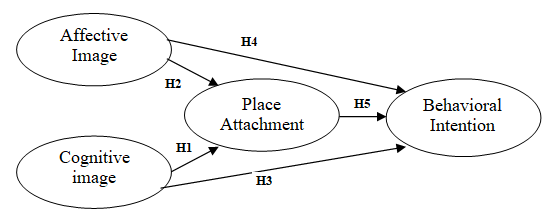
H1: Cognitive image positively influences place attachment.
2.3 Affective Image and Place Attachment
Affective image refers to tourists’ emotional evaluations of a destination, reflecting the feelings or affective responses that individuals associate with a place, such as whether the destination is perceived as pleasant, exciting, relaxing, or enjoyable . Unlike cognitive image, which is based on rational assessments of destination attributes, affective image captures the emotional impressions that arise from tourists’ subjective experiences and personal interpretations of the destination environment . These emotional responses play a crucial role in shaping how individuals relate psychologically to a destination.
Place attachment represents the emotional bond that individuals develop with a specific place through meaningful experiences and personal engagement . In tourism contexts, affective evaluations of a destination can significantly contribute to the formation of this attachment . When tourists experience positive emotions during their interaction with a destination, such emotional responses may strengthen their sense of belonging and personal connection to the place . Emotional experiences such as enjoyment, excitement, or relaxation can therefore reinforce the development of affective ties between visitors and destinations.
Empirical studies have consistently demonstrated that positive affective images significantly enhance tourists’ place attachment. Destinations that evoke favourable emotions tend to foster deeper psychological bonds with visitors because emotional experiences are more memorable and personally meaningful . Similarly, research in cultural tourism contexts indicates that destinations capable of generating strong emotional impressions are more likely to cultivate lasting attachments among visitors . Consequently, the emotional perceptions associated with a destination play a vital role in strengthening visitors’ attachment to that place.
H2: Affective image positively influences place attachment.
2.4 Cognitive image positively and behavioral intention.
Cognitive image refers to tourists’ evaluations and beliefs regarding the functional characteristics of a destination, including the quality of attractions, accessibility, infrastructure, and cultural resources . These cognitive evaluations represent tourists’ rational assessments of a destination and often serve as an important basis for travel-related decision making . Before deciding to visit a destination, tourists typically evaluate whether the destination possesses attributes that are capable of delivering valuable and satisfying experiences . When a destination is perceived as attractive, well-developed, and capable of meeting tourists’ expectations, such evaluations may increase the likelihood that tourists will consider the destination as a potential travel choice.
Behavioral intention reflects tourists’ willingness to perform future behaviors related to a destination, such as visiting, revisiting, or recommending the destination to others . In the tourism decision-making process, cognitive evaluations of destination attributes play an important role in shaping such intentions because tourists often rely on their perceptions of destination quality when comparing travel alternatives . Positive perceptions of destination attributes may reduce uncertainty and strengthen tourists’ confidence that the destination will provide a worthwhile experience
Empirical tourism research has demonstrated that favorable cognitive evaluations of destination attributes significantly influence tourists’ behavioral intentions across various tourism contexts . These findings indicate that tourists who perceive a destination as attractive and well-equipped are more likely to develop stronger intentions to visit or recommend the destination.
H3: Cognitive image positively influences behavioral intention.
2.5 Affective Image and Behavioral Intention
Affective image refers to tourists’ emotional evaluations of a destination, reflecting the feelings that individuals associate with a place, such as excitement, pleasure, relaxation, or enjoyment . Unlike cognitive image, which focuses on rational assessments of destination attributes, affective image captures the emotional impressions formed through tourists’ interactions with a destination environment . These emotional responses play an important role in shaping tourists’ overall evaluations because travel decisions are often influenced not only by rational considerations but also by anticipated feelings associated with the destination experience.
In tourism contexts, behavioral intention reflects tourists’ willingness to engage in future actions related to a destination, including visiting, revisiting, or recommending it to others . Emotional evaluations of a destination can significantly shape such intentions because positive feelings toward a place tend to strengthen individuals’ desire to experience or re-experience that destination . When tourists associate a destination with pleasant or exciting emotions, these affective responses can increase the attractiveness of the destination and motivate future travel-related behaviors
Empirical studies have demonstrated that affective image plays a significant role in predicting tourists’ behavioral intentions across various tourism settings . Destinations that evoke positive emotional responses are more likely to stimulate stronger intentions to visit or recommend the destination because emotional impressions often remain more memorable and influential in shaping travel preferences . Therefore, affective perceptions of a destination represent an important psychological factor influencing tourists’ future behavioral responses.
H4: Affective image positively influences behavioral intention.
2.6 Place Attachment and Behavioral Intention
Place attachment refers to the emotional bond that individuals develop with a particular place through experiences, interactions, and personal meanings associated with that location . In tourism contexts, this attachment reflects the extent to which visitors feel a sense of belonging, identity, or emotional connection with a destination . Such emotional ties often emerge when visitors perceive that a destination provides meaningful experiences that resonate with their personal values, memories, or interests. As a result, place attachment has been widely recognized as an important psychological factor that shapes tourists’ future behavioral responses
Behavioral intention in tourism commonly refers to tourists’ willingness to engage in future behaviors related to a destination, such as revisiting, recommending the destination to others, or maintaining a positive relationship with the place . When tourists develop strong emotional connections with a destination, they are more likely to express favorable behavioral intentions because the destination becomes personally significant to them . Emotional attachment can strengthen tourists’ motivation to maintain relationships with a destination, which often manifests in the form of revisit intentions and positive word-of-mouth communication
Empirical studies have consistently demonstrated that place attachment significantly influences tourists’ behavioral intentions across various tourism contexts. Visitors who feel emotionally connected to a destination tend to exhibit stronger loyalty and a higher likelihood of revisiting or recommending the destination to others . These findings suggest that emotional bonds with a destination play a crucial role in shaping tourists’ future behavioral responses
H5: Place attachment positively influences behavioral intention.
3. Methodology
This study employed a quantitative approach with an explanatory research design to examine the relationships between destination image, place attachment, and behavioral intention in the context of museum tourism destinations. The research object focused on cultural and historical museums that function as educational tourism destinations while also serving as institutions for preserving cultural heritage. Data were collected from August to November 2025. To capture a broader range of visitor experiences, the study was conducted across six cultural and historical museums located in East Java and Central Java, namely Museum Mpu Tantular, De Tjolomadoe, Museum 10 November, Museum Sonobudoyo, Museum Manusia Purba Sangiran, and Museum Ranggawarsita. The respondents in this study were individuals aged at least 18 years who had visited one of these museums within the past year and had undertaken the visit voluntarily as part of personal tourism activities rather than as a requirement of academic or institutional programs.
A purposive sampling technique was employed because the study required respondents with specific characteristics aligned with the research objectives . Data were collected using a structured questionnaire measured on a five-point Likert scale ranging from 1 (strongly disagree) to 5 (strongly agree). During the data collection period, a total of 275 questionnaires were obtained from visitors across the six museums included in the study. All responses were subsequently screened to ensure completeness and consistency before being included in the analysis. The data were analyzed using Structural Equation Modeling (SEM) with the Partial Least Squares (PLS) approach to examine the relationships among the constructs in the proposed research model.
4. Empirical results
4.1 Demographics results
The demographic profile reveals a clear pattern in museum visitation behavior. The sample is dominated by older visitors, with 44% of respondents aged above 40, followed by 34% in the 31–40 age group and 22% in the 21–30 group. This distribution suggests that museum tourism in Indonesia tends to attract more mature individuals rather than younger audiences. In terms of visit frequency, 49% of respondents are first-time visitors, 36% visit occasionally (two to three times per year), and only 15% can be classified as frequent visitors. This indicates that museum visits are not yet a habitual activity, but rather occur on an occasional basis. The relatively small proportion of repeat visitors highlights the challenge of building sustained engagement.
This demographic structure provides important context for the empirical findings. The dominance of older (44%) and infrequent visitors (49% first-time) may explain the stronger role of affective image compared to cognitive image, as such visitors are more likely to rely on emotional and experiential evaluations rather than purely functional considerations when forming behavioral intentions.
4.2. Measurement Model Assessment
The measurement model demonstrates satisfactory reliability and convergent validity, as reported in Table 1. All indicators show adequate loadings on their respective constructs, while composite reliability and Cronbach’s alpha exceed the recommended thresholds, indicating strong internal consistency. The AVE values further confirm that each construct captures sufficient variance from its indicators.
| Constructs | Loadings | AVE | Cronbach's Alpha | Composite Reliability |
| Affective Image | 0.721 | 0.871 | 0.721 | |
| AI1: I had pleasant experiences at this destination. | 0.863 | |||
| AI2: Visiting this destination made me feel relaxed and tranquil. | 0.833 | |||
| AI3: I felt a sense of pleasure when visiting this destination. | 0.837 | |||
| AI4: Visiting this destination made me feel happy. | 0.864 | |||
| Behavioral Intention | 0.754 | 0.836 | 0.754 | |
| BI1: I intend to visit this destination in the future. | 0.855 | |||
| BI2: I would recommend this destination to others. | 0.876 | |||
| BI3: I will consider this museum as a travel destination. | 0.874 | |||
| Cognitive Image | 0.627 | 0.861 | 0.627 | |
| CI1: This destination is easy to access. | 0.835 | |||
| CI2: The destination offers good value for money. | 0.744 | |||
| CI3: This destination provides a variety of attractions. | 0.621 | |||
| CI4: The environment of this destination is well maintained. | 0.934 | |||
| Place Attachment | 0.734 | 0.819 | 0.734 | |
| PA1: I would defend this destination when others criticize it. | 0.837 | |||
| PA2: I feel proud of this destination. | 0.865 | |||
| PA3: This museum has personal meaning for me. | 0.867 |
Discriminant validity is established in Table 2. The HTMT values remain within acceptable limits, indicating that each construct is empirically distinct and that no conceptual overlap exists among the variables.
| Constructs | AI | BI | CI | PA |
| AI | ||||
| BI | 0.686 | |||
| CI | 0.056 | 0.040 | ||
| PA | 0.653 | 0.736 | 0.063 |
The collinearity assessment in Table 3 shows that all VIF values are well below critical thresholds. This confirms that multicollinearity is not a concern and that the structural relationships can be estimated reliably.
| Path | VIF |
| Affective Image Behavioral Intention | 1.447 |
| Affective Image Place Attachment | 1.000 |
| Cognitive Image Behavioral Intention | 1.006 |
| Cognitive Image Place Attachment | 1.000 |
| Place Attachment Behavioral Intention | 1.454 |
The structural model results in Table 4 reveal that affective image has a positive and significant effect on both place attachment and behavioral intention. In addition, place attachment significantly influences behavioral intention, highlighting its role as a key psychological mechanism. In contrast, cognitive image does not show a significant effect on either place attachment or behavioral intention, suggesting that rational evaluations alone are insufficient to drive emotional attachment or behavioral responses.
| Path | Path Coefficient | T-Statistics | P-Values |
| Affective Image Behavioral Intention | 0.356 | 7.286 | 0.000 |
| Affective Image Place Attachment | 0.554 | 13.908 | 0.000 |
| Cognitive Image Behavioral Intention | -0.023 | 0.366 | 0.357 |
| Cognitive Image Place Attachment | 0.064 | 0.766 | 0.222 |
| Place Attachment Behavioral Intention | 0.416 | 8.569 | 0.000 |
Finally, the explanatory power of the model, as presented in Table 5, indicates moderate predictive capability. The model explains 46.3% of the variance in behavioral intention and 31.2% in place attachment, suggesting that while the model is meaningful, other factors beyond the proposed framework may also contribute to these outcomes.
Table 5 Coefficient of Determination (R2)
| Endogenous Variable | R2 |
| Behavioral Intention | 0.463 |
| Place Attachment | 0.312 |
5. Discussions
5.1 Meaningful Experiences as the Foundation of Future Behavioral Decisions
The findings demonstrate that future behavioral decisions are primarily shaped by experiences that carry emotional significance rather than by rational evaluations alone. Although destinations may possess attractive functional attributes, such attributes do not automatically translate into behavioral intentions. Instead, individuals appear to make future decisions based on how meaningful their experiences are and how those experiences are remembered over time.
This finding suggests that decision-making in experiential contexts is not merely a consequence of objective assessment but also of subjective interpretation. Visitors do not simply evaluate whether a destination is accessible, affordable, or well-maintained. More importantly, they evaluate how the destination makes them feel and whether the experience creates a lasting impression. Consequently, behavioral intentions emerge not because visitors recognize the quality of a destination, but because they assign personal meaning to their experiences within it.
From this perspective, meaningful experiences function as psychological resources that individuals draw upon when making future decisions. The stronger the emotional significance attached to an experience, the greater its influence on subsequent behavioral choices. Future intentions therefore become reflections of remembered experiences rather than responses to objective destination attributes.
5.2. The Transformative Power of Emotional Experiences
The significant influence of affective image highlights the transformative role of emotions in shaping behavior. Emotional responses such as enjoyment, excitement, happiness, and relaxation appear to create stronger and more enduring impressions than cognitive evaluations. These emotions transform ordinary visits into experiences that visitors perceive as personally valuable and memorable.
Unlike cognitive assessments, emotional experiences possess the capacity to remain salient long after the visit has ended. Individuals tend to remember how an experience made them feel rather than the specific functional characteristics of the destination. As a result, emotions become an important mechanism through which experiences continue to influence future decisions.
The findings indicate that emotionally rich experiences not only generate immediate positive reactions but also establish a foundation for future behavioral choices. Visitors who associate a destination with positive emotions become more inclined to revisit and recommend it because these emotions create a desire to relive and share meaningful experiences. Therefore, emotions act as a bridge connecting past experiences with future behavioral intentions.
5.3. Place Attachment as the Continuation of Meaningful Experiences
The significant effect of place attachment on behavioral intention suggests that meaningful experiences do not end when a visit is completed. Instead, such experiences evolve into a deeper psychological connection that continues to influence future decisions. Place attachment represents the process through which temporary experiences are transformed into enduring personal relationships with a destination.
When visitors perceive that a destination holds personal significance, the destination becomes more than a physical location. It becomes part of their personal memories and emotional identity. This psychological connection increases the likelihood of revisit intentions because returning to the destination allows individuals to reconnect with experiences that are meaningful to them.
Furthermore, place attachment strengthens recommendation behavior because individuals tend to share places that have become personally significant. Recommendations therefore reflect more than satisfaction; they represent an attempt to communicate meaningful experiences to others. This finding suggests that future behavioral decisions are often rooted in emotional bonds rather than purely rational considerations.
5.4. Beyond Rational Evaluation: Understanding Why Cognitive Image Matters Less
An important finding of this study is the absence of a significant effect of cognitive image on both place attachment and behavioral intention. This result indicates that rational evaluations alone are insufficient to influence future behavioral choices in experiential settings.
Cognitive assessments provide information about destination quality and reduce uncertainty during the decision-making process. However, they do not create the emotional engagement necessary to motivate action. Visitors may acknowledge that a destination offers good facilities, accessibility, or value for money, yet such recognition does not necessarily encourage them to revisit or recommend the destination.
This finding suggests that rational evaluations function primarily as threshold conditions. They ensure that a destination meets basic expectations, but they do not generate the motivational energy required for behavioral commitment. Future decisions are therefore influenced less by what visitors know about a destination and more by what they emotionally experience and remember from it.
5.5. Implications for Understanding Behavioral Decisions and Choices
Taken together, the findings provide a broader understanding of how future behavioral decisions are formed in experiential consumption contexts. Behavioral intentions are not simply outcomes of evaluating destination characteristics. Rather, they emerge through a process in which experiences acquire emotional significance, develop into meaningful memories, foster psychological attachment, and ultimately influence future choices.
This process highlights the central role of meaningful experiences as a mechanism connecting past interactions with future behavior. The results suggest that individuals are more likely to revisit and recommend destinations that create emotional value and personal significance. Consequently, future behavioral decisions can be understood as expressions of remembered meaning rather than mere responses to rational evaluation.
6. Conclusions
This study demonstrates that affective image is a stronger predictor of behavioral intention than cognitive image. The results show that affective image positively influences both place attachment and behavioral intention, whereas cognitive image has no significant effect on either construct. In addition, place attachment significantly influences behavioral intention.
These findings indicate that future behavioral decisions are primarily driven by emotional experiences rather than rational evaluations of destination attributes. While cognitive image may help visitors evaluate a destination, it is affective image that creates emotional connections and motivates future behavioral responses. Furthermore, place attachment serves as an important mechanism through which positive emotional experiences are translated into revisit and recommendation intentions.
Overall, the study suggests that meaningful experiences influence future behavioral decisions by strengthening visitors' emotional attachment to a destination.
7. Practical Implications
The findings suggest that destination managers should focus on creating positive emotional experiences rather than relying solely on improvements in functional attributes. Although accessibility, facilities, and destination quality remain important, these factors alone may not be sufficient to encourage future behavioral intentions.
Managers should therefore develop experiences that generate enjoyment, excitement, and personal relevance for visitors. Interactive activities, engaging storytelling, and immersive experiences can help create stronger emotional responses and enhance visitors' attachment to the destination. By strengthening emotional connections, destinations can increase the likelihood of revisit intentions and positive word-of-mouth recommendations.
8. Limitations and Suggestions for Future Research
This study has several limitations. First, the data were collected using a cross-sectional design, which limits the ability to examine changes in perceptions and attachment over time. Future studies may employ longitudinal designs to better understand the development of behavioral intentions.
Second, the study focuses exclusively on museum destinations. Therefore, the findings may not be generalizable to other tourism contexts. Future research should examine the proposed model in different types of destinations to assess its applicability.
Third, the model only considers destination image and place attachment as predictors of behavioral intention. Future studies may incorporate additional variables, such as memorable tourism experiences, authenticity, satisfaction, or perceived value, to provide a more comprehensive explanation of future behavioral decisions.
References
- Aditya, M. K., Arafah, W., Rahmanita, M., & Mariati, S. (2023). The Effect of Destination Image and Visitor Experience towards Behavioural Intentions at Rice Field Agritourism (Number Tgdic). Atlantis Press International BV. DOI ↗ Google Scholar ↗
- Afshardoost, M., & Eshaghi, M. S. (2020). Destination image and tourist behavioural intentions: A meta-analysis. Tourism Management, 81(May), 104154. DOI ↗ Google Scholar ↗
- Arifiana, A., & Mardikaningsih, R. (2024). The Influence of Affective Image, Attractiveness, Hedonism, Psychological Well-Being, and Shopping Experience on Revisit Intention. Airlangga Journal of Innovation Management, 5(4), 575–598. DOI ↗ Google Scholar ↗
- Avloniti, C., Yfantidou, G., Papaioannou, A., Kouthouris, C., & Costa, G. (2025). Participant Perceptions and Destination Image: Cognitive and Affective Dimensions in Local Sports Contexts. Tourism and Hospitality, 6(2), 1–20. DOI ↗ Google Scholar ↗
- Aziza Ismatillaevna, F., Dian Sua Pratama, B., & Elya Rohimi, U. (2023). Increasing the Potential of Tourism Destinations Through Combining the Principles of Sustainability and Innovation. Journal of World Science, 2(2), 197–203. DOI ↗ Google Scholar ↗
- Baloglu, S., & Brinberg, D. (1997). Affective images of tourism destinations. Journal of Travel Research, 35(4), 11–15. DOI ↗ Google Scholar ↗
- Basaran, U. (2016). Examining the Relationships of Cognitive, Affective, and Conative Destination Image: A Research on Safranbolu, Turkey. International Business Research, 9(5), 164. DOI ↗ Google Scholar ↗
- Beerli, A., & Martín, J. D. (2004). Factors influencing destination image. Annals of Tourism Research, 31(3), 657–681. DOI ↗ Google Scholar ↗
- Cao, L., Qu, Y., & Yang, Q. (2021). The formation process of tourist attachment to a destination. Tourism Management Perspectives, 38(May), 100828. DOI ↗ Google Scholar ↗
- Cash, P., Isaksson, O., Maier, A., & Summers, J. (2022). Sampling in design research: Eight key considerations. Design Studies, 78. DOI ↗ Google Scholar ↗
- Čaušević, A., Mirić, R., Drešković, N., & Hrelja, E. (2019). Cognitive image of a tourism destination: The case of sarajevo. African Journal of Hospitality, Tourism and Leisure, 8(2), 1–12. DOI ↗ Google Scholar ↗
- Chai-Arayalert, S., & Puttinaovarat, S. (2025). Fostering Visitor Engagement Through Serious Game-Based Mediation in Small Local Museums. Tourism and Hospitality, 6(4). DOI ↗ Google Scholar ↗
- Chen, C. F., & Tsai, D. C. (2007). How destination image and evaluative factors affect behavioral intentions? Tourism Management, 28(4), 1115–1122. DOI ↗ Google Scholar ↗
- Chen, J. (2024). Factors Affecting Cultural Transmission in Museum Tourism: An Empirical Study with Mediation Analysis. SAGE Open, 14(3), 1–17. DOI ↗ Google Scholar ↗
- Chen, L., Wu, X., Liu, Y., Hu, Z., Chen, X., & Zhang, Z. (2025). Integrating TAM–ISSM–SOR framework to explore how virtual tourism experience influences tourists’ travel intention. Scientific Reports, 15(1), 1–14. DOI ↗ Google Scholar ↗
- Dang, L., & Weiss, J. (2021). Evidence on the relationship between place attachment and behavioral intentions between 2010 and 2021: A systematic literature review. Sustainability (Switzerland), 13(23). DOI ↗ Google Scholar ↗
- Debbagh, Z., & Azouaoui, H. (2022). The Mediating Role of Destination Image in the Relationship Between Event Image and Tourists’ Behavioural Intentions Towards the Destination: The Case of Music Festivals in Morocco. African Journal of Hospitality, Tourism and Leisure, 11(2), 754–769. DOI ↗ Google Scholar ↗
- Endah, P. E., Nimran Umar, & Suharyono, K. A. (2017). STUDY ON DESTINATION IMAGE, SATISFACTION, TRUST AND BEHAVIORAL INTENTION. RJOAS, 1(January), 112–118. DOI ↗ Google Scholar ↗
- Fan, J., & Qiu, H. L. (2014). Examining the effects of tourist resort image on place attachment: A case of zhejiang, China. Public Personnel Management, 43(3), 340–354. DOI ↗ Google Scholar ↗
- Fu, X., Adejoke, A. B., Salaripour, A., Zali, N., & Reihani, Z. S. (2024). Does Urban Livability Lead to Place Attachment and Behavioural Intentions? Case Study: Isfahan City. Environment and Urbanization ASIA, 15(1), 156–174. DOI ↗ Google Scholar ↗
- Gorji, A. S., Garcia, F. A., & Mercadé-Melé, P. (2023). Tourists’ perceived destination image and behavioral intentions towards a sanctioned destination: Comparing visitors and non-visitors. Tourism Management Perspectives, 45(November 2022). DOI ↗ Google Scholar ↗
- Gunawan, H. (2022). The Phenomenon of the Population Explosion and its Challenge in Indonesia : The Living Environment and the Social Change. International Journal of Trend in Scientific Research and Development, 6(3), 323–331. DOI ↗ Google Scholar ↗
- Gunawan, H. (2023). Toxic Leadership, Culture and Job Satisfaction In Indonesia. www.ijtsrd.com DOI ↗ Google Scholar ↗
- Harrill, R., Zuñiga-Collazos, A., Castillo-Palacio, M., & Padilla-Delgado, L. M. (2023). An Exploratory Attitude and Belief Analysis of Ecotourists’ Destination Image Assessments and Behavioral Intentions. Sustainability (Switzerland), 15(14), 1–11. DOI ↗ Google Scholar ↗
- Hashemi, S., Jasim Mohammed, H., Singh Dara Singh, K., Abbasi, G., & Shahreki, J. (2023). Exploring the effects of place attachment and positive emotions on place satisfaction and intentional behaviour in Iranian ski resort: a perspective from S-O-R model. Journal of Sport and Tourism, 27(2), 161–186. DOI ↗ Google Scholar ↗
- Jebbouri, A., Zhang, H., Wang, L., & Bouchiba, N. (2021). Exploring the Relationship of Image Formation on Tourist Satisfaction and Loyalty: Evidence From China. Frontiers in Psychology, 12(November), 1–13. DOI ↗ Google Scholar ↗
- Jiang, Y., Ramkissoon, H., Mavondo, F. T., & Feng, S. (2017). Authenticity: The Link Between Destination Image and Place Attachment. Journal of Hospitality Marketing and Management, 26(2), 105–124. DOI ↗ Google Scholar ↗
- Jin, M. L., Choi, Y., Lee, C. K., & Ahmad, M. S. (2020). Effects of place attachment and image on revisit intention in an ecotourism destination: Using an extended model of goal-directed behavior. Sustainability (Switzerland), 12(18). DOI ↗ Google Scholar ↗
- Kamza, A. (2026). The cognitive compass of attachment: how primed security and insecurity navigate mental representations. Frontiers in Psychology, 17(February), 1–19. DOI ↗ Google Scholar ↗
- Kaplanidou, K. (2009). Relationships among behavioral intentions, cognitive event and destination images among different geographic regions of olympic games spectators. Journal of Sport and Tourism, 14(4), 249–272. DOI ↗ Google Scholar ↗
- Khairani, K., Aruan, D. T. H., Gayatri, G., & Hati, S. R. H. (2025). Urban tourism experiences: linking destination attributes to tourist behaviour through stimulus-organism-response theory. Tourism Recreation Research, 0(0), 1–18. DOI ↗ Google Scholar ↗
- Lam González, Y. E., De León Ledesma, J., & León González, C. J. (2015). European nautical tourists: Exploring destination image perceptions. Tourism and Hospitality Management, 21(1), 33–49. DOI ↗ Google Scholar ↗
- Leković, K., Tomić, S., Marić, D., & Ćurčić, N. V. (2020). Cognitive component of the image of a rural tourism destination as a sustainable development potential. Sustainability (Switzerland), 12(22), 1–12. DOI ↗ Google Scholar ↗
- Li, H., Bibi, S., Kanwel, S., Khan, A., & Hussain, B. (2025). Understanding of cultural heritage tourists’ emotional experiences: How place attachment and satisfaction determine behavioral intentions. Acta Psychologica, 259(August), 105429. DOI ↗ Google Scholar ↗
- Lin, C.-H., Morais, D. B., Kerstetter, D. L., & Hou, J.-S. (2007). Examining the Role of Cognitive and Affective Image in Predicting Choice Across Natural, Developed, and Theme-Park Destinations. Journal of Travel Research, 46(2), 183–194. DOI ↗ Google Scholar ↗
- Lin, F., Ryu, K., Kong, Y., & Chen, N. (2023). Effect of Design and Affective Museum Image on Behavioral Intention for Museum Archaeological Box. DOI ↗ Google Scholar ↗
- Lin, M. (2024). Understanding the influencing factors of tourists’ revisit intention in traditional villages. Heliyon, 10(15), e35029. DOI ↗ Google Scholar ↗
- Marques, C. P. (2011). Mapping Affective Image of Destinations. Tourism & Management Studies, (1997), 1040–1043. DOI ↗ Google Scholar ↗
- Masykuri, A. R., Nurbaeti, N., & Mumin, A. T. (2023). Examining the Borobudur temple’s affective image, cognitive image, and visitor satisfaction in predicting revisit intention. International Journal of Applied Sciences in Tourism and Events, 7(2), 193–208. DOI ↗ Google Scholar ↗
- Mehrabian, A., & Russell, J. A. (1974). An approach to environmental psychology. DOI ↗ Google Scholar ↗
- Nazir, M. U., Yasin, I., & Tat, H. H. (2021). Destination image’s mediating role between perceived risks, perceived constraints, and behavioral intention. Heliyon, 7(7), e07613. DOI ↗ Google Scholar ↗
- Nguyen-Viet, B., & Van Nguyen, S. (2023). Authentic Experience, Place Attachment, and Behavioral Intention: Vietnamese Religious Tourism. SAGE Open, 13(4), 1–14. DOI ↗ Google Scholar ↗
- Nian, S., Li, D., Zhang, J., Lu, S., & Zhang, X. (2023a). Stimulus-Organism-Response Framework: Is the Perceived Outstanding Universal Value Attractiveness of Tourists Beneficial to World Heritage Site Conservation? International Journal of Environmental Research and Public Health, 20(2). DOI ↗ Google Scholar ↗
- Nian, S., Li, D., Zhang, J., Lu, S., & Zhang, X. (2023b). Stimulus-Organism-Response Framework: Is the Perceived Outstanding Universal Value Attractiveness of Tourists Beneficial to World Heritage Site Conservation? International Journal of Environmental Research and Public Health, 20(2). DOI ↗ Google Scholar ↗
- Nieves-Pavón, S., López-Mosquera, N., & Jiménez-Naranjo, H. (2023). The factors influencing STD through SOR theory. Journal of Retailing and Consumer Services, 75(August). DOI ↗ Google Scholar ↗
- Pahrudin, P., Hsieh, T. H., Liu, L. W., & Wang, C. C. (2023). The Role of Information Sources on Tourist Behavior Post-Earthquake Disaster in Indonesia: A Stimulus–Organism–Response (SOR) Approach. Sustainability (Switzerland), 15(11). DOI ↗ Google Scholar ↗
- Papadimitriou, D., Apostolopoulou, A., & Kaplanidou, K. (Kiki). (2015a). Destination Personality, Affective Image, and Behavioral Intentions in Domestic Urban Tourism. Journal of Travel Research, 54(3), 302–315. DOI ↗ Google Scholar ↗
- Papadimitriou, D., Apostolopoulou, A., & Kaplanidou, K. (Kiki). (2015b). Destination Personality, Affective Image, and Behavioral Intentions in Domestic Urban Tourism. Journal of Travel Research, 54(3), 302–315. DOI ↗ Google Scholar ↗
- Preko, A., Gyepi-Garbrah, T. F., Arkorful, H., Akolaa, A. A., & Quansah, F. (2020). Museum experience and satisfaction: moderating role of visiting frequency. International Hospitality Review, 34(2), 203–220. DOI ↗ Google Scholar ↗
- Rahman, I., Martin, D. S., & Liu, S. (2022). Outbound medical tourists: The interplay of perceived quality, length of stay, group-size, post-visit destination image and revisit intention. PLoS ONE, 17(5 May), 1–17. DOI ↗ Google Scholar ↗
- Rhama, B., Jaya, I., Rusmanto, J., Hikmah, N., & Santoso, Y. A. (2026). Analyzing tourist perceptions of creativity in Indonesian tourism: a review-based approach. Cogent Social Sciences, 12(1). DOI ↗ Google Scholar ↗
- Sanz, I., Lledó Museros, & Luis González-Abril. (2016). Exploring the Cognitive-Affective-Conative Image of a Rural Tourism Destination Using Social Data. (June). DOI ↗ Google Scholar ↗
- Scannell, L., & Gifford, R. (2010). Defining place attachment: A tripartite organizing framework. Journal of Environmental Psychology, 30(1), 1–10. DOI ↗ Google Scholar ↗
- Shen, K., Geng, C., & Su, X. (2019). Antecedents of residents’ pro-tourism behavioral intention: Place image, place attachment, and attitude. Frontiers in Psychology, 10(OCT), 1–12. DOI ↗ Google Scholar ↗
- Skavronskaya, L., Scott, N., Moyle, B., Le, D., Hadinejad, A., Zhang, R., Gardiner, S., Coghlan, A., & Shakeela, A. (2017). Cognitive psychology and tourism research: state of the art. Tourism Review, 72(2), 221–237. DOI ↗ Google Scholar ↗
- Sthapit, E., Garrod, B., Coudounaris, D. N., Seyfi, S., Cifci, I., & Vo-Thanh, T. (2024). Antecedents of memorable heritage tourism experiences: an application of stimuli–organism–response theory. International Journal of Tourism Cities, 10(4), 1469–1487. DOI ↗ Google Scholar ↗
- Stylidis, D., Belhassen, Y., & Shani, A. (2017). Destination image, on-site experience and behavioural intentions: path analytic validation of a marketing model on domestic tourists. Current Issues in Tourism, 20(15), 1653–1670. DOI ↗ Google Scholar ↗
- Tosun, C., Dedeoğlu, B. B., & Fyall, A. (2015). Destination service quality, affective image and revisit intention: The moderating role of past experience. Journal of Destination Marketing and Management, 4(4), 222–234. DOI ↗ Google Scholar ↗
- Trianita, B., & Dewantara, Y. F. (2021). ANALYSIS OF INTERACTION OF VISITORS COMING TO THE MUSEUM PERJUANGAN AT BOGOR CITY. 9(3), 50–62. DOI ↗ Google Scholar ↗
- Walmsley, D. J., & Jenkins, J. M. (1992). Tourism cognitive mapping of unfamiliar environments. Annals of Tourism Research, 19(2), 268–286. DOI ↗ Google Scholar ↗
- Wang, Z., Zhang, H., Cao, C., & Ramachandran, S. (2025). A cognitive appraisal of the City Walk travel trend, considering city image, visitor engagement, place attachment, and behavioural intention. Humanities and Social Sciences Communications, 12(1), 1–11. DOI ↗ Google Scholar ↗
- Williams, D. R., & Vaske, J. J. (2003). The Measurement of Place Attachment: Validity and Generalizability of a Psychometric Approach. Forest Science, 49(6), 830–840. DOI ↗ Google Scholar ↗
- Wu, S., & Wang, S. (2025). Exploring the impact of AI-enhanced virtual tourism on Tourists’ pro-environmental behavior: A stimulus-organism-response model perspective. Acta Psychologica, 253(January), 104773. DOI ↗ Google Scholar ↗
- Xie, K. L., & Lee, J. S. (2013). Toward The Perspective Of Cognitive Destination Image And Destination Personality: The Case Of Beijing. Journal of Travel and Tourism Marketing, 30(6), 538–556. DOI ↗ Google Scholar ↗
- Yang, S., Isa, S. M., Yao, Y., Xia, J., & Liu, D. (2022). Cognitive image, affective image, cultural dimensions, and conative image: A new conceptual framework. Frontiers in Psychology, 13. DOI ↗ Google Scholar ↗
- Yuwono, A. A., Nuraeni, A., Saptaningsih, N., Murti, B. D., & Khrisna, D. A. N. (2025). Educational Media Optimization for Museum Keris Nusantara’s Masterpiece Collections Using 3D Interactive Technology. International Journal of Community Service Learning, 9(2), 312–320. DOI ↗ Google Scholar ↗
- Zhang, B., & Zhang, Y. (2025). Exploring knowledge sharing intention of digitalization of rural intangible cultural heritage (DRICH): Integrating stimulus-organism-response (SOR) theory and social exchange theory (SET). Plos One, 20(6 JUNE), 1–23. DOI ↗ Google Scholar ↗
- Zhao, Y., Yang, J., Song, J., & Lu, Y. (2025). The Effects of Tourism Motivation and Perceived Value on Tourists’ Behavioral Intention Toward Forest Health Tourism: The Moderating Role of Attitude. Sustainability (Switzerland), 17(2). DOI ↗ Google Scholar ↗
- Zheng, J. J., Shen, H., Chau, K. Y., Liu, T., & Li, E. L. (2021). Factors influencing conative loyalty in anthropology museum tourism. Tourism and Management Studies, 17(2), 29–40. DOI ↗ Google Scholar ↗
- Zhu, N., Xu, H., Zhang, X., & Lu, Y. (2025). Research on the factors influencing tourist loyalty to outdoor music festivals: an application of stimulus-organism-response paradigm. Frontiers in Psychology, 16. DOI ↗ Google Scholar ↗