Abstract
Instagram has become an important digital space for teenagers to communicate, express emotions, and negotiate identity. One feature that significantly shapes these practices is Close Friends, which allows users to limit audiences and share content selectively. This study aims to explore the meaning of Instagram’s Close Friends feature as a medium for teenagers’ self-disclosure through a qualitative case study conducted in Jembatan Besi Subdistrict, West Jakarta. Using in-depth semi-structured interviews, non-participant observation, and documentation, data were collected from teenagers aged 15–21 years who actively use the Close Friends feature. The findings show that Close Friends is interpreted not merely as a technical privacy tool, but as a socially meaningful communication space that provides perceived safety, emotional comfort, and audience control. Teenagers use this feature to disclose personal emotions, stress, and everyday experiences selectively to trusted peers, while intentionally withholding more sensitive aspects of their lives. Feedback received within Close Friends plays a crucial role in emotional validation and self-reflection. Interpreted through the Johari Window framework, the feature expands the open self within a limited audience while preserving the hidden self through ongoing boundary negotiation. Overall, the study highlights that Close Friends functions as a semi-private digital micro-public that enables controlled self-disclosure, emotional support, and identity exploration among adolescents in their everyday digital lives.
Key words:-Adolescents, Close Friends, Instagram, self-disclosure, social media
Introduction
Social media has become a central environment for teenagers to communicate, construct identity, and negotiate social relationships in everyday life [1]. Among various platforms, Instagram occupies a distinctive position due to its visual orientation and affordances that encourage continuous self-presentation through stories, images, and short videos [8]. For adolescents, this platform is not merely a channel for entertainment, but a space where emotional expression, peer validation, and identity experimentation take place simultaneously (Chen et al., 2022). As a result, Instagram functions as a hybrid arena that blends interpersonal communication with public visibility, creating both opportunities and risks for teenage self-disclosure [2].
Self-disclosure refers to the process by which individuals reveal personal information, emotions, or experiences to others, often to build intimacy, trust, or social support (Chen et al., 2022). In adolescence, self-disclosure plays a crucial role in psychosocial development, particularly in identity formation and emotional regulation [7]. However, digital self-disclosure differs from face-to-face interaction because online platforms introduce persistent visibility, audience ambiguity, and potential content circulation beyond the original context [9]. These conditions intensify adolescents’ concerns about privacy, judgment, and misinterpretation, especially when their disclosures are exposed to heterogeneous audiences [1].
One of the main challenges faced by teenagers on social media is context collapse, a situation in which multiple social groups friends, family members, classmates, and acquaintances—merge into a single audience [8]. Context collapse complicates disclosure decisions because messages intended for close peers may be evaluated differently by unintended viewers (Marwick & boyd, 2023). As a coping mechanism, adolescents increasingly engage in audience management strategies, such as selective sharing, self-censorship, or migrating to private communication channels [9]. These strategies indicate that disclosure on social media is not accidental, but carefully negotiated within perceived social boundaries [2].
In response to these dynamics, Instagram has introduced features that allow users to segment audiences and control content visibility (Chen et al., 2022). One such feature is Close Friends, which enables users to share stories exclusively with a selected list of trusted individuals. This feature creates a semi-private digital space that sits between public broadcasting and private messaging [8]. For teenagers, Close Friends offers an infrastructural solution to balance openness and privacy, allowing emotional expression without exposure to a broader, unpredictable audience [7].
Empirical studies suggest that adolescents are more willing to disclose personal emotions, stress, and vulnerabilities in restricted online spaces where perceived trust and relational closeness are high (Chen et al., 2022). Private-mode sharing has been associated with increased help-seeking behavior and perceived social support among youth, particularly when dealing with emotional distress [6]. Conversely, public disclosures often trigger anxiety due to fear of stigma, moral judgment, or social backlash [9]. These findings underscore that the meaning of disclosure is shaped not only by individual motivation but also by platform design and audience structure [2].
Theoretically, these practices can be understood through the lens of the Johari Window, which conceptualizes self-knowledge and disclosure in terms of open, hidden, blind, and unknown selves [4]. In digital contexts, selective disclosure tools such as Close Friends expand the “open self” within a trusted circle while preserving the “hidden self” from the broader public [1]. Feedback received from close audiences also helps reduce the “blind self” by enabling adolescents to reflect on how their expressions are perceived by others [8]. Meanwhile, emotional experimentation in safe digital spaces can surface aspects of the “unknown self,” supporting identity exploration during adolescence [7].
Recent scholarship emphasizes that adolescents do not perceive privacy as complete secrecy, but rather as controlled sharing within meaningful relationships [2]. Trust, emotional safety, and relational history strongly influence who is included in selective audiences and what kinds of content are shared (Chen et al., 2022). However, researchers also warn that private features may create an illusion of total control, as digital content can still be captured or redistributed beyond intended boundaries (Marwick & boyd, 2023). This ambivalence highlights the need to understand not only how features are used, but how they are interpreted and given meaning by teenage users [9].
Contextual factors further shape these meanings. In densely populated urban areas with limited physical space for social interaction, digital platforms often become primary venues for emotional expression and peer connection [3]. Adolescents living in such environments may rely more heavily on social media to fulfill interpersonal and psychological needs, increasing the significance of controlled digital spaces like Close Friends [6]. Despite growing international research on adolescent social media use, studies that examine the subjective meaning of Close Friends within specific local contexts remain limited [8].
Therefore, this study seeks to explore the meaning of Instagram’s Close Friends feature as a medium for teenagers’ self-disclosure through a case study in Jembatan Besi Subdistrict. By focusing on adolescents’ lived experiences and interpretations, the study aims to contribute to international discussions on self-disclosure, audience management, and digital intimacy among youth ([1]; [2]). Understanding how teenagers negotiate openness and privacy in bounded digital spaces is essential for advancing communication theory and informing platform design that supports adolescent well-being [3].
Research methods
This study adopts a qualitative research design using a case study approach to explore the meaning of Instagram’s Close Friends feature as a medium for teenagers’ self-disclosure. A qualitative approach is suitable because the research focuses on understanding subjective meanings, lived experiences, and interpretive processes constructed by adolescents in their everyday use of social media [11]. Rather than examining usage frequency, this study emphasizes how teenagers interpret and manage selective self-disclosure within a bounded digital space [1]
The case study approach enables an in-depth investigation of a contemporary phenomenon within its real-life context [14]. Instagram’s Close Friends feature is examined as a communicative practice embedded in specific social and spatial conditions. The research was conducted in Jembatan Besi Subdistrict, West Jakarta, an urban area characterized by high population density and limited public spaces for adolescent interaction. Such conditions are known to increase adolescents’ reliance on digital platforms for emotional expression and interpersonal communication [3].
Participants were selected using purposive sampling based on the following criteria: (1) adolescents aged 15–21 years, (2) active Instagram users, and (3) regular use of the Close Friends feature. Purposive sampling allows the selection of information-rich cases that provide in-depth insight into the phenomenon under study [14]. The study involved five informants, including adolescents and one key informant with relevant expertise in youth digital communication.
Data were collected between April and June 2025 through semi-structured in-depth interviews, supported by non-participant observation and documentation. Semi-structured interviews enabled participants to express their experiences, motivations, and perceptions regarding Close Friends usage while allowing flexibility for probing emerging themes [10]. Observation focused on participants’ descriptions of their Instagram Story practices, audience selection, and interaction patterns, while documentation included field notes and anonymized digital materials provided voluntarily by participants. The use of multiple data sources supports triangulation and enhances the credibility of qualitative findings [11].
Data analysis was conducted using thematic analysis. Interview transcripts were coded iteratively to identify patterns of meaning related to self-disclosure, audience management, and perceived safety [10]. Themes were developed inductively while being theoretically informed by concepts of self-disclosure and the Johari Window framework [1]. To ensure analytic rigor, the researcher engaged in continuous comparison across cases and maintained reflexive notes throughout the analytic process.
Ethical considerations were carefully addressed. All participants provided informed consent, with parental consent obtained for participants under 18 years old. Participants’ identities were anonymized, and all data were stored securely. Particular attention was given to the sensitivity of self-disclosure content, following ethical recommendations for research involving adolescents and digital environments [3].
Research Results and Discussion
Overview of Empirical Findings
This study explores how teenagers in Jembatan Besi Subdistrict interpret Instagram’s Close Friends feature as a medium for self-disclosure. Based on in-depth interviews, observations, and documentation, the findings reveal that Close Friends is not perceived merely as a technical feature, but as a socially meaningful communication space. Teenagers actively assign meaning to this feature in relation to emotional safety, trust, audience control, and identity management. The analysis identifies four interconnected thematic dimensions that structure both the results and the discussion: (1) perceived safety and intimacy, (2) selective self-disclosure, (3) emotional validation and feedback, and (4) negotiated privacy boundaries.
Close Friends as a Perceived Safe and Intimate Space
Empirical findings indicate that participants consistently framed Close Friends as a safer and more comfortable digital space compared to public Instagram Stories. Safety, in this context, was understood socially rather than technically. Teenagers did not associate safety with data protection or platform security, but with the ability to control who could access their content.
Participants described Close Friends as a space where they felt less pressure to perform an idealized self. The reduced audience size minimized fear of negative judgment, misunderstanding, or reputational risk. For adolescents living in a densely populated area with limited opportunities for private face-to-face interaction, this digital space functioned as an alternative arena for personal expression. Thus, Close Friends was interpreted as a semi-private micro-public, positioned between private messaging and fully public posting.
From a theoretical perspective, this finding supports the argument that platform affordances shape users’ sense of communicative safety. The perception of intimacy emerged not from the platform itself, but from the relational composition of the audience selected by users.
Selective Self-Disclosure and the Role of Trust
The findings demonstrate that self-disclosure on Close Friends was highly selective and strategically managed. Participants curated their Close Friends lists carefully, often limiting them to peers who were perceived as trustworthy, emotionally supportive, and capable of maintaining confidentiality. Inclusion decisions were based on prior interactions, emotional closeness, and shared experiences.
This selectivity directly influenced the type of content shared. Participants reported using Close Friends to disclose emotional struggles, academic stress, relational conflicts, and moments of vulnerability. Such content was deliberately avoided in public Stories, which were reserved for more neutral or socially acceptable representations of the self.
These patterns indicate that self-disclosure was not impulsive but relationally negotiated. Trust functioned as the central mechanism that enabled openness, suggesting that disclosure intensity was contingent upon perceived audience reliability. This aligns with the view that digital self-disclosure operates as a calculated social practice rather than spontaneous expression.
Emotional Expression, Feedback, and Validation
Another significant finding concerns the role of Close Friends in facilitating emotional expression and social validation. Participants described posting on Close Friends as a way to “release emotions” or “vent” feelings that were difficult to communicate offline. Emotional expressions included sadness, frustration, disappointment, and anxiety.
Feedback from Close Friends audiences such as direct messages, empathetic responses, or supportive emojis was interpreted as validation. These responses reinforced feelings of being understood and socially supported. Even minimal feedback was often perceived as meaningful, indicating that emotional validation did not require extensive interaction.
However, the absence of feedback also carried meaning. Some participants interpreted silence as a lack of support, prompting reflection on relational closeness or future disclosure decisions. This highlights that Close Friends operates as an emotionally responsive space, where interaction patterns shape adolescents’ perceptions of social connection and belonging.
Negotiating Openness and Privacy Boundaries
Despite perceiving Close Friends as safe, participants did not disclose all personal aspects. Highly sensitive issues such as family conflict, trauma, or deeply personal insecurities were often withheld. This demonstrates that self-disclosure remained bounded and continuously negotiated. Participants were aware that complete privacy could not be guaranteed, as digital content could potentially be redistributed. This awareness generated a reflexive process in which adolescents balanced emotional needs with perceived risks. Close Friends was therefore understood not as a space of total transparency, but as a managed disclosure zone, where levels of openness were adjusted according to emotional readiness and situational context.
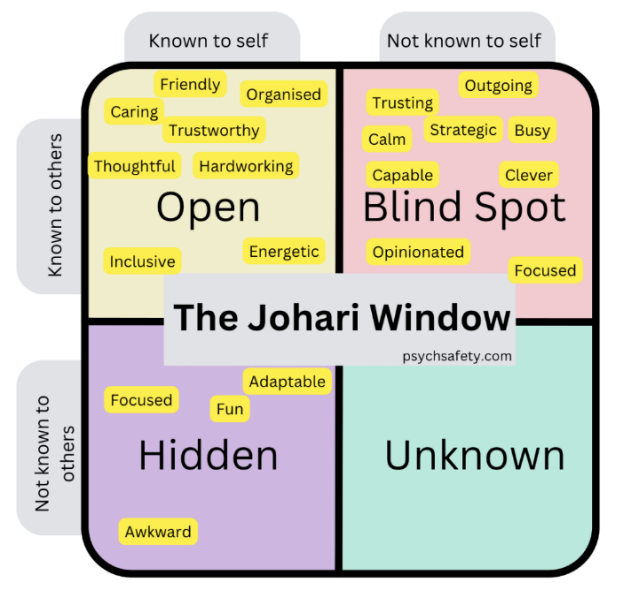
When interpreted through the Johari Window framework, the findings illustrate how Close Friends reshapes adolescents’ self-awareness and disclosure practices. The feature expands the open self within a limited audience by enabling selective sharing of emotions and experiences. At the same time, adolescents actively maintain a hidden self by withholding sensitive information.
Feedback from trusted peers contributes to reducing the blind self, as adolescents gain insight into how their expressions are perceived. In several cases, emotional expression on Close Friends facilitated self-reflection, allowing adolescents to recognize feelings they had not previously articulated, engaging aspects of the unknown self. Thus, Close Friends functions as a dynamic space where self-knowledge and relational awareness are continuously negotiated.
| Theme | Empirical Evidence from Field | Analytical Interpretation |
| Perceived safety and intimacy | Participants felt more comfortable sharing emotions on Close Friends than public Stories | Close Friends functions as a semi-private micro-public enabling emotional safety |
| Selective self-disclosure | Disclosure limited to trusted peers; personal content avoided in public Stories | Self-disclosure is strategic and relational, shaped by trust |
| Emotional validation | Supportive feedback interpreted as care and understanding | Close Friends operates as an emotionally responsive communication space |
| Negotiated privacy | Sensitive issues withheld despite perceived safety | Privacy is managed through continuous boundary negotiation |
| Johari Window dynamics | Feedback and reflection enhanced self-awareness | Close Friends expands open self while preserving hidden self |
Discussion
Overall, the results demonstrate that Instagram’s Close Friends feature is meaningfully integrated into teenagers’ everyday communication practices. It operates as a socially constructed space where adolescents negotiate intimacy, trust, emotional expression, and identity. Rather than eliminating privacy concerns, Close Friends enables controlled vulnerability, allowing adolescents to balance openness and self-protection. These findings contribute to communication theory by illustrating how digital affordances reshape interpersonal disclosure processes within specific social contexts.
Conclusion and Implications
This study concludes that Instagram’s Close Friends feature is interpreted by teenagers not merely as a technical option for limiting audiences, but as a meaningful communicative space that enables controlled self-disclosure. Teenagers in Jembatan Besi Subdistrict actively use this feature to balance emotional expression and privacy by selectively sharing personal content with trusted peers. The findings demonstrate that self-disclosure through Close Friends is strategic, relational, and context-dependent, shaped by perceived safety, trust, and anticipated feedback. Through this process, adolescents expand their “open self” within a limited audience while maintaining boundaries around more sensitive aspects of their personal lives, confirming the relevance of the Johari Window framework in contemporary digital communication contexts.
Theoretically, this study contributes to communication and social media scholarship by highlighting how platform affordances mediate interpersonal disclosure processes among adolescents. The results extend self-disclosure theory by showing that openness in digital environments is not a linear movement toward greater transparency, but a negotiated practice of controlled vulnerability. Close Friends functions as a semi-private micro-public that supports emotional validation and identity exploration while simultaneously reinforcing boundary management. These findings underscore the importance of examining not only what adolescents disclose online, but how they interpret and manage disclosure spaces in relation to audience composition and social context.
Practically, the findings carry implications for social media platform design, digital literacy education, and youth well-being initiatives. Platform developers should recognize the value of features that allow nuanced audience segmentation and provide clearer cues about content circulation risks. Educators and parents can use these insights to foster adolescents’ critical awareness of digital self-disclosure, emphasizing trust, consent, and boundary management rather than discouraging online expression altogether. Finally, policymakers and youth practitioners should acknowledge that for adolescents in densely populated urban environments, digitally mediated spaces such as Close Friends can serve as important resources for emotional support and interpersonal connection, warranting thoughtful integration into broader strategies for adolescent mental health and digital well-being.
References
- Darr, C. R., & Doss, C. R. (2022). Fake one is the real one: Finstas, authenticity, and context collapse. Journal of Computer-Mediated Communication, 27(4), zmac009. DOI ↗ Google Scholar ↗
- Kim, J., Wolfe, R., Lee, M. H., & Hiniker, A. (2025). Trust-enabled privacy: Supporting adolescent boundary regulation on social media. Proceedings of SOUPS 2025. DOI ↗ Google Scholar ↗
- Livingstone, S., Stoilova, M., & Kelly, A. (2023). The benefits and risks of adolescent social media use. Nature Human Behaviour, 7(6), 913–925. DOI ↗ Google Scholar ↗
- Luft, J., & Ingham, H. (1961). The Johari Window: A graphic model of awareness in interpersonal relations. Human Relations Training News, 5(1), 6–7. DOI ↗ Google Scholar ↗
- Marwick, A. E., & boyd, d. (2023). Context collapse and the imagined audience revisited. Social Media + Society, 9(2). DOI ↗ Google Scholar ↗
- Moreno, M. A., Uhls, Y. T., & George, M. J. (2022). Online disclosure and adolescent mental health. Current Opinion in Psychology, 44, 101–106. DOI ↗ Google Scholar ↗
- Rideout, V., & Fox, S. (2024). Teens, social media, and emotional expression. Journal of Adolescent Research, 39(1), 3–25. DOI ↗ Google Scholar ↗
- Yao, Y., Taylor, S. H., & Ransom, S. L. (2024). Imagined audiences, affordances, and self-disclosure goals. Social Media + Society, 10(1). DOI ↗ Google Scholar ↗
- Zhang, Y., Shi, S., Guo, S., & Chen, X. (2021). Audience management and online turbulence. International Journal of Information Management, 56, 102233. DOI ↗ Google Scholar ↗
- Braun, V., & Clarke, V. (2021). Thematic analysis: A practical guide. Sage. DOI ↗ Google Scholar ↗
- Creswell, J. W., & Poth, C. N. (2018). Qualitative inquiry and research design: Choosing among five approaches (4th ed.). Sage. DOI ↗ Google Scholar ↗
- Darr, C. R., & Doss, C. R. (2022). Fake one is the real one: Finstas, authenticity, and context collapse in teen friend groups. Journal of Computer-Mediated Communication, 27(4), zmac009. DOI ↗ Google Scholar ↗
- Livingstone, S., Stoilova, M., & Kelly, A. (2023). The benefits and risks of adolescent social media use. Nature Human Behaviour, 7(6), 913–925. DOI ↗ Google Scholar ↗
- Yin, R. K. (2018). Case study research and applications: Design and methods (6th ed.). Sage. DOI ↗ Google Scholar ↗