Abstract
The impact of solvents on the demulsification efficiency of cashew nutshell liquid (CNSL) were determined using water, acetone, toluene and ethanol. Results obtained showed that the demulsification efficiency of CNSL on crude AB101 after solvent modification followed the trend water < acetone < toluene < ethanol. Water is the poorest modifying agent for CNSL primarily because of the poor solubility of CNSL in water compared to acetone and other solvents while ethanol is a better modifying agent (solvent) than acetone and toluene because it exhibits a better synergistic effect with CNSL derivatives which also contains hydroxyl or amine groups after modification. The impact of pH on the demulsification efficiency of CNSL was studied using sodium hydroxide and sulfamic acid respectively. CNSL maintained a neutral pH after modification with water, acetone, toluene and ethanol respectively however the pH of CNSL was alkaline and acidic after modification with sodium hydroxide and sulfamic acid respectively. CNSL with alkaline pH had better demulsification efficiency than those with neutral pH because of their ability to break bonds in organic structures potentially forming soluble phenolic salts which helps separate oil from water. On the other hand, CNSL with acidic pH had better demulsification efficiency than those with alkaline pH because of their ability to form acidic environment which is crucial for specific chemical modifications of CNSL components like cardinol and anacardic acid to produce effective demulsifier agents. Analyses were carried out using a different crude oil AB336 but the same demulsifier and modifying agents to ascertain the influence of the crude on the solvent and pH effects. Results obtained showed the same trend as observed with the initial crude AB101 indicating that the solvent and pH effects were consistent with different crudes. The demulsification efficiencies of CNSL influenced by solvent and pH effects also had impacts on some physicochemical characteristics of CNSL. The higher the demulsification efficiencies of CNSL the lower their saponification value and the higher the total acid number (TAN) and iodine values. The kinematic viscosity and specific gravity of the CNSL did not influence their demulsification efficiency in any way as there is no specific trend that connects the kinematic viscosity and specific gravity to the demulsification efficiency. The unmodified CNSL had the least demulsification efficiency while the synthetic demulsifier DMT05 had the highest efficiency than all the modified CNSL demulsifiers however the health and environmental advantage of using organic CNSL as demulsifiers outweighs the advantage from the use of synthetic demulsifiers.
Keywords
Demulsifier solvent crude oil total acid number acidic alkaline.
Introduction
Solvent effects refer to mechanisms employed by a solvent in regulating chemical processes through interacting with reactants, intermediates and products thereby altering the reaction rates, equilibria and selectivities. Intermolecular forces within the solvent such as ion-dipole and hydrogen bond play predominant roles in influencing the effect of solvents on the thermodynamic and kinetic outcomes of a reaction by favouring specific pathways or product formation (Gandhi et al., 2012). Solvents can be classified into several categories based on a number of factors, for instance they are classified into polar protic, polar aprotic and nonpolar solvents based on their polarity (Ugi et al., 2023; Ugi et al., 2025; Wordu et al., 2023; Sammy et al., 2023; Benedict and Fredrick, 2023, Benedict et al., 2022; Ugi et al., 2023; Ugi et al., 2026; Ugi et al., 2021; Igwe et al., 2026; Ogolo et al., 2026). Classification based on polarity and molecular structure classifies solvents by their interaction with other substances as substances with similar polarities tend to dissolve each other. Polar protic solvents have positive and negative charges separated from each other with the propensity to donate protons, water and alcohols fall under this category (Gregory et al., 2024). On the other hand, polar aprotic solvents have a separation of charges but cannot donate protons example is dimethyl sulphoxide (DMSO). Nonpolar solvents have no charge separation and are best for dissolving nonpolar solvents, examples are benzene, alkane, toluene etc (Gandhi et al., 2012).
Solvents can also be classified into organic and inorganic based on the presence or absence of carbon atoms in the solvent’s chemical structure. Inorganic solvents do not contain carbon, examples are water, ammonia etc while organic solvents contain carbon and can be further classified into hydrocarbons, oxygenated solvents and halogenated carbons (Bergin et al., 2009). Solvents can also be classified into classes 1, 2 and 3 based on their risk and toxicity. Class 1 solvents have high toxicity, they are known human carcinogens and should be avoided example benzene, carbon tetrachloride etc. while class 2 solvents have moderate toxicity however are still associated with potential hazards such as severe heath effects like neurotoxicity. Examples are acetonitrile, chloroform etc. Class 3 solvents on the other hand have low toxic potential to humans and are generally considered safe, examples are acetone, ethanol, 1-butanol etc. Solvents can also be further classified into green and aqueous solvents based on their sources, origin and properties (Gregory et al., 2024).
The pH which is also known as the potential or power of hydrogen determines the acidity or basicity of an aqueous solution on a logarithmic scale from 0 to 14 where a pH below 7 is acidic, 7 is neutral and above 7 is basic or alkaline. The influence of pH and solvents in chemical reactions and processes are quite interrelated as such solvent effects can be altered by the initial or after impact of the pH within a system and vice versa, for instance pH affects the ionization state of molecules which in turn determines their interaction with different solvents (Al-Sabagh et al., 2016; Chikwe and Igwe, 2024). Solvents on the other hand through their polarity and complex-forming abilities can also alter the local environment and effect of pH thereby leading to changes in solubility, biological activity and even material structure such as proteins (Abdulkadir, 2010). Cashew nutshell liquid (CNSL) is a versatile by-product obtained from cashew, it is the outer shell of the cashew nuts which are part of the cashew nut fruit along with the cashew apples, these shells contain viscous liquid released on steaming raw cashew nuts (Olife et al., 2013). Cashew nutshell liquid (CNSL) is as useful as the nuts, apple, and the bark of the cashew tree, they are used in polymer-based industries for friction linings, paints, laminating resins, surfactants and varnishes etc. Cashew nutshell liquid has also found wide use as a demulsifier in the oil and gas industry (Victor-Oji et al., 2019). Several research have confirmed its ability to separate water from crude oil emulsion; however, studies have also shown some limitations in its demulsification capacity when compared with synthetic grade demulsifiers (Lubi and Thachi, 2000). There have also been reported cases of variations in its demulsification efficiency with certain crude oil from different sources as well as with different solvents both as an extraction solvent and modifying agents (Abdulredha et al., 2020). This study gives an insight on the impact of different classes of solvents (as modifying agents) as well as pH on the demulsification efficiency of CNSL. The study is also aimed at evaluating the impact of solvent and pH modifications on the physicochemical characteristics of CNSL as well as the impact of these characteristics on its demulsification efficiency. The effects of the crude on the demulsification efficiency of the demulsifier (CNSL) will also be evaluated.
2.Materials And Methods
2.1 Sample Collection and Preparation
Cashew nuts from cashew (Anacardium Occidentale) were obtained from a village in Agwata local government area of Anambra state Nigeria. The crushed cashew nutshells were weighed (350 g) and packed in the soxhlet extractor thimble using a whatman filter paper and extracted by refluxing with n-hexane at 60-65 ℃ until the solvent becomes clear in the thimble. The extract was then subjected to solvent recovery at 40-50 oC using a rotary evaporator. The percentage yield was calculated using the equation 1:
2.2 Modification of CNSL With Solvent
The extracted CNSL weighing 30 g was combined with 30 mL ethanol in a reaction flask. Ethanol which is a poly protic solvent in this case serves as the modifying agent. A 5 mL sulphamic acid was added to the mixture as catalyst and the entire mixture heated to a temperature of 120 0C with the mixture continuously stirred for an hour. The water of esterification produced during the reaction was collected as a byproduct. The reaction mixture was cooled to room temperature resulting to a phase separation. The upper modified layer which was the desired product was decanted and washed with water to remove water soluble impurities. A 5 ml petroleum ether (a non-polar solvent) was added to selectively dissolve and extract the non-polar components of CNSL. The non-polar solvent was evaporated to obtain the final modified product. This reaction was repeated using acetone (poly aprotic), toluene (non-polar and organic), water (inorganic) as modifying agents. The reaction was also repeated using acidic (sulfamic acid) and alkaline (sodium hydroxide) as modifying agents to determine the impact of pH on the demulsification efficiency of CNSL (Victor-Oji et al., 2019).
2.3 Determination of Water content of Crude Emulsion
The water content of two crude oil samples (AB101 and AB336) obtained from Niger Delta Nigeria was determined using Rotanta 460R Petroleum centrifuge. The test was carried out to ascertain the volume of water in the crude. A 50 ml of demulsifier (CNSL) was introduced into six (6) calibrated 200 ml Teflon-stoppered bottles with each bottle labelled according to the concentration of demulsifier introduced into the bottle. The different concentrations of demulsifier namely 5, 10, 15, 20 and 25 ppm were obtained using the modifying solvents as dissolving solvents respectively with the sixth bottle having no concentration of the demulsifier but only the dissolving solvent. A 100 ml crude oil sample was poured into each centrifuge bottle and a 5 ml demulsifier with specific concentration was introduced into the crude. The crude oil containing the demulsifier was agitated to ensure homogeneity and then introduced into the trunnion cups on opposite sides of the petroleum centrifuge to maintain balanced condition. The centrifuge bath was set at 60 0C with a minimum relative centrifugal force of 1200 rpm and started to spin for 5 minutes. The analysis was repeated for different concentrations of demulsifer, dimulsifier pH, spinning time and demulsifier type to ascertain the demulsification efficiency. The volumes of water and oil in each tube were read and recorded to the nearest 0.05 ml (ASTM D4007, 2022; ASTM D664, 2024).
2.4 Determination of the Total Acid Number (TAN) of Modified and Unmodified CNSL
Total acid number (TAN) in demulsifier sample was determined by Potentiometric titration. A blank test was carried out by adding 125 mL of toluene, pure water and 2-propanol (titration solvent) in a volumetric ratio of 100 : 1 : 95 into a 200 mL beaker, nitrogen gas was blown onto the surface with a flow rate of 200 L/min to eliminate the influence of CO2 in air, titration was carried out with 0.1 mol/L potassium hydroxide 2-propanol solution to measure blank level. Actual measurement was carried out by weighing 20 g of demulsifier sample (approximately 25 mL) into a 200 mL beaker, 125 mL of the titration solvent was added, nitrogen gas was blown to the surface of the solution at a flow rate of 200 L/min and then titrate with 0.1 mol/L potassium hydroxide 2-propanol (reagent) to measure the total acid number (ASTM D7042, 2025).. TAN can be calculated using equation 1 as shown below:
Where: EP1=Titer for blank (mL)
BL1=End point of blank (mL)
TF=Titration factor of reagent (mL)
C1=Concentration conversion coefficient
K1=Unit conversion coefficient
S=Weight of sample (g)
2.5 Determination of the Kinematic Viscosity and Specific Gravity of Modified and Unmodified CNSL
The cells of the Anton Paar densitometer were thoroughly cleaned using xylene. Appropriate temperature settings were initiated and exactly 2 ml of the test sample was introduced into the equipment through the connector installed for filling samples into the measuring cells with the use of a suitable syringe after proper agitation of the test sample. The start button was pressed to commence analyses. Density, kinematic viscosity, dynamic viscosity and specific gravity values were displayed at the end of the analyses and the readings recorded (ASTM D7042, 2025).
2.6 Determination of the Saponification value of Modified and Unmodified CNSL
A 1 gram of the sample was weighed in a beaker and then dissolved with 5 ml of ethanol. The solution was then transferred to a conical flask rinsing the beaker with more solvent. A 25 ml of 0.5 N KOH solution was added to the flask. A blank solution was prepared in a separate flask with all the reagents except the demulsifer (sample). Reflux condensers were attached to both flasks and then heated in a water bath for 30 minutes to ensure complete saponification. The flasks were cooled at room temperature. Some drops of phenolphthalein indicator were added to both flasks and the excess KOH was titrated with 0.5N HCl until the pink colour disappears. The volume of HCl used for both the blank and sample titration were recorded (ASTM D5558, 2023). The saponification value was calculated with the equation below:
SV=(B-A)*N* 56.1 W ………………………………………………(2)
Where: SV= Saponification value
B=Volume of HCl used for blank titration (ml)
A=Volume of HCl used for sample titration (ml)
N=Normality of HCl solution
56.1=Equivalent weight of KOH
W=Weight of demulsifier sample
2.7 Determination of the Iodine value of Modified and Unmodified CNSL
A 0.2 g of the sample (demulsifier) was introduced into an iodine flask and dissolved in chloroform. A 25 ml of Hanus solution was added to the flask to react with the double bonds in the sample. The flask was closed and allowed to react in the dark for 30 minutes. Potassium iodide was added to the flask to react with the remaining Hanus solution. The liberated iodine was titrated with a standardized sodium thiosulphate solution using starch as an indicator until the blue colour disappears. A blank titration was performed with the same reagent except the sample (ASTM D664, 2024). The iodine value was calculated using the equation below:
Where: B=Volume of sodium thiosulphate solution for the blank (ml)
S=Volume of sodium thiosulphate solution for the sample (ml)
N=Normality of sodium thiosulphate solution
W=Weight of demulsifier sample (grams)
12.69=Conversion factor
2.7 pH Determination of Modified and Unmodified CNSL
The pH meter and associated electrodes were standardized using two reference buffer solutions within the range of the anticipated sample pH. The sample measurement was made under strict controlled conditions and prescribed techniques. The already calibrated electrodes were immersed into the sample. As soon as the electrode output stabilizes, the stability indicator appears displaying the pH and temperature (ASTM E70, 2024).
3.Results And Discussion:
The impact of different classes of solvents (as modifying agents) on the demulsification efficiency of CNSL on two different crudes (AB101 and AB336) were unveiled in the results obtained. Table 1 shows the % of water separated from crude AB101 within a one-hour period with ten (10) minutes interval using different concentrations of unmodified CNSL as demulsifier.
Table 2 shows the % of water separated from the same crude (AB101) within a one-hour period with ten (10) minutes interval using different concentrations of CNSL modified with water as demulsifier. Tables 3, 4 and 5 show the % of water separated from crude AB101 within a one-hour period with ten (10) minutes interval using different concentrations of CNSL modified with acetone, toluene and ethanol respectively. Results obtained from Tables 1,2,3,4 and 5 (illustrated as plots 1, 2, 3, 4 and 5 respectively) show the impact of different solvents on the demulsification efficiency of CNSL when used as a modifying agents at different concentrations of the demulsifiers and at different time intervals. From the results obtained it can be deduced that water is the poorest modifying agent for CNSL primarily because of the poor solubility of CNSL in water compared to acetone and other solvents (Victor-Oji et al., 2019).
Acetone for instance is a highly effective solvent for CNSL than water due to its polarity which allows it to dissolve a wide range of organic phenolic compounds such as anacardic acid, cardanol and cardol found in CNSL. Toluene is a better solvent than acetone as a modifying agent in CNSL based demulsifiers because of its aromatic nature (Opawale, 2009). Demulsifiers dissolved in aromatic solvents show very good effect on crude emulsions because the aromatic structure of toluene contributes to better interaction and performance within the complex environment of crude oil emulsions (Adeyanju and Oyekunle, 2017). Acetone is a better solvent than ethanol as a modifying agent for CNSL if the aim is to maximize yield, achieve specific chemical separations or enhance certain properties in applications like biofuels, however ethanol is a better modifying agent for CNSL-based demulsifiers than acetone because of the hydroxyl group in alcohols like ethanol which provides a critical synergetic effect with CNSL in improving demulsification efficiency. Ethanol provides a more significant performance boost in demulsification applications than acetone (Ike et al., 2021; Gregory et al., 2024). Ethanol is a better modifying agent (solvent) than toluene for CNSL because it exhibits a better synergistic effect with CNSL derivatives which also contains hydroxyl or amine groups after modification. The synergy between ethanol and CNSL derivatives enhances the demulsifier’s ability to weaken and rupture the interfacial film of water-in oil emulsions allowing for faster coalescence and water separation (Ihad et al., 2014). Figure 1 show plots of the demulsification efficiencies of unmodified CNSL and modified CNSL on crude AB101 using water, acetone, toluene and ethanol as solvents.
Results obtained from Tables 6 and 7 show the % of water separated from crude AB101 within a one-hour period with ten (10) minutes interval using different concentrations of CNSL modified with sodium hydroxide and sulfamic acid respectively. Results obtained show that the impact of solvents (as modifying agent) on the demulsification efficiency of CNSL which reflected the quantity of water separated from the crude followed the trend water < acetone < toluene < ethanol.
Comparing results presented as plots 5 and 6 which are derived from Tables 5 and 6 it can be deduced that CNSL modified with sodium hydroxide possessed better demulsification efficiency than CNSL modified with ethanol solvent. Though sodium hydroxide not typically used as a solvent for CNSL act as a catalyst or reactant in the chemical modification of CNSL. Sodium hydroxide acts as an alkaline agent with the ability to convert the pH of the CNSL demulsifier from neutral to alkaline. Alkaline agents can break bonds in organic structures potentially forming soluble phenolic salts which helps separate oil from water (Copini et al., 2020). Comparing results presented as plots 6 and 7 which are derived from Tables 6 and 7 it can be deduced that sulfamic acid is a better reactant / catalyst for enhancing the demulsification efficiency of CNSL than sodium hydroxide because its use as an acid catalyst avoids formation of a highly viscous, unmanageable mixture that occurs when CNSL reacts with aldehydes in the presence of an alkali catalyst like sodium hydroxide. Sodium hydroxide acts as a base catalyst while sulfamic acid functions as an acid catalyst. The acidic environment is crucial for specific chemical modifications of CNSL components like cardinol and anacardic acid to produce effective demulsifier agents (Opawale, 2009). Figure 2 show plots of the demulsification efficiencies of modified CNSL on crude AB101 using Sodium hydroxide and sulfamic acid as modifying agents
The synthetic demulsifier (DMT05) used in Table 8 showed a better demulsification efficiency than CNSL based demulsifier modified with sulfamic acid used in Table 7 however the health and environmental impact from synthetic demulsifiers do not justify the slight advantage obtained from using them as opposed to organic demulsifiers like CNSL which are more environmentally friendly (Hammed et al., 2008). Figure 3 shows plot of the demulsification efficiency of synthetic demulsifier on crude AB101.
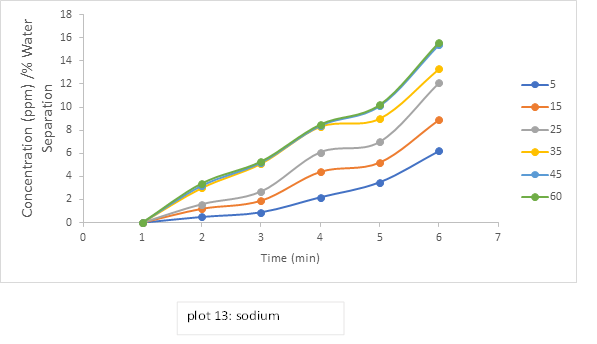
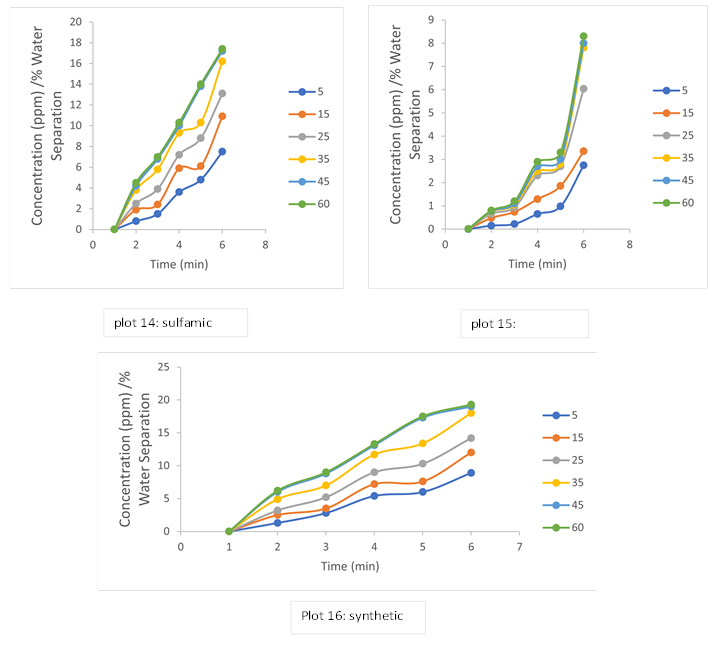
Experiments were carried out to ascertain the impact of solvents and pH on CNSL using a different crude (AB336) with lower water content but the same solvents and reactants / catalyst. Results obtained from Tables 9, 10, 11, 12, 13, 14, 15 and 16, presented as plots 9, 10, 11, 12, 13, 14, 15 and 16 respectively showed the same trend of solvent / pH impact seen with crude AB101 verifying that the solvent / pH effects on CNSL demulsifiers are consistent irrespective of the nature and source of crude. Figure 4 shows plots of the demulsification efficiencies of unmodified and modified CNSL on crude AB336 using different solvents (water, acetone, toluene and ethanol respectively) while Figure 5 shows plots of the demulsification efficiencies of unmodified and modified CNSL on crude AB336 using sodium hydroxide and sulfamic acid as modifying agents. Figure 6 shows the demulsification efficiency of synthetic demulsifier on crude AB336
The average physicochemical characteristics of the unmodified and modified CNSL demulsifier were obtained in Table 17 to ascertain the solvent / pH impact on these physicochemical characteristics and by extension the demulsification efficiency of the CNSL demulsifier. Results obtained from Table 17 shows that the CNSL demulsifier maintained a neutral pH when modified with water, acetone, toluene and in its unmodified state but however became alkaline and acidic when treated with sodium hydroxide and sulfamic acid respectively. The total acid number (TAN) and iodine value of the CNSL demulsifiers increases with increase in the demulsification efficiency of the CNSL demulsifier with the synthetic demulsifier (DMT05) having the highest TAN and iodine values respectively, while the saponification value of the CNSL demulsifiers reduces with increase in their demulsification efficiencies with the synthetic demulsifier having the least saponification number. The kinematic viscosity and specific gravity of the CNSL demulsifier did not influence their demulsification efficiency in any way as there is no specific trend that connects the kinematic viscosity and specific gravity to the demulsification efficiency.
TAN is a very important characteristic that influences the demulsification efficiency of CNSL. The primary components responsible for the surface activity as well as demulsification efficiency of CNSL are anacardic acid, cardol and cardanol and these components especially anacardic acid contributes significantly to the TAN value. The saponification number of CNSL provides an indirect measure of the average weight and chain length of its constituent fatty acids. The lower the saponification number the longer the fatty acid chain. Longer fatty acid chains lead to a higher molecular weight which can be beneficial for creating a more stable interaction at the oil-water interface and this is a key requirement for effective demulsifiers.
The iodine value of CNSL indicates its degree of unsaturation which significantly influences its performance as a demulsifier. The higher the iodine value of the demulsifier, the higher its potential for chemical reactions such as polymerization, oxidation or coupling reactions which increases the effectiveness of the demulsifying agent.
4. Conclusion
Modifying agents in form of solvents influences the demulsification efficiencies of organic demulsifiers like CNSL through the interaction between the functional groups of these solvents and the active ingredients of the CNSL. The polarity of the solvents which enables them to dissolve a wide range of phenolic compounds such as anacardic acid, cardol and cardanol in CNSL also play a predominant role in influencing the demulsification efficiency of CNSL. The aromatic nature of the solvents plays very vital roles in adequately dissolving the CNSL based demulsifiers thereby contributing to better interaction and performance within the complex environment of crude oil emulsions. Modifying agents such as sodium hydroxide and sulfamic acid altered the pH of CNSL based demulsifier from neutral to alkaline and acidic respectively. CNSLbased demulsifiers with alkaline pH produced better demulsification efficiencies than those with neutral pH, on the other hand those with acidic pH had better demulsification efficiencies than those with alkaline pH. The demulsification efficiencies of CNSL influenced by solvent and pH effects also had impacts on some physicochemical characteristics of CNSL. The higher the demulsification efficiencies of CNSL the lower their saponification value and the higher the TAN and iodine values. The kinematic viscosity and specific gravity of the CNSL demulsifier do not influence their demulsification efficiency in any way as there is no specific trend that connects the kinematic viscosity and specific gravity to the demulsification efficiency.
5.Acknowledgements
Department of Chemical / Petrochemical Engineering, River State University and Pure and Industrial Chemistry University of Port Harcourt
References
- Abdulkadir, M. (2010). Comparative analysis of the effect of demulsifiers in the treatment of crude oil emulsion. ARPN Journal of Engineering and Applied Sciences, 5(6), 67-73. Google Scholar ↗
- Abdulredha, M.M., Aslina, H.S. & Luqman, C.A. (2020). Overview on petroleum, emulsions formation,influence and demulsification treatment techniques. Arabian Journal of. Chemistry, 13(1), 3403-3428. Google Scholar ↗
- Adeyanju, O.A. & Oyekunle, L.O. (2017). Optimum demulsifier formulations for Nigerian crude oil-water emulsions. Egyptian journal of petroleum, 27(4) Google Scholar ↗
- Al-Sabagh, A.M., El-Kafrawy, A.F., Noor El-Din, M.R., El-Tabay, A.M. & Fakher, E.M. (2016). Some factors affecting the demulsification efficiency of modified alkyl benzene sulfonic acid in petroleum industry. Indian Chemical Engineer, 58(1), 61-78. Google Scholar ↗
- American Standard for Testing and Materials (2022). Standard test method for water and sediment in crude oil by centrifuge method. ASTM D4007, 7-9. Google Scholar ↗
- American Standard for Testing and Materials (2024). Standard test method for acid number of petroleum products by potentiometric titration. ASTM D664, 7-9. Google Scholar ↗
- American Standard for Testing and Materials (2025). Standard test method for dynamic viscosity and density of liquids by stabinger viscometer (and the calculation of kinematic viscosity. ASTM D7042, 5-7. Google Scholar ↗
- American Standard for Testing and Materials (2023). Standard test method for determination of the saponification value of fats and oils. ASTM D5558, 5-7. Google Scholar ↗
- American Standard for Testing and Materials (2024). Standard test method for pH of aqueous solutions with the glass electrode. ASTM E70, 4-6. Google Scholar ↗
- Bergin, S.D., Sun, Z., Rickard, D., Streich, P.V., Hamilton, J.P. & Coleman, J.N. (2009). Multicomponent Solubility Parameters for Single-Walled Carbon Nanotube−Solvent Mixtures. American Chemical Society Nano journal, (3) (8): 2340–2350 Google Scholar ↗
- Benedict U. Ugi, and Fredrick Bekong Ugi (2023). 817M40T Mild Steel Corrosion Remediation in 0.5 M Hydrochloric Acidic Environment Using Alkaloid and Flavonoid Extracts of Salvia Officinalis. Physical Chemistry Research, 12(1), 121-133. Google Scholar ↗
- Benedict U. U., Faith S. P., V. Bassey, Fredrick Ugi (2022). Expired CYP3A Inhibitor (Ritonavir) as Potential Corrosion Mitigator Of Petroleum Product Trunk Pipeline (20cb-3) in the Oil and Gas Sector. Conference: Chemical Society of Nigeria South-South Zonal Conference, Workshop and Exhibition 2022, at: Asaba, Delta State. Google Scholar ↗
- Chikwe, T.N. & Igwe, C.E. (2024). Analytical evaluation of oil and water obtained from demulsification of crude oil using cashew (Anacardium occidentale) nutshell liquid. Scientia Africana, 23(3): 153-160 Google Scholar ↗
- Copini, S., Micheletti, A.C., De Souza, A.M., Gomes, R.S., De Lima, D.P. & Beatriz, A. (2020). Synthesis and Antioxidant and Antimicrobial Properties of β-Hydroxy Sulfides, Sulfoxides, and Sulfones Derived from Cardanol and Glycerol Derivatives. Journal of Brazilian Chemical Society, 31, 2569–2582. Google Scholar ↗
- Gandhi, T., Patel, M. & Dholakiya, B.K. (2012). Studies on effect of various solvents on extraction of cashew nutshell liquid (CNSL) and isolation of major phenolic constituents from extracted CNSL. Journal of Natural Product Plant Resources. (2):135-142. Google Scholar ↗
- Gregory, K.P., Wanless, E.J., Webber, G.B., Craig, V.S.J. & Page, A.J. (2024). A first-principles alternative to empirical solvent parameters. Physical Chemistry Chemical Physics, 26 (31): 20750–20759. Google Scholar ↗
- Hammed, L.A., Anikwe, J.C. & Adededji, A.R. (2008). Cashew Nuts and Production Development in Nigeria. American Eurasian Journal of Scientific Research, 3 (1), 54–61 Google Scholar ↗
- Igwe C. I., Ugi F.B., Chikwe T. N., Gloria T. T., Ugi B. U., James B. J. (2026) Modeling and Performance Assessment of Produced Water Injection Efficiency in Homogeneous and Heterogeneous Reservoir System as an Enhanced Oil Recovery Approach, International Journal of Petroleum and Gas Engineering Research, 9(1),81-119 Google Scholar ↗
- Idah, P.A., Simeon, M.I. & Mohammed, M.A. (2014). Extraction and characterization of cashew nut (Anacardium occidentale) oil and cashew shell liquid oil. Academic Research International, 5(3):50. Google Scholar ↗
- Ike, D.C., Ibezim-Ezeani, M.U. & Akaranta, O. (2021). Cashew nutshell liquid and its derivatives in oil field applications: an update. Green Chemistry Letters and Reviews, 14, (4), 620-633. Google Scholar ↗
- Lubi, M.C. & Thachil, E.T. (2000). Cashew Nutshell Liquid (CNSL)-a Versatile Monomer for Polymer Synthesis. Designed. Monomers and Polymers, 3 (2), 123–153. Google Scholar ↗
- Olife, I.C., Jolaoso, M.A. & Onwualu, A.P. (2013). Cashew processing for economic development in Nigeria. Agricultural Journal, 8(1), 45-50. 391 Google Scholar ↗
- Ogolo Doris Bruce, Ehirim Emmanuel O., Goodhead T. O., Ugi Fredrick B. (2026). Modeling and Kinetics of Polypropylene Plastic Wastes Depolymerization System to Propylene in Autoclave Recycling Reactor. International Journal of Scientific Research and Management (IJSRM), 14(3), 67-77. DOI: DOI ↗ Google Scholar ↗
- Opawale, A.O. (2009). Optimising the Demulsification of Heavy Crude Oil: A means of Improving its Flow through Flowlines, Manifolds and Processing Facilities. Proceedings of the 11th Offshore West Africa Conference and Exhibition, Abuja. Google Scholar ↗
- Sammy, T. D., Ehirim, E. O. & Ugi, F. B. (2023). Modeling the Effect of Temperature for Enhanced Oil Recovery (EOR) using Steam Injection Technique. Journal of Newviews in Engineering and Technology. 5(1), 22 – 31. Google Scholar ↗
- Ugi B. U., Obeten M. E., Bassey V. M., BoEkom E. J., Omaliko E. C., Ugi F. B., Uwah I. E. (2021). Quantum and Electrochemical Studies of Corrosion Inhibition Impact on Industrial Structural Steel (E410) by Expired Amiloride Drug in 0.5 M Solutions of HCl, H2SO4 and NaHCO3. Moroccan Journal of Chemistry, 9(4), 677-696 677 Google Scholar ↗
- Ugi, F. B., Ehirim, E. O., Wordu, A. A. and Ugi, B. U. (2023). Modelling, design and kinetics of novel Fred-Ugi environmental wastes converter reactor plant for crude oil distillates, minerals and petrochemical synthesis, International Journal Environmental Engineering, 12(2), 159–191. Google Scholar ↗
- Ugi F.B., Benedict U. Ugi & Gloria T.Tamunotonye (2025). Design of Mechanically Agitated Fermenter for a Daily Ten Tons Ethanol Production from Cool Feed Biomass. ENP Engineering Science Journal, 5(1), 61-69 Google Scholar ↗
- Ugi B. U, Bassey V. M., Ashishie P. B., Nandi D. O., and Ugi F. B. (2023) S275JR Mild Steel Corrosion Sites Deactivation in Sodium Sesquicarbonate Heavy Deposits Using Piperaquine as Alternative Inhibitor. Portugaliae Electrochimica Acta, 42,101-114 101 DOI ↗ Google Scholar ↗
- UGİ, B. U; OJİ, N. N; UGİ, F. B; UGI, D. U; TAMUNOTONYE, G. T (2026). Corrosion Inhibitor Potential of Tropical Milkweed (Asclepias Curassavica) Plant Leaf Extracts for Reinforced Bars in Chloride Concentrated Environment. J. Appl. Sci. Environ. Manage. 30 (2) 481-490 Google Scholar ↗
- Ugi F.B., Benedict U. Ugi & Gloria T. Tamunotonye (2025). Design of Mechanically Agitated Fermenter for a Daily Ten Tons Ethanol Production from Cool Feed Biomass. ENP Engineering Science Journal, 5(1), 61-69 Google Scholar ↗
- Victor-Oji, C.O., Chukwu, U.J. & Akaranta, O. (2019) Comparative Study of Cashew Nutshell Liquid and a Commercial Demulsifier for Treating Crude Oil Emulsions. Chemical Science International Journal. 2019; XX, 1–17. Google Scholar ↗
- Wordu, A. A; Briggs, M. I . F; Ugi, Fredrick. B; Ikenyiri P (2023). Thermodynamics, Kinetics and Equilibrium Analysis of Sulphur dioxide Oxidation in a Catalytic Reactor. Scientific Research Journal of Engineering and Computer Science, 3(3), 42-48 Google Scholar ↗
Appendix
| Concentration (ppm) /% Water Separation | ||||||
| Time (minutes) | (0 ppm) | 5 ppm | 10 ppm | 15 ppm | 20 ppm | 25 ppm |
| 5 | 0 | 0.50 | 0.80 | 2.20 | 3.10 | 4.50 |
| 15 | 0 | 0.90 | 1.10 | 3.20 | 4.20 | 6.90 |
| 25 | 0 | 1.20 | 1.50 | 3.90 | 5.20 | 7.80 |
| 35 | 0 | 1.30 | 1.80 | 4.40 | 6.00 | 9.20 |
| 45 | 0 | 1.35 | 1.90 | 4.90 | 6.70 | 10.80 |
| 60 | 0.02 | 1.40 | 1.95 | 5.00 | 7.10 | 11.50 |
| Concentration (ppm) /% Water Separation | ||||||
| Time (minutes) | (0 ppm) | 5 ppm | 10 ppm | 15 ppm | 20 ppm | 25 ppm |
| 5 | 0 | 0.50 | 0.80 | 2.20 | 3.10 | 4.50 |
| 15 | 0 | 0.90 | 1.10 | 3.20 | 4.20 | 6.90 |
| 25 | 0 | 1.20 | 1.55 | 3.90 | 5.20 | 8.00 |
| 35 | 0 | 1.30 | 1.80 | 4.40 | 6.00 | 9.50 |
| 45 | 0 | 1.35 | 1.92 | 5.30 | 7.30 | 11.80 |
| 60 | 0.02 | 1.38 | 1.95 | 5.50 | 7.50 | 12.00 |
| Concentration (ppm) /% Water Separation | ||||||
| Time (minutes) | (0 ppm) | 5 ppm | 10 ppm | 15 ppm | 20 ppm | 25 ppm |
| 5 | 0 | 0.90 | 1.40 | 3.70 | 5.20 | 6.80 |
| 15 | 0 | 1.50 | 2.00 | 4.50 | 7.30 | 8.80 |
| 25 | 0 | 1.90 | 3.70 | 6.60 | 9.40 | 10.50 |
| 35 | 0 | 2.10 | 4.50 | 8.60 | 10.50 | 12.30 |
| 45 | 0 | 2.80 | 5.00 | 9.50 | 11.00 | 12.80 |
| 60 | 0.02 | 3.00 | 5.20 | 9.50 | 11.20 | 13.00 |
| Concentration (ppm) /% Water Separation | ||||||
| Time (minutes) | (0 ppm) | 5 ppm | 10 ppm | 15 ppm | 20 ppm | 25 ppm |
| 5 | 0 | 4.10 | 6.70 | 7.40 | 10.20 | 11.80 |
| 15 | 0 | 6.20 | 8.20 | 9.20 | 12.00 | 13.50 |
| 25 | 0 | 7.50 | 9.50 | 11.30 | 14.40 | 15.70 |
| 35 | 0 | 9.30 | 11.90 | 12.50 | 15.90 | 17.30 |
| 45 | 0 | 11.60 | 13.60 | 14.30 | 17.50 | 19.10 |
| 60 | 0.02 | 11.80 | 13.90 | 14.80 | 18.00 | 19.60 |
| Concentration (ppm) /% Water Separation | ||||||
| Time (minutes) | (0 ppm) | 5 ppm | 10 ppm | 15 ppm | 20 ppm | 25 ppm |
| 5 | 0 | 4.10 | 6.80 | 8.40 | 10.80 | 12.20 |
| 15 | 0 | 6.50 | 8.50 | 10.20 | 12.40 | 14.60 |
| 25 | 0 | 8.20 | 10.10 | 12.10 | 14.90 | 16.20 |
| 35 | 0 | 10.40 | 12.50 | 13.10 | 16.40 | 18.10 |
| 45 | 0 | 12.00 | 13.90 | 15.30 | 18.50 | 21.80 |
| 60 | 0.02 | 12.20 | 14.20 | 15.50 | 18.90 | 22.20 |
| Concentration (ppm) /% Water Separation | ||||||
| Time (minutes) | (0 ppm) | 5 ppm | 10 ppm | 15 ppm | 20 ppm | 25 ppm |
| 5 | 0 | 6.00 | 9.70 | 13.00 | 14.70 | 16.50 |
| 15 | 0 | 8.20 | 11.40 | 15.80 | 16.90 | 18.40 |
| 25 | 0 | 10.10 | 13.30 | 17.90 | 18.70 | 20.10 |
| 35 | 0 | 11.60 | 15.00 | 19.50 | 20.00 | 22.10 |
| 45 | 0 | 13.00 | 16.50 | 20.20 | 22.10 | 23.80 |
| 60 | 0.02 | 13.40 | 17.00 | 20.50 | 22.40 | 24.00 |
| Concentration (ppm) /% Water Separation | ||||||
| Time (minutes) | (0 ppm) | 5 ppm | 10 ppm | 15 ppm | 20 ppm | 25 ppm |
| 5 | 0 | 5.50 | 10.10 | 14.70 | 17.50 | 20.50 |
| 15 | 0 | 8.30 | 12.90 | 16.50 | 19.90 | 22.40 |
| 25 | 0 | 10.70 | 14.60 | 18.50 | 21.40 | 24.50 |
| 35 | 0 | 13.4 | 16.30 | 21.30 | 23.50 | 26.20 |
| 45 | 0 | 14.80 | 18.50 | 22.50 | 25.00 | 28.50 |
| 60 | 0.02 | 15.00 | 18.70 | 22.70 | 25.20 | 28.70 |
| Concentration (ppm) /% Water Separation | ||||||
| Time (minutes) | (0 ppm) | 5 ppm | 10 ppm | 15 ppm | 20 ppm | 25 ppm |
| 5 | 0 | 5.50 | 10.10 | 14.70 | 17.50 | 20.50 |
| 15 | 0 | 8.30 | 12.90 | 16.50 | 19.90 | 22.80 |
| 25 | 0 | 10.70 | 14.60 | 18.90 | 21.40 | 25.00 |
| 35 | 0 | 13.40 | 17.00 | 21.30 | 24.10 | 27.80 |
| 45 | 0 | 15.80 | 19.70 | 23.40 | 26.70 | 29.50 |
| 60 | 0.02 | 16.00 | 20.00 | 23.60 | 27.00 | 29.80 |
| Concentration (ppm) /% Water Separation | ||||||
| Time (minutes) | (0 ppm) | 5 ppm | 10 ppm | 15 ppm | 20 ppm | 25 ppm |
| 5 | 0 | 0.22 | 0.31 | 0.93 | 1.38 | 3.20 |
| 15 | 0 | 0.63 | 0.95 | 1.78 | 2.94 | 4.90 |
| 25 | 0 | 0.85 | 1.21 | 2.89 | 3.79 | 7.78 |
| 35 | 0 | 0.9 | 1.30 | 3.50 | 4.50 | 9.10 |
| 45 | 0 | 1.00 | 1.50 | 3.60 | 4.70 | 9.50 |
| 60 | 0.01 | 1.00 | 1.60 | 3.80 | 4.80 | 9.70 |
| Concentration (ppm) /% Water Separation | ||||||
| Time (minutes) | (0 ppm) | 5 ppm | 10 ppm | 15 ppm | 20 ppm | 25 ppm |
| 5 | 0 | 0.22 | 0.31 | 0.93 | 1.38 | 3.20 |
| 15 | 0 | 0.63 | 0.95 | 1.78 | 2.94 | 4.90 |
| 25 | 0 | 0.85 | 1.21 | 2.89 | 3.79 | 7.78 |
| 35 | 0 | 1.00 | 1.83 | 3.88 | 4.99 | 9.10 |
| 45 | 0 | 1.10 | 2.00 | 4.20 | 5.70 | 10.80 |
| 60 | 0.01 | 1.15 | 2.10 | 4.50 | 5.90 | 11.00 |
| Concentration (ppm) /% Water Separation | ||||||
| Time (minutes) | (0 ppm) | 5 ppm | 10 ppm | 15 ppm | 20 ppm | 25 ppm |
| 5 | 0 | 0.28 | 0.44 | 1.25 | 2.10 | 4.10 |
| 15 | 0 | 0.71 | 1.19 | 2.86 | 3.81 | 6.83 |
| 25 | 0 | 1.08 | 1.78 | 4.36 | 5.55 | 10.50 |
| 35 | 0 | 1.55 | 2.68 | 5.11 | 6.34 | 10.80 |
| 45 | 0 | 1.60 | 3.00 | 5.50 | 6.70 | 12.20 |
| 60 | 0.01 | 1.80 | 3.20 | 5.70 | 6.90 | 12.50 |
| Concentration (ppm) /% Water Separation | ||||||
| Time (minutes) | (0 ppm) | 5 ppm | 10 ppm | 15 ppm | 20 ppm | 25 ppm |
| 5 | 0 | 0.38 | 0.6 | 1.78 | 2.90 | 5.30 |
| 15 | 0 | 0.85 | 1.48 | 3.34 | 4.37 | 7.67 |
| 25 | 0 | 1.25 | 2.31 | 5.20 | 6.21 | 11.23 |
| 35 | 0 | 2.00 | 3.50 | 6.00 | 7.10 | 11.60 |
| 45 | 0 | 2.10 | 3.8 | 6.30 | 7.50 | 13.10 |
| 60 | 0.01 | 2.20 | 3.9 | 6.50 | 7.60 | 13.40 |
| Concentration (ppm) /% Water Separation | ||||||
| Time (minutes) | (0 ppm) | 5 ppm | 10 ppm | 15 ppm | 20 ppm | 25 ppm |
| 5 | 0 | 0.50 | 0.90 | 2.20 | 3.50 | 6.20 |
| 15 | 0 | 1.20 | 1.90 | 4.40 | 5.20 | 8.90 |
| 25 | 0 | 1.60 | 2.70 | 6.10 | 7.00 | 12.10 |
| 35 | 0 | 3.00 | 5.10 | 8.30 | 9.00 | 13.30 |
| 45 | 0 | 3.20 | 5.20 | 8.40 | 10.10 | 15.40 |
| 60 | 0.01 | 3.40 | 5.30 | 8.50 | 10.20 | 15.60 |
| Concentration (ppm) /% Water Separation | ||||||
| Time (minutes) | (0 ppm) | 5 ppm | 10 ppm | 15 ppm | 20 ppm | 25 ppm |
| 5 | 0 | 0.80 | 1.50 | 3.60 | 4.80 | 7.50 |
| 15 | 0 | 1.90 | 2.40 | 5.90 | 6.10 | 10.90 |
| 25 | 0 | 2.50 | 3.90 | 7.20 | 8.80 | 13.10 |
| 35 | 0 | 3.80 | 5.80 | 9.30 | 10.30 | 16.20 |
| 45 | 0 | 4.20 | 6.80 | 10.00 | 13.80 | 17.20 |
| 60 | 0.01 | 4.50 | 7.00 | 10.30 | 14.00 | 17.40 |
| Concentration (ppm) /% Water Separation | ||||||
| Time (minutes) | (0 ppm) | 5 ppm | 10 ppm | 15 ppm | 20 ppm | 25 ppm |
| 5 | 0 | 0.15 | 0.22 | 0.65 | 0.98 | 2.75 |
| 15 | 0 | 0.48 | 0.74 | 1.29 | 1.86 | 3.35 |
| 25 | 0 | 0.66 | 0.94 | 2.31 | 2.70 | 6.04 |
| 35 | 0 | 0.75 | 1.05 | 2.50 | 2.80 | 7.80 |
| 45 | 0 | 0.77 | 1.10 | 2.70 | 3.00 | 8.00 |
| 60 | 0.01 | 0.80 | 1.20 | 2.90 | 3.30 | 8.30 |
| Concentration (ppm) /% Water Separation | ||||||
| Time (minutes) | (0 ppm) | 5 ppm | 10 ppm | 15 ppm | 20 ppm | 25 ppm |
| 5 | 0 | 1.30 | 2.80 | 5.40 | 6.00 | 8.90 |
| 15 | 0 | 2.50 | 3.50 | 7.20 | 7.60 | 12.00 |
| 25 | 0 | 3.20 | 5.20 | 9.00 | 10.30 | 14.20 |
| 35 | 0 | 4.90 | 7.00 | 11.70 | 13.40 | 18.00 |
| 45 | 0 | 6.00 | 8.80 | 13.10 | 17.30 | 19.00 |
| 60 | 0.01 | 6.20 | 9.00 | 13.30 | 17.50 | 19.30 |
| DEMULSIFIER | pH | TAN | Saponification Value | Iodine Value | Kin. Viscosity 0C | Specific Gravity |
| (mgKOH/g) | (mgKOH/g) | (mgI2/100g) | (Cp) | |||
| Unmodified CNSL | 7.00 | 52.00 | 204.00 | 136.00 | 495.00 | 0.9431 |
| CNSL modified with water | 7.40 | 56.00 | 142.00 | 144.00 | 453.00 | 0.9449 |
| CNSL modified with acetone | 7.20 | 58.50 | 140.00 | 142.00 | 478.00 | 0.9449 |
| CNSL modified with ethanol | 7.80 | 72.50 | 105.00 | 197.00 | 530.00 | 0.9528 |
| CNSL modified with toluene | 7.40 | 83.00 | 101.00 | 180.00 | 375.00 | 0.9530 |
| CNSL modified with sodium hydroxide | 9.20 | 95.00 | 68.50 | 276.00 | 410.00 | 0.9563 |
| CNSL modified with Sulfamic acid | 2.10 | 87.00 | 67.00 | 263.00 | 373.00 | 0.9560 |
| Synthetic demulsifier (DMT05) | 1.40 | 118.00 | 59.00 | 332.00 | 100.00 | 0.8930 |