Abstract
This study investigates the influence of Entrepreneurial Orientation (EO) on Innovation Performance, specifically examining the mediating roles of Big Data Analytics (BDA) and Digital Marketing Innovation (DMI) among Small and Medium-sized Enterprises (SMEs) in the southern border provinces of Thailand, specifically Yala, Pattani, and Narathiwat. A total of 105 respondents, comprising SME owners, upper-level managers, and head of Information Technology (IT), with strategic decision-making authority within the service, trade, and retail sectors, were analyzed using Structural Equation Modeling with Partial Least Squares (SEM-PLS). The findings reveal that Entrepreneurial Orientation has a significant direct positive influence on Competitive Advantage. Furthermore, Big Data Analytics and Digital Marketing Innovation both emerge as significant partial mediators in this relationship. The results underscore that while a proactive and innovative mindset is a critical organizational resource, its impact is significantly amplified when channeled through robust, structured data systems and interactive digital marketing capabilities. This study provides vital practical implications, emphasizing the need for SME owners to transition from basic digital adoption to active data-driven decision-making and continuous market experimentation to sustain long-term growth and competitiveness in resource-constrained environments.
Keywords
Entrepreneurial Orientation Big Data Analytics Digital Marketing Innovation Competitive Advantage
Introduction
In the modern economic landscape, the business competition environment is increasingly dynamic, and Small and Medium-sized Enterprises (SMEs) hold a pivotal position in the global economy. They make a substantial contribution to employment generation, representing around 60% of total global jobs, and play a vital role in driving national Gross Domestic Product (GDP) and overall economic well-being (1). In Thailand, SMEs are the foundation of a strong national economy, accounting for more than 99% of all businesses and employing over 80% of the national workforce (2). Despite their significant role, Thai SMEs face major challenges that limit their growth and sustainability, including restricted access to finance, high operational costs, and intense competition from large e-commerce firms that are reshaping consumer behavior (3). To survive and grow in this environment, enhancing competitive capability and transitioning toward an innovation-driven economy under the "Thailand 4.0" initiative is essential (4).
Despite the national push for innovation, pronounced regional disparities in SME distribution and performance remain evident. According to the Office of Small and Medium Enterprises Promotion (OSMEP), the southern border provinces namely Yala, Pattani, and Narathiwat record the lowest number of micro, small, and medium-sized enterprises nationwide, with only 68,723 entities (5). Beyond the issue of quantity, this region continues to experience a significant lag in technological adoption compared to the country’s major economic zones, with many businesses remaining concentrated in low value-added activities (6).
The rapid growth of data availability has positioned digital transformation as a crucial tool for improving decision-making. However, the implementation of Big Data Analytics (BDA) among Thai SMEs reveals a fragmented maturity landscape. A recent assessment indicates that while approximately 26% of surveyed Thai SMEs have reached a mature transformation stage utilizing advanced tools for predictive and prescriptive analytics the vast majority remain in transitional or pre-adoption phases (7). These lower-maturity firms often struggle to initiate systematic BDA implementation due to severe resource constraints, a shortage of specialized technical talent, and limited top management support, resulting in a continued reliance on basic spreadsheet tools (7, 8). While there are practical examples of data adoption across specific sectors such as trade SMEs utilizing point-of-sale (POS) systems to optimize inventory, and hospitality sectors leveraging digital footprints to forecast demand (9, 10) engagement remains largely superficial for many. A significant 65% of surveyed retail SMEs actively utilize digital platforms to broadcast content but currently lack the capability to systematically analyze the resulting consumer data or measure performance (11, 12). There remains a significant gap in the in-depth understanding of how to systematically apply big data analytics to support strategic decision-making and establish a sustainable competitive advantage (13).
A parallel execution gap is evident in their approach to customer engagement. While the adoption of digital platforms is widespread, engagement with Digital Marketing Innovation (DMI) remains largely superficial. Recent studies reveal that although 65% of surveyed retail SMEs implement early-stage digital marketing, they remain stalled at a foundational level. They actively utilize innovative digital platforms to broadcast content, but they currently lack the capability to systematically analyze the resulting consumer data, adapt to market trends, or effectively measure campaign performance (9, 10). Consequently, there remains a significant gap in understanding how SMEs can systematically integrate BDA and DMI to support strategic decision-making and establish a sustainable competitive advantage (13).
Entrepreneurial Orientation (EO) is an organizational-level concept that reflects a firm’s intention and capability to proactively identify and exploit emerging business opportunities under conditions of risk and uncertainty (14). While SMEs are recognized as a hotbed of entrepreneurship, possessing a set of higher-level EO capabilities alone does not always translate into increased innovation or competitive advantage. It is estimated that almost 50% of global SMEs are currently not translating their EO capabilities into actionable innovation, negatively impacting their competitive position (15). Emerging evidence suggests that the development of Big Data Analytics (BDA) and Digital Marketing Innovation (DMI) holds significant potential to address this gap, acting as the critical mechanisms that align product designs with customer needs and translate entrepreneurial intent into tangible market success (16, 17).
This study employed primary data obtained directly from relevant respondents representing Small and Medium Enterprises (SMEs) in the service, trade, and retail sectors of the southern border provinces of Thailand (Yala, Pattani, and Narathiwat). Data was collected through a survey method using a structured questionnaire from 105 respondents. All questions were measured using a five-point Likert scale. The target respondents met the following criteria: 1) operating as a founder, owner, or upper-level manager with strategic decision-making authority; 2) business established for at least three years; and 3) actively utilizing digital tools to analyze operational or performance data to drive predictive or prescriptive strategic decisions.
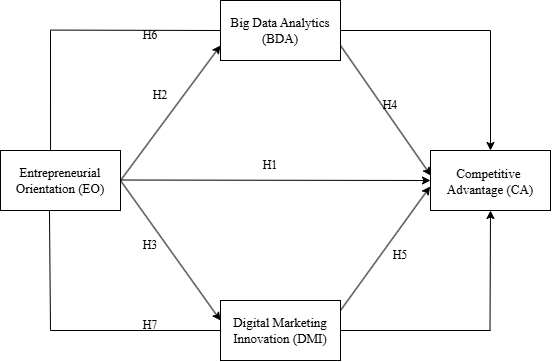
This study employed primary data obtained directly from relevant respondents representing Small and Medium Enterprises (SMEs) in the southern border provinces of Thailand, specifically Yala, Pattani, and Narathiwat. Data was collected through a survey method using a structured questionnaire as the primary research instrument from 105 respondents. All questions were measured using a five-point Likert scale, ranging from 1 = strongly disagreement to 5 = strongly agree. The target respondents met the following specific inclusion criteria: 1) the respondent must be a founder, owner, or upper-level manager with strategic decision-making authority; 2) the business must be an SME operating in the service, trade, or retail sector (including food and beverage, hospitality, education, medical, health and wellness, and wholesale); 3) the SME has been established and in active operation for at least three years to ensure organizational stability and sufficient history to assess innovation and competitive advantage over time (18); 4) the SME must report a net profit margin or sales growth that is above the industry average for the previous fiscal year to ensure the data accurately reflects the advantage of the variables (19); and 5) the SME must actively analyze operational or performance data (such as sales history, product profitability, or enrollment trends) to drive predictive or prescriptive strategic decisions, such as forecasting inventory, optimizing menus, or allocating resources.
Subsequently, to ensure the sample accurately represented the geographical distribution of the target population, the Proportionate Stratified Random Sampling technique was employed. This method is utilized when a population is composed of distinct, non-overlapping subgroups, ensuring that each subgroup's representation is directly proportional to its actual size within the broader population (20). Based on distribution data, the total population across these three provinces is 3,319 SMEs. To determine the specific sample size for each stratum (province), the proportion of each relative to the total population was calculated and multiplied by the predetermined target sample size of 105 respondents. Consequently, the sample allocation is distributed proportionally: Narathiwat accounts for the largest share at 36.4% (38 respondents), followed by Yala at 31.8% (34 respondents), and Pattani at 31.8% (33 respondents).
The collected data were analyzed using SmartPLS version 4.1.1.6 with the Structural Equation Modeling (SEM) approach. This method was applied to assess both measurement and structural models simultaneously, enabling the examination of relationships among latent variables. The use of SEM-PLS was justified by its suitability for complex models, predictive accuracy, and robustness in handling data from relatively small to medium-sized samples typical of SME research contexts.
Result
Of the 125 questionnaires distributed, 105 were confirmed valid after screening and subsequently used for data analysis. The following section outlines the demographic profile of the respondents along with key characteristics of their businesses.
| Characteristics | Frequence | Percentage |
|---|---|---|
| Strategic Data Analysis | ||
| Actively analyze data to drive decisions | 105 | 105 |
| Digital Tool Utilization Utilize digital tools or platforms Gender | ||
| 105 | 105 | |
| Male | 63 | 60.0 |
| Female | 42 | 40.0 |
| Age | ||
| Under 30 years | 20 | 19.0 |
| 30 - 40 years | 63 | 60.0 |
| 41 - 50 years | 19 | 18.1 |
| Over 50 years | 3 | 2.9 |
| Education Level | ||
| Bachelor's Degree | 75 | 71.4 |
| Master's Degree Doctorate | 27 | 25.7 |
| Doctoral degree | 3 | 2.9 |
| Working Position | ||
| Owner / Founder | 77 | 73.4 |
| Manager / Executive | 27 | 25.7 |
| Head of IT | 1 | 1.0 |
| Primary Target Customer | ||
| Residents in the southern border area | 89 | 84.8 |
| Visitors from other Thai provinces | 3 | 2.9 |
| All the above | 13 | 12.4 |
| Business primarily located | ||
| Yala | 34 | 32.4 |
| Pattani | 33 | 31.4 |
| Narathiwat | 38 | 36.2 |
| length of business operation | ||
| 3-5 Years | 43 | 41.0 |
| 6-10 Years | 32 | 30.5 |
| More than Then Years | 30 | 28.6 |
| Business sector | ||
| Trade | 5 | 4.8 |
| Retail | 15 | 14.3 |
| Food and Beverage | 34 | 32.4 |
| Hospitality and Tourism | 12 | 11.4 |
| Health, Beauty, and Wellness | 19 | 18.1 |
| Education | 20 | 19.0 |
| Number of employees | ||
| Less than 10 employees | 36 | 34.3 |
| 10 - 50 employees | 45 | 42.9 |
| 51 - 200 employees | 24 | 22.9 |
| Primary Data Analysis Method | ||
| Dedicated software & dashboards (POS) | 60 | 57.1 |
| Dedicated software & dashboards (POS+CRM) | 4 | 3.8 |
| Basic spreadsheet software (Excel, Google Sheets) | 17 | 16.2 |
| Custom-built / In-house Software Systems | 28 | 26.8 |
| Digital Tool Utilization | ||
| Utilize digital tools or platforms | 105 | 105 |
| Digital Platform Strategy | ||
| Display products/services and basic transactions only | 13 | 12.4 |
| Interact with customers | 48 | 45.7 |
| Content Marketing and Customer Engagement | 30 | 28.6 |
| All the above | 14 | 13.8 |
| Financial Performance | ||
| Profit/sales grew better than industry average | 105 | 105 |
The demographic and business profiles of respondents indicate that SMEs in the southern border provinces of Thailand are predominantly managed by individuals aged 30–40 years and hold bachelor’s degrees, suggesting a relatively educated entrepreneurial base. The distribution of business sectors shows an intense concentration in the food and beverage industry, followed by education, health/wellness, retail, trade, hospitality and tourism indicating sectoral dominance within service-oriented businesses rather than equal representation across all fields. These characteristics provide relevant contextual grounding for interpreting the later statistical findings, particularly regarding how entrepreneurial orientation, big data analytics, and digital marketing innovation operate within the specific structure of the SME ecosystem in Yala, Pattani, and Narathiwat. Overall, the respondent profile supports the analytical framework and helps position the empirical results within a clear socio-economic landscape.
| Variable | Average variance extracted (AVE) |
| Big Data Analytics | 0.845 |
| Competitive Advantage | 0.788 |
| Digital Marketing Innovation | 0.663 |
| Entrepreneurial Orientation | 0.690 |
| Entrepreneurial Orientations Innovativeness (EOINN) | 0.797 |
| Entrepreneurial Orientation Proactiveness (EOPN) | 0.858 |
| Entrepreneurial Orientation Risk-Taking (EORT) | 0.876 |
As presented in Table 2, the Average Variance Extracted (AVE) values for all latent variables Entrepreneurial Orientation (0.690), Big Data Analytics (0.845), Digital Marketing Innovation (0.663), Competitive Advantage (0.788) Entrepreneurial Orientations Innovativeness (0.797), Entrepreneurial Orientation Proactiveness (0.858), and Entrepreneurial Orientation Risk-Taking (0.876) are all above the recommended threshold of 0.50. These results demonstrate that each construct satisfies the requirement for convergent validity, indicating that the measurement indicators are capable of adequately explaining the variance of their respective latent constructs. Therefore, the indicators employed in this study can be considered both valid and reliable in representing the underlying theoretical variables.
| BDA | CA | DMI | EO | |
|---|---|---|---|---|
| Big Data Analytics (BDA) | 0.919 | |||
| Competitive Advantage (CA) | 0.869 | 0.887 | ||
| Digital Marketing Innovation (DMI) | 0.286 | 0.443 | 0.814 | |
| Entrepreneurial Orientation (EO) | 0.855 | 0.865 | 0.418 | 0.831 |
Based on Table 3, the square root of the Average Variance Extracted (AVE) for each construct is greater than the inter-construct correlation values. This finding demonstrates that each latent variable shares more variance with its own indicators than with other constructs in the model. Accordingly, the results confirm that all constructs satisfy the criterion for discriminant validity, indicating that the measurement model possesses adequate validity and that each construct is empirically distinct from the others.
| Variable | Composite reliability |
| Big Data Analytics | 0.965 |
| Competitive Advantage | 0.949 |
| Digital Marketing Innovation | 0.885 |
| Entrepreneurial Orientation | 0.930 |
| Entrepreneurial Orientations Innovativeness (EOINN) | 0.887 |
| Entrepreneurial Orientations Proactiveness (EOPN) | 0.924 |
| Entrepreneurial Orientations Risk-Taking (EORT) | 0.934 |
Based on Table 4, the composite reliability values for all variables Big Data Analytics (0.965), Competitive Advantage (0.949), Digital Marketing Innovation (0.855), Entrepreneurial Orientation (0.930), Entrepreneurial Orientations Innovativeness (0.887), Entrepreneurial Orientations Proactiveness (0.924), and Entrepreneurial Orientations Risk-Taking (0.934) strongly exceed the recommended threshold of 0.70. This indicates that the measurement items for each construct are highly consistent and reliable. Therefore, it can be concluded that all variables in this study demonstrate excellent reliability.
| R-square | R-square adjusted | |
| Big Data Analytics | 0.730 | 0.728 |
| Competitive Advantage | 0.826 | 0.820 |
| Digital Marketing Innovation | 0.168 | 0.160 |
| Entrepreneurial Orientations Innovativeness (EOINN) | 0.807 | 0.805 |
| Entrepreneurial Orientations Rroactiveness (EOPN) | 0.883 | 0.882 |
| Entrepreneurial Orientations Risk-Taking (EORT) | 0.766 | 0.764 |
Based on Table 5, the adjusted R-square value for the Big Data Analytics variable is 0.728, indicating that the independent variables explain 72.8% of the variance in Big Data Analytics. The remaining 27.2% is influenced by other factors not included in this study. Meanwhile, the adjusted R-square for Innovation Performance is 0.820, suggesting that the model's predictors collectively explain 82.0% of the variance in Innovation Performance, with the remaining 18.0% attributable to external factors beyond the model. Furthermore, the adjusted R-square for Digital Marketing Innovation is 0.160, indicating that 16.0% of its variance is explained by the independent variables, while the remaining 84.0% is due to other factors outside this study. Additionally, the adjusted R-square values for the dimensions of Entrepreneurial Orientation indicate that the higher-order construct explains 80.5% of the variance in Innovativeness (0.805), 88.2% in Proactiveness (0.882), and 76.4% in Risk-Taking (0.764).
| Hypothesis | T statistics | P values | ||
| H1, Entrepreneurial Orientation ->Competitive Advantage | 3.482 | 0.001 | accepted | |
| H2, Entrepreneurial Orientation-> the use of Big Data Analytics | 28.999 | 0.000 | accepted | |
| H3, Entrepreneurial Orientation ->the implementation of Digital Marketing Innovation | 6.304 | 0.000 | accepted | |
| H4, The use of Big Data Analytics -> the Competitive Advantage | 5.600 | 0.000 | accepted | |
| H5, Implementation of Digital Marketing Innovation -> the Competitive Advantage | 2.865 | 0.004 | accepted |
The results show that Entrepreneurial Orientation has a significant effect on Competitive Advantage, as indicated by a T-statistic of 3.482 and a p-value of 0.001, which indicates a positive and statistically significant effect. Therefore, Hypothesis 1, Entrepreneurial Orientation has a significant and positive effect on the Competitive Advantage of SMEs in Southern Border Thailand is supported. The findings reveal a T-statistic of 28.999 with a p-value of 0.000, indicating a positive and statistically significant effect. Thus, Hypothesis 2, Entrepreneurial Orientation has a significant and positive effect on the use of Big Data Analytics of SMEs in Southern Border Thailand is supported. The analysis indicates a T-statistic of 6.304 and a p-value of 0.000, demonstrating a significant positive relationship. Accordingly, Hypothesis 3, Entrepreneurial Orientation has a significant and positive effect on the implementation of Digital Marketing Innovation of SMEs in Southern Border Thailand is supported. The results show a T-statistic of 5.600 with a p-value of 0.000, confirming a significant positive effect. Therefore, Hypothesis 4, the use of Big Data Analytics has a significant and positive effect on the Competitive Advantage of SMEs in Southern Border Thailand is supported. The findings indicate that Digital Marketing Innovation significantly affects Competitive Advantage, as shown by a T-statistic of 2.865 and a p-value of 0.004. Hence, Hypothesis 5, implementation of Digital Marketing Innovation has a significant and positive influence on the Competitive Advantage of SMEs in Southern Border Thailand is supported.
| Hypothesis | T statistics | P values | |
| H6, Entrepreneurial Orientation-> Big Data Analytics ->Competitive Advantage | 5.810 | 0.000 | accepted |
| H7, Entrepreneurial Orientation -> Digital Marketing Innovation ->Competitive Advantage | 2.840 | 0.005 | accepted |
Table 7 presents the specific indirect effects within the structural model, examining the mediating relationships between the variables. The results indicate that Entrepreneurial Orientation has highly significant indirect effect on Competitive Advantage through Big Data Analytics (t = 5.810; p = 0.000). This supports the hypothesis that Big Data Analytics acts as a significant mediator, meaning an entrepreneurial mindset enhances big data capabilities, which in turn drives competitive advantage.
Furthermore, the indirect path from Entrepreneurial Orientation to Competitive Advantage via Digital Marketing Innovation also has a significant (t = 2.840 p = 0.000). This confirms that Digital Marketing Innovation serves as another crucial mediating mechanism, effectively translating entrepreneurial orientation into improved overall competitiveness. Therefore, both specific indirect hypotheses are accepted.
Discussions
Hypothesis 1 is supported, indicating that entrepreneurial orientation (EO) has a significant positive effect on the competitive advantage (CA) of SMEs in the southern border provinces (t = 3.482, p=0.001). This result demonstrates that when SMEs in Yala, Pattani, and Narathiwat actively increase their entrepreneurial posture, their competitive position strengthens significantly. Descriptive findings further reveal that this orientation is heavily anchored in digital proactivity, with the highest mean score recorded for the adoption of modern technologies (EO4 = 4.20), even if these firms are not always the radical first-movers in product invention (EO1 = 3.27). Consequently, this mindset translates into a competitive advantage primarily manifested through superior customer satisfaction (CA3 = 4.13) rather than rapid market share growth (CA2 = 3.24), reflecting the survival-oriented strategy of small enterprises in volatile and highly competitive environments. This finding is consistent with prior research, which validates the positive influence of an entrepreneurial mindset on firm competitiveness (21), (22), (23). Moreover, the results echo the perspectives of another article that EO enables firms to build a strategic edge that subsequently translates into superior performance (24) Therefore, the supported H1 confirms that for regional SMEs, fostering an entrepreneurial culture, specifically through digital adoption and proactive customer engagement is essential for maintaining a robust market position and ensuring long-term business resilience.
Hypothesis 2 is supported, confirming that Entrepreneurial Orientation (EO) has a significant positive effect on Big Data Analytics (BDA) adoption among SMEs in the southern border provinces. The strong statistical relationship (t = 28.999, p = 0.000,) indicates that SMEs with a higher entrepreneurial posture exhibit a proactive approach to identifying and utilizing advanced technologies to enhance decision-making and innovation. Theoretically, this finding aligns with the Dynamic Capabilities Theory (DCT) and the Resource-Based View (RBV), suggesting that an organization’s ability to sense and seize technological shifts is critical for survival in dynamic environments. Descriptive results reinforce this, showing that SMEs prioritize digital adoption (EO4 = 4.20) and leverage data primarily for improving operational efficiency (BDA5 = 4.15) and predicting customer needs (BDA4 = 4.06). However, the lower score for automated data monitoring tools (BDA3 = 3.44) reflects ongoing challenges related to resource constraints, technological readiness, and high investment costs typical of small-scale enterprises. This evidence corresponds with research, which posits that entrepreneurial-oriented firms are more likely to enhance their digital capabilities despite limited resources. Therefore, the acceptance of H2 underscores that an entrepreneurial mindset is a foundational driver for successful data integration, enabling SMEs to transition from basic spreadsheet tools toward sophisticated, structured data systems to maintain a competitive market edge (15), (17).
Hypothesis 3 is supported, confirming that Entrepreneurial Orientation (EO) has a significant positive influence on Digital Marketing Innovation (DMI) among SMEs in the southern border provinces (t = 6.304, p = 0.000). This result indicates that firms with strong entrepreneurial attributes characterized by proactivity, innovation, and risk-taking are naturally driven to leverage modern digital channels to engage customers and expand their market reach. Theoretically, this finding aligns with the Resource-Based View (RBV), which positions EO as a strategic asset that compels firms to continuously experiment with new digital communication channels to create superior value. As previous studies have explained, while EO initiates forward-looking behavior, DMI serves as the essential operational vehicle that actualizes these strategic intentions within the marketplace. Descriptive analysis further reveals that these SMEs prioritize a readiness to explore new digital opportunities (Mean = 3.91) and interaction applications (Mean = 3.64), although they focus less on utilizing advanced digital tools for background market research (Mean = 3.45). In the unique socio-economic context of Yala, Pattani, and Narathiwat, these findings suggest that fostering an entrepreneurial mindset is critical for transitioning from basic digital adoption to active market experimentation, enabling SMEs to maintain relevance and secure a competitive edge despite resource constraints.
Hypothesis 4 is supported, confirming that Big Data Analytics (BDA) has a significant positive relationship with Competitive Advantage (CA) among SMEs in the southern border provinces (t = 5600, p = 0.000). This finding demonstrates that SMEs actively leveraging analytical capabilities such as tracking customer preferences and optimizing operational data tend to exhibit superior market responsiveness and efficiency. Theoretically, this aligns with the Resource-Based View (RBV) and Dynamic Capabilities Theory, where proprietary data and analytical processing are treated as core strategic assets that allow firms to adapt to market shifts. Descriptive insights reinforce this link, as SMEs highly prioritize using customer data to personalize services (BDA4 = 4.06) and manage daily tasks (BDA5 = 4.15), although advanced automated validation tools (BDA3 = 3.44) remain difficult to implement due to resource and skill limitations. A strong data analytical capacity is essential for resilience and profitability in dynamic economic environments. Therefore, for enterprises in Yala, Pattani, and Narathiwat, integrating BDA as a core business priority supported by digital training and structured data systems is a critical driver for enhancing customer satisfaction and securing a sustainable market edge (16), (9).
Hypothesis 5 is supported, confirming that Digital Marketing Innovation (DMI) has a significant positive effect on Competitive Advantage (CA) among SMEs in the southern border provinces (t = 2.865, p = 0.004). This indicates that the active implementation of novel digital marketing tools and interactive communication methods directly enhances the competitive positioning of firms in Yala, Pattani, and Narathiwat. Theoretically, this aligns with the perspective that digital innovation shifts marketing from conventional methods to highly efficient, cost-effective interactive platforms. Descriptive findings support this strategic focus, as demographic data shows that 45.7% of respondents prioritize digital platforms for customer interaction rather than mere product display. Furthermore, the highest-rated indicators readiness for new digital market opportunities (Mean = 3.91) and experimentation with interaction applications (Mean = 3.64) directly reflect the primary advantages achieved by these SMEs, namely improved customer satisfaction (Mean = 4.13) and successful market entry (Mean = 3.62). Reinforcing that DMI is not a passive tool but a vital mechanism for securing a sustainable market edge in resource-constrained environments (11), (12). Therefore, the supported H5 underscores that for regional SMEs, competitive success depends on transitioning to dynamic, innovation-driven marketing strategies that foster responsive and high-value customer relationships.
Hypothesis 6 is supported, confirming that Big Data Analytics (BDA) significantly mediates the relationship between Entrepreneurial Orientation (EO) and Competitive Advantage (CA) among SMEs in the southern border provinces (t = 5.810, p = 0.000). Because the direct effect of EO on CA remains highly significant (t = 3.482, p = 0.001), BDA functions as a partial mediator, serving as the critical "bridge" that translates a proactive entrepreneurial mindset into actionable market intelligence. This finding aligns with the theoretical framework of Cadden (16). which posits that while strategic intent is foundational, it must be channeled through technological capabilities to uncover complex customer patterns and market trends. Descriptive results further illustrate this mechanism, showing that a high proactive readiness to adopt digital tools (Mean = 4.20) drives the systematic use of data for operational tasks (Mean = 4.15) and demand forecasting (Mean = 4.06), which ultimately results in superior customer satisfaction (Mean = 4.13). This transition from intent to execution is clearly observed from the Primary Data Analysis Method findings, which show that 57.1% of surveyed SMEs that have moved beyond basic spreadsheets to utilize dedicated POS and CRM software for data-driven decision-making. Therefore, the supported H6 underscores that for SMEs in Yala, Pattani, and Narathiwat, maintaining a competitive edge requires more than just an entrepreneurial spirit; it necessitates a deliberate investment in the analytical infrastructure required to turn proactivity into measurable customer value.
Hypothesis 7 is supported, indicating that Digital Marketing Innovation (DMI) significantly mediates the relationship between Entrepreneurial Orientation (EO) and Competitive Advantage (CA) among SMEs in the southern border provinces (t = 2.752, p = 0.005). Given that the direct relationship between EO and CA is also significant (t = 3.482, p = 0.001), DMI acts as a partial mediator, functioning as the critical "operational vehicle" that actualizes entrepreneurial intent into measurable marketplace outcomes. This finding validates the theoretical proposition that an entrepreneurial strategic posture must be operationalized through interactive marketing channels to maximize outcomes. Descriptive insights further support this mediating pathway (12). A high proactive readiness for digital technology adoption (Mean = 4.20) drives the implementation of interactive practices such as seeking new digital market opportunities (Mean = 3.91) and trying new interaction applications (Mean = 3.64) which ultimately results in superior customer satisfaction (Mean = 4.13) and successful market entry (Mean = 3.62). This transition is reflected in the regional demographic reality, where 45.7% of surveyed SMEs prioritize active digital interaction and 28.6% focus on content marketing over passive broadcasting strategies. Consequently, the supported H7 confirms that for SMEs in Yala, Pattani, and Narathiwat, simply possessing an entrepreneurial mindset is insufficient; sustaining a competitive edge requires the active channeling of strategic posture into modern, responsive digital marketing strategies.
Conclusion
This study investigates the influence of Entrepreneurial Orientation (EO) on Competitive Advantage (CA) among Small and Medium-sized Enterprises (SMEs) in the southern border provinces of Thailand, with Big Data Analytics (BDA) and Digital Marketing Innovation (DMI) serving as mediating variables. The findings confirm that EO significantly and positively influences BDA, DMI, and CA directly, indicating that entrepreneurial-oriented SMEs are more capable of developing strategic behaviors that enhance long-term business competitiveness. SMEs characterized by innovativeness, proactiveness, and risk-taking tendencies are more likely to adopt modern technologies, respond quickly to market changes, and create superior value for customers compared to competitors.
The results further demonstrate that EO positively affects the adoption and implementation of Big Data Analytics. SMEs with strong entrepreneurial characteristics tend to actively utilize digital technologies and data-driven systems to improve business decision-making, monitor customer behavior, forecast market trends, and optimize operational performance. The findings suggest that BDA has become an important strategic capability for SMEs operating in highly competitive and uncertain environments. Through the effective use of data analytics, firms can reduce uncertainty, improve efficiency, and identify new business opportunities, which ultimately contributes to stronger competitive advantage.
In addition, the study reveals that Entrepreneurial Orientation significantly influences Digital Marketing Innovation. Entrepreneurial-oriented SMEs are more willing to invest in innovative digital marketing practices, including the use of social media platforms, online customer engagement, digital promotional strategies, and data-driven marketing campaigns. These practices allow SMEs to improve communication with customers, expand market reach, strengthen brand awareness, and enhance responsiveness to rapidly changing consumer preferences. The findings emphasize that DMI is not only a marketing tool but also a strategic mechanism that enables SMEs to remain competitive in the digital business environment.
The empirical results also confirm that both Big Data Analytics and Digital Marketing Innovation have significant positive effects on Competitive Advantage. SMEs that effectively utilize BDA are better equipped to generate valuable customer insights, improve strategic planning, and develop more efficient business processes. Similarly, SMEs implementing innovative digital marketing strategies are more capable of attracting and retaining customers, improving customer satisfaction, and differentiating themselves from competitors. These findings indicate that technological and marketing innovation capabilities are essential resources for achieving sustainable competitive advantage in modern SMEs.
Furthermore, the mediation analysis demonstrates that BDA and DMI partially mediate the relationship between EO and CA. This means that Entrepreneurial Orientation alone is not sufficient to maximize competitive advantage unless it is supported by effective technological and digital marketing capabilities. Entrepreneurial-oriented SMEs achieve stronger competitive outcomes when they successfully transform entrepreneurial behaviors into actionable strategies through the utilization of data analytics and digital marketing innovation. The mediating role of BDA and DMI highlights the importance of integrating strategic orientation with digital transformation initiatives to improve organizational performance and sustainability.
From a theoretical perspective, this study contributes to the Resource-Based View (RBV) and Dynamic Capabilities Theory by demonstrating that EO, BDA, and DMI function as valuable organizational resources and dynamic capabilities that support sustainable competitive advantage. The study extends existing literature by integrating entrepreneurial orientation with modern technological capabilities within the context of SMEs in southern border Thailand, an area that has received limited academic attention. The findings provide empirical evidence that digital transformation capabilities are critical mechanisms through which SMEs can convert entrepreneurial intentions into superior competitive performance.
From a practical perspective, the study suggests that SME owners and managers should focus on strengthening entrepreneurial culture while simultaneously investing in data analytics infrastructure and digital marketing capabilities. SMEs should prioritize the development of digital skills, customer data management systems, and innovative online marketing strategies to improve business adaptability and competitiveness. Policymakers and government agencies should also provide support programs, digital training, and technological assistance to encourage SMEs in southern border Thailand to adopt modern business technologies and innovation practices.
Grounded in the Resource-Based View (RBV) and Dynamic Capabilities Theory, these results suggest that while a proactive business mindset is a critical organizational resource, long-term performance depends on the ability to sense market shifts and reconfigure operations through technological execution. Practically, SME owners are encouraged to move beyond intuition and invest in accessible data systems, such as Point-of-Sale (POS) or Customer Relationship Management (CRM) tools, to enhance daily efficiency and customer personalization.
However, this study has several limitations that should be considered when interpreting the findings. First, the sample size was relatively limited, consisting of only 105 respondents, and the scope of the study was restricted to the southern border provinces of Thailand namely Yala, Pattani, and Narathiwat. As a result, the findings may not fully represent SMEs operating in other regions of Thailand. Furthermore, based on the demographic profiles of the respondents, the majority of the sample consisted of small enterprises concentrated in the food and beverage, education, trade, retail, hospitality and tourism, as well as health and beauty sectors. Consequently, the findings may not comprehensively explain the characteristics and operational behaviors of medium-sized enterprises or other industries, such as the manufacturing sector.
Furthermore, future studies should explore more deeply the internal data management processes within organizations, particularly among Medium Enterprises that possess the capability to fully develop In-house Software Systems. Future research may investigate how these organizations utilize technical tools such as SQL, Python, Business Intelligence (BI) tools, and Dashboard Analytics systems in storing, processing, and systematically analyzing business data. In addition, future studies may examine how such systems contribute to reducing data inaccuracies, increasing the speed of data accessibility, and supporting strategic managerial decision-making. These aspects may also be linked to important business variables, including operational efficiency, market responsiveness, decision-making quality, customer satisfaction, and competitive advantage.
Furthermore, future studies may compare the effectiveness of businesses that still rely on basic tools such as Excel or Google Sheets, businesses that utilize semi-integrated systems such as POS or ERP, and businesses that develop their own In-house Software Systems. Such comparisons could provide deeper insights into how different levels of technological and information system development influence business performance, including data accuracy, speed of information accessibility, reduction of operational errors, the ability to predict customer demand, and long-term competitiveness. For example, businesses that continue to rely on Excel or Google Sheets may face limitations in managing large volumes of data, integrating information across departments, and reducing the risk of human error caused by manual data entry. In contrast, businesses utilizing POS or ERP systems are able to automate the storage of sales, inventory, and customer data, enabling managers to monitor organizational performance more quickly and accurately. Meanwhile, businesses that develop In-house Software Systems may achieve greater flexibility because such systems can be specifically designed to align with the organization’s operational characteristics and integrate data from multiple internal departments to support strategic decision-making more effectively.
In addition, future research may investigate the role of data-related professionals, such as Data Analysts, Business Analysts, or Heads of IT, in driving Digital Transformation within businesses of similar organizational scale, particularly Medium Enterprises, or may focus specifically on Large Enterprises. This would allow researchers to compare the impact of technological investment within organizations that possess relatively similar operational capacities and structural potential. Future studies may also examine how data professionals contribute to organizational innovation, strategic agility, and managerial decision-making effectiveness. For instance, researchers may explore how tools such as SQL or Python are used to extract, analyze, and manage business data, how real-time dashboards support the monitoring of sales performance, customer behavior, and operational efficiency, and how analytical systems assist organizations in forecasting market trends and supporting future business planning.
Therefore, investigating these issues would provide readers and researchers with a clearer understanding of the evolution of Digital Transformation within the Thai business sector, particularly regarding the transition from basic data management tools toward advanced information systems. Moreover, such studies would contribute to the expansion of knowledge in the areas of Big Data Analytics, Digital Transformation, and Strategic Management within the context of Medium Enterprises and Large Enterprises, while also offering practical implications for future business applications.
In conclusion, this study confirms that Entrepreneurial Orientation, Big Data Analytics, and Digital Marketing Innovation are critical determinants of Competitive Advantage among SMEs in southern border Thailand. The integration of entrepreneurial behavior with digital and analytical capabilities enables SMEs to improve strategic responsiveness, operational efficiency, customer engagement, and overall business performance. Therefore, SMEs seeking long-term sustainability and competitiveness should actively embrace digital transformation and innovation-driven strategies in response to the increasingly dynamic and technology-oriented business environment.
References
- Costa Melo, D. I., Queiroz, G. A., Alves Junior, P. N., Sousa, T. B. de, Yushimito, W. F., & Pereira, J. (2023). Sustainable digital transformation in small and medium enterprises (SMEs): A review on performance. In Heliyon (Vol. 9, Number 3). Elsevier Ltd. DOI ↗ Google Scholar ↗
- Office of Small and Medium Enterprises Promotion (OSMEP). MSME Overview by Province/Industry [Internet]. 2024 [cited 2026 May 8]. Available from: DOI ↗ Google Scholar ↗
- Angsukanjanakul, J. (2022). Developing The Competitiveness Of Small And Medium-Sized Enterprises (Smes) In Thailand. In Journal of Positive School Psychology (Vol. 2022, Number 8). http://journalppw.com DOI ↗ Google Scholar ↗
- Kamkankaew, P., Thanitbenjasith, P., Phattarowas, V., Khumwongpin, S., & Sribenjachot, S. (2025). Deglobalization and Its Impact on Thai SMEs: Challenges, Opportunities, and Adaptation Strategies. International Journal of Sociologies and Anthropologies Science Reviews, 5(1), 371–394. DOI ↗ Google Scholar ↗
- Office of Small and Medium Enterprises Promotion (OSMEP). SME Situation Report Year 2025 [Internet]. 2025 [cited 2026 May 8]. Available from: DOI ↗ Google Scholar ↗
- Sangayotin, T. (2022). POTENTIAL DEVELOPMENT FOR COMPETITIVENESS ENHANCEMENT OF COMMUNITY ENTERPRISES IN THAILAND’S SOUTHERN BORDER PROVINCES. 96–108. DOI ↗ Google Scholar ↗
- Chummee, P. (2025). Causal Influences of Big Data Analytics Adoption for Small and Medium-Sized Enterprises in the Eastern Economic Corridor (EEC) of Thailand. International Journal of Sociologies and Anthropologies Science Reviews, 6(6), 1–18. DOI ↗ Google Scholar ↗
- Sangpetch, P., & Ueasangkomsate, P. (2023). The Influence of the Big Data Analytics and Circular Economy on the Sustainable Performance of SMEs. Thammasat Review, 26(1), 114–139. DOI ↗ Google Scholar ↗
- Tarmidi, D., Taruna, I., Budi S, A., & Marinda S, V. (2023). Big data analytics and key success factor in achieving competitive advantage and performance of small medium enterprises: literature review. Enrichment : Journal of Management, 13(1), 586–595. DOI ↗ Google Scholar ↗
- Naz, S., Haider, S. A., Khan, S., Nisar, Q. A., & Tehseen, S. (2024). Augmenting hotel performance in Malaysia through big data analytics capability and artificial intelligence capability. Journal of Hospitality and Tourism Insights, 7(4). DOI ↗ Google Scholar ↗
- Homcharoen, N., Kuljittree, S., Peesara, T., & Mathuros, S. (2025). Effective Digital Marketing Strategies for Thai Retail SMEs. 9(4), 187–199. DOI ↗ Google Scholar ↗
- Boonmalert, W., Ayasanond, C., Phoothong, B., & Chaitorn, T. (2021). A Causal Influence Model of Innovation and Digital Marketing on the Small and Medium Enterprise (SME) Performance in Thailand. European Journal of Molecular & Clinical Medicine, 08(03), 2021. DOI ↗ Google Scholar ↗
- Binisris, W., & Payo, N. (2022). The Problem And Obstacle Of The Thai-Malay Muslims’ Small And Medium Enterprises (Sme) In Southern Thailand’s Conflict. Journal of Positive School Psychology, 2022(9), 2606–2616. http://journalppw.com DOI ↗ Google Scholar ↗
- Fan, M., Qalati, S. A., Khan, M. A. S., Shah, S. M. M., Ramzan, M., & Khan, R. S. (2021). Effects of entrepreneurial orientation on social media adoption and SME performance: The moderating role of innovation capabilities. PLoS ONE, 16(4 April 2021). DOI ↗ Google Scholar ↗
- Cherla, S., & Sharma, P. (2024). Enhancing Operational Performance: The Role of Entrepreneurial Orientation, Big Data Analytics, and AI Under Environmental Dynamis. Researcher Academy Innovation Data Analysis, 1(3), 140–252. DOI ↗ Google Scholar ↗
- Cadden, T., Weerawardena, J., Cao, G., Duan, Y., & McIvor, R. (2023). Examining the role of big data and marketing analytics in SMEs innovation and competitive advantage: A knowledge integration perspective. Journal of Business Research, 168. DOI ↗ Google Scholar ↗
- Bhatti, S. H., Ahmed, A., Ferraris, A., Hirwani Wan Hussain, W. M., & Wamba, S. F. (2025). Big data analytics capabilities and MSME innovation and performance: A double mediation model of digital platform and network capabilities. Annals of Operations Research, 350(2), 729–752. DOI ↗ Google Scholar ↗
- Parthasarathi, S., & Ongkowijoyo, G. (2025). Entrepreneurial Orientation Dimensions, Competitive advantage, and Indonesian F&B SMEs Performance. Dinasti International Journal of Economics, Finance & Accounting, 5(6), 6270–6285. DOI ↗ Google Scholar ↗
- Lee, Y. Y., & Falahat, M. (2019). El impacto de la digitalización y los recursos en la obtención de una ventaja competitiva en los mercados internacionales: papel mediador de las capacidades de marketing, innovación y aprendizaje | Revisión de TIM. Technology Innovation Management Review, 9(11), 13. DOI ↗ Google Scholar ↗
- Sekaran, U., & Bougie, R. (2016). Research Methods for Business: A Skill-Building Approach. Leadership & Organization Development Journal, 34(7), 700–701. DOI ↗ Google Scholar ↗
- Zeebaree, M. R. Y., & Siron, R. B. (2017). The impact of entrepreneurial orientation on competitive advantage moderated by financing support in SMEs. In International Review of Management and Marketing (Vol. 7, Issue 1) http://www.econjournals.com DOI ↗ Google Scholar ↗
- Lee, T., & Chu, W. (2011). Entrepreneurial orientation and competitive advantage: The mediation of resource value and rareness. In African Journal of Business Management (Vol. 5, Number 33). Academic Journals. DOI ↗ Google Scholar ↗
- Kiyabo, K., & Isaga, N. (2020). Entrepreneurial orientation, competitive advantage, and SMEs’ performance: application of firm growth and personal wealth measures. In Journal of Innovation and Entrepreneurship (Vol. 9, Number 12). SpringerOpen. DOI ↗ Google Scholar ↗
- Sadalia, I., Irawati, N., Syahfitri, I., & Erisma, N. (2021). The impact of strategic intelligence on entrepreneurial behaviour and organizational development. In Advances in Economics, Business and Management Research (Vol. 202). Atlantis Press. DOI ↗ Google Scholar ↗