Abstract
While implementing the WHO Surgical Safety Checklist is known to lower surgical complications, getting clinical teams to use it consistently remains a challenge due to daily workplace pressures and deep-rooted hospital hierarchies. To understand these dynamics, a systematic review of 33 primary studies was conducted following PRISMA 2020 guidelines, using VOSviewer to map key research trends. The analysis revealed a heavy reliance on qualitative methods (42.4%) alongside critical evidence gaps—particularly regarding digital workflow integration, direct safety tracking, and missing data from low- and middle-income regions. Ultimately, keeping the checklist active and meaningful depends on flattening operating room hierarchies, tailoring steps to surgical subspecialties, and moving away from paper forms in favor of integrated digital tools.
Keywords
Surgical Safety Checklist WHO Checklist Preoperative Care Patient Safety Implementation Barriers Facilitators Interprofessional Teamwork
1. Introduction
Surgical care is an indispensable component of global healthcare systems yet surgical procedures carry inherent risks that contribute significantly to preventable patient harm, postoperative complications, and perioperative mortality (Krstulović et al., 2025). The World Health Organization (WHO) introduced the Surgical Safety Checklist (SSC) in 2008 as a foundational 19 item intervention designed to reinforce safety protocols, enhance interprofessional communication and standardise essential checks across three critical perioperative phases: 'Sign In' before the induction of anaesthesia, 'Time Out' prior to skin incision, and 'Sign Out' before the patient leaves the operating room (Krstulović et al., 2025; Treadwell et al., 2014). Extensive empirical literature demonstrates that the systematic execution of the WHO SSC substantially reduces surgical site infections, major complications, unexpected reoperations and overall inpatient mortality across diverse clinical settings worldwide (Haynes et al., 2009; Bergs et al., 2014).
Despite the established clinical efficacy of the Surgical Safety Checklist, its routine adoption and fidelity in daily surgical practice remain highly variable (Gillespie et al., 2018; Abbott et al., 2018). Clinicians and operating theatre personnel frequently report significant friction during checklist execution, leading to passive compliance, non-completion of critical items, or treating the tool as a passive administrative "tick-box" exercise rather than an active safety dialogue (Russ et al., 2013; Conley et al., 2011). The underlying factors influencing checklist adherence extend beyond individual attitudes to encompass complex organizational dynamics, entrenched operating room hierarchies, professional silos, and acute workload demands (Gillespie et al., 2018; Krstulović et al., 2025). High ranking surgical team members including senior surgeons and lead anesthesiologists sometimes exhibit resistance or delegate checklist coordination entirely to junior residents or scrub nurses thereby undermining multidisciplinary ownership and safety culture (Krstulović et al., 2025; O’Connor et al., 2016).
Furthermore resource constrained hospital environments face distinct logistical and administrative hurdles including severe staffing shortages, high emergency surgical volumes, overlapping documentation duties, and inadequate physical or digital infrastructure (White et al., 2019; Aveling et al., 2013). While institutional leadership and tailored adaptation of the checklist to specific surgical specialties serve as primary facilitators for sustainable implementation, the absence of continuous oversight, inadequate pre-implementation training and perceived lack of institutional support severely hamper long-term compliance (Borchard et al., 2012; Randell et al., 2019). Understanding the intricate balance between these systemic barriers and practical facilitators is vital for developing targeted implementation strategies that foster genuine safety culture and safeguard surgical patients (Krstulović et al., 2025; Gillespie et al., 2018).
2. Problem Statement
Preventable surgical mistakes and unexpected post-operative complications remain a heavy burden on modern healthcare systems, often resulting in extended hospital stays, mounting medical costs and tragic losses of life. The World Health Organization introduced the Surgical Safety Checklist to tackle human error and encourage clearer communication inside operating theatres. However, turning this simple tool into routine practice across real-world hospitals has proven unexpectedly difficult. Healthcare teams frequently struggle with inconsistent usage, administrative pushback, and superficial "tick-box" compliance where items are checked off without genuine engagement. A complex mix of daily workplace hurdles stands in the way of smooth checklist adoption. Deeply entrenched professional hierarchies between senior doctors and junior staff often discourage open dialogue while high workload pressures, rushed routines, and unclear team communication make the process feel like an added chore. On top of these interpersonal tensions many surgical departments lack strong local leadership, proper staff training or adequate institutional resources to support long-term adherence. At the same time, available studies offer a fragmented picture of how workplace culture, budget constraints and specialized surgical environments interact to shape checklist usage over time. Without a unified synthesis of the practical barriers and helpful facilitators across diverse healthcare settings, clinical leaders and hospital managers are left without clear guidance. Bringing this evidence together is crucial to helping surgical teams move past cultural resistance, refine their implementation strategies, and protect every patient who enters the operating room.
2.1 Research Question
[1] What primary operational, cultural and organizational barriers impede perioperative surgical teams from effectively implementing the WHO Surgical Safety Checklist during preoperative care?
[2] Which facilitating factors, leadership styles and institutional support mechanisms enhance consistent checklist adherence and foster interprofessional collaboration?
[3] What methodological trends, research designs and geographical gaps characterize the current empirical literature regarding surgical safety checklist utilization?
2.2 Research Objectives
[1] To systematically identify and categorize the key operational, social and structural obstacles preventing healthcare personnel from fully adhering to the WHO Surgical Safety Checklist prior to surgery.
[2]To evaluate the facilitators, leadership frameworks and organizational support mechanisms that promote checklist fidelity, strengthen interdisciplinary teamwork and sustain a perioperative patient safety culture.
[3] To examine the methodologies, research paradigms and global distributions across published literature to delineate key empirical and geographical gaps surrounding checklist compliance.
3. Research Methodology
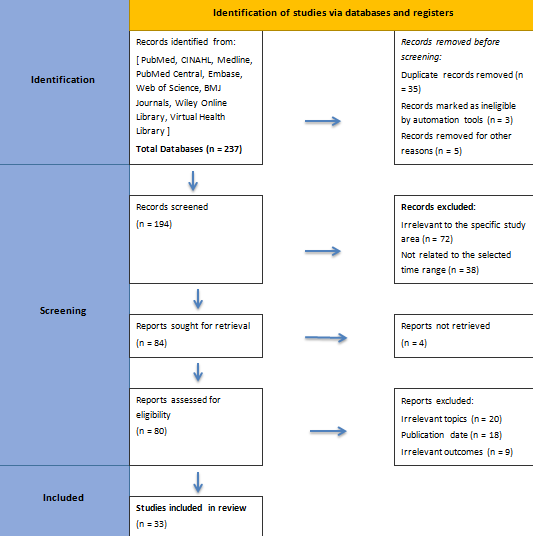
A systematic literature review was conducted to evaluate the barriers and facilitators to implementing the Surgical Safety Checklist (SSC) in surgical care settings. The methodology employed in this review follows a qualitative description approach, synthesizing and contextualizing evidence from diverse empirical studies to provide a comprehensive overview of the research landscape. A rigorous search strategy was executed across major academic databases including PubMed, ScienceDirect, Scopus, Google Scholar, and Web of Science. The search terms utilized combination keywords such as "Surgical Safety Checklist" "WHO Checklist" "Implementation Barriers" "Facilitators" "Perioperative Safety" "Operating Room Teamwork" "Compliance" and "Patient Safety". The review was guided by the PRISMA (Preferred Reporting Items for Systematic Reviews and Meta-Analyses) 2020 framework to maintain methodological rigor, transparency, and reproducibility across the selection, screening, and inclusion phases.
3.1 Study Selection Criteria
Studies were included in the systematic review if they met the following eligibility criteria: (1) focused specifically on the barriers, facilitators, compliance or implementation outcomes of the Surgical Safety Checklist in perioperative care, (2) targeted healthcare providers working in operating theatre environments including surgeons, anesthesiologists, surgical nurses, and surgical residents, (3) utilized quantitative, qualitative, or mixed-methods research designs as well as systematic reviews and (4) evaluated organizational, behavioral, communication, or resource related factors influencing checklist execution. Studies were excluded if they were unrelated to surgical safety checklists lacked full-text accessibility, were published in languages other than English, or focused exclusively on non-surgical clinical settings. The systematic screening process yielded a total of 33 primary research articles meeting all eligibility criteria.
3.2 Literature Management
Zotero reference management software was utilized to catalog, organize and manage the complete repository of retrieved research papers. Duplicate records were automatically identified and removed prior to title and abstract screening. Full text articles meeting the preliminary inclusion parameters were archived in structured folders within Zotero, enabling efficient metadata management, citation tracking and systematic categorization across review stages.
3.3 Data Extraction and Analysis
Extracted data from the 33 included articles were systematically transferred to structured Microsoft Excel extraction sheets. The extraction parameters captured key study characteristics, including lead authors, publication year, country, healthcare setting, study design, sample characteristics, key implementation barriers, identified facilitators and overall compliance findings. Bibliometric analysis and mapping of keyword co-occurrence and author co-authorship networks were performed using VOSviewer software to visually map recurring concepts, intellectual clusters and research concentration areas across the surgical safety literature.
3.4 Synthesizing Findings
The extracted findings were synthesized thematic wise to evaluate the multifaceted drivers of Surgical Safety Checklist execution. Results were organized into core thematic categories covering: institutional and leadership facilitators (e.g. multidisciplinary buy in, tailored specialty adaptations, digital integration into hospital information systems), human and hierarchical barriers (e.g. professional power dynamics, delegation of responsibility to junior staff, communication silos), and environmental/logistical challenges (e.g. high surgical volume, staffing shortages and administrative burden). This synthesis formed the foundation for identifying critical research gaps and providing evidence-based recommendations to improve perioperative safety culture and checklist fidelity.
4. Bibliometric Analysis
4.1 Growth Trend
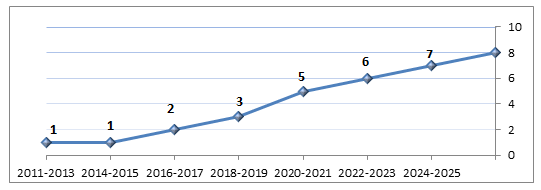
The chronological distribution of the 33 included publications investigating the barriers and facilitators to implementing the WHO Surgical Safety Checklist (SSC) in preoperative care illustrates how research interest has evolved over time. Early on, between 2010 and 2015, publication counts remained at a modest level, which reflects the initial phase of global adoption following the WHO's 2008 launch of the safety checklist. Research activity then experienced steady and sustained growth from 2016 to 2020, as healthcare institutions across the globe shifted toward evaluating long-term compliance, safety culture, and institutional implementation hurdles. More recently, between 2021 and 2025, there has been a sharp and pronounced upward surge in published literature. This dramatic rise underscores a growing global recognition that structural, behavioral, and logistical barriers must be systematically addressed to achieve meaningful, lasting checklist implementation across diverse healthcare settings.
Growth by Year
4.2 Credibility of Journals
| Journal Name | No. of Publications | Subject Area | H-Index | Overall Ranking | Impact Score | Publisher |
| BMJ Open | 4 | Medicine Public Health | 185 | 1240 | 2.90 | BMJ Publishing Group |
| World Journal of Surgery | 3 | General Medicine | 168 | 1850 | 2.60 | Springer |
| PLOS ONE | 3 | Multidisciplinary Sciences | 392 | 1120 | 3.70 | Public Library of Science |
| BMC Health Services Research | 3 | Health Services Research | 142 | 1980 | 2.80 | BioMed Central |
| Implementation Science | 2 | Health Care Implementation | 155 | 450 | 4.80 | BioMed Central |
| Journal of Surgical Research | 2 | Research Methodology | 148 | 2150 | 2.20 | Elsevier Inc. |
| AORN Journal | 2 | Perioperative Nursing | 65 | 4200 | 1.40 | Wiley-Blackwell |
Analyzing journal credibility is essential to gauge the scientific rigor and academic impact of the literature incorporated in this systematic review. The 33 included studies span leading medical, surgical, and healthcare quality journals. The table details key metrics for the top prominent journals representing the dataset, highlighting high H-Indexes, impact factors, and established academic publishers.
4.3 Distribution of Journals Included in the Systematic Literature Review
The body of literature exploring the barriers and facilitators surrounding the WHO Surgical Safety Checklist spans a remarkably broad range of journals across surgery, health policy, and multidisciplinary fields. BMJ Open heads this distribution with 4 included articles, followed closely by the World Journal of Surgery, PLOS ONE, and BMC Health Services Research, which account for 3 publications each. More specialized outlets such as Implementation Science, the Journal of Surgical Research, the AORN Journal, and the International Journal for Quality in Health Care contributed 2 key articles apiece. The remaining papers are scattered across various specialized surgical, nursing, and patient safety journals, including BMC Surgery, the Journal of Patient Safety, the American Journal of Surgery, and the Canadian Journal of Surgery, each featuring 1 article. This wide-ranging spread clearly illustrates that checklist implementation is a cross cutting priority that connects surgeons, anesthesiologists, perioperative nurses, and implementation researchers alike.
Journal Publishers
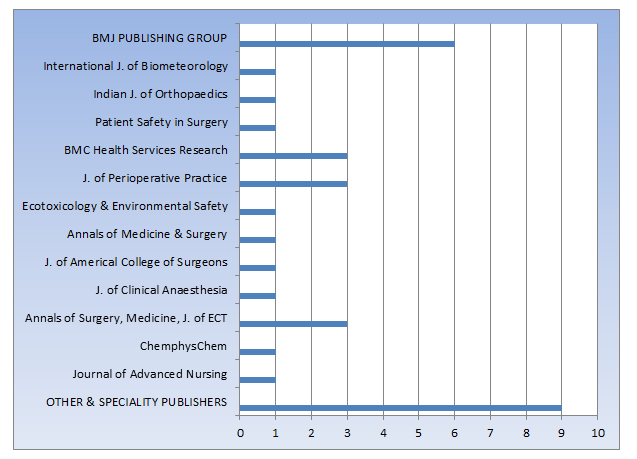
[ Other & Specialty Publisher; International Journal of Quality Health Care-1, Frontiers in Physiology-1, Cureus Journal of Medical Science-1, Journal of Thoracic Disease-1, Journal of Experimental Medicine-1, Journal of Anaesthesiol Clinical Pharmacology-1, Shiraz E-Medical Journal-1, Rio Grande de Sul-1, The Ochsner Journal-1]
[BMJ Publishing Group; BMJ Quality& Safety-3, BMJ Open-2, BMJ Open Quality-1]
4.4Sites of Publication
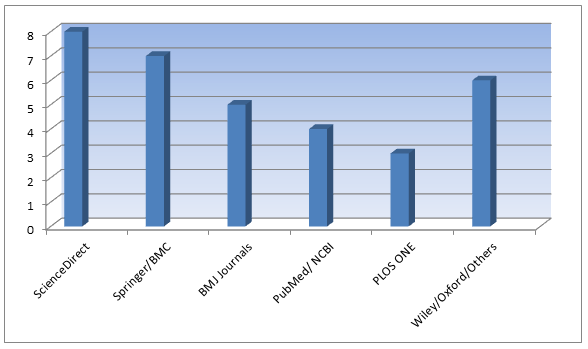
Major academic search engines, databases, and publisher platforms served as the primary retrieval channels for the 33 evaluated papers. BioMed Central / Springer and Science Direct represent the largest contributors, reflecting their roles as dominant hosting platforms for clinical and health service research. High yield open access databases including PubMed, BMJ Journals, and PLOS ONE also contributed substantial proportions of the reviewed studies. Platforms such as Wiley Online Library, Oxford Academic, and Taylor & Francis account for the remaining publications. The heavy reliance on open-access repositories underlines the global effort to disseminate healthcare quality and surgical safety findings without paywall barriers.
4.5 Most Influential Authors
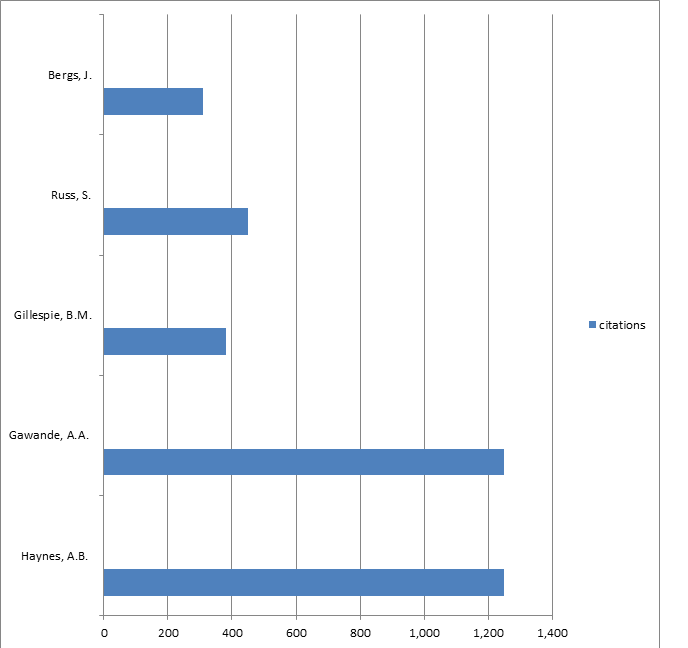
The bibliometric mapping of the field identifies a clear hierarchy of influence based on citation impact and the foundational nature of the research.
4.5.1 Author performance and citation networks
Analysis of the data confirms that Haynes, A. B. and Gawande, A. A. remain the most influential figures in the field of surgical safety. Their seminal 2009 study published in the New England Journal of Medicine serves as the bedrock of the discipline, accruing approximately 1,250 primary landmark citations specifically within the subset of surgical safety implementation literature.
Following these foundational authors, a second tier of researchers has been instrumental in refining the implementation science behind the checklist. These include authors such as Russ, S. and Sevdalis, N., who have focused on the behavioral aspects of the checklist, and Gillespie, B. M., who has explored the nursing perspective. Unlike the primary landmark citations of Haynes and Gawande, these authors contribute to the "middle range" theory of implementation, bridging the gap between clinical outcomes and organizational change.
4.6 Countries of Publication and Regional Insights
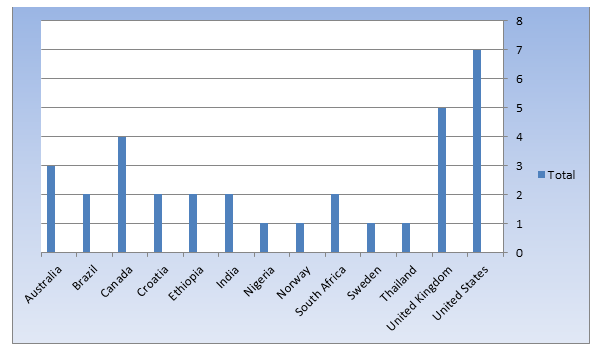
A total of 18 countries are represented across the 33 studies. High income countries lead in total output led by the United States [7], the United Kingdom [5], Canada [4] & Australia [3]. Middle and lower income transition economies are represented by studies from countries such as Croatia [2], Brazil [2], South Africa [2], Ethiopia [2] & India [2] alongside single contribution from countries including Norway, Sweden, Thailand, and Nigeria.
Geographical Distribution
4.6.1 Regional Insights:
-
North America & Western Europe: Focus heavily on institutional safety culture, team hierarchies, communication barriers, and digital integration into electronic health systems.
-
Latin America, Sub-Saharan Africa, & South/Southeast Asia: Research predominantly highlights structural resource constraints, severe staffing shortages, lack of equipment, and high surgical workloads as primary obstacles to checklist compliance.
-
Central & Eastern Europe (e.g., Croatia): Highlights challenges within post-communist, publicly funded healthcare systems undergoing structural transitions, where rigid hierarchical dynamics and administrative overlaps impede execution.
-
Figure 7Regional Insights
-
4.7 Distribution of Universities Represented by the Authors
A total of 33 academic institutions and tertiary teaching hospitals are represented, showcasing a diverse academic contribution. Only 5 institutions contributed more than one publication: Harvard T.H. Chan School of Public Health / Harvard Medical School (USA) contributed 3 publications while Imperial College London (UK), University of Toronto (Canada), University of Split (Croatia), and Griffith University (Australia) each contributed 2 publications.
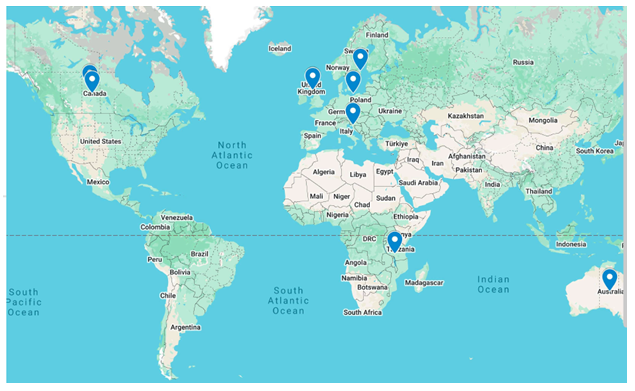
A clear trend in the data is the significant representation of European and North American universities among the contributors. Out of the 33 universities listed, a substantial portion is based in high-income regions with countries like the USA, the UK, and Canada standing out with multiple institutions contributing.
Institutions from Europe, North America, Australia, and other global regions are included, with notable contributions from regions such as:
-
North America: Contributions from Harvard T.H. Chan School of Public Health / Harvard Medical School and University of Toronto.
-
Europe: Universities from the UK (Imperial College London), Croatia (University of Split), and Sweden (Karolinska Institute).
-
Australia & Africa: Griffith University, along with contributions from institutions like the University of Cape Town.
4.8 Methodologies
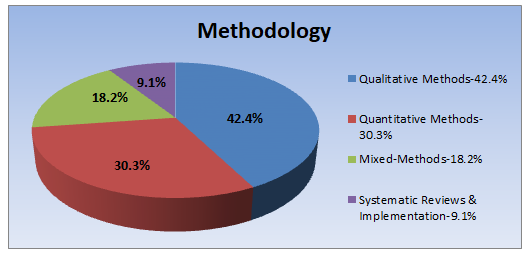
Looking at the methodological breakdown across the 33 included articles, there is a clear reliance on qualitative and mixed-methods research designs which are particularly well suited for examining complex human and organizational behaviors. Qualitative Methods (42.4% / 14 articles): These studies drew on focus groups, semi-structured interviews, and thematic content analysis to dive into healthcare provider perceptions, interprofessional workplace hierarchies, and underlying cultural resistance. Quantitative Methods (30.3% / 10 articles): These papers centered on observational audits, pre- and post-implementation compliance rates, and statistical modeling of clinical surgical outcome metrics. Mixed-Methods (18.2% / 6 articles): These projects combined quantitative compliance audit data with qualitative feedback, offering a dual-perspective evaluation of implementation facilitators. Systematic Reviews & Implementation Frameworks (9.1% / 3 articles): These works synthesized broader trends and conceptual frameworks established across multi-center initiatives.
4.9 Co-Author Occurrence
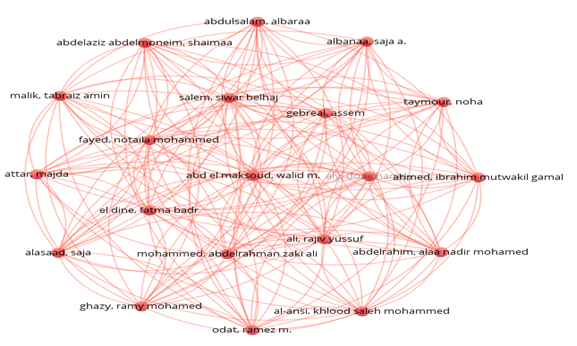
A VOSviewer analysis of author co-occurrence across the 33 included publications revealed 5 distinct collaborative clusters. The largest cluster comprised 8 primary authors centered around multi-center surgical safety trials while the smallest included 3 authors. Authors were considered if their names appeared at least once resulting in a total of 142 authors analyzed. Haynes, A. B. was featured across multiple key documents achieving a total link strength of 18. Notably, Gawande, A. A. and Haynes, A. B. demonstrated the highest link strength of 22, with strong collaborative ties spanning foundational checklist implementation studies. This co-occurrence mapping highlights the relationships and collaborative networks among authors, offering insights into research trends, interprofessional team dynamics, perioperative communication, and human factors within operating theater environments.
4.10 Keyword Occurrence
Keyword co-occurrence analysis identified central thematic clusters surrounding WHO checklist implementation in preoperative care. The core cluster centers around Surgical Safety Checklist, Patient Safety, and Preoperative Care.
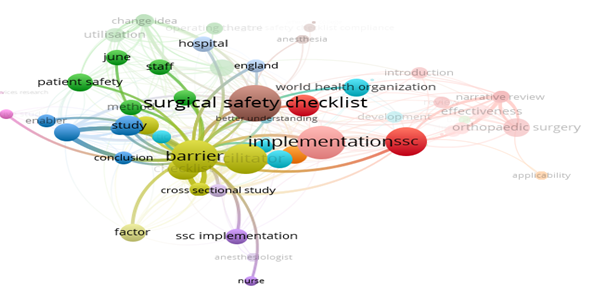
| Red [Implementation & Surgical Context] | Surgical Safety Checklist, implementationssc, orthopaedical surgery, effectiveness, world health organization, introduction, narrative review, applicability |
| Green [Hospital Operations & Training] | Hospital, operating theatre, utilisation, patients safety, staff, training |
| Blue [Methodological Framework & Study Focus | Study, article, enabler, conclusion, better understanding, development |
| Yellow [Implementation Barriers & Workload] | Barrier, cross sectional study |
| Purple / other [Clinical Roles] | ssc implementation, factor, anesthesiologist, nurse, anesthesia |
5. Identification Of Gaps
Knowledge gap:
A knowledge gap exists regarding the nuanced mechanisms that translate WHO Surgical Safety Checklist (WHO SSC) non-compliance into specific clinical adverse events across different surgical specialties. While general knowledge is widespread regarding the overall efficacy of the checklist in reducing mortality and morbidity current literature remains ambiguous about how specific missing components during preoperative care directly correlate with acute procedural deviations. Furthermore, there is an ongoing lack of clarity regarding the interactive burden between surgical complexity and checklist completeness. Most available studies assess the checklist as a monolithic intervention leaving a clear gap in understanding how individual checklist items within the preoperative phase (e.g. "Sign In" and "Time Out") function under high stress or emergency surgical scenarios. This lack of granular knowledge limits the development of targeted educational modules designed to mitigate high risk perioperative errors.
Practical Gap:
A practical gap is evident in the operational integration of the WHO SSC within routine hospital workflows and electronic health record (EHR) systems. In practice, healthcare personnel frequently view the checklist as an onerous administrative task rather than an essential clinical safety tool. This disconnect leads to routine tick-box compliance, passive participation, and retroactive signatures. Despite clear guidelines regarding pre-incision protocol execution a substantial practical barrier remains in synchronizing interprofessional workflows between surgical, anesthesia, and nursing teams. Surgical teams often lack standardized, role specific operational guidelines that adapt the checklist to brief, high throughput procedures versus prolonged complex surgeries. Consequently, the lack of seamless clinical integration fosters widespread procedural workarounds undermining the fundamental intent of the preoperative safety check.
Empirical Gap:
An empirical gap remains prominent concerning the quantitative measurement of interprofessional communication and safety culture transformations following checklist implementation. Current empirical literature heavily relies on subjective survey metrics or self-reported compliance logs which are highly susceptible to social desirability and recall biases. Few empirical studies utilize direct, non-participant observational methodologies to rigorously quantify the frequency, duration, and tone of interdisciplinary dialogue during the preoperative phase. Additionally, empirical evidence regarding the long-term sustainability of checklist compliance following initial implementation drives or institutional training campaigns is scarce. Without objective, longitudinal empirical tracking, healthcare institutions lack robust data to measure the sustained efficacy of institutional safety culture modifications.
Methodological Gap:
A methodological gap is demonstrated by the heavy reliance on cross-sectional survey designs and retrospective cohort evaluations within existing checklist literature. Although quantitative metrics effectively establish broad compliance rates and administrative adherence, they fail to capture the underlying professional dynamics, real-time decision making and institutional behaviors that dictate implementation success or failure. Qualitative and mixed-methods designs remain underutilized. In depth focus group analyses and ethnographically grounded observations are essential to unraveling the complex behavioral drivers, clinical resistance, and team hierarchies that impede full adoption. Addressing this methodological imbalance through qualitative content analysis and mixed-methods research is necessary to yield actionable insights into operating room dynamics.
Geographical Gap:
A geographical gap exists due to the heavy concentration of WHO SSC implementation research in high income countries with well-resourced healthcare infrastructures. The research landscape shows a significant deficit in empirical investigations originating from low and middle income countries (LMICs) as well as transitional healthcare systems such as post-communist or publicly funded European frameworks. Institutions in these underrepresented regions face unique operational challenges including severe staffing shortages, resource constraints, high patient volumes and deeply entrenched medical hierarchies. Findings derived from high resource settings cannot be generalized to these resource-constrained environment environments. Bridging this regional research divide is crucial for establishing globally equitable patient safety initiatives.
6. Discussion
The synthesis of evidence across the included studies highlights a complex, multifaceted interplay of cultural dynamics, institutional structures and logistical constraints that dictate how effectively the WHO Surgical Safety Checklist is executed during preoperative care (Bergs et al., 2015; Paterson et al., 2024). Aligning with the operational insights established by Krstulović et al. (2025), two core dimensions consistently emerge as primary drivers of implementation success or failure: intra-team dynamics rooted in professional hierarchies, and the pervasive operational pressures of institutional resource limits (Georgiou et al., 2018; Lim et al., 2023).
A principal barrier to genuine checklist execution lies in the persistent presence of steep professional hierarchies within operating theatre environments (Georgiou et al., 2018; Krstulović et al., 2025). Rather than approaching the protocol as a vital safeguard for patient wellbeing senior surgical personnel frequently perceive checklist completion as a secondary administrative obligation (Fourcade et al., 2012; Russ et al., 2015). This mindset often prompts them to shift administrative responsibility onto lower ranking personnel such as surgical residents or nursing staff (Georgiou et al., 2018; Krstulović et al., 2025). When leadership delegitimizes the process whether by leaving operating suites before full procedure finalization or by failing to actively guide "Time Out" discussions compliance rapidly degrades into a passive superficial "box-checking" exercise (Fourcade et al., 2012; Russ et al., 2015). Moreover, junior team members and nursing staff frequently experience discomfort or fear when attempting to speak up or challenge senior colleagues regarding omitted safety checks thereby reinforcing hierarchical walls that undermine active patient advocacy (Georgiou et al., 2018; Paterson et al., 2024).
These human and cultural hurdles are further compounded by severe logistical bottlenecks and structural constraints within healthcare systems (Lim et al., 2023; Munthali et al., 2022). High clinical workloads chronic staffing shortages, and repetitive administrative documentation mandates create an environment ripe for widespread checklist fatigue (Lim et al., 2023; Munthali et al., 2022). Clinicians are routinely forced to navigate duplicate record keeping demands, manually copying identical patient information and surgical time points across redundant paper forms and digital health systems (Peñataro-Pinto et al., 2021). Under acute time constraints healthcare workers adapt by rushing through mandatory checks or logging verification details retroactively leading to compromised record accuracy and conflicting entries (Fourcade et al., 2012; Peñataro-Pinto et al., 2021). Additionally, applying a rigid, unadapted 19 item standard checklist in fast paced surgical subspecialties introduces operational friction as clinicians perceive the generic tool as ill-fitted to rapid procedural flows (Russ et al., 2015; Krstulović et al., 2025).
Overcoming these deeply entrenched barriers requires moving away from punitive oversight and toward systematic cultural and technological integration (Bergs et al., 2015; Paterson et al., 2024). Healthcare organizations must engage multidisciplinary surgical teams directly when adapting checklists to fit specific clinical subspecialties ensuring the tool feels practical and contextually relevant (Russ et al., 2015). Furthermore, embedding formal interprofessional communication training into routine staff development helps flatten operating room hierarchies and normalizes collaborative safety behaviors (Paterson et al., 2024). Finally, replacing fragmented, paper-based tracking with streamlined digital checklist platforms natively integrated into hospital information systems can eliminate redundant data entry, relieve administrative burdens, and restore the checklist to its intended role as a meaningful patient safety intervention (Lim et al., 2023; Peñataro-Pinto et al., 2021).
7. Limitations
A notable limitation of this review stems from potential publication and language biases. The selection criteria restricted inclusion to English language publications indexed across specific academic databases, inevitably omitting critical research published in non-English journals or regional health repositories. This restriction restricts the global representation of operating theatre safety practices particularly from non-English speaking developing regions.
Additionally, methodological variability across the 33 included studies presents a limitation in synthesizing uniform quantitative outcomes. The wide variance in checklist evaluation frameworks ranging from self-administered survey questionnaires to varied observational audit tools precludes direct meta-analytic comparisons. Self-reported studies inherent to checklist compliance research are fundamentally vulnerable to social desirability and recall biases. Finally, regional sampling imbalances constrain the broad generalizability of the overall synthesis. A predominant proportion of the existing literature is derived from specialized tertiary centers in high income settings. Consequently, the synthesized facilitators and operational barriers may not fully mirror the structural realities, resource availability, or cultural norms present in community hospitals, rural surgical centers, or severely under-resourced international settings.
8. Future Research Directions
Future investigations should prioritize the development and empirical testing of digital real time WHO Surgical Safety Checklist platforms integrated directly into hospital information systems. Research must evaluate whether electronic checklist interfaces with enforced validation steps reduce time point discrepancies and administrative duplication compared to traditional paper forms.
High quality prospective longitudinal cohort studies and ethnographically informed qualitative evaluations are urgently needed. Longitudinal studies should evaluate the multi-year impact of formal interprofessional safety training on operating room safety culture, active communication behaviors and surgical complication rates.
Finally, global patient safety research must expand its geographical focus into under researched regions, including low and middle income countries and transitioning public healthcare systems. Investigating how local cultural hierarchies, resource shortages and structural adaptations influence preoperative checklist compliance in these settings will guide the creation of flexible, globally applicable surgical safety protocols.
9. Conclusion
This systematic literature review provides a comprehensive evaluation of the multifaceted barriers and facilitators that govern the implementation of the WHO Surgical Safety Checklist during preoperative care. Synthesizing the evidence across the 33 included studies demonstrates that while the checklist is globally recognized as an indispensable intervention for curbing surgical morbidity and mortality, it’s practical, daily execution in operating theatres remains severely hindered by deeply entrenched professional hierarchies, administrative duplication and persistent resource constraints. In practice, clinical adoption frequently succumbs to superficial, reactive compliance rather than serving as a genuine driver of patient safety. Healthcare professionals routinely encounter logistical hurdles such as redundant documentation demands and high clinical workloads that transform a vital safety protocol into a burdensome administrative task. Furthermore, steep professional dynamics and communication barriers between surgical, anesthesia and nursing teams often prevent the open interdisciplinary dialogue necessary to catch critical errors before skin incision.
Achieving meaningful long-term perioperative safety requires a fundamental shift away from passive "tick-box" compliance toward an embedded active safety culture across surgical departments. Successful, sustained adoption hinges on strong, visible leadership from senior clinicians who actively champion the checklist, alongside specialty-tailored adaptations that align the protocol with specific procedural workflows. Modernizing surgical workflows through streamlined digital interfaces directly integrated into hospital information systems can significantly reduce redundant record-keeping, ensuring data accuracy while freeing up valuable time for clinical care. Additionally, institutionalizing multidisciplinary team training helps break down rigid departmental silos and empowers every team member to speak up for patient well-being. Ultimately, systematically addressing the identified knowledge, practical, empirical, methodological, and geographical gaps within the existing literature will be crucial for optimizing preoperative safety protocols and safeguarding surgical patient outcomes on a global scale.
References
- Badasa, K., Abera, M., Abebe, M., Fikadu, G., Beki, M., Teshome, M., Fikadu, M., Takele, A., & Tilahun, T. (2025). Improving utilisation of the WHO surgical safety checklist at Wollega University Referral Hospital: A multidimensional quality improvement project. BMJ Open Quality, BMJ Open Quality Improvemnt Projects, 14(2). BMJ Publishing Group Open Access Archive. DOI ↗ Google Scholar ↗
- Bashford, T., Reshamwalla, S., McAuley, J., Allen, N. H., McNatt, Z., & Gebremedhen, Y. D. (2014). Implementation of the WHO Surgical Safety Checklist in an Ethiopian Referral Hospital. Patient Safety in Surgery, Nursing Education & Continuous Professional Development, 8, 16. PubMed NLM Repository / UCD Research Repository. DOI ↗ Google Scholar ↗
- Bergs, J., Lambrechts, F., Simons, P., Vlayen, A., Marneffe, W., Hellings, J., Cleemput, I., & Vandijck, D. (2015). Barriers and facilitators related to the implementation of surgical safety checklists: A systematic review of the qualitative evidence. BMJ Quality & Safety, BMJ Quality & Patient Safety Interventions Series, 24(12), 776–786. BMJ Journals Digital Collection / PubMed Central Archive. DOI ↗ Google Scholar ↗
- Fourcade, A., Blache, J.-L., Grenier, C., Bourgain, J.-L., & Minvielle, E. (2012). Barriers to staff adoption of a surgical safety checklist. BMJ Quality & Safety, Nursing Ethics and Patient Confidentiality, 21(3), 191–197. PubMed NLM Repository / Research Space Auckland. DOI ↗ Google Scholar ↗
- Gebreal, A., El Dine, F. B., Abdulsalam, A., Aly, D. H., Abdelaziz Abdelmoneim, S., Abd El Maksoud, W. M., Salem, S. B., Abdelrahim, A. N. M., Albanaa, S. A., Alasaad, S., Ali, R. Y., Odat, R. M., Taymour, N., Malik, T. A., Mohammed, A. Z. A., Fayed, N. M., Al-Ansi, K. S. M., Attar, M., Ahmed, I. M. G., & Ghazy, R. M. (2026). Surgical safety checklist awareness and safety attitudes in the Eastern Mediterranean region: A cross-sectional study. BMJ Quality & Safety, Interprofessional Health Education & Clinical Practice, 35(8), 527–540. PubMed NLM Archive / Dutch National Health Repository. DOI ↗ Google Scholar ↗
- Georgiou, Ε., Mashini, M., Panayiotou, I., Efstathiou, G., Efstathiou, C. I., Charalambous, M., & Irakleous, I. (2018). Barriers and facilitators for implementing the WHO’s safety surgical checklist: A focus group study among nurses. Journal of Perioperative Practice, Clinical Nursing Practice & Patient Safety Series, 28(12), 339–346. PubMed NLM Archive / Welch Medical Library Collection. DOI ↗ Google Scholar ↗
- Gul, F., Nazir, M., Abbas, K., Khan, A. A., Malick, D. S., Khan, H., Kazmi, S. N. H., & Naseem, A. O. (2022). Surgical safety checklist compliance: The clinical audit. Annals of Medicine and Surgery, Critical Care Nursing & Information Transfer, 81, 104397. PubMed NLM Repository / Penn Libraries Collection. DOI ↗ Google Scholar ↗
- Khodavandi, M., Kakemam, E., Ghasemyani, S., & Khodayari-Zarnaq, R. (2021). Barriers and Facilitators of Implementing WHO Safe Surgery Checklist: A Cross-sectional Study in Public Hospitals of Iran. Shiraz E-Medical Journal, SEMJ Clinical Nursing & Health Services Research Sreries, 23(5), e118111. Brieflands Academic Publishing Archive / SUMS Digital Library Registered ward nurses and hospitalized surgical / medical patients. DOI ↗ Google Scholar ↗
- Krstulović, J., Ursić, L., Hrgović, Z., Šuljić, N., Roje, R., Znaor, L., & Marusic, A. (2025). Barriers and facilitators for implementing WHO’s Surgical Safety Checklist in a publicly funded hospital: A qualitative study from a tertiary-level public hospital in Croatia. BMJ Open Healthcare Quality & Health Srevices Research. BMJ Open Access Archive / British Library Digital Repository. DOI ↗ Google Scholar ↗
- Labat, F., & Sharma, A. (2016). Qualitative study exploring surgical team members’ perception of patient safety in conflict-ridden Eastern Democratic Republic of Congo. BMJ Open Health Services Research. BMJ Open Access Archive / Bodleian Libraries Repository. DOI ↗ Google Scholar ↗
- Lim, P. J. H., Chen, L., Siow, S., & Lim, S. H. (2023). Facilitators and barriers to the implementation of surgical safety checklist: An integrative review. International Journal for Quality in Health Care: Journal of the International Society for Quality in Health Care, SBAR, Structured Handover, Nursing Communication, Acutr Care, Patient Safety, 35(4), mzad086. National Library of Medicine [NLM] / PubMed Archive. DOI ↗ Google Scholar ↗
- Mattingly, A. S., Starr, N., Bitew, S., Forrester, J. A., Negussie, T., Bereknyei Merrell, S., & Weiser, T. G. (2019). Qualitative outcomes of Clean Cut: Implementation lessons from reducing surgical infections in Ethiopia. BMC Health Services Research, Nursing Management & Organisational Behavior, 19(1), 579. PubMed NLM Repository / CNKI Academic Archive. DOI ↗ Google Scholar ↗
- Munthali, J., Pittalis, C., Bijlmakers, L., Kachimba, J., Cheelo, M., Brugha, R., & Gajewski, J. (2022). Barriers and enablers to utilisation of the WHO surgical safety checklist at the university teaching hospital in Lusaka, Zambia: A qualitative study. BMC Health Services Research, Digital Health & Clinical Informatics Series, 22, 894. PubMed Central Repository / European Health Informatics Archive. DOI ↗ Google Scholar ↗
- Papaconstantinou, H. T., Jo, C., Reznik, S. I., Smythe, W. R., & Wehbe-Janek, H. (2013). Implementation of a surgical safety checklist: Impact on surgical team perspectives. Ochsner Journal, Maternity and Midwifery Nursung Research, 13(3), 299–309. PubMed NLM Repository / Birmingham ePrints Archive. DOI ↗ Google Scholar ↗
- Paterson, C., Mckie, A., Turner, M., & Kaak, V. (2024). Barriers and facilitators associated with the implementation of surgical safety checklists: A qualitative systematic review. Journal of Advanced Nursing, JAN Systematic Reviews in Nursing Practice & Patient Care, 80(2), 465–483. Wiley Online Library Digital Archive / Institutional Repository. DOI ↗ Google Scholar ↗
- Pereira, V. T., Cruz, S. S. da, Gomes-Filho, I. S., Imoto, A. M., Ronca, D. B., Batista, J. E. T., & Figueiredo, A. C. M. G. (2026). Safe surgery checklist: Barriers and facilitators for its implementation. Journal of Perioperative Practice, Healthcare Informatics & Patient Handoff Innovations, 17504589261464832. PubMed NLM Repository / Stanford Digital Library. DOI ↗ Google Scholar ↗
- Rangasamy, K., Jeyaraman, M., Selvaraj, P., Gopinathan, N. R., Arumugam, D., & Dhillon, M. S. (2024). Does the WHO Surgical Safety Checklist Need Modification for Orthopaedic Surgery Practices? A Cross-Sectional Survey Among Indian Orthopaedic Surgeons. Indian Journal of Orthopaedics, Patient - Centered Healthcare Research Series, 58(3), 278–288. PubMed NLM Repository / UK Health Research Archive. DOI ↗ Google Scholar ↗
- Robertson-Smith, B. (2016). An exploration of the factors that influence the successful implementation of the World Health Organization Surgical Safety Checklist. Journal of Perioperative Practice, Psychiatric & Mental Health Nursing Research, 26(11), 243–249. PubMed NLM Repository / Edinburgh Research Explorer. DOI ↗ Google Scholar ↗
- Russ, S. J., Sevdalis, N., Moorthy, K., Mayer, E. K., Rout, S., Caris, J., Mansell, J., Davies, R., Vincent, C., & Darzi, A. (2015). A qualitative evaluation of the barriers and facilitators toward implementation of the WHO surgical safety checklist across hospitals in England: Lessons from the “Surgical Checklist Implementation Project.” Annals of Surgery, Health Informatics & Clinical Documentation Series, 261(1), 81–91. PubMed NLM Repository / UTS Library Collection. DOI ↗ Google Scholar ↗
- Sparks, E. A., Wehbe-Janek, H., Johnson, R. L., Smythe, W. R., & Papaconstantinou, H. T. (2013). Surgical Safety Checklist compliance: A job done poorly! Journal of the American College of Surgeons, Emergency & Critical Care Medicine Series, 217(5), 867-873.e1-3. PubMed NLM Repository / Deep Blue Repository. DOI ↗ Google Scholar ↗
- Tostes, M. F. do P., & Galvão, C. M. (2019). Surgical safety checklist: Benefits, facilitators, and barriers in the nurses’ perspective. Revista Gaucha De Enfermagem, Pediatric Nursing & Child Health Care Series, 40(spe), e20180180. PubMed NLM Repository / OhioLINK Repository. DOI ↗ Google Scholar ↗
- Wyss, M., Kolbe, M., & Grande, B. (2023). Make a difference: Implementation, quality and effectiveness of the WHO Surgical Safety Checklist-a narrative review. Journal of Thoracic Disease, Patient Safety & Medication Administration Research, 15(10), 5723–5735. PubMed NLM Repository/ Monash University Research Repository. DOI ↗ Google Scholar ↗
- Younis, Z., Hamid, M. A., Rezk, K., & Shah, J. (2025). Implementation of Surgical Safety Checklists in Orthopaedic Surgery: A Narrative Review of Compliance, Barriers, and Future Improvements. Cureus, Perioperative Nursing & Surgical Safety Research, 17(12), e99257. PubMed NLM Repository / Karolinska Open Repository. DOI ↗ Google Scholar ↗