Abstract
Advancements in science and technology across various fields, when applied in companies and industries, also increase standards and regulations. This paper reviews and discusses the relationship among ergonomics, occupational safety and health, workloads, work conditions, workplaces, and operational management in the context of international standards that are adopted as national standards in each country. Ergonomics is an interdisciplinary and multidisciplinary applied science that takes a holistic approach to integrate human capabilities and limitations with organisational management requirements, with an emphasis on process and progress in work culture. The analysis showed that the main problems are workplace health and safety and control of the work environment and workload, which prevent work-related illnesses and inefficiencies. This study shows the importance of adherence to ergonomic standards as a key factor in increasing productivity, ensuring occupational safety and health, improving employee well-being, achieving company performance, and maintaining environmental sustainability. The results indicate that collaboration among employees, management and regulatory authorities is required to ensure compliance with ergonomics standards and principles in the design of human-centred work systems.
Keywords
ergonomics standards holistic approach workloads management regulations.
1. Introduction
For companies, the bottom line is building a healthy, safe, and productive workforce to keep operations running. With this base capital, they compete to generate profits. This can reduce the hidden financial costs of occupational injuries, illnesses and inefficiency. By identifying and taking systemic action to minimise occupational risks, organisations can reduce direct costs, such as medical bills and compensation payments and indirect costs, such as lost workdays and decreased work morale. Good health and safety practices in the work system, as well as cost control, ensure business continuity and increase process reliability, which leads to improved quality and predictable productivity trends.
When employees feel secure and supported in the workplace, they tend to maintain consistent performance, even go beyond their core duties, and engage constructively in workplace improvement initiatives. Additionally, the benefits for employees include improved well-being, higher job satisfaction, and a greater ability to maintain a work-life balance within the community. Allocating sufficient time for caregiving and social participation also boosts social capital. This mitigates stressors that could otherwise negatively impact the work environment, thereby creating a mutually reinforcing positive cycle involving personal well-being, work culture, and organisational performance.
Aligning the diverse interests of employers, workers, and regulators requires coordinated planning across work systems, workplace design, managerial practices, and regulatory frameworks. Employers should integrate ergonomic principles and effective workload management into their work systems, training programmes, and performance indicators. Managers need to adopt proactive prevention strategies that actively engage workers in the work culture, rather than relying on reactive, compliance-driven approaches. Regulators must foster continuous improvement through clear standards, meaningful enforcement, and mechanisms that facilitate collaboration between employers and workers. These measures go beyond mere administrative compliance; they lead to significant health improvements, reduced incident rates, and greater resilience against operational disruptions.
The key company’s success hinges on its ability to effectively translate regulatory and technical requirements into day-to-day organisational practices. Three critical factors shape this translation process: management, health, and safety. Management represents a blend of science and art in planning, executing, controlling, evaluating, and allocating corporate assets, including physical, financial, human, and technological resources. Effective management entails resource integration, work system design, performance analysis, and workload limits that leverage appropriate technology by applying ergonomic principles. Health factors encompass the physical and mental health of workers, which is a vital asset. Occupational preventive measures, access to healthcare services, and an understanding of workload are essential for maintaining and boosting productivity. The safety factor covers work systems, work behaviours, and work environmental controls designed to prevent accidents and exposure to hazards; safety is both an aspect of work system design and the product of a work culture rooted in leadership and worker participation.
These three dimensions are inherently linked to ergonomic principles and are relevant to companies of all sizes. Consequently, it is crucial to establish regulations that adopt ergonomic standards and to implement these principles within the organisation. However, due to a lack of risk assessment and accountability frameworks that prioritise mere administrative compliance, management practices regarding health and safety systems are often misaligned. This explains why formal compliance with standards sometimes fails to yield meaningful improvements. Addressing this situation requires an integrated approach encompassing the design of ergonomics work systems, proactive health promotion, and systemic safety management, all supported by management commitment and meaningful worker participation. Therefore, management, health, and safety aspects must be viewed as interdependent factors, enabling organisations to move beyond mere aspirations and achieve tangible, measurable improvements in worker well-being and performance.
2. Methods
The research employs a desk research methodology, involving a systematic review of literature combined with targeted online searches to identify relevant scholarly works on ergonomics, occupational health and safety, and workload. Primary sources include peer-reviewed journals, books, technical reports, and publications from credible national and international institutions. The selection process focuses on recent empirical and theoretical contributions, as well as policy analyses that offer insights into the relationship between management aspects and health and safety. Studies addressing ergonomic interventions, occupational health outcomes, safety systems, and the managerial and regulatory contexts influencing workplace risks are also examined, with consideration given to productivity aspects. The analysis is descriptive and qualitative, utilising analogies, conceptual linkages, and explanatory mechanisms found in the literature. Research findings are presented as a synthesis of themes and illustrative examples, while policy and practical implications are formulated based on mutually reinforcing evidence from the reviewed sources.
3. Ergonomics
“Ergonomics (Greek: Ergon = work + Nomos = custom, law) is an interdisciplinary scientific approach to problems of adjusting work to humans, aiming to increase productivity, i.e., working efficiency, work safety, and humanisation of human labour” (Colovic, 2014). At about the same time, a similar discipline evolved in North America, which came to be called human factors (Pheasant, 1991). Therefore, the terms ‘ergonomics’ and ‘human factors’ are often used interchangeably or as a unit (e.g., ‘human factors/ergonomics – HFE or EHF’), a practice that is adopted by the IEA (IEA, 2026). However, as Dattel et al. (2023) state, the two terms have distinct meanings: ergonomics emphasises physical capabilities and limitations (e.g., comfortable physical furniture and placement of targets within accessible reach), while human factors emphasise cognitive applications that involve human processing and behavioural capabilities and limitations such as response time, memory capacity, and so on. Ergonomics, besides being an interdisciplinary field, is a multidisciplinary scientific approach (Dattel et al., 2023, p. 134). In fact, ergonomics is not only physical but also cognitive and organisational.
The definition of ergonomics (or human factors) adopted by the IEA in 2000 is the scientific discipline concerned with the understanding of interactions among humans and other elements of a system and the profession that applies theory, principles, data, and methods to design to optimise human well-being and overall system performance (IEA, 2026). This definition is reflected in the discipline of ergonomics, which involves the study of human factors (as part of the domain of cognitive ergonomics). Domains of ergonomics and human factors were also defined in 2000 to include physical ergonomics, cognitive ergonomics, and organisational ergonomics (IEA, 2026). Each develops dynamically in its scope of study and research. The topics include human-computer interactions (HCI), neuroergonomics, cognitive task analysis, and the design of work systems. Since they are all one in the system study of human work (activity), it does not matter if they call it ‘ergonomics’ or ‘ergonomics and human factors’ (EHF) or ‘human factors and/or ergonomics’ (HFE, HF/E). However, people are more familiar with the terms ‘ergonomics’ or ‘human factors and ergonomics.’ For additional information, please visit the website at https://iea.cc/about/what-is-ergonomics/.
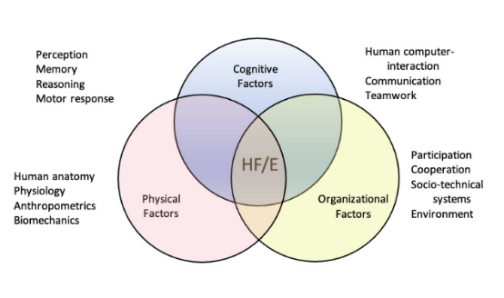
Of the three domains of ergonomics, the most frequently applied principles and the most researched area of development are in physical ergonomics. Even though its definition varies, as in OSHA (2026) and also in Kroemer (2017), ergonomics – fitting a job to a person – helps reduce muscle fatigue, increase productivity, and reduce the number and severity of work-related MSDs. Work-related MSDs are among the most frequently reported causes of lost or restricted work time (OSHA, 2026). However, employers have a responsibility to provide their workers with safe and healthful workplace facilities. According to OSHA (2026), the application of ergonomic principles can significantly reduce the number and severity of MSDs resulting from physical overexertion and the associated costs in the workplace.
Meanwhile, ergonomics, from the perspective of an ergonomic designer, combines physical and cognitive ergonomics and defines ergonomics as follows: “Ergonomics is the scientific discipline describing the interaction between human beings and their working environment. It encompasses the design of products, product details, workstations and complex work systems against criteria which are determined by human characteristics and performance conditions. Its objective is to enhance human well-being and the performance of the system as a whole” (KAN, 2026).
In addition, here is a view of ergonomics management, which combines physical, cognitive, and organisational ergonomics. It defines ergonomic management as follows: Ergonomic management is the observation, planning, designing, measuring, organising, evaluating, and analysing, by applying ergonomics principles, human mental and physical activities, work systems, workplaces, and their environments as a whole system to achieve productivity and performance and attain human well-being and welfare (Marhaendra, 2025).
However, from the definitions above, it should be realised that ergonomics is a process, not a product, and this process addresses not merely the physical needs of people but also their cognitive and emotional needs (Hedge and Pazell, 2016).
4. Reviewing Occupational Safety, Health, Workloads, and Ergonomics Standards
4.1 Occupational Safety and Health
Safety and health are indivisible within the occupational system, continuously interacting across people, tasks, tools and organisational processes. The field of occupational safety and health is concerned with minimising loss by aiding in the preservation and protection of both human and other physical assets in the workplace (Friend and Kohn, 2023). Most countries, developed and developing alike, have regulations and standards that establish the minimum requirements for how companies should operate. However, simply complying with the rules is not sufficient. An effective, sustainable, and safe work environment is represented by the implementation of a robust occupational safety and health management system that integrates legal requirements into everyday practices and continuous improvement. These systems include leadership, worker engagement, risk assessment, training and performance monitoring to control hazards, maintain capacity and improve well-being. ILO (2026) actively implements an efficient and effective occupational safety and health management system. This is an essential tool to achieve a safe and healthy working environment.
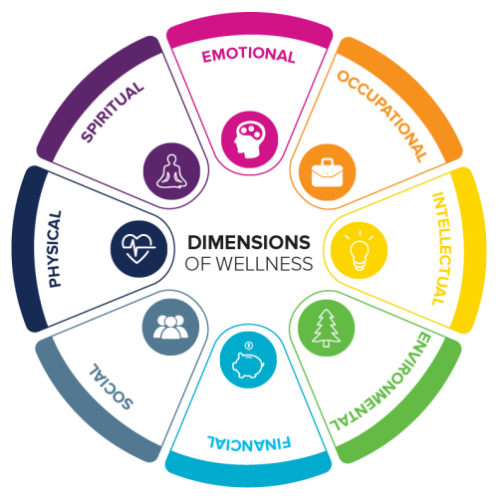
World Health Organisation (WHO) Constitution defines “health” as “a state of complete physical, mental, and social well-being and not merely the absence of disease or infirmity” (WHO, 2020). The next paragraph states that “the enjoyment of the highest attainable standard of health is one of the fundamental rights of every human being without distinction of race, religion, political belief, or economic or social condition” (WHO, 2020). In its development, the WHO’s concept of health was expanded to “wellness”. The National Wellness Institute (NWI), founded in 1977, defines wellness as “an active process by which people become aware of, and make choices towards, a more successful existence” (Hedge and Pazell, 2016). In other words, in line with the University of California Davis (UCDavis, 2026), “Wellness is caring for mind, body, and soul. Usually affected by culture and life experience. Wellness is more than the absence of illness or stress. You can still strive for wellness even if you are experiencing these challenges in your life.”
Michaels and Greene (2013) proposed that workplace wellness programmes incorporate six interrelated dimensions of wellness (Wellness Alliance, 2026): emotional, physical, intellectual, occupational, spiritual, and social. The two additional dimensions (UCDavis, 2026) are environmental and financial, which make it an eight-dimensional wellness model and should aim to protect and enhance employee health and improve quality of life and work morale while reducing direct and indirect healthcare costs, absenteeism, and presenteeism (being present at work but not working). Comprehensive workplace wellness promotion strategies should be adopted by employers worldwide.
Active worker participation is crucial to the operation of a corporate organisation. When technical personnel understand ergonomics and use the participatory ergonomics method to build specific solutions to minimise or even eliminate risk factors, the chain of events becomes apparent, and employees can recognise risk factors early (Marhaendra, 2025). Therefore, OSHA (2026) states that a participatory ergonomic approach, in which workers are directly involved in worksite assessments, solution development and implementation, is the foundation of a successful ergonomic process. Furthermore, OSHA (2026) also revealed that implementing ergonomic processes is effective in reducing the risk of developing MSDs in high-risk industries as diverse as construction, food processing, firefighting, office jobs, healthcare, transportation and warehousing.
The goal of occupational safety and health at work is to protect lives, prevent harm, and ensure every worker can do their job safely and with dignity (ILO, 2026). That implies three important dimensions to investigate and analyse in regulating labour relations. Firstly, it is essential to consider the worker’s personal situation, as it directly impacts their well-being, productivity, enjoyment of basic labour rights, and work-life balance. Second, the organisation’s managerial practices are crucial for ensuring safety, healthy working conditions, compliance with labour standards, and sustainable business operations. Third, government oversight ensures the effective implementation of regulatory frameworks; this protects workers’ rights and promotes fair competition among the same businesses. These aspects are interconnected responsibilities of individuals, organisations and states in promoting fair and sustainable labour practices. Therefore, understanding the distinctions between the terms distinguishes “health and safety work” from “safety and health work”; this depends on the management or worker perspective. When the initiative is driven by management, the framing tends to be occupational health and safety – a focus on organisational provision of health services, safety facilities and controls. On the other hand, when the term is driven by the workers, the focus is on occupational safety and health – prioritising worker-centred safety behaviours (safety first) and risk management to maintain workers’ health. With this combination, both the company (manager) and the workers are able to collaborate harmoniously.
4.2 Workload
Human activity or work expends mental and physical resources. Workers execute tasks; they understand the task information and transform it into movement and effort. In the early days, the study of mind and behaviour lagged behind the advances of modern medicine. However, rapid progress has been made in several areas of work psychology. Ergonomic advances in neuroergonomics, which is the study of the brain and behaviour at work (Parasuraman, 2003). These advances have improved understanding of perception, attention, memory, work behaviour and decision-making and enriched ergonomics by shifting the emphasis from physical design to incorporating cognitive demands and information flow. Psychological knowledge can better position ergonomics to avoid blunders, reduce exhaustion and improve safety, health and productivity.
As a preliminary understanding, ‘workload’ refers to the types of tasks a worker receives and their capacity to complete them within a specific time frame. Meanwhile, a person’s capacity depends on two potential aspects, physical and mental, which depend on an individual's characteristics, such as gender, age, body size, health condition, education level, experience, and social environment. Some of these potential aspects shape motivation, perception, beliefs, desires, and so on. Therefore, at work, this will be reflected in a person's ability to manage workload and information received, their attention and concentration at work, and the time required to complete the work. Attention is multidimensional, ranging from purely physiological reactiveness (also called ‘arousal’) to sustained processing of crucial tasks while avoiding distractors (Pattyn et al., 2024). Therefore, the primary determinant is how humans process this workload information. This activity involves not only mental factors but also physical readiness.
Kroemer (2017) examined information processing in humans and revealed that, in the CNS (central nervous system), the signal transmitted from the sensors is perceived, decoded, interpreted, and processed through sequential stages. The CNS is responsible for integrating, processing, and coordinating the sensory information and the motor commands (Pattyn et al., 2024). However, little is known specifically about how this complicated procedure actually develops, yet it obviously involves a comparison with previous experiences by pairing the current information with related knowledge stored in the long-term memory (Kroemer, 2017). The ANS (autonomic nervous system) is called ‘autonomic’, or ‘self-governing’, because it acts independently, not requiring voluntary action or consciousness from the subjects (Pattyn et al., 2024). Such experience comes naturally with age and is intentional through teaching and training. The need to teach and train new workers in decision-making is an example of ‘fitting the human to the job’ – as opposed to ‘fitting the job to the human’ (Kroemer, 2017). Fitting the job to the human relates to enhancing human capabilities. When capabilities are misaligned with the workload, it can potentially lead to mental fatigue, stress, and burnout.
Workload is a set of task demands, as well as effort and activity or accomplishment (Gartner and Murphy, 1979). The task demands (task load) are the goals to be achieved: the time allowed to perform the task and the performance level at which the task is to be completed (Gawron, 2008). However, there are factors affecting the effort to accomplish the workloads. As Gawron (2008) revealed, the factors affecting the effort expended are the information and equipment provided, the task environment, the subject’s skills and experience, the strategies adopted, and the emotional response to the situation. This understanding should be established early in the job: task load is the breakdown or detail of tasks to be performed based on the job description.
Mental or cognitive workload related to stress and fatigue is generally described as overload and underload. As Frankenhaeuser and Johansson (1981) explained, qualitatively expressed as ‘overload’, it refers to a previously unknown complex method of working too long or too often on a particular task; on the other hand, ‘underload’ generally refers to monotonous or repetitive work. A well-known model of work stress is that proposed by Karasek (1979), who states that mental stress results from the existence of “work demands” and “work decision latitude”. According to Åhsberg (1998), these predetermined work demands ultimately provide workers with the ability to decide how to deal with them. Another conceptual framework that is also important to mental workloads is closely related to three factors or dimensions, which are time load (length of load), mental effort load, and psychological stress load (Reid and Nygren, 1988).
Mental capacity is the ability to make decisions or take actions that impact a person’s life (MDU, 2026). This capacity can be diminished or decreased by various factors, most commonly emotional distress or health problems, which are reflected in cognitive functioning. Cognitive functioning is a complex integration of skills, cumulative experience, pattern recognition, attentional control, memory, concentration, expectations, associative processes, generalisation, and categorisation. Importantly, physical health plays a major role in the sustainability and effectiveness of this cognitive (mental) capacity. If we perform mentally intensive work tasks while tired, overstimulated, stressed, emotionally or chemically agitated, anxious, depressed, or hungry, our brains can shift from high-performance thinking mode (planning, reasoning, and evaluating) to survival mode (quick, instinctive action to avoid danger or discomfort), which can, at worst, result in negative consequences ranging from minor errors to fatal accidents (Berlin and Adams, 2017).
4.3 Ergonomics Standards in Regulations
A standard is a document that provides requirements, specifications, guidelines or characteristics that can be used consistently to ensure that materials, products, processes and services are fit for their purpose (University of Texas Libraries, 2026). ISO (International Organisation for Standardisation), which establishes and publishes many standards, including ergonomics standards. However, concerns have arisen that the sheer number of standards established will lead to overlap or conflict between them. Therefore, this demonstrates the importance of these standards being complementary to regulations that are as comprehensive as possible.
The first International Organisation for Standardisation (ISO) standard based on the ergonomic design of work systems, ISO 6385 (1981), i.e., ergonomic principles of work system design, was developed based on the German standard DIN 33 400 (1975), which designs systems according to the ergonomic guidelines (Colovic, 2014). The principles of mental workload became an ISO standard with ISO 10075 in 1994 and continued to increase in quality and development. Further development is the replacement of the standards DIN EN ISO 10075-1 (2000-11) and DIN EN ISO 10075-1 (2015-12) with the ergonomic principles related to mental workload (ISO 10075-1:2017). The international recognition of these mental workload standards has led to the standards becoming one of the testing parameters in industrial management. This supplements the ergonomic principles for physical workloads and the standards already in existence and adopted by the Occupational Safety and Health (OSH) standards. Development of ISO 6385 (1981) to ISO 6385:2016 (published in 2016) is also underway, which sets forth the basic principles of ergonomics as general guidelines for designing work systems and defines relevant basic terms (ISO, 2026). People can find all of the ergonomics standards at https://www.iso.org/ics/13.180/x/.
Besides those particular standards of ergonomic principles in mental workload and design of work systems, there are the Occupational Safety and Health (OSH) standards and regulations, which were formulated in almost all countries in the world. For example, there is the Occupational Safety and Health Standards (as Amended in 1989), conducted by the Department of Labour and Employment Manila (Philippines, 2016). In Indonesia, as part of ergonomics concerns, there are the Regulation of the Minister of Health Number 48, Year 2016, regarding Office Occupational Safety and Health Standards (Indonesia, 2016a); the Regulation of the Minister of Health Number 70, Year 2016, regarding Industrial Work Environmental Health Standards and Requirements (Indonesia, 2016b); and the Regulation of the Minister of Manpower Number 5, Year 2018, regarding Occupational Safety and Health in the Work Environment (Indonesia, 2018). Also, the National Standardisation Agency of Indonesia (Badan Standardisasi Nasional, or BSN) Number 590/KEP/BSN/12/2021 regarding the Determination of SNI 9011:2021 Measurement and Evaluation of Potential Ergonomic Hazards in the Workplace (BSN, 2021). SNI is an abbreviation for Standar Nasional Indonesia (Indonesian National Standard). “Therefore, ergonomic standards should be references for both ergonomists and managers. Besides justifying them economically, they should practically and legally apply to the company” (Marhaendra, 2025).
Standards, however comprehensive, are just documents unless implemented with rigour, transparency, and clear accountability. Monitoring and evaluation need to be built into implementation if there is to be any lasting impact; therefore, managers, ergonomists, regulators and oversight bodies can identify changing organisational conditions, measure compliance and assess effectiveness in real time. Continuous monitoring not only exposes gaps in implementation but also guides corrective measures and furnishes the evidentiary foundation for policy reform, thus converting fixed mandates into responsive actions. When implementation, monitoring and evaluation are one iterative cycle, standards are no longer paperwork but become living tools to help sustain safer, healthier and more productive workplaces – and meaningful indicators of company performance. Furthermore, to ensure the system works right and properly, no less important is law enforcement against regulatory violations based on data and factual evidence.
5. Result
Various regulations and standards have been established; however, this still raises questions about work accidents, occupational safety and health, job satisfaction, and worker welfare, while the goals and expectations of the companies are not yet being realised, as reported by the ILO (2026) and Castañeda-Navarrete et al. (2025). This may be influenced by the workers’ motivation and the management’s interest in the company. At least, this is one of the many symptoms of the iceberg phenomenon: issues related to worker safety and health, workloads, and management. According to Colovic (2014), different jobs require different efforts, and how much effort an individual will make depends on the level of their work motivation. Colovic (2014) also revealed that the scientific approach to motivation as a phenomenon began with the Industrial Revolution in the late 18th century and experienced its peak in the late 20th century. However, today, this phenomenon is given great importance because it improves the efficiency, effectiveness, creativity and quality of work and the humanisation of working conditions (Colovic, 2014). Therefore, part of management’s job is to find ways to motivate employees productively while maintaining corporate performance by developing work culture. Organisational culture refers to a system of shared meaning held by members that distinguishes the organisation from other organisations (Robbins and Judge, 2018). It is necessary to note that the implementation of regulations based on ergonomic standards is carried out by applying ergonomic principles. Management should define clear goals and objectives for the ergonomic process, discuss them with their workers, assign responsibilities to designated staff members, and communicate clearly with the workforce (OSHA, 2026).
Many factors contribute to work motivation, such as parenting styles, education, traditions and social environment (culture). In the broader context, Rodahl (1989) revealed that motivation plays a major role in all kinds of human pursuits. Since work motivation is defined differently by everyone, which depends on their pursuits, there should be a shared understanding between workers and management regarding it in the work organisation. Colovic (2014) states that psychology defines it as internal factors that initiate, organise, direct and determine the intensity and duration of work activities. Biologically speaking, the basic concept of reward and punishment still plays a basic role in determining our attitude toward work and our willingness to employ all our resources in the pursuit of our goals (Rodahl, 1989). Therefore, management seeks to ensure that people behave in desirable ways to achieve organisational goals and meet employees’ needs (Colovic, 2014). Management functions as the mediating mechanism that translates these individual pursuits and social propensities into organisational performance: through job design, incentive structures, supervision, and participatory practices, managers seek to elicit behaviours that meet strategic goals while simultaneously satisfying employee needs for recognition, autonomy, and work–life balance. According to Robbins and Judge (2018), motivation is a powerful force: it can drive employees through encouragement and reward to accomplish challenging goals. Effective management thus requires both an appreciation of psychological motivators and the capacity to shape social contexts that sustain productive, fulfilling work.
Furthermore, the theory of Herzberg (1966) is not just compatible and complementary in one manner but also in a way that is harmonious with Abraham Maslow’s hierarchy of human needs theory (Guillén, 2020). Despite the success this theory has achieved, doubts remain due to varying reactions among workers and a lack of evidence that satisfied workers are more effective manufacturers than their unsatisfied counterparts (Colovic, 2014).
Basically, motivation influences performance, and appreciation for quality performance leads to job satisfaction. Regarding worker satisfaction, Colovic (2014) argues that job satisfaction is a psychological state resulting from completing tasks. Satisfaction or dissatisfaction is the generalised experience related to the very contents of the job, the circumstances under which it is carried out and the organisation as a whole (Colovic, 2014). Therefore, job satisfaction is not merely based on income (increasing wages; Herzberg, 1966), which is the consequence of the quality of their work (it should be like that). However, the highest reward for workers is recognition for the responsibility of their work and humane treatment.
6. Discussion
Since the relationship between workload and work capacity is influenced by a variety of highly complex factors, both internal and external, human motivation is the background of these relationships. As a result, the workload is difficult to define definitively and measure objectively and accurately. Kroemer and Grandjean (1997) state that until a few years ago, there was a suitable line of demarcation between manual work, performed by blue-collar workers, and brain work, which was the domain of white-collar workers, but today this distinction is less clear on two grounds. Furthermore, Kroemer and Grandjean (1997) explained that some jobs call for a good deal of mental activity without really coming into the category of brain work; for example, information processing, supervisory work, and taking important decisions on one’s own responsibility. Moreover, this sort of work is by no means restricted to white-collar workers but is often delegated to manual operatives (Kroemer and Grandjean, 1997).
Related to brain work (activity), Parasuraman (2003) defines ‘neuroergonomics’ as the study of the brain and behaviour at work. Neuroscience is the study of brain structure and function, and ergonomics (also known as ‘human factors’) examines human use of technology at work and in other real-world settings (Parasuraman, 2003). In recent years, experimental research in neuroergonomics has benefited from the emergence of many non-invasive techniques for human brain monitoring that can be used to study various aspects of neural activity and behaviour in relation to technology and work systems, including domains such as mental workload, visual attention, working memory, motor control, human-automation interaction and adaptive automation (Johnson and Proctor, 2013). Non-invasive imaging techniques such as PET (positron emission tomography) and fMRI (functional magnetic resonance imaging) currently provide the best for the evaluation and localisation of neural activity (Parasuraman and Rizzo, 2006). Even though neuroergonomics expands the toolkit for understanding and improving human performance at work, its promise depends on rigorous validation, ethical safeguards, and integration with broader organisational and ergonomic practices. When applied responsibly, neuroscience can complement traditional approaches to create safer, more efficient, and more humane workplaces.
The emergence of neuroergonomics is presenting the discipline of ergonomics with great challenges and rich opportunities. For ergonomists, it is crucial to have a deeper understanding of brain activity and its influence on behaviours, emotions, and overall brain health (Marhaendra, 2026). Therefore, there is an opportunity for practitioners who have traditionally relied on manual assessment techniques to upskill, combining established observational expertise with new skills in physiological measurement and data interpretation.
Regarding external factors affecting workload and work capacity, Mullins and Christy (2016) stated that increased business competitiveness, globalisation, shifts in the labour market, rapid technological advances, the move towards a more customer-driven market, societal demands, and demands for work-life balance have led to a period of constant change and the need for greater organisational flexibility. “The combination of these influences is transforming the way we live and work. It clearly has significant implications for management and organisational behaviour; therefore, it is important to understand how organisations function and the broad influence on people’s behaviour and actions” (Mullins and Christy, 2016). Furthermore, Pattyn et al. (2024) state that this changes the focus of ergonomics from simply addressing the design of an employee’s workstation to considering the ergonomic design of the total workplace – inside and outside. In other words, ergonomics must move beyond isolated workstation fixes to a holistic design of the total workplace, integrating spatial layout, digital systems, work schedules, psychosocial supports, and community‑facing factors.
Pattyn et al. (2024) argue that one should think of a building as a set of workspaces where those within are working with technology and each other in all sorts of places, from desks to cafeterias to libraries to meeting rooms to coffee places and beyond. Ergonomics Everywhere (Pattyn et al., 2024) extends ergonomic design from individual workstations to the entire workplace. Each place of interaction has sound ergonomic principles. In short, ergonomics is everywhere: inside and outside buildings; in human activities, tools, organisational processes, homes, healthcare, transport and logistics, tourism, communities and the wider social and cultural environment.
Ergonomics Everywhere: A holistic systems discipline that considers the whole set of contexts in which work and technology meet. From this perspective, ergonomic risk does not only concern a chair or a monitor but also the convergence of physical design, digital interfaces, social practices, schedules and community factors that affect workload, comfort, health and safety. Embedding ergonomics into all touchpoints, on-site or remote, formal or informal, organisations can create environments that better protect health, reduce risk and sustain productivity across the full spectrum of modern work culture. Cameron and Quinn (2011) argued that most organisations develop a dominant cultural style over time, which deeply influences their strategic effectiveness. Robbins and Judge (2018) also stated that a strong culture gives employees a clear understanding of how things are done in the workplace. It is, therefore, intended to be pervasive, moving from a patchwork of practices to integrated design and policy and resilient workplaces that improve work culture and performance. Therefore, wherever there is human activity, ergonomics principles apply.
However, a hallmark of modern life today is human dependence on information technology, to the point that there is no boundary between public and private life. It seems humans have lost control over technological advancement, such as artificial intelligence (AI). This condition also impacts the human work-life balance. Likewise, jobs are increasingly shifting from physical to cognitive tasks and to automatic systems controlled by AI. The rapid changes in workload are inevitable and pose unpredictable risks; additionally, many workers have lost their jobs during the shift, affecting families’ economies, the socio-cultural system, and the environment. This situation’s impact on ergonomics approaches, as revealed by Castañeda-Navarrete et al. (2025), highlights key risks, including heightened cognitive workloads due to changing job tasks; ergonomic challenges from interactions with digital systems and robotics; sedentary work patterns; and psychosocial risks such as increased surveillance and a loss of work–life boundaries.
7. Conclusion
The difference between ‘occupational health and safety’ and ‘occupational safety and health’ is a major one, and it is based on who drives implementation rather than a difference in ultimate aims. Both formulas seek to enhance company performance and employee well-being by improving safety and comfort in the workplace. This terminology matters, since it influences mindsets and work behaviour. Managers with a health and safety orientation focus on the selection and maintenance of a healthy workforce and on ensuring the job is fit for the worker (fitting the job to the human principles), on the assumption that healthy employees will work safely. On the other hand, the value of worker “safety and health” prioritises safety, as it is believed that safe practices are essential for maintaining health amid workload demands and ensuring performance sustainability. The practical meeting point is therefore reciprocal: managers are obliged to provide appropriate occupational health and safety facilities and systems, and workers are obliged to use them responsibly to ensure safe, comfortable and sustainable work. To meet these reciprocal obligations, both parties must adhere to ergonomic standards and apply ergonomic principles for safety, health, workload, productivity, and company performance by developing a work culture. Managers provide the plan, resources and policies; workers provide compliance, feedback, and participatory insight; and by framing ergonomics as a shared responsibility, there is a clear pathway for collaboration. In this way, ergonomists can join forces with company stakeholders because ergonomics (applied to work design, organisation and behaviour) offers common ground for the alignment of safety, health, productivity and performance. However, when humans lose control over technological advancement, rapid changes to the work-life balance become inevitable and pose unpredictable risks. Therefore, advanced ergonomic approaches are needed to find solutions that minimise these risks. Since ergonomics is everywhere and therefore not limited to inside and outside buildings, work system design is also emerging as a holistic, systemic, interdisciplinary and multidisciplinary approach.
Conflict of Interest: No conflicts declared.
Funding: The author received no financial support for the research, authorship, and/or publication of this article.
References
- Åhsberg, E. (1998). Perceived Fatigue Related to Work. (Thesis). Stockholm: Department of Psychology. University of Stockholm. DOI ↗ Google Scholar ↗
- Berlin, C., and Adams, C. (2017). Production Ergonomics: Designing Work Systems to Support Optimal Human Performance. Ubiquity Press. DOI: DOI ↗ Google Scholar ↗
- BSN (Badan Standarisasi Nasional – National Standardisation Agency of Indonesia). (2021). Decree of the National Standardisation Agency of Indonesia Number 590/KEP/BSN/12/2021 regarding Determination of SNI 9011:2021 Measurement and Evaluation of Potential Ergonomic Hazards in the Workplace. BSN. Jakarta. DOI ↗ Google Scholar ↗
- Cameron, K. S., and Quinn, R. E. (2011). Diagnosing and Changing Organizational Culture: Based on the competing values framework (3rd ed.). Jossey-Bass. DOI ↗ Google Scholar ↗
- Castañeda-Navarrete, J., Li, J., Zhang, H., and Roupakia, Z. (2025). Advancing workplace safety in Southeast Asia: A Policy Brief Drawing on Data from The Lloyd’s Register Foundation World Risk Poll. IfM Engage. DOI ↗ Google Scholar ↗
- Colovic, G. (Ed.). (2014). Ergonomics in the Garment Industry (1st ed.). WPI Publishing. DOI ↗ Google Scholar ↗
- Dattel, A. R., Wang, H., and Babin, A. K. (2023). Ergonomics and Safety Management. In Friend, M. A., and Kohn, J. P. (Eds). Fundamentals of Occupational Safety and Health (Eighth Edition). (p. 131-167). Bloomsbury Publishing. DOI ↗ Google Scholar ↗
- Frankenhaeuser M., and Johansson, G. (1981). On the psychophysiological consequences of understimulation and overstimulation. In Levi, L. (ed.). Society, stress and disease. (pp.81-89). Oxford University Press. DOI ↗ Google Scholar ↗
- Friend, M. A., and Kohn, J. P. (2023). Fundamentals of Occupational Safety and Health (Eighth Edition). Bloomsbury Publishing. DOI ↗ Google Scholar ↗
- Gartner, W. B. and Murphy, M. R. (1979). Concepts of workload. In Hartman, B. O. and McKenzie, R. E. (Eds). Survey of methods to assess workload. AGARD-AG-246. DOI ↗ Google Scholar ↗
- Gawron, V. J. (2008). Human Performance: Workload, and Situational Awareness Measures Handbook (2nd ed.). CRC Press. DOI: DOI ↗ Google Scholar ↗
- Guillen, M. (2020). Motivation in Organisations: Searching for a Meaningful Work-Life Balance (1st ed.). Routledge. . DOI ↗ Google Scholar ↗
- Hedge, A. and Pazell, S. (2016). Ergonomics and Wellness in Workplaces. In Hedge, A. (Ed.). Ergonomic Workplace Design for Health, Wellness, and Productivity. (pp. 409-423). CRC Press. DOI ↗ Google Scholar ↗
- Herzberg, F. (1966). Work and the Nature of Man. World Publishing Company. DOI ↗ Google Scholar ↗
- IEA (International Ergonomics & Human Factors Association). (2026, May 13). What Is Ergonomics (HFE)? DOI ↗ Google Scholar ↗
- ILO (International Labour Organisation). (2026, May 12). Safety and health at work. DOI ↗ Google Scholar ↗
- Indonesia. (2016a). Minister of Health Regulation Number 48 Year 2016 regarding Office Occupational Safety and Health Standards. Ministry of Health. DOI ↗ Google Scholar ↗
- Indonesia. (2016b). Minister of Health Regulation Number 70 Year 2016 regarding Industrial Work Environmental Health Standards and Requirements. Ministry of Health. DOI ↗ Google Scholar ↗
- Indonesia. (2018). Minister of Manpower Regulation Number 5 Year 2018 regarding Occupational Safety and Health in the Work Environment. Minister of Manpower. DOI ↗ Google Scholar ↗
- ISO (International Organisation for Standardisation). (2026, May 12). ISO 6385:2016, Ergonomics principles in the design of work systems. DOI ↗ Google Scholar ↗
- Johnson, A. and Proctor, R. W. (Eds.). (2013). Neuroergonomics: A Cognitive Neuroscience Approach to Human Factors and Ergonomics. Palgrave Macmillan. DOI ↗ Google Scholar ↗
- KAN (Kommission Arbeitsschutz und Normung). (2026, May 11). Ergonomics for Designers. DOI ↗ Google Scholar ↗
- Karasek, R. (1979). Job demands, job decision latitude, and mental strain: Implications for job redesign. Admin. Sci. Quart. 24. p. 285-308. http://dx. DOI ↗ Google Scholar ↗
- Kroemer, K.H.E. (2017). Fitting the Human: Introduction to Ergonomics / Human Factors Engineering (7th ed.). CRC Press. DOI ↗ Google Scholar ↗
- Kroemer, K.H.E., and Grandjean, E. (1997). Fitting The Task To The Human: A Textbook Of Occupational Ergonomics (5th ed.). CRC Press. DOI ↗ Google Scholar ↗
- Marhaendra, T. B. P. (2025). Ergonomics Management for Work Design in the Workplace and Work Environment. International Journal of Scientific Research and Management. (p. 10096-10107). Vol. 13(12), DOI: DOI ↗ Google Scholar ↗
- Marhaendra, T. B. P. (2026). Understanding Ergonomics for Improved Work System Design and Work Culture Development. International Journal of Scientific Research and Management. (p. 10584-10592). Vol. 14(05). DOI: DOI ↗ Google Scholar ↗
- MDU. (2026, May 15). Assessing mental capacity. DOI ↗ Google Scholar ↗
- Michaels, C. N. and Greene, A. M. (2013). Worksite wellness: Increasing adoption of workplace health promotion programs. Health Promot Pract. 14(4). p. 473-9. DOI ↗ Google Scholar ↗
- Mullins, L. J., & Christy, G. (2016). Management and organisational behaviour (11th ed.). Pearson Education. DOI ↗ Google Scholar ↗
- OSHA (Occupational Safety and Health Administration). (2026, May 15). Ergonomics. DOI ↗ Google Scholar ↗
- Parasuraman, R. (2003). Neuroergonomics: Research and practice. Theoretical Issues in Ergonomics Science, 4(1–2), p. 5–20. DOI ↗ Google Scholar ↗
- Parasuraman, R., and Rizzo, M. (2006). Introduction to Neuroergonomics. In Parasuraman, R., and Rizzo, M. (Eds.). Neuroergonomics: The brain at work. Oxford University Press. DOI ↗ Google Scholar ↗
- Pattyn, N., Cutsem, J. V., Martin, A., Hauffa, R., and Ungerer, J. (2024). Scientific Foundation. In Pattyn, N., and Hauffa, R. (Eds.). Handbook of Mental Performance, Lessons from High-Performance Domains. (pp. 5-51). Routledge. DOI: DOI ↗ Google Scholar ↗
- Pheasant, S. (1991). Ergonomics, work and health. Palgrave Macmillan. DOI: DOI ↗ Google Scholar ↗
- Philippines. (2016). The Occupational Safety and Health Standards (As Amended, 1989). Department of Labour and Employment Manila. DOI ↗ Google Scholar ↗
- Reid, G. and Nygren, T. (1988). The subjective workload assessment technique: A scaling procedure for measuring mental workload. In Hancock, P. A., and Meshkati, N. (Eds.). Human mental workload (Vol. 52). (pp. 185-218). North-Holland. DOI ↗ Google Scholar ↗
- Robbins, S. P., and Judge, T. A. (2018). Organizational Behavior (18th ed.). Pearson. DOI ↗ Google Scholar ↗
- Rodahl, K. (1989). The Physiology of Work (1st ed.). CRC Press. . DOI ↗ Google Scholar ↗
- UCDavis (University of California Davis). (2026, May 10). Eight Dimensions of Wellness. DOI ↗ Google Scholar ↗
- University of Texas Libraries. (2026, May 12). What is standard? DOI ↗ Google Scholar ↗
- Wellness Alliance. (2026, May 10). Six Dimensions of Wellness Model. DOI ↗ Google Scholar ↗
- WHO (World Health Organization). (2020). Basic Documents: (including amendments adopted up to 31 May 2019). 49th edition. (p. 1). World Health Organization. DOI ↗ Google Scholar ↗