Abstract
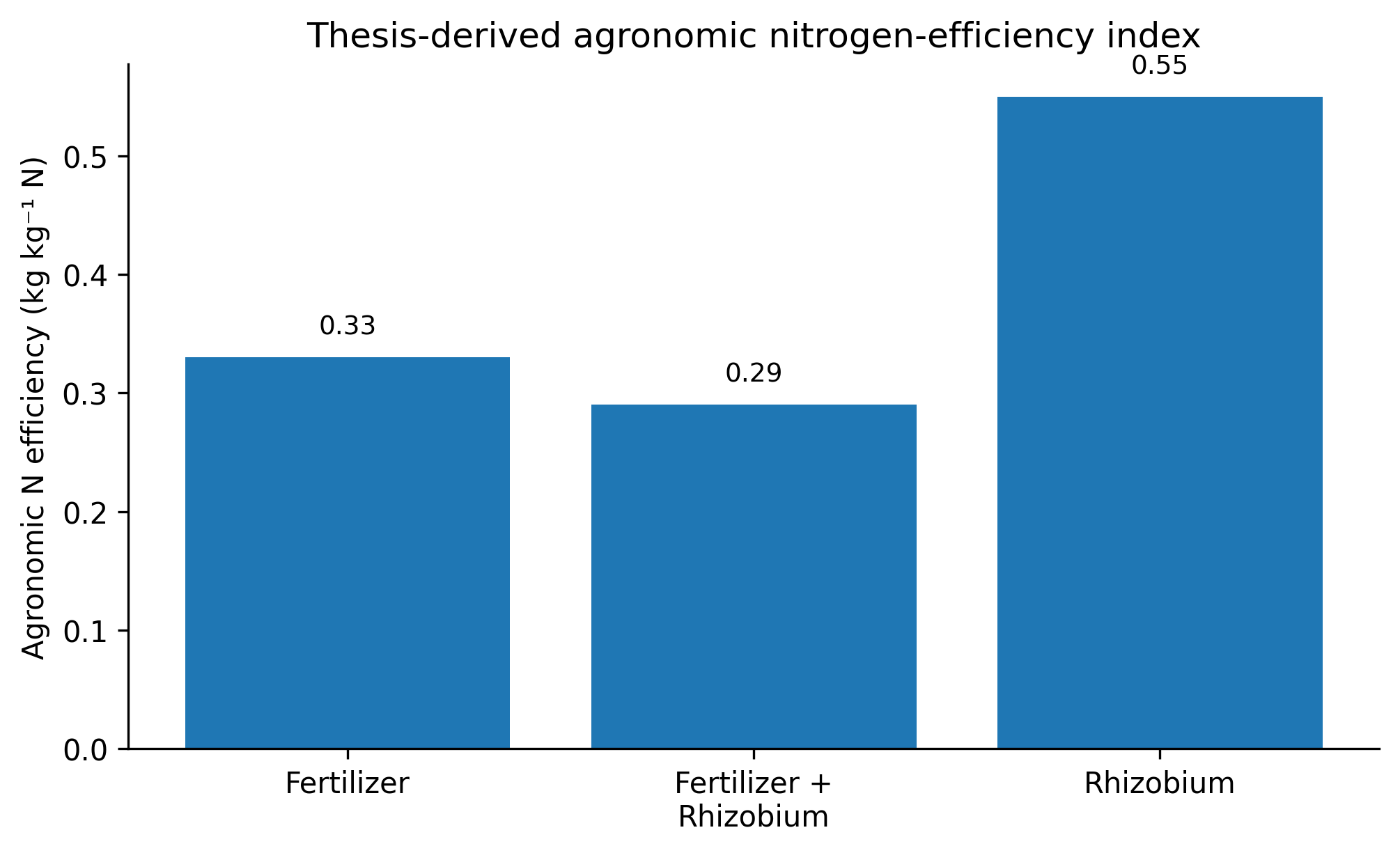
This focused secondary analysis examines biomass accumulation and harvest allocation in cowpea cultivar Gorda using measurements preserved in a master's thesis evaluating Rhizobium spp. inoculation and inorganic fertilization under ex vitro conditions. The original ex vitro experiment included 200 plants among four treatments: untreated control, inorganic fertilizer, inorganic fertilizer + Rhizobium spp., and Rhizobium spp. without inorganic fertilizer. Fresh biomass was 2.74, 4.44, 5.91, and 6.13 kg, respectively, and dry biomass was 0.511, 0.684, 0.710, and 0.899 kg. Relative to the control, the thesis reported fresh-biomass treatment-effect indices of 62%, 115%, and 123% and dry-biomass indices of 8%, 38%, and 75% for fertilizer, fertilizer + Rhizobium spp., and Rhizobium spp., respectively. Fresh-biomass differences were statistically significant, whereas dry-biomass differences were not. Harvest index declined from 49% in the control to 37%, 32%, and 31% across the three active treatments. Thus, the treatment with the greatest total biomass did not have the greatest proportional allocation to harvested grain. The thesis also reported agronomic nitrogen-efficiency indices of 0.33, 0.29, and 0.55 kg kg-1 N; these values are retained only as thesis-defined agronomic metrics because biological nitrogen fixation was not directly measured. The analysis highlights the distinction between biomass accumulation, harvest allocation, and direct physiological measurements of symbiotic N contribution.
Keywords
Keywords: cowpea Vigna unguiculata Rhizobium spp. biomass accumulation harvest index biomass partitioning nutrient management.
1. Introduction
Cowpea is a multipurpose grain legume of value in tropical and subtropical agriculture because it combines food production with the capacity to establish symbiotic associations with nitrogen-fixing rhizobia. This interaction can reduce dependence on external nitrogen inputs and support nutrient cycling in low-input production systems. Earlier work has emphasized the ecological and agronomic importance of biological nitrogen fixation in legumes and the central role of Rhizobium-related symbioses in nodule formation and nitrogen acquisition (Lloret and Martínez-Romero 2005). The Gorda cowpea cultivar used in the original experiment was developed for cultivation in Puerto Rico and represents a locally relevant genetic material for evaluating nutrient-management strategies (Beaver and Flores 2005).
Biomass production provides an integrated measure of crop response because it reflects the cumulative effects of nutrient acquisition, photosynthetic growth, and partitioning of assimilates among plant organs. However, greater total biomass does not necessarily translate into a greater harvest index. Harvest index expresses the proportion of total plant production allocated to the harvested economic component and can therefore decline when vegetative growth increases more rapidly than grain production. Studies cited in the thesis have shown that nitrogen and phosphorus management can alter both biomass accumulation and agronomic efficiency in legume-based systems (Apáez Barrios et al. 2013; Abebe and Alemayehu 2022)
Recent literature continues to support the relevance of rhizobial inoculation for cowpea productivity. A meta-synthesis of grain legume studies reported positive cowpea yield responses to rhizobial inoculation and to combined nutrient-management strategies (Buernor et al. 2022).
Rhizobial inoculation and nitrogen application have been reported to improve several yield and quality traits in fresh cowpea (Kandil and Ünlü 2023).Mineral nutrition and rhizobial symbiosis can also interact to influence biomass accumulation and allocation in cowpea, as demonstrated through the combined evaluation of liming, mineral nitrogen fertilization, and Rhizobium inoculation (Costa et al. 2023).
Inoculation with elite Bradyrhizobium strains has been shown to enhance shoot biomass while allowing direct quantification of symbiotic nitrogen fixation using a ^15N natural-abundance approach (Ayalew et al. 2024). Collectively, these findings support the potential contribution of rhizobial inoculation to cowpea biomass production (Costa et al. 2023; Kandil and Ünlü 2023; Ayalew et al. 2024).
The parent experiment evaluated Rhizobium spp. inoculation and inorganic fertilization across greenhouse and ex vitro conditions and was subsequently reported as a broader agronomic study (Burgos Arzola 2017; Burgos Arzola 2026). The present manuscript does not treat that shared experiment as a new independent efficacy trial. Instead, it asks a narrower question: whether a similar pattern in proportional harvest allocation accompanied the treatment pattern in total biomass. Its primary objective was therefore to characterize the divergence between biomass accumulation and harvest index across the four ex vitro treatments. The thesis-defined agronomic nitrogen-efficiency metric is retained as a secondary contextual endpoint, with explicit recognition that biological nitrogen fixation was not directly quantified.
2. Materials and Methods
2.1 Experimental source and analytical scope
This manuscript presents a focused secondary analysis of the ex-vitro component of the master's thesis entitled “Efecto de la inoculación con Rhizobium spp. sobre la cosecha de granos del frijol Vigna unguiculata” (Burgos Arzola 2017). The broader experiment was subsequently reported in a published agronomic article (Burgos Arzola 2026). The present analysis included only thesis-preserved measurements directly relevant to biomass accumulation, harvest index, and agronomic nitrogen efficiency. We did not reconstruct, simulate, or impute individual-level observations, and we did not generate new inferential statistical tests from unavailable raw data.
2.2 Experimental design and treatments
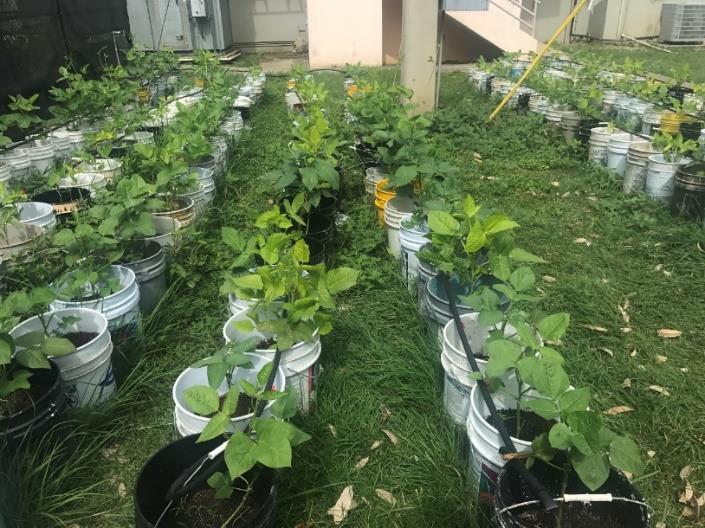
The ex vitro phase consisted of 200 cowpea (Vigna unguiculata) plants distributed among four treatment groups, with 50 plants assigned to each treatment: (1) untreated control, without Rhizobium spp. inoculation or inorganic fertilization; (2) inorganic fertilization without Rhizobium spp. inoculation; (3) combined inorganic fertilization and Rhizobium spp. inoculation; and (4) Rhizobium spp. inoculation without inorganic fertilization. Plants were maintained outdoors under the natural environmental conditions defined as ex vitro in the original experimental protocol. Irrigation and containerized experimental units were managed according to the procedures described in the original thesis (Burgos Arzola 2017).
2.3 Rhizobium inoculation and plant establishment.
Rhizobium spp. inoculum was prepared from active cowpea nodules using Yeast Mannitol Agar (YEMA) followed by Yeast Mannitol Broth (YEMB). Inoculated seeds were exposed to 100 mL of bacterial inoculum for 1 h 45 min before planting, whereas seeds in non-inoculated treatments were exposed to distilled water. The present manuscript does not reinterpret the microbiological identity of the inoculum beyond the Rhizobium spp. designation used in the thesis.
2.4 Biomass measurements and treatment-effect index
Fresh biomass was determined at harvest. Plant material used for dry-biomass determination was dried at 60 °C for 20 days. The thesis reported a treatment-effect index (IET) for both fresh and dry biomass relative to the untreated control. These IET values are reproduced exactly as reported in the thesis.
2.5 Harvest index
Harvest index was reported in the original study as the percentage of total plant production represented by harvested grain. The present secondary analysis reproduces the treatment-level harvest-index values preserved in the thesis (49%, 37%, 32%, and 31%) and does not reconstruct individual-plant harvest indices or generate new inferential tests for this endpoint.
2.5 Agronomic nitrogen efficiency
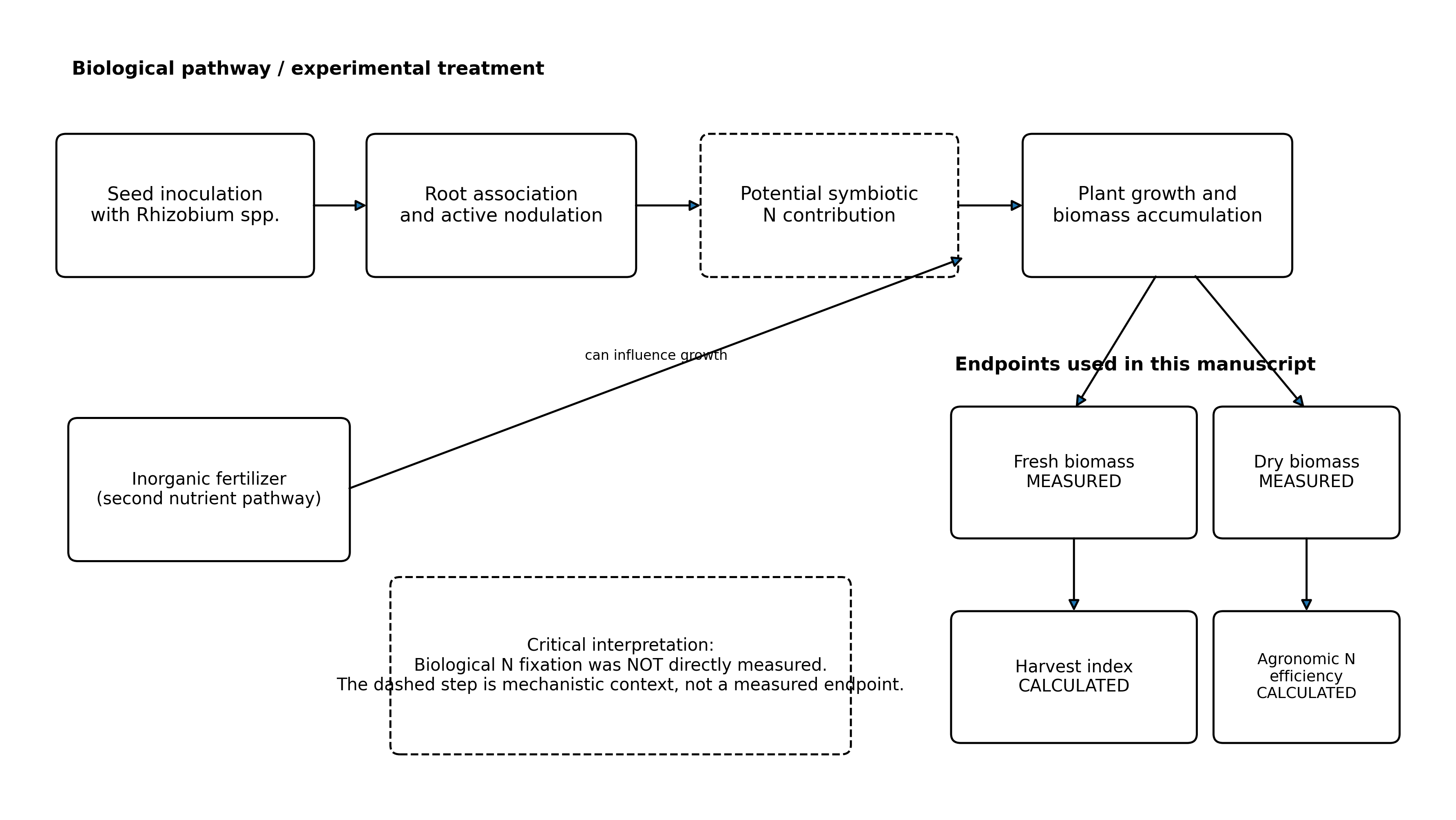
Agronomic nitrogen efficiency was reported in the thesis using EA = (RGF - RGT) / F, where RGF represents grain yield for the treatment, RGT represents grain yield of the control, and F represents the nutrient amount used in the original calculation. The thesis reported values for the fertilizer, fertilizer + Rhizobium, and Rhizobium-only treatments. Because the study did not directly quantify atmospheric N2 fixation or determine the amount of symbiotically fixed N entering the Rhizobium-only treatment, the 0.55 kg kg-1 N value is reproduced only as a thesis-defined agronomic index. It is not interpreted as nitrogen-use efficiency, N-fixation efficiency, or a physiological estimate of fixed nitrogen.
2.6 Statistical analysis
The original thesis used analysis of variance (ANOVA) and Tukey's procedure at a 95% confidence level. For the biomass data considered here, the thesis classified fresh-biomass treatment differences as significant (reported significance level 0.001) and dry-biomass differences as non-significant (p > 0.05). These classifications are retained as reported. No additional inferential tests were generated for harvest index or agronomic nitrogen efficiency where the thesis did not preserve a corresponding inferential output.
3. Results
3.1 Fresh and dry biomass
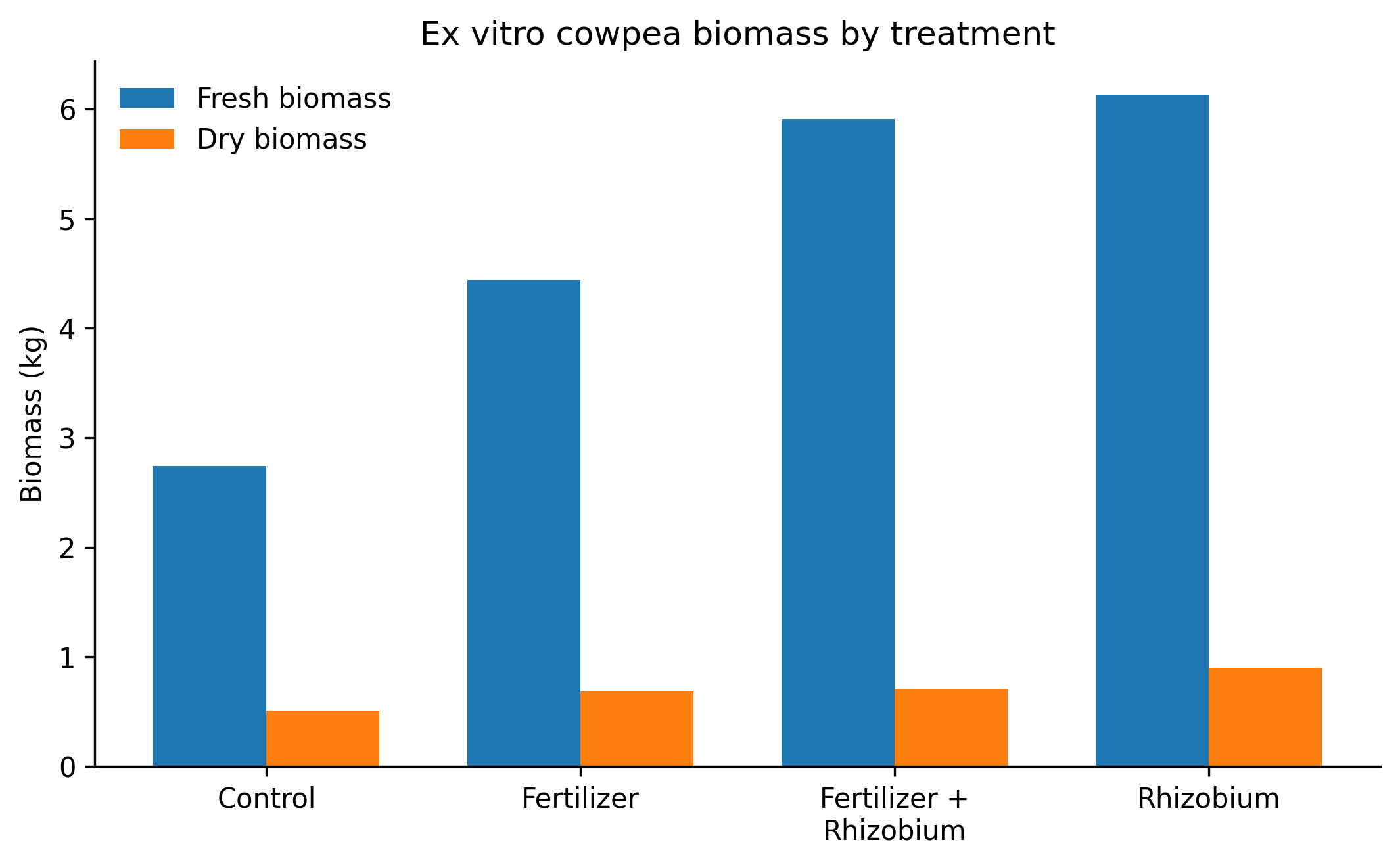
Fresh biomass increased progressively from 2.74 kg in the control to 4.44 kg with inorganic fertilizer, 5.91 kg with fertilizer + Rhizobium spp., and 6.13 kg with Rhizobium spp. alone. The corresponding fresh-biomass IET values reported in the thesis were 62%, 115%, and 123% for the three active treatments relative to the control. The thesis identified fresh-biomass differences among treatments as statistically significant.
Dry biomass was 0.511 kg in the control, 0.684 kg with fertilizer, 0.710 kg with fertilizer + Rhizobium spp., and 0.899 kg with Rhizobium spp. alone. The reported dry-biomass IET values were 8%, 38%, and 75%, respectively. Despite this numerical pattern, the thesis classified dry-biomass differences as non-significant; therefore, the larger dry-biomass value in the Rhizobium-only group is described as an observed treatment difference rather than as a statistically demonstrated effect.
| Treatment | Fresh biomass (kg) | Fresh IET (%) | Dry biomass (kg) | Dry IET (%) | Moisture (%) |
| Control | 2.74 | 0 | 0.511 | 0 | 81 |
| Inorganic fertilizer | 4.44 | 62 | 0.684 | 8 | 85 |
| Fertilizer + Rhizobium spp. | 5.91 | 115 | 0.710 | 38 | 88 |
| Rhizobium spp. | 6.13 | 123 | 0.899 | 75 | 85 |
3.2 Harvest index
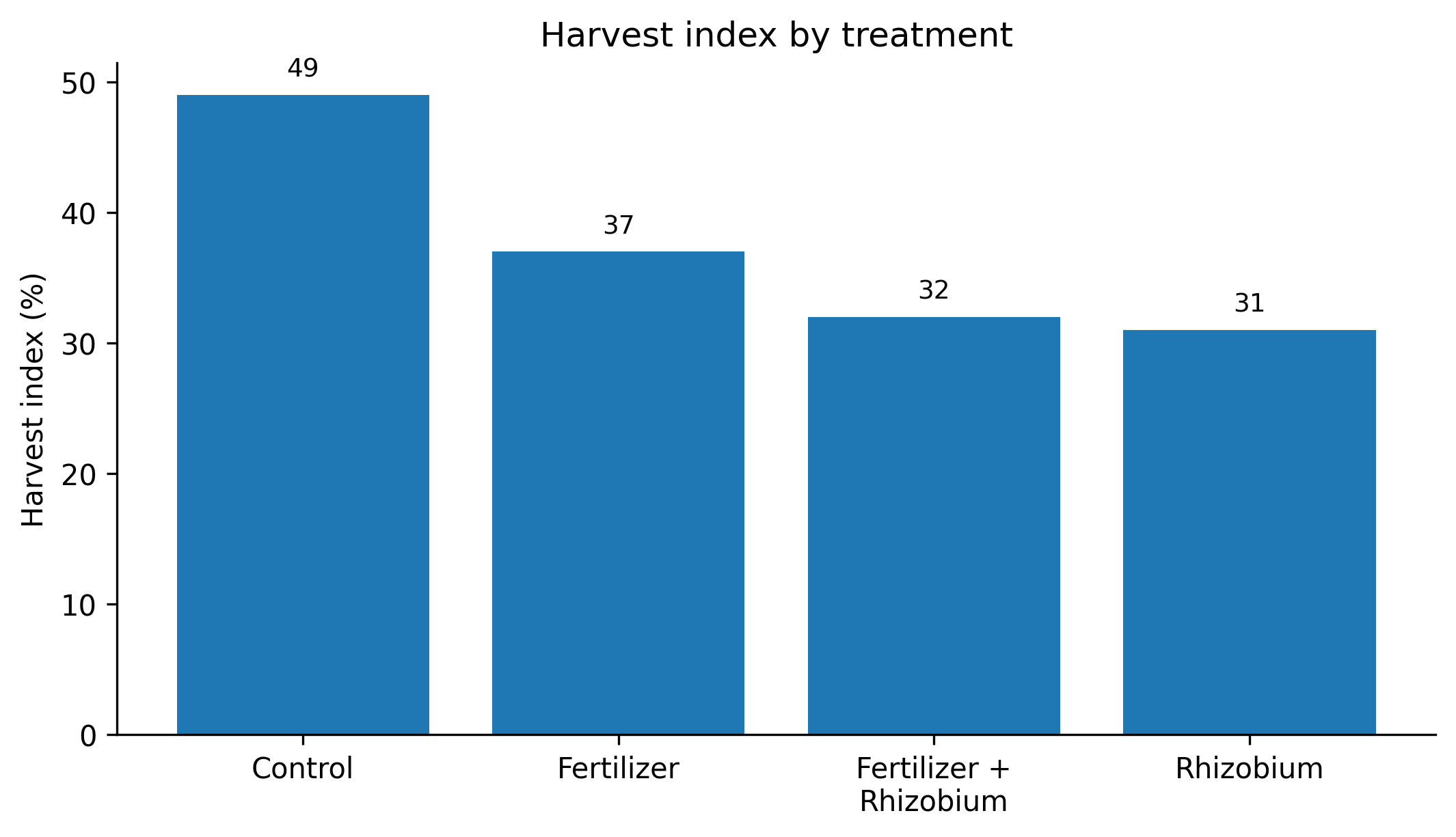
Harvest index showed the opposite directional pattern from total biomass. The control had the highest reported harvest index (49%), followed by inorganic fertilizer (37%), fertilizer + Rhizobium spp. (32%), and Rhizobium spp. alone (31%). Thus, treatments associated with greater total biomass had a smaller proportion of total plant production represented by harvested grain. The thesis interpreted this pattern as increased allocation to vegetative biomass.
3.3. Agronomic nitrogen efficiency
The thesis reported agronomic nitrogen-efficiency values of 0.33 kg kg-1 N for inorganic fertilizer, 0.29 kg kg-1 N for fertilizer + Rhizobium spp., and 0.55 kg kg-1 N for Rhizobium spp. alone. The Rhizobium-only treatment therefore had the greatest reported value of this calculated index. No value was assigned to the untreated control because it served as the reference term in the agronomic-efficiency calculation.
| Treatment | Harvest index (%) | Agronomic N efficiency (kg kg-1 N) |
| Control | 49 | - |
| Inorganic fertilizer | 37 | 0.33 |
| Fertilizer + Rhizobium spp. | 32 | 0.29 |
| Rhizobium spp. | 31 | 0.55 |
4. Discussion
A The focused biomass analysis shows a consistent numerical gradient in which the Rhizobium-only treatment produced the greatest fresh and dry biomass, followed by fertilizer + Rhizobium, fertilizer alone, and the untreated control. The strongest inferential support in the thesis applies to fresh biomass, which was reported as significantly different among treatments. Dry biomass followed the same general numerical pattern but was classified as non-significant. This distinction is important: the results support a statistically supported fresh-biomass response, whereas the dry-biomass pattern should be interpreted descriptively.
The observed biomass response is consistent with the broader literature on cowpea–rhizobia interactions. Positive yield responses to rhizobial inoculation have been reported across cowpea studies included in a meta-synthesis of grain legumes (Buernor et al. 2022). Positive responses of fresh cowpea to rhizobial inoculation and nitrogen application have also been reported (Kandil and Özdamar Ünlü 2023). Mineral nitrogen and Rhizobium inoculation can interact to influence biomass partitioning and production, reinforcing the importance of interpreting biomass as the outcome of multiple nutrient-management processes rather than as a direct proxy for biological nitrogen fixation (Costa et al. 2023).
A useful mechanistic comparison is provided by research in which cowpea biomass measurements were paired with direct ^15N-based estimates of symbiotic nitrogen contribution (Ayalew et al. 2024). Increased shoot biomass and symbiotic nitrogen contribution were observed following inoculation with elite Bradyrhizobium strains (Ayalew et al. 2024). In contrast, the present dataset contains no direct measurement of N₂ fixation. Accordingly, the greater biomass observed in the inoculated treatment can be discussed as an association with inoculation, but it cannot be quantitatively attributed to biologically fixed atmospheric nitrogen.
The harvest-index pattern represents the principal analytical contribution of this focused secondary analysis. Harvest index declined from 49% in the control to 31% in the Rhizobium-only treatment, while total biomass increased. Within the limits of the treatment-level values preserved in the thesis, this indicates that the ranking of treatments for total biomass differed from their ranking for proportional harvest allocation. Greater plant biomass, therefore, should not automatically be interpreted as greater proportional allocation to the harvested component. This distinction is agronomically relevant when evaluating bioinoculation strategies for grain legumes.
The thesis-defined agronomic nitrogen-efficiency index requires particularly cautious interpretation. The greatest reported value (0.55 kg kg⁻¹ N) occurred in the Rhizobium-only treatment, but the denominator was not supported by a direct measurement of symbiotically fixed nitrogen. The present manuscript therefore preserves the historical calculation for transparency without using it to claim superior physiological nitrogen-fixation efficiency. Direct isotopic approaches, such as the ^15N natural-abundance method, would be more appropriate for directly quantifying symbiotic nitrogen contribution (Ayalew et al. 2024)
Taken together, the treatment-level results show two distinct response dimensions: biomass accumulation was greatest in the Rhizobium-only treatment, whereas proportional harvest allocation was greatest in the control. This divergence represents the central finding of the present secondary analysis. These results support evaluating biomass accumulation and harvest allocation as distinct agronomic endpoints and provide a rationale for future experiments combining direct measurements of symbiotic nitrogen contribution with organ-specific biomass and grain-yield measurements.
5. Limitations
This manuscript is restricted to data and statistical outputs preserved in the master's thesis. Individual-level observations from the original experiment were not reconstructed or used to generate new inferential analyses for this secondary manuscript. Consequently, statistical interpretation is limited to the ANOVA and Tukey test results explicitly reported in the thesis (Burgos Arzola 2017).
Biological nitrogen fixation was not directly quantified using ^15N natural abundance, isotope dilution, acetylene reduction, total-N balance, or another direct physiological or isotopic method. Accordingly, the thesis-derived agronomic nitrogen-efficiency value reported for the Rhizobium-only treatment should not be interpreted as a direct measurement of symbiotically fixed atmospheric nitrogen.
The present manuscript analyzes a focused subset of the same original experiment previously reported in the parent agronomic publication (Burgos Arzola 2026). Its intended contribution is therefore a secondary analysis focused specifically on biomass accumulation, harvest allocation, harvest index, and the thesis-defined agronomic nitrogen-efficiency metric rather than a new independent efficacy trial. The relationship between the present secondary analysis and the parent publication should be explicitly disclosed to the journal editor at the time of submission.
6. Conclusion
In the ex vitro component of the original cowpea experiment, Rhizobium spp. inoculation without inorganic fertilizer produced the greatest reported fresh biomass (6.13 kg) and dry biomass (0.899 kg), whereas the untreated control exhibited the greatest harvest index (49%) (Burgos Arzola 2017). Fresh biomass differed significantly among treatments, while differences in dry biomass were non-significant (Burgos Arzola 2017). The contrasting treatment rankings for biomass accumulation and harvest index indicate that greater total biomass was not accompanied by greater proportional allocation to harvested grain. This distinction is consistent with evidence that mineral nutrition and rhizobial symbiosis can jointly influence biomass production and partitioning in cowpea (Costa et al. 2023). The thesis-defined agronomic nitrogen-efficiency values are retained only as contextual historical metrics and should not be interpreted as direct measurements of biological nitrogen fixation. This distinction is particularly important because direct isotopic approaches have been used to quantify symbiotic nitrogen contribution while simultaneously evaluating biomass responses to Bradyrhizobium inoculation in cowpea (Ayalew et al. 2024). Future studies should therefore integrate biomass partitioning and grain-yield measurements with direct quantification of symbiotic nitrogen contribution to determine whether increased biomass accumulation is accompanied by greater biological nitrogen fixation.
References
- Abebe BK, Alemayehu MT. 2022. A review of the nutritional use of cowpea (Vigna unguiculata L. Walp) for human and animal diets. J Agric Food Res. 10:100383 [accessed 2025 Apr 29]. DOI ↗ Google Scholar ↗
- Apáez Barrios P et al. 2013. Eficiencia agronómica de nitrógeno y fósforo en la producción de frijol chino en espaldera de maíz. Terra Latinoam. 31(4):285–293 [accessed 2026 Sept 9]. http://www.scielo.org.mx/scielo.php?script=sci_abstract&pid=S0187-57792013000500285&lng=es&nrm=iso&tlng=es DOI ↗ Google Scholar ↗
- Ayalew T, Yoseph T, Cadisch G. 2024. Symbiotic N2 fixation in cowpea varieties is markedly enhanced by inoculation with elite Bradyrhizobium strains. Rhizosphere. 32:100976 [accessed 2026 Sept 9]. DOI ↗ Google Scholar ↗
- Beaver JS, Flores CA. 2005. LIBERACIÓN DEL CULTIVAR DE FRIJOL [VIGNA UNGUICULATA (L.) WALP] ’GORDA‘. J Agric Univ P R. 89(3–4):267–269 [accessed 2025 Apr 29]. DOI ↗ Google Scholar ↗
- Buernor AB et al. 2022. Grain Legume Yield Responses to Rhizobia Inoculants and Phosphorus Supplementation Under Ghana Soils: A Meta-Synthesis. Front Plant Sci. 13:877433. DOI ↗ Google Scholar ↗
- Burgos Arzola BA. 2017. EFECTO DE LA INOCULACIÓN CON Rhizobium spp. SOBRE LA COSECHA DE GRANOS DEL FRIJOL Vigna unguiculata. [accessed 2025 Apr 29]. DOI ↗ Google Scholar ↗
- Burgos Arzola BA. 2026. Effect of Rhizobium spp. Inoculation on Growth and Grain Yield of Cowpea (Vigna unguiculata) Under Greenhouse and Ex Vitro Conditions. Int J Sci Res Manag IJSRM. 14(09):231–238 [accessed 2026 Sept 7]. DOI ↗ Google Scholar ↗
- Costa MG et al. 2023. Interaction of liming, mineral nitrogen fertilization, and Rhizobium inoculation in biomass partitioning and production of cowpea. J Plant Nutr. 46(16):3794–3809 [accessed 2026 Sept 9]. . 10.1080/01904167.2023.2211618 DOI ↗ Google Scholar ↗
- Kandil A, Ünlü H. 2023. Effect of rhizobium inoculation on yield and some quality properties of fresh cowpea. Cogent Food Agric. 9. DOI ↗ Google Scholar ↗
- Lloret L, Martínez-Romero E. 2005. Evolución y filogenia de Rhizobium. Rev Latinoam Microbiol. [published online ahead of print] DOI ↗ Google Scholar ↗