Abstract
This study investigated how heads of schools mobilise resources to promote climate change mitigation practices in public secondary schools in Kilimanjaro Region, Tanzania. The study was guided by Stapp's (1970) Environmental Education Theory. The study used a convergent mixed-methods design, drawing on a target population of 110,534. A sample of 25 schools, 25 heads of schools, 370 teachers, and 400 students, making a total sample of 795. A proportionate stratified random sampling technique was used to select schools; stratified random sampling was used to sample teachers and students; and criterion purposive sampling was used to select heads of schools. Data were collected through an interview guide, questionnaires, document analysis and an observation guide. Three experts ensured instrument validity: two from educational planning and administration and one from the Department of Social Science and Humanities. The reliability of the quantitative instruments was ensured using Cronbach's alpha, with coefficients of 0.888 for the teachers' questionnaire and 0.797 for the students' questionnaire. The trustworthiness of qualitative data was ensured through credibility, dependability, conformability and transferability. Quantitative data were analysed using descriptive statistics, whereas qualitative data were analysed using thematic analysis. Ethical considerations were observed, including informed consent, permission from the Vice-Chancellor of MWECAU, anonymity, and acknowledgement of sources. Findings showed that heads of schools supported climate change mitigation by mobilising funding, stakeholders, and materials, but that these efforts were undermined by insufficient funding, political interference, and a tendency to prioritise academic matters over climate concerns. The study concludes that heads of schools use a resource mobilisation strategy by mobilising financial, material, human, and community resources to promote climate change mitigation practices in public secondary schools. Thus, the study recommends that Heads of Schools should institutionalise environmental education through budgeted action plans, practical teacher training, and well-structured environmental clubs, while mobilising local partnerships and low-cost resources to address funding gaps.
Keywords
Keywords: Climate Change Mitigation Head of School Resource Mobilisation Environmental Education
1. Introduction
Climate change is one of the most urgent challenges confronting the global community today, affecting nearly every dimension of human and ecological life. Its effects are visible in extreme weather events, rising sea levels, and accelerating biodiversity loss, as documented in the scientific literature (IPCC, 2022; Stott et al., 2022). What makes this crisis particularly demanding is that it cannot be addressed through isolated interventions; it requires coordinated, swift, and decisive action across sectors, and education is increasingly recognised as one of the most powerful tools available for this purpose. Schools, in particular, occupy a unique position in this effort, since they serve as the primary sites where young people first encounter structured knowledge about the environment and their responsibility toward it. However, the extent to which schools actually deliver on this promise varies considerably, and much of that variation can be traced back to the quality of leadership provided by heads of schools. These leaders are not merely administrators; they are the individuals ultimately responsible for determining whether resources for climate change mitigation are secured, allocated, and put to meaningful use. This leadership function, and the strategies heads of schools use to mobilise resources, forms the central concern of the present study.
In North America, the integration of climate change education into school curricula has advanced considerably, with school leaders playing an increasingly active role in directing resources toward such programmes (Zhang et al., 2022; Davidson & Paus, 2023). Even so, this progress has not been uniform across the region, and notable disparities in resource availability continue to shape outcomes on the ground. States such as Texas illustrate this unevenness clearly, where constrained state-level support has limited how far climate initiatives can be implemented in practice (Nguyen et al., 2022; Pike & Murphy, 2022). These contrasts reveal that leadership alone cannot guarantee equitable outcomes; the broader policy and funding environment in which heads of schools operate matters just as much. School leaders in better-resourced districts can often translate ambition into action more readily than their counterparts working under tighter constraints. This pattern underscores a recurring theme that runs throughout the international literature: access to funding, and the leadership capacity to secure it, fundamentally shapes how climate change education takes root in different regions. This study explores this dynamic between leadership and resource access in the Tanzanian context.
A comparable pattern of uneven progress emerges when examining the European experience. Countries such as Sweden and Germany have demonstrated strong national commitment to advancing climate change education, and school leaders in these settings have worked deliberately to secure the resources needed to support sustainability initiatives (Green et al., 2022; Müller & Schneider, 2022). Yet beneath this apparent success lies a persistent urban-rural divide, with schools situated in cities typically enjoying considerably greater access to funding, training, and institutional support than those located in rural communities (Smith et al., 2022). This gap is not simply a matter of geography; it reflects deeper structural inequalities in how resources are distributed and how effectively school leaders in different settings can advocate for their institutions. Urban school heads, operating within denser networks of institutional support, often find it easier to mobilise partnerships and secure funding streams than rural leaders working in relative isolation. The result is a two-tiered system in which the quality of climate change education a student receives can depend heavily on where their school happens to be located. Once again, this illustrates how central the leadership function is in determining whether climate education becomes a lived reality or remains an unrealised policy aspiration.
Progress in Asia tells a similarly mixed story. Countries such as Japan and South Korea have made meaningful strides in developing structured frameworks for climate change education, yet rural regions within these countries continue to face substantial implementation obstacles (Yamamoto & Taniguchi, 2022; Lee & Kim, 2023). Rural China offers a particularly telling example, where limited infrastructure and weak support from local government authorities have significantly undermined the effectiveness of climate change education programmes, even where such programmes formally exist (Liu et al., 2023; Yin & Yang, 2023). In these more constrained settings, heads of schools often have few conventional options and must instead turn to external funding sources and community partnerships to keep their initiatives afloat. This reliance on informal and often unpredictable support channels places considerable pressure on school leaders, who must be resourceful and persistent in the absence of stable institutional backing. It also means that the success or failure of climate education in these contexts often hinges disproportionately on the individual initiative of the head of school, rather than on any guaranteed system of support. This pattern of leader-driven resource mobilisation under conditions of scarcity closely mirrors the situation found in many parts of Sub-Saharan Africa, including Tanzania.
Nowhere is the urgency of climate change more acutely felt than in Sub-Saharan Africa, where economies remain heavily dependent on agriculture and are therefore especially vulnerable to shifting weather patterns and environmental degradation (Chadwick et al., 2022; Opiyo et al., 2023). Despite this pressing vulnerability, resources dedicated to climate change education remain scarce across much of the region, and the scarcity is felt most sharply in rural areas where institutional support tends to be weakest. In countries such as Kenya and Tanzania, heads of schools have consequently taken on a central and often demanding role in securing and deploying whatever resources they can for climate change mitigation programmes (Mwangi et al., 2022; Njoroge et al., 2023). This responsibility is especially pronounced in Tanzania's Kilimanjaro Region, where school leaders continue to navigate significant resource constraints alongside limited government support as they attempt to weave climate initiatives into the fabric of everyday school life (Mwangi et al., 2022; Ochieng & Njoroge, 2022). These leaders are, in many respects, working against considerable odds, relying on personal initiative, local partnerships, and creative problem-solving to keep climate education programmes viable. Within this specific and demanding context, the present study focuses on how heads of schools in Kilimanjaro's public secondary schools actively mobilise resources to promote climate change mitigation practices.
Environmental Education Theory provides a useful lens for understanding why this leadership role matters so profoundly. The theory holds that effective education must go beyond the simple transmission of facts; it must cultivate a genuine emotional and intellectual connection to the environment while empowering individuals to translate that understanding into meaningful action (Tilbury, 2023; UNESCO, 2023). This theoretical grounding is central to the present study, which examines how heads of schools operating in a resource-constrained region such as Kilimanjaro influence the mobilisation and use of resources for climate change education. Because school leadership strongly determines whether such resources are made available and used effectively, and because considerable variation persists globally, the study deliberately focuses on Kilimanjaro, Tanzania. In this setting, heads of public secondary schools carry substantial responsibility for both securing and distributing the resources needed to sustain climate change mitigation efforts. By closely examining the leadership decisions and strategies these individuals employ, the study aims to clarify how they shape the integration of climate change mitigation within their schools despite considerable constraints. Ultimately, the findings are intended not only to illuminate the Kilimanjaro context but also to offer a leadership model that may prove valuable for schools facing similar resource challenges elsewhere.
2.Statement of the Problem
Low student engagement in practical environmental activities remains a persistent obstacle to climate change mitigation education in secondary schools across the Kilimanjaro Region. Climate change poses a serious threat to the region's ecosystems and livelihoods, yet public secondary schools continue to struggle to integrate climate education meaningfully, hampered by resource shortages, inadequate teaching materials, limited teacher training, and constrained facilities (Mtitu & Mneney, 2022; Shiboko & Mrema, 2024). Educators, policymakers, and environmental stakeholders have voiced concern that climate change education policies are not being translated into practical action in schools, which in turn limits students' ability to adopt climate-friendly behaviours (Alten et al., 2025).
Several studies have examined aspects of environmental education in Tanzania, including its sustainable integration into curricula, climate change awareness, adaptation practices among secondary school students, and the effect of climate change education on public perception and behaviour (Kayombo et al., 2025; Mashaza et al., 2024; Milabagano Nyambere, 2025; Misingi, 2024). However, has focused specifically on how heads of schools mobilise resources to promote climate change mitigation practices in public secondary schools. If low engagement in climate mitigation practices among students is left unaddressed, it will compromise the development of a generation equipped with the skills, knowledge, and disposition needed to confront climate change at the local, national, and international levels. Therefore, this study focused on the resource-mobilisation strategies of heads of public secondary schools to promote climate change mitigation practices in the Kilimanjaro Region, Tanzania.
3.Research Question
The study was guided by the following research question:
1. How do heads of schools use a resource-mobilisation strategy to promote climate change mitigation practices in public secondary schools in Kilimanjaro Region?
4.Significance of the Study
The findings of this study are relevant to educational stakeholders, including heads of schools, teachers, and curriculum developers, offering evidence-based insight into the strategies heads of schools use to mobilise resources for environmental education and climate change mitigation in public secondary schools in the Kilimanjaro Region. These insights will help guide the integration of practical, action-oriented environmental education into school practice and strengthen efforts to build climate-conscious behaviour among students. Theoretically, the study extends Environmental Education Theory by linking classroom-based environmental learning to real-world mitigation action, thereby deepening understanding of how educational leadership shapes environmental outcomes. It also contributes to the broader body of knowledge as a reference for future research on school leadership and environmental education in Tanzania and similar contexts. At the policy level, the findings will inform the implementation and refinement of national frameworks, such as the Education and Training Policy (2014, 2023 ed.) and the National Climate Change Response Strategy (2021–2026), particularly by strengthening the role of schools in climate change awareness and mitigation.
5.Theoretical Framework
This study is guided by Environmental Education Theory, developed by William Stapp and other environmental education scholars in the 1970s. The theory is founded on the premise that increasing individuals' understanding of environmental challenges and their underlying human causes enhances their capacity to make informed decisions and engage in sustainable practices. It emphasises an interdisciplinary approach that integrates knowledge from both the natural and social sciences, with particular attention to ecological literacy, systems thinking, and the complex interactions between human activities and natural systems.
A major strength of Environmental Education Theory is its ability to promote critical awareness, problem-solving skills, and experiential learning approaches that enable learners to engage meaningfully with environmental issues. Its interdisciplinary orientation also encourages collaboration among schools, communities, and other stakeholders in developing context-specific solutions. However, the application of the theory can be challenging, particularly in educational settings where limited financial resources, inadequate institutional support, and examination-focused curricula restrict the adoption of broader sustainability-oriented approaches. Therefore, the theory highlights an important gap between developing environmental awareness and creating the institutional conditions necessary for sustained environmental action.
In the context of this study, Environmental Education Theory provides a valuable framework for examining the role of heads of schools in mobilising resources for climate change mitigation in public secondary schools in Kilimanjaro Region. Heads of schools are not only responsible for allocating available resources but also play a critical role in creating an institutional culture that promotes environmental responsibility among teachers, students, and surrounding communities. The theory's emphasis on experiential learning, stakeholder collaboration, and community engagement aligns with the realities faced by heads of schools who must develop partnerships, encourage student participation, and maximise limited resources to support climate-related initiatives. Applying this theoretical perspective enables the study to explore how leadership practices influence the transition of climate change mitigation from policy objectives into practical actions within school environments.
6.Literature Review
Resource mobilisation refers to the deliberate effort to identify, secure, and utilise available human, financial, material, and institutional support to achieve a given goal. In schools, heads of schools play a central role in directing such resources toward activities that reduce environmental degradation and strengthen climate change mitigation, which may include mobilising teachers, students, parents, community members, government agencies, and development partners to support tree planting, waste management, environmental clubs, energy-saving practices, and climate education. Because climate change mitigation calls for both awareness and practical action, heads of schools’ ability to organise and coordinate resources becomes an important strategy for promoting sustainable environmental practice within and around schools. The following studies illustrate how this challenge has been addressed.
Kafa et al. (2025) examined, through an exploratory qualitative case study, how heads of schools within Cyprus's centralised education system build external networks, partnerships, and support systems for their schools. The study involved six heads of urban secondary schools in Larnaca, Limassol, and Nicosia, purposively selected after Ministry of Education inspectors identified them as leading successful school organisations. Data were gathered through interview protocols developed for the International Successful School Principalship Project, focusing on leadership practice, external leadership, school culture, trust, and relationships with parents, the local community, and other organisations, and were analysed through case-study interpretation and narrative presentation. The findings revealed that successful heads of schools had built strong relationships with parents, parent associations, neighbouring schools, local communities, municipalities, churches, businesses, sponsors, and other external stakeholders.
What stands out in Kafa et al.'s (2025) findings is that heads of schools can draw support from far beyond the government purse, through personal networks, trust built over time, sponsorship, and collaboration with a wide range of stakeholders. Their sample, however, was made up of heads already singled out by ministry inspectors as running successful schools, which means the study can say very little about how an ordinary or struggling head of school goes about building the same kind of support. Nor was the study concerned with climate change at all; its interest lay in how schools fund themselves generally. The present study speaks directly to both gaps. Because its sample is drawn through stratified random selection rather than reputation, it includes schools that are by no means already thriving, and because its focus is deliberately narrowed to climate change mitigation, whatever patterns it uncovers, whether in tree planting, environmental clubs, waste management, or water and energy conservation, bear directly on the strategy this study set out to investigate.
Using a qualitative critical space analysis design, Yoon et al. (2025) examined how school fundraising in Canada is shaped by neighbourhood wealth, space, community advantage, and structural inequality, drawing on a sample of two high schools in contrasting urban neighbourhoods within one Canadian prairie province. The findings revealed that unequal community wealth produced unequal fundraising processes: schools in low-income and under-resourced areas carried a heavier and more prolonged fundraising burden, while schools in better-resourced communities enjoyed a stronger fundraising advantage.
Yoon et al.'s (2025) central insight, that how much a school can raise has as much to do with the wealth of its surrounding community as with the effort of its leadership, is a useful corrective to any account that treats resource mobilisation as a matter of leadership skill alone. Even so, the two schools in their sample already operated within established fundraising cultures, so the heads of schools studied were mobilising resources in systems that were, relatively speaking, already well off. A sample of two schools confined to a single Canadian province is also a slender base from which to generalise, and a critical space analysis, by its nature, tells us more about how unevenly resources are raised than about whether they are put to good use once secured. Kilimanjaro's public secondary schools present a rather different picture: schools with no alumni networks or established donor bases to lean on, where a head of school's resourcefulness may matter more precisely because there is no such safety net. By drawing on 25 schools spread across all seven districts of the region, and by tracking not just how resources are raised but how they are subsequently used, this study is positioned to speak to both the scale and the use-effectiveness questions that Yoon et al.'s (2025) design could not.
Abdullahi et al. (2025) used a quantitative survey design to examine how educational management strategies, particularly community engagement, infrastructure management, and student involvement, could help mitigate climate change issues in public senior secondary schools in Kwara State, Nigeria. Data were collected from school administrators and teachers using a standardised questionnaire and analysed with Smart PLS 3.0. The findings revealed that community engagement, infrastructure management, and student involvement were significant elements of an effective climate change strategy, and that collaboration between schools and communities, sustainable infrastructure planning, and active student participation strengthened school-based climate change responses.
The value of Abdullahi et al.'s (2025) work lies in demonstrating that school management can shape climate change outcomes directly, not merely through policy statements but through concrete community, infrastructure, and student-involvement decisions. The study's reach, though, stopped at management strategies in the broad sense; it did not ask what heads of schools themselves specifically do to bring resources together, which is the question this study takes up. A more serious concern is methodological: the entire evidence base rests on one standardised questionnaire completed by administrators and teachers, with no interviews or direct observation to explain why the statistical relationships hold, and no students consulted at all, despite student engagement being the outcome the study cared about. A survey of this kind can tell us that a relationship exists; it cannot tell us how that relationship plays out on the ground. This study was designed with that limitation in mind, combining questionnaires for teachers and students with interview guides for heads of schools and an observation guide for the school environment itself, so that the numbers can be read alongside an account of how and why they came about.
Kawinzi et al. (2024) examined resource allocation as an institutional determinant of strategic plan implementation in public secondary schools in Machakos County, Kenya, using a descriptive survey design. The target population comprised 351 public secondary schools, 351 principals, 1,404 class teachers, and 1,755 heads of academic departments, from which a sample of 105 principals, 176 heads of department, and 140 class teachers was drawn. Data were collected through questionnaires and interview guides and analysed using descriptive and inferential statistics. The findings revealed that resource allocation had no statistically significant effect on strategic plan implementation (β = -0.0168, p = .714), and that many principals disagreed that government funds were adequate or released on time.
Perhaps the most useful lesson from Kawinzi et al. (2024) is a negative one: simply having resources on paper does not translate into implementation, since so much depends on whether those resources arrive on time and match what a school actually needs. That said, the study's cross-sectional, descriptive design leaves an obvious question unanswered, namely why resource allocation showed no significant statistical effect in the first place; a survey of this kind can register the absence of a relationship without being able to explain it. Its scope, moreover, was strategic planning writ large, not the more specific question of how heads of schools go about securing, organising, and deploying resources, which is what this study is built to examine. Where Kawinzi et al. (2024) could only report a null finding, the present study pairs quantitative data on the general pattern of resource mobilisation with qualitative accounts of what heads of schools actually experience and do, so that a finding of inadequacy, should one emerge, comes with an explanation attached rather than standing alone.
Mosha et al. (2024) examined the practicability of fundraising as a strategy used by heads of schools to mobilise physical resources in public secondary schools in Hai District, Tanzania, adopting a convergent mixed-methods design guided by Resource Mobilisation Theory. The target population comprised one District Secondary Education Officer, 624 teachers, and 31 heads of schools, from which a sample of 124 teachers, six heads of schools, and the District Secondary Education Officer (N = 131) was drawn. Data were collected through questionnaires, interview guides, and a document analysis guide. The findings revealed that fundraising was an important strategy for bridging resource gaps and improving the availability of physical resources in public secondary schools.
Being set in Tanzania and concerned with heads of schools' own fundraising efforts, Mosha et al.'s (2024) work sits closer to the present study than most of the others reviewed here, and it makes a convincing case that fundraising genuinely helps when government provision falls short. Its lens, however, almost exclusively on physical resources, leaving human labour, community partnerships, technical support, local materials, environmental expertise, and institutional networks largely outside the picture, even though these plainly matter to how a school mobilises resources for anything, including climate change mitigation. The sample was also confined to a single district, which is too narrow a slice of the Kilimanjaro Region to say much about the region as a whole. This study widens the lens on both counts: it considers the fuller range of resources heads of schools might draw on beyond the physical, and it samples across all seven districts of the region rather than one, so that whatever patterns emerge can be spoken of with more confidence as regional rather than local.
Research Gap
From the literature reviewed, the researcher found that none of the studies treats resource mobilisation as a strategy aimed specifically at climate change mitigation Kafa et al. (2025) and Yoon et al. (2025) look at how heads of schools pull in external networks, trust, and fundraising, but for general school funding rather than climate work; Abdullahi et al. (2025) gets closer by linking school management to climate response, yet spreads across community engagement, infrastructure, and student involvement without pinning down what heads of schools actually do to mobilise resources; and Kawinzi et al. (2024) and Mosha et al. (2024), while both concerned with resource allocation, focus on strategic plan implementation and physical resources respectively, neither on mitigation as such. The settings compound the problem: Cyprus, urban Canada, Kwara State, Machakos County, and Hai District all sit far from the resource scarcity, rural character, and climate vulnerability that shape Kilimanjaro Region's public secondary schools, where heads of schools have none of the alumni networks or fundraising cultures that studies like Yoon et al. (2025) takes for granted.
Methodologically, too, the picture is thin, with small qualitative case studies, a lone quantitative questionnaire, or mixed methods confined to one district and just over a hundred respondents none of it approaching the triangulation a 795-respondent convergent design across heads of schools, teachers, and students could offer. And on population, Kawinzi et al. (2024), Abdullahi et al. (2025), and Mosha et al. (2024) all leave students out entirely, with Mosha further narrowing to a single district rather than the Kilimanjaro Region as a whole. This combination of thematic, contextual, methodological, and population-based gaps is what the current study sets out to close.
7.Research Methodology
This study was grounded in pragmatism, the philosophical worldview that judges research approaches not by allegiance to one paradigm but by their usefulness in answering the questions at hand: how heads of schools in Kilimanjaro's public secondary schools use a mobilisation of resources strategy to promote climate change mitigation practices. Answering that question meant establishing the degree of this mobilisation across schools while also understanding how it actually unfolds in the day-to-day running of a school, and pragmatism allowed the study to pursue both without being confined to a single paradigm. This philosophical stance led naturally to a mixed methods approach, and within that, a convergent design: quantitative and qualitative data were collected side by side, which suited a study trying to capture both the scale of resource mobilisation, through questionnaire data from teachers, and students, and its texture, through interview guide for the heads of schools and observation guide for the school environment of how heads of schools go about securing resources for climate mitigation on the ground.
As Creswell and Plano Clark (2018) note, a key advantage of this design is that it allows the researcher to collect quantitative and qualitative data simultaneously and then merge them, so that the strengths of one approach offset the weaknesses of the other, producing a more complete understanding of the research problem. Quantitative data, gathered through questionnaires, measured heads of schools' strategies for mobilising resources to promote climate change mitigation practices, while qualitative data, collected through interviews and observations, offered a deeper account of how that strategy played out in practice. The target population comprised 249 public secondary schools, 249 heads of schools, 4,835 teachers, and 105,450 students, for a total population of 110,534. From this, a sample of 25 schools, 25 heads of schools, 370 teachers, and 400 students, for a total sample size of 795, was drawn. Teacher and student sample sizes were determined using Israel's sample size table, and participants across all categories were selected through stratified random sampling. Data collection combined questionnaires, an interview guide, and an observation guide, which together allowed for triangulation of findings, and ethical considerations, including informed consent, confidentiality, and cultural sensitivity, were observed throughout.
8.Data Presentation, Interpretation, and Discussion of Findings
This section presents and discusses data on heads of public secondary schools' strategies for mobilising resources to promote climate change mitigation practices. Questionnaires, interview guides, and observation guides were used together to address the research question, each offering a different vantage point on the activities of heads of schools. This combination made it possible to blend quantitative data with qualitative narrative for a fuller picture of how heads of schools contributed to the availability and use of resources for climate change mitigation. Responses to the Likert-scale items were interpreted following Vasileiou et al. (2018), who classify mean scores between 1.00 and 1.49 as strong disagreement and scores between 4.50 and 5.00 as strong agreement, a scheme that supports a systematic and reliable reading of participants' views. The scale ranged from 1 (strongly disagree) to 5 (strongly agree).
| No. | Statement | Respondents | SD | D | MA | A | SA | Mean |
| I | HoS sets aside funds specifically for climate change mitigation activities | Teachers | 147 (46%) | 88 (28%) | 38 (12%) | 35 (11%) | 11 (3%) | 1.98 |
| Students | 145 (43%) | 84 (25%) | 40 (12%) | 55 (16%) | 17 (5%) | 2.16 | ||
| Ii | HoS provides adequate physical resources (tools and equipment) | Teachers | 91 (29%) | 127 (40%) | 55 (17%) | 33 (10%) | 13 (4%) | 2.22 |
| Students | 78 (23%) | 137 (40%) | 58 (17%) | 53 (16%) | 15 (4%) | 2.38 | ||
| Iii | HoS mobilises practical teaching and learning materials | Teachers | 109 (34%) | 96 (30%) | 78 (24%) | 29 (9%) | 7 (2%) | 2.15 |
| Students | 111 (33%) | 100 (29%) | 77 (23%) | 46 (13%) | 7 (2%) | 2.23 | ||
| Iv | HoS facilitates access to government/non-government financial support | Teachers | 89 (28%) | 115 (36%) | 69 (22%) | 34 (11%) | 12 (4%) | 2.27 |
| Students | 98 (29%) | 113 (33%) | 74 (22%) | 41 (12%) | 15 (4%) | 2.30 | ||
| V | HoS supports infrastructure (tree nurseries, waste management, energy-saving technologies) | Teachers | 97 (30%) | 83 (26%) | 80 (25%) | 36 (11%) | 23 (7%) | 2.39 |
| Students | 98 (29%) | 85 (25%) | 75 (22%) | 60 (18%) | 23 (7%) | 2.49 | ||
| vi | HoS ensures access to reference materials and guidelines | Teachers | 89 (28%) | 111 (35%) | 90 (28%) | 22 (7%) | 7 (2%) | 2.21 |
| Students | 88 (26%) | 118 (35%) | 94 (28%) | 33 (10%) | 8 (2%) | 2.28 | ||
| vii | HoS actively mobilises external resources | Teachers | 147 (46%) | 70 (22%) | 46 (14%) | 40 (13%) | 16 (5%) | 2.08 |
| Students | 151 (44%) | 62 (18%) | 48 (14%) | 59 (17%) | 21 (6%) | 2.23 | ||
| viii | HoS prioritises school resources for mitigation activities | Teachers | 73 (23%) | 135 (42%) | 64 (20%) | 32 (10%) | 15 (5%) | 2.31 |
| Students | 86 (25%) | 133 (39%) | 66 (19%) | 36 (11%) | 20 (6%) | 2.33 | ||
| ix | HoS ensures students' access to materials and facilities | Teachers | 77 (24%) | 108 (34%) | 79 (25%) | 45 (14%) | 10 (3%) | 2.38 |
| Students | 76 (22%) | 120 (35%) | 73 (21%) | 58 (17%) | 14 (4%) | 2.45 | ||
| x | HoS ensures effective maintenance and use of resources | Teachers | 94 (29%) | 114 (36%) | 77 (24%) | 25 (8%) | 9 (3%) | 2.19 |
| Students | 95 (28%) | 119 (35%) | 78 (23%) | 36 (11%) | 13 (4%) | 2.28 |
Note. SD = strongly disagree; D = disagree; MA = moderately agree; A = agree; SA = strongly agree. Source: Field data (2025).
As Table 1 shows, 56% of teachers disagreed that heads of schools supported the provision of infrastructure such as tree nurseries, waste-management facilities, and energy-saving technologies, against only 18% who agreed; students responded similarly, with 54% disagreeing and 25% agreeing. The mean scores, 2.39 for teachers and 2.49 for students, were unanimous, though students were less critical. Most teachers and students, in other words, did not regard the infrastructure their schools provided as adequate for climate change mitigation. The minority who agreed may have worked in schools where such facilities existed or had themselves taken part in environmental initiatives coordinated by their head of school, but the overall pattern still points to a gap between the infrastructure schools need and what most currently have. Interview data helped clarify both the efforts heads of schools were making and the financial constraints under which they worked.
Head of School One explained:
As the Head of School, I ensure that I have the necessary resources for climate-change mitigation by obtaining them through different means. I have a few waste bins and composting practices in place, and I am still working on recycling. Although the school lacks sufficient funds to purchase all the dustbins we need, I rely on donations from environmental partners and other donors, although these are not always sufficient. In addition, while we lack resources for infrastructure such as gutters and terraces, we work with the community and the Municipal Council to arrange waste collection and undertake measures, such as digging trenches, to prevent soil erosion. (Interview with Head of School One, May 8, 2025)
Head of School Six similarly reported that the school had begun separating waste and preparing compost but acknowledged that more remained to be done, since the infrastructure for climate change mitigation was "still developing" (Interview with Head of School Six, May 15, 2025). Head of School Ten added that the school depended on donations for its waste-management facilities, though the resulting system was "not as efficient as it should be" (Interview with Head of School Ten, May 27, 2025).
Together, these accounts suggest that at least some heads of schools were not passive in the face of resource constraints: they took practical steps toward better waste management through composting, waste separation, collaboration with local communities, and support from municipal authorities and donors. These activities indicate a degree of genuine commitment, but they remained limited in scale and were rarely financed through regular school budgets, leaving their sustainability dependent on ad hoc donations and external partnerships. The presence of a few bins or composting sites, then, did not necessarily reflect a coordinated, sustainable waste-management system across the school.
School observations added further depth to these findings. Waste bins were present in most schools visited, but their condition and use varied considerably. A small number of schools had separate bins for different waste categories, though proper recycling stations appeared only in a few locations. In several schools, bins were overflowing with waste, waste went unseparated, and some plastic bins had themselves ended up discarded in rubbish pits, as illustrated in Figure 1.
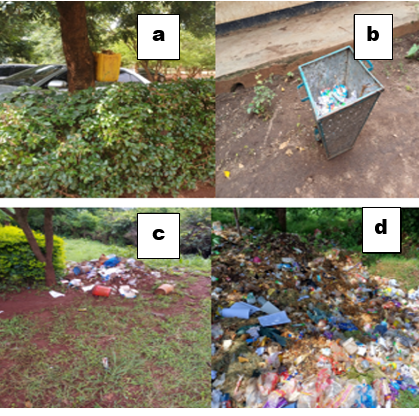
Source: Field data (2025)
Key:
-
Plastic dustbin that was overflowing with rubbish in School One
-
A waste bin with very little garbage in School Two
-
Multiple plastic bins were thrown with garbage in the rubbish pit in School Three
-
Unseparated garbage in the rubbish pit of School Four.
These observations indicate that the mere presence of waste bins did not guarantee effective waste management. In many cases, facilities were insufficient, poorly maintained, used incorrectly, or unsupported by regular collection and separation procedures, which reduced their practical value and their contribution to environmental education and climate change mitigation.
The quantitative data point to disagreement that heads of schools supported infrastructure for tree nurseries, waste management, and energy-saving technologies, while the qualitative data show that heads of schools were not entirely inactive: several had introduced composting, waste separation, erosion-control trenches, and community-based waste collection. These measures remained modest, though, constrained by limited school funding, inadequate facilities, and dependence on donors. Waste bins were present in most schools, but overflowing containers, unsegregated waste, discarded bins, and limited recycling facilities suggested that existing infrastructure was not being managed as part of a consistent, school-wide system. Overall, environmental infrastructure existed but was fragmented, underfunded, and poorly institutionalised: teachers' and students' disagreement reflected limited coverage and weak facility functioning, while interviews showed heads of schools responding as best they could with the resources available to them. The problem was therefore not simply a lack of physical infrastructure, but a lack or absence of sustained financing, maintenance, coordination, and participation needed to make that infrastructure work.
These findings align with those of Abdullahi et al. (2025), who found that effective school responses to climate change depend on infrastructure management, community engagement, leadership, and student involvement acting together; infrastructure alone cannot sustain lasting environmental practice when poorly maintained or disconnected from everyday school activity. They also echo Stapp's (1970) Environmental Education Theory, which stresses the importance of a supportive learning environment in which learners actively participate in addressing environmental problems. The uneven condition of waste facilities observed in this study suggests that students, teachers, and other staff were not being consistently drawn into waste separation, recycling, monitoring, and maintenance.
Table 1 further shows that 74% of teachers disagreed that heads of schools set aside funds for climate change mitigation activities, against 14% who agreed; students responded similarly, with 68% disagreeing and 21% agreeing. The mean scores of 1.98 for teachers and 2.16 for students both indicate disagreement, suggesting a gap in heads of schools' financial prioritisation of climate initiatives. Interviews with heads of schools helped explain this shortfall.
Head of School Two stated:
While I recognise the importance of climate change mitigation, our ability to allocate sufficient funds for these initiatives has been limited. I rely on external donations and community support, but the funds I can set aside internally are not enough to fully implement the changes I would like to see. (Interview with Head of School Two, May 9, 2025)
Head of School Seven added:
I have made some efforts towards climate change mitigation, but the financial resources required to make a significant impact are simply not available. Despite our best intentions, the funding required to implement comprehensive programmes is often insufficient, limiting our effectiveness. (Interview with Head of School Seven, May 16, 2025)
The responses of the heads of schools suggest that limited fund allocation did not stem from a lack of awareness. Heads of schools understood the importance of climate change mitigation but operated within budgets already stretched by competing academic, administrative, and welfare demands, which left environmental activities treated as occasional projects rather than regular items of school expenditure. Some relied on donations, community contributions, or support from external organisations, but such funding proved neither sufficient nor predictable. To corroborate these accounts, an observation guide was used to capture physical evidence of environmental practices and infrastructure across the school environments.
Observations within the school environments confirmed these financial limitations. There was little evidence of substantial investment in waste-separation systems, renewable energy technologies, practical environmental laboratories, or energy-efficient facilities. Tree planting was more common, since it required relatively little capital and could draw on student labour, donated seedlings, or community participation; more costly interventions were rare. Where facilities such as renewable energy systems or water-harvesting infrastructure did exist, they had generally come from parents, non-governmental organisations, development partners, or individual supporters rather than a coordinated school budget.
Generally, both teachers and students disagreed that heads of schools allocate funds specifically for climate change mitigation, and the qualitative data help explain why: heads of schools recognised the need for mitigation activities but lacked the internal financial capacity to implement comprehensive programmes, relying instead on donations and community support while limiting themselves largely to low-cost activities such as tree planting. intensive measures, including renewable energy, recycling systems, environmental laboratories, and energy-efficient technologies, were largely absent. Financial scarcity, however, does not fully absolve leadership of responsibility. Heads of schools retain some influence over whether environmental priorities appear in school plans, whether potential partners are approached, whether existing facilities are maintained, and whether the limited resources available are directed toward realistic environmental activities.
These findings align with the theory of environmental education, which emphasises that meaningful environmental action depends not only on awareness and intention but on a supportive institutional environment that provides the resources, structures, and opportunities needed for that action to be carried out. Even where heads of schools clearly intend to implement climate mitigation activities, and even where such activities are written into school plans, the absence of dedicated funding, procurement systems, and assigned responsibility weakens the enabling environment needed for implementation, producing the gap between planning and practice that Kawinzi et al. (2024) describe. Mosha et al. (2024) similarly found that fundraising eases resource shortages only temporarily: it strengthens a school's capacity to act in the short term, but because it is not systematic, that capacity is rarely stable enough to sustain long-term implementation or maintenance. Yoon et al. (2025) extend this point by showing that the enabling environment for resource mobilisation is not evenly distributed but shaped by the wealth and donor networks available in a school's surrounding community, so that heads of schools in wealthier areas enjoy genuinely greater capacity to mobilise resources than their counterparts in low-income areas, even where both hold identical intentions and pursue identical strategies. The disparity in outcomes, in other words, has less to do with differences in planning or intent than with unequal access to the means of executing that intent.
Table 1 also shows that 58% of teachers disagreed that heads of schools ensure students have access to the materials and facilities needed to participate in climate change mitigation activities, compared with 17% who agreed; among students, 57% disagreed, and 21% agreed. The mean scores, 2.31 for teachers and 2.45 for students, show they disagreed; teachers and students alike saw heads of schools as doing little to ensure such access. The interview data helped explain this trend, as heads of schools acknowledged the resource limitations shaping their responses.
Head of School Three noted:
I acknowledge the importance of climate change education, but unfortunately, the resources available to us are limited. While I try to incorporate sustainability into our programmes, the lack of adequate facilities and funding prevents us from fully engaging students in these activities. (Interview with Head of School Three, May 12, 2025)
Head of School Nine was more direct still, admitting that climate change mitigation was not prioritised in the budget, which left students with few opportunities for hands-on projects (Interview with Head of School Nine, May 20, 2025). These responses suggest that limited student participation stemmed less from a lack of awareness among school leaders than from financial constraints and the low priority given to climate change mitigation in school budgets.
Observations reinforced this picture. Recycling stations were absent from all 25 schools visited, and plastic, glass, paper, food remains, and leaves were generally disposed of together. Across the schools, the researcher observed only one incinerator and one geography laboratory; only two schools used gas for cooking, with the rest relying mainly on firewood. Waste bins, composting areas, water-conservation facilities, and energy-related infrastructure were generally limited or poorly maintained, though green spaces stood out as a notable exception, being comparatively well maintained across all 25 schools.
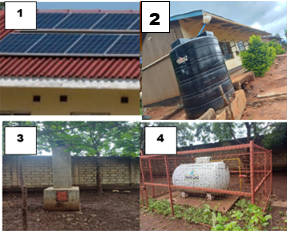
Source: Field data (2025)
Key:
-
Evidence of solar panels donated in school seven by the environmentally friendly non-governmental organisation
-
Water tank for harvesting rainwater in School Thirteen
-
Incinerator for combustion of waste materials in school nineteen
-
Clean cooking energy source (gas tank) at school twenty-four.
The qualitative data indicate that only a small number of schools had facilities capable of supporting students' participation in climate change mitigation, among them solar panels, rainwater-harvesting tanks, an incinerator, and gas-based cooking facilities. These remained isolated cases rather than a common feature across schools, suggesting that participation depended largely on individual school initiative, external donation, or the resources a particular school happened to have.
The quantitative data indicate disagreement that heads of schools prioritise school resources for mitigation activities, while the qualitative data confirm that heads of schools faced real financial and infrastructural constraints and that climate activities were not consistently built into school budgets. The data further point to the absence of basic environmental facilities, including recycling stations, composting areas, waste-separation systems, and clean-energy infrastructure. Overall, students' participation in climate change mitigation appears constrained by inadequate resources, weak infrastructure, and limited financial commitment. The comparatively well-maintained green spaces show that schools retain some capacity for promoting environmental responsibility, but this capacity has not yet extended consistently to other forms of climate mitigation.
These findings resonate with environmental education theory, which holds that lasting environmental behaviour develops through direct participation and interaction with the surrounding environment rather than through classroom instruction alone. Students in this study could not be expected to develop lasting climate-friendly practices through textbook learning alone; they also needed opportunities to observe environmental practices, use appropriate facilities, and take part in activities with visible results. The absence of waste-separation systems, demonstration facilities, practical materials, and organised environmental projects limited how far environmental knowledge could translate into everyday behaviour. Abdullahi et al. (2025) reach a similar conclusion, arguing that students should be involved in planning, implementing, and evaluating environmental activities rather than treated merely as recipients of environmental information, though in the schools examined here, inadequate facilities and financial constraints limited the depth of such involvement. The well-maintained green spaces observed across all 25 schools show that, even under conditions of broader resource scarcity, schools retained some capacity to sustain a positive environmental practice by prioritising activities within their reach. Maintaining green spaces alone is not enough, however; without greater investment in waste management, clean energy, water conservation, and practical environmental projects, students' participation in climate change mitigation is likely to remain limited.
Table 1 shows that 64% of teachers disagreed that heads of schools actively mobilise external resources to support climate change mitigation, against 15% who agreed, with a mean score of 2.08 indicating disagreement. This suggests that, in the view of most teachers, external resource mobilisation was not an important point of the school's approach to climate change. Interviews revealed a more varied picture.
Head of School Four remarked:
While we acknowledge the importance of climate change initiatives, we have not actively pursued external funding to support these efforts. Instead, our focus has primarily been on utilising internal resources, such as asking students to bring fruit and tree seedlings from home when they first join the school. Securing external support has not been a primary focus for us thus far. (Interview with Head of School Four, May 13, 2025)
Head of School Five, by contrast, described a more deliberate approach:
I make concerted efforts of engaging with local environmental organizations and community stakeholders to mobilize resources for climate change mitigation. I have successfully secured funding for water-harvesting projects and for planting tree seedlings in our school environment through partnerships with external donors. (Interview with Head of School Five, May 14, 2025)
Head of School Six summed up the underlying philosophy this way: "meaningful progress in climate change mitigation comes not just from our own efforts, but from the partnerships and resources we gently build along the way" (Interview with Head of School Six, May 15, 2025).
These accounts span a range of strategies, from internally driven initiatives to active external engagement, underscoring the importance of partnership and collaboration in school-based climate action. Field observations similarly showed that some schools had formed partnerships for specific initiatives, such as receiving trees from local councils and non-governmental organisations, though relatively few schools mobilised external resources for broader mitigation efforts, suggesting that such partnerships generally remain underdeveloped (see Figure 3).
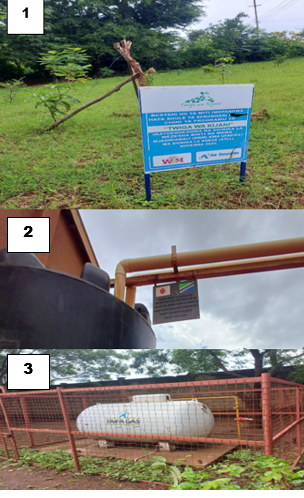
Source: Field data (2025)
Key
-
Tree plantation in School Eleven sponsored by both the governmental organization and local NGOs.
-
Water harvesting infrastructure donated by the Japan International Cooperation Agency (JICA) in School Sixteen.
-
Gas tank (source of school cooking energy) bought from the contributions of students' parents and guardians.
These observations show that, in some cases, heads of schools mobilised resources through external partners, including JICA, Twiga wa Kijani, Wezesha Binti na Mama, Air Tanzania Company Limited, and parents, illustrating how collaborative relationships and community involvement can strengthen the sustainability and impact of school-based climate initiatives.
While the questionnaire data suggest that heads of schools generally did not actively seek external support, the interview data tell a more distinct story. Some heads relied mainly on resources available within the school, such as seedlings contributed by students, while others actively built partnerships that brought in support for tree planting, rainwater harvesting, and clean-cooking solutions. However, only a few schools had externally supported projects, rather than support across the board. This suggests that although external resource mobilisation contributed to climate change mitigation efforts in some schools, it was inconsistent and depended largely on the initiative and networks of individual school leaders.
These findings can be read through the theory of environmental education, which emphasises that effective environmental action grows out of active engagement with the surrounding community and environment, rather than from classroom instruction or institutional intention alone. Heads of schools who established partnerships and secured support for tree planting, rainwater harvesting, and clean cooking were, in effect, extending environmental learning and action beyond the school gates into the wider community. This is consistent with Kafa et al. (2025), who found that successful school leaders mobilised support by building relationships with parents, local communities, municipalities, businesses, sponsors, and other external stakeholders, and with Abdullahi et al. (2025), who reported that school-community collaboration was important for strengthening school-based climate responses. Yet the disagreement that heads of school actively mobilise external resources to support climate change mitigation expressed by teachers and students, together with the limited scope of the partnerships observed, suggest that many heads of school may lack the confidence, professional networks, or institutional support needed to mobilise external resources effectively, a pattern also documented by Yoon et al. (2025), who found that a school's ability to mobilise resources is shaped by community wealth, donor access, neighbourhood conditions, and existing social networks. Strengthening heads of schools' partnership-building and negotiation skills, improving their access to potential supporting organisations, and establishing clearer expectations for school-community collaboration could all help deepen the kind of community-based environmental engagement needed for sustained climate change mitigation.
Finally, Table 1 shows that 64% of teachers disagreed that heads of schools ensure the mobilisation of practical teaching and learning materials for climate change mitigation, against 11% who agreed, a small minority who may themselves head their schools' environment departments and so have been better placed to observe such efforts. Students were somewhat less critical, with 62% disagreeing and 15% agreeing. The responses show that both groups predominantly perceived a shortfall in the practical resources needed for climate change education, with teachers expressing this concern slightly more strongly than students. The mean scores, 2.38 for teachers and 2.23 for students, both indicate disagreement and point to a gap in the provision of resources essential for practical environmental education. The following interview responses reinforce the questionnaire findings, offering a first-hand explanation for why so few teachers and students perceived adequate provision of practical materials for climate change mitigation.
Head of School Four said:
We try to incorporate climate change education, but we often lack the resources and materials to make it truly impactful. The focus has been on other areas, and the budget has not allowed for the allocation of funds specifically for practical materials for teaching climate change mitigation. (Interview with Head of School Four, May 13, 2025)
Head of School Eight added:
We mainly rely on the government to provide all teaching and learning materials for all subjects, including practical environmental learning. Without the necessary government support and funding, it becomes challenging for us to implement these initiatives independently. While the government has made some progress in providing geography books that address climate change theoretically, in most cases there is a need for greater investment in hands-on materials and teacher training to effectively engage students in climate action. (Interview with Head of School Eight, May 19, 2025)
These accounts suggest that climate change education was constrained by limited funding and a heavy reliance on government support, with the resources available mainly supporting theoretical instruction, particularly through geography textbooks, while materials for demonstrations, experiments, and student-led activities remained scarce. Schools consequently struggled to move beyond classroom explanation toward giving students direct experience of climate change mitigation practices.
Field observations confirmed that many schools lacked basic materials and facilities for practical climate change education, and recycling stations, rainwater-harvesting systems, composting areas, waste-separation facilities, and renewable-energy infrastructure were either unavailable or insufficient. Some schools had taken part in tree-planting activities supported by local organisations, but these initiatives were isolated and often hampered by weak maintenance and limited follow-up, reducing students' opportunities to connect classroom learning with the environmental problems facing their schools and communities.
Overall, the quantitative data indicate disagreement with the statement that heads of schools ensure students' access to materials and facilities, and the qualitative data help explain this: schools operated under tight budgets, depended heavily on government provision, and tended to prioritise other, more immediate needs, while lacking the facilities that would support experiential environmental learning. Climate change education in these schools remained largely theoretical. Although some heads of schools recognised its importance and occasionally secured support for activities such as tree planting, the limited practical materials, infrastructure, funding, and teacher preparation constrained sustained student participation.
These findings are consistent with those of Kawinzi et al. (2024), who found that resource allocation in public secondary schools was often inadequate, untimely, and poorly connected to actual school priorities, which weakened the implementation of school plans more broadly; a similar disconnect between stated priorities and the resources actually available appears to have limited practical environmental learning in the schools examined here. Mosha et al. (2024) likewise found that heads of schools turned to fundraising mainly to bridge gaps in physical resources left by insufficient government provision, a pattern echoed in the present study's finding that heads of schools relied on donations rather than steady institutional budgets to support hands-on climate activities. Abdullahi et al. (2025) further showed that infrastructure management, alongside community engagement and student involvement, was central to effective school-based climate responses; the shortage of practical materials and infrastructure documented in the present study helps explain why heads of schools struggled to sustain that combination.
The results also reflect Environmental Education Theory, which holds that direct experience and interaction with the environment are essential to meaningful learning. Students may acquire basic knowledge about climate change from textbooks, but knowledge alone is unlikely to produce lasting environmental behaviour. They need opportunities to separate waste, conserve water, plant and care for trees, observe renewable-energy systems, and participate in locally relevant mitigation projects. Where schools lack the resources and institutional support required for these activities, environmental education remains abstract, and students have little opportunity to translate climate knowledge into practice.
Generally, the data on how heads of schools use a resource mobilisation strategy to promote climate change mitigation practices tells a fairly consistent story. Qualitative data show that heads of schools pursued this strategy by mobilising financial support, engaging stakeholders, and securing material resources, but that their efforts were constrained by inadequate funding, political interference, and a tendency to deprioritise climate-related initiatives in favour of academic matters. Quantitative data reinforce this picture, showing that teachers and students alike disagree that heads of schools use the strategy effectively. While heads of schools do draw on financial, material, human, and community resources to support climate change mitigation, their efforts remain inadequate relative to what schools actually need.
9. Conclusions
Based on the findings, the study concludes that heads of schools use a resource mobilisation strategy by mobilising financial, material, human, and community resources to promote climate change mitigation practices in public secondary schools in the Kilimanjaro Region.
10. Recommendations
Based on these conclusions, the study recommends that heads of schools should prepare a simple annual environmental action plan setting out the activities to be implemented, the resources required, potential funding sources, and the people responsible. The school board should review this plan and build it into the school budget, rather than treating it as a set of occasional projects. District Secondary Education Officers should provide a clearly identified allocation for such activities, while schools seek additional support from local businesses, parents, alumni, non-governmental organisations, and community groups. All contributions and expenditures should be properly recorded to improve transparency and guard against political interests shaping how resources are used.
References
- Abdullahi, R., et al. (2025). Educational Management Strategies to Mitigate Climate Change Issues. Malaysian Online Journal of Educational Technology, 13(4), 88–103. DOI ↗ Google Scholar ↗
- Alten, J., & Kimaro. (2025). Climate change mitigation practices among secondary school students in the Kilimanjaro Region, Tanzania. Huria: Journal of the Open University of Tanzania, 23(3), 1–15. DOI ↗ Google Scholar ↗
- BMC Ecology and Evolution. (2024). Impact of climate change on agricultural productivity in East Africa. BMC Ecology and Evolution. DOI ↗ Google Scholar ↗
- Chadwick, R., Mwangi, A., & Njoroge, M. (2022). Climate change and its implications for agriculture in Sub-Saharan Africa. Global Environmental Change, 35(2), 100125. DOI ↗ Google Scholar ↗
- Creswell, J. W., & Plano Clark, V. L. (2018). Designing and conducting mixed methods research (3rd ed.). SAGE Publications. DOI ↗ Google Scholar ↗
- Davidson, D., & Paus, M. (2023). The integration of climate change education in North American secondary schools: A leadership perspective. Environmental Education Review, 58(1), 17–30. DOI ↗ Google Scholar ↗
- Everth, A., & Bright, J. (2023). School leadership and climate change education: Insights from Aotearoa New Zealand. International Journal of Educational Leadership, 21(3), 111–128. DOI ↗ Google Scholar ↗
- Green, S., Müller, L., & Schneider, H. (2022). Advancing climate change education in Europe: Lessons from Sweden and Germany. Environmental Education Policy and Practice, 40(2), 95–112. DOI ↗ Google Scholar ↗
- Intergovernmental Panel on Climate Change. (2022). Climate change 2022: Impacts, adaptation, and vulnerability. DOI ↗ Google Scholar ↗
- Kafa, A., et al. (2025). When successful school leaders go entrepreneurial: Empirical insights from Cyprus. International Journal of Leadership in Education. Advance online publication. DOI ↗ Google Scholar ↗
- Kawinzi, et al. (2024). Resource allocation as an institutional determinant of strategic plan implementation in public secondary schools in Machakos County, Kenya [Full journal details not supplied by author; please verify title, journal, volume, and pages]. DOI ↗ Google Scholar ↗
- Kayombo, R., Iftekhar, S., & Mashaza, T. (2025). Sustainable integration and climate change awareness among secondary school students in Tanzania. Huria: Journal of the Open University of Tanzania, 26(2), 1–15. . v23i0.25Lee, J., & Kim, J. (2023). Climate change education frameworks in South Korea: Progress and challenges. Environmental Education Research, 29(3), 233–248. 10.64528/huria DOI ↗ Google Scholar ↗
- Liu, Y., Yin, H., & Yang, W. (2023). Challenges in implementing climate change education in rural China: A case study of local education systems. Environmental Education Review, 41(1), 47–61. DOI ↗ Google Scholar ↗
- Mashaza, J., Bhalalusesa, E., & Nzima, D. (2024). Climate change education and public perception and behaviour in Tanzania [Full journal details not supplied by author; please verify]. Google Scholar ↗
- Milabagano Nyambere, J. (2025). Climate change adaptation practices among secondary school students in Tanzania. Huria: Journal of the Open University of Tanzania, 25(4), 1–15. . v23i0.25 DOI ↗ Google Scholar ↗
- Misingi, N. (2024). Environmental education in Tanzania [journal/publisher details not stated in the reviewed source. East African Journal of Educational Research, 10(3), 92–107. DOI ↗ Google Scholar ↗
- Mosha, H., et al. (2024). The practicability of fundraising in mobilising physical resources in public secondary schools in Hai District, Tanzania [Full journal details not supplied by author; please verify title, journal, volume, and pages]. DOI ↗ Google Scholar ↗
- Mtitu, E. A., & Mneney, E. (2022). Assessment of Climate Change Education in Tanzanian Secondary Schools: A Focus on Competency-Based Curriculum. African Journal of Environmental Science and Technology, 16(10), 431-441. DOI ↗ Google Scholar ↗
- Müller, L., & Schneider, H. (2022). School leadership and sustainability: Strategies for promoting climate change education in Europe. European Journal of Environmental Education, 20(2), 110–123. DOI ↗ Google Scholar ↗
- Mwangi, A., Kamau, P., & Njoroge, M. (2021). Disparities in climate change education in Kenya: The urban-rural divide. African Journal of Environmental Education, 16(3), 75–90. DOI ↗ Google Scholar ↗
- Nguyen, T., Pike, A., & Murphy, P. (2022). The role of educational leadership in addressing climate change education in Texas. Educational Leadership and Policy Studies, 58(5), 142–157. DOI ↗ Google Scholar ↗
- Ochieng, R., & Njoroge, M. (2022). School leadership and climate change education in East Africa: Perspectives from Tanzania and Kenya. International Journal of Educational Management, 36(6), 1798–1812. DOI ↗ Google Scholar ↗
- Opiyo, F., Mwangi, A., & Njoroge, M. (2023). Climate change impacts on agriculture in Sub-Saharan Africa: School leadership and the role of climate change education. Journal of Environmental Education and Leadership, 41(2), 88–103. DOI ↗ Google Scholar ↗
- Pike, A., & Murphy, P. (2022). Challenges in resource allocation for climate change education: A case study of Texas public schools. Environmental Education Research, 28(1), 56–73. DOI ↗ Google Scholar ↗
- Shiboko, M. J., & Mrema, K. J. (2024). Challenges facing the implementation of primary and secondary school competence-based curriculum in the same district, Tanzania. East African Journal of Education and Social Sciences, 5(5), 20–29. DOI ↗ Google Scholar ↗
- Stapp et. al (1969). The concept of environmental education. Journal of Environmental Education, 1(1), 30–31. DOI ↗ Google Scholar ↗
- Tilbury, D. (2023). The theory and practice of environmental education: A focus on leadership and action. Environmental Education Review, 42(1), 1–15. DOI ↗ Google Scholar ↗
- UNESCO. (2023). Environmental education theory and practice: Fostering sustainability through education. DOI ↗ Google Scholar ↗
- Vasileiou, K., Barnett, J., Thorpe, S., & Young, T. (2018). Characterising and justifying sample size sufficiency in interview-based studies: Systematic analysis of qualitative health research over a 15-year period. BMC Medical Research Methodology, 18(1), 148. DOI ↗ Google Scholar ↗
- Yamamoto, Y., & Taniguchi, M. (2022). Developing frameworks for climate change education in Japan: Progress and barriers. Asia-Pacific Journal of Environmental Education, 24(1), 32–47. DOI ↗ Google Scholar ↗
- Yin, H., & Yang, W. (2023). Climate change education and rural school leadership in China: Bridging the gap. Asian Journal of Environmental Education, 17(2), 145–160. DOI ↗ Google Scholar ↗
- Yoon, E.-S., Livingston, E., & Young, J. (2025). A donor wall vs. a big jar: Critical space analysis of two school fundraising campaigns. Journal of Educational Administration and History, 57(1), 92–111. DOI ↗ Google Scholar ↗
- Zhang, L., Lee, H., & Paus, M. (2022). Leadership in climate change education: The North American approach. Journal of Educational Leadership, 53(3), 234–249. DOI ↗ Google Scholar ↗