Abstract
This study aims to analyse the level of digital inclusivity in the development of Community-Based Tourism (CBT) in Ciamis Regency as an effort to strengthen community-based regional tourism management. The background of this study stems from the challenges of low digital literacy and access to technology in rural tourist areas, which affect community participation in destination management. This study uses a descriptive-qualitative approach with data collection techniques through in-depth interviews, participatory observation, and analysis of regional digital tourism policy documents. Data analysis was conducted by exploring the relationship between the dimensions of digital literacy, community participation, and local economic sustainability. The results show that the level of community digital inclusiveness varies between tourist destinations, depending on infrastructure support, the role of local government, and the capacity of communities to utilise digital platforms. Although there has been an increase in participation through social media and online promotion systems, the digital divide remains a major obstacle to the equitable distribution of tourism benefits. The discussion emphasises that improving digital inclusiveness needs to be integrated into community-based tourism policies through training programmes, multi-stakeholder collaboration, and the development of an adaptive digital ecosystem. Thus, digital transformation in the Ciamis tourism sector can take place in an inclusive, participatory, and sustainable manner.
Keywords: Digital Community, Regional Tourism, Smart Tourism.
Introduction
Community-Based Tourism (CBT) is a strategic approach to tourism development that emphasises the active participation of local communities in managing tourist destinations . This approach not only promotes the preservation of local culture and the environment but also has the potential to improve the social and economic welfare of local communities. In the digital era, the use of information and communication technology has become a crucial aspect in expanding the reach of promotion and increasing community participation in tourism development. The integration of digitalisation in CBT opens up opportunities to create a more inclusive, efficient, and sustainable tourism ecosystem.
Initial observations in Ciamis Regency show that Digital Community-Based Tourism is currently largely initiated and dominated by the use of social media, particularly TikTok and Instagram, as the main means of promoting tourist attractions. Local communities, through tourism awareness groups, utilise these media to disseminate information, showcase cultural uniqueness, and build narratives about destinations that are attractive to tourists. This digital strategy enables direct community involvement in managing tourism image and experience, while strengthening their position as key players in the local tourism ecosystem .
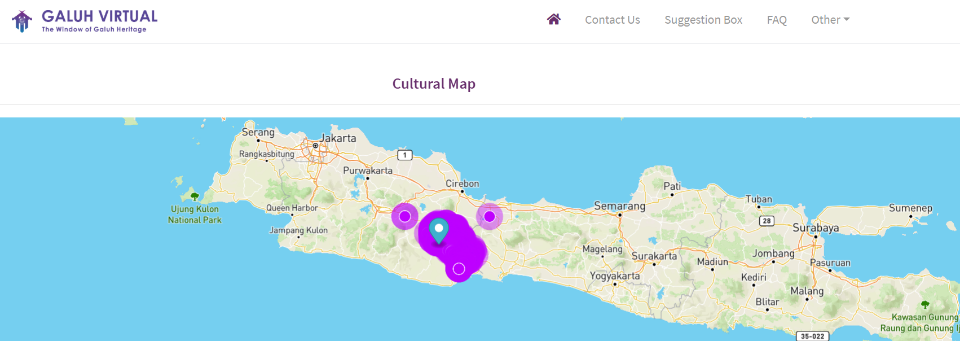
The massive promotional movement through social media has made several tourist attractions managed by tourism awareness groups in Ciamis Regency go viral and successfully attract a significant number of local tourists. This phenomenon shows how active community participation in digital promotion not only expands the reach of information but also contributes to an increase in tourist visits. This impact directly boosts local economic activities, including income from micro-enterprises, transportation services, culinary offerings, and accommodation, thereby strengthening community-based economic circulation . The Ciamis District Government has initiated digitalisation efforts as follows:
Source: https://galuhvirtual.ciamiskab.go.id, 2025.
The Ciamis Regency Government, through the Department of Culture, Youth, and Sports (Disbudpora), has developed the Galuh Virtual application as the main digital infrastructure to facilitate access to information on tourism, culture, and local history. This application is equipped with various interactive features such as tourist locations, cultural heritage sites, historical content, animated media, and a GPS system for location pointing, making it easier for users to explore local potential. Additionally, Galuh Virtual integrates additional digital elements, including 360° content, photo galleries, and digital events, which enrich the user experience and support the digital promotion of tourism in Ciamis Regency.
The development of Digital CBT in Ciamis Regency reflects the synergy between digital inclusivity, community participation, and local economic empowerment. This study aims to analyse the level of digital inclusivity in CBT, identify supporting and inhibiting factors, and evaluate its contribution to sustainable tourism development in the region. The findings are expected to provide strategic recommendations for local governments, tourism awareness groups, and other stakeholders to improve the effectiveness of community-based tourism digitalisation, while promoting inclusive local economic growth .
The urgency of this research arises from the need to understand the extent to which Digital Community-Based Tourism (Digital CBT) can increase local community participation and drive tourism-based economic growth in Ciamis Regency. Although the viral phenomenon of several tourist attractions through social media shows significant economic potential, there has been no systematic analysis of the level of digital inclusiveness, supporting and inhibiting factors, and the socio-economic impact of these practices. This research is important to provide empirical evidence on the effectiveness of digitalisation in CBT, while also providing recommendations for local governments, tourism awareness groups, and stakeholders regarding inclusive and sustainable promotion strategies. Furthermore, the integration of the Smart Tourism concept with Digital CBT can serve as an innovative model for adaptive, participatory, and technology-based regional tourism development, making this research highly relevant for the development of sustainable tourism policies and practices at both the local and national levels .
Literature Review
Basic Concepts of Community-Based Tourism
Community-Based Tourism (CBT) is a tourism development approach that emphasises the active involvement of local communities in the management and decision-making related to tourist destinations. CBT focuses on the sustainable use of local resources, preserving cultural wisdom, and promoting the economic welfare of the community. The success of CBT is highly dependent on community participation, community organisational capacity, and collaborative relationships between tourism stakeholders, local government, and the private sector . In the context of Ciamis Regency, tourism awareness groups are at the forefront of CBT implementation, playing a central role in organising tourism activities, promotion, and interaction with visitors.
The dynamics of empowerment in Digital Community-Based Tourism (CBT), particularly in evaluating how partnerships and collaborations between stakeholders can create participatory spaces for local communities while strengthening social and economic inclusion . This approach emphasises the development of sustainable CBT, in line with the principles of sustainable tourism that highlight inclusive development, community empowerment, and responsible management of local resources .
Networked Community-Based Tourism has a positive and significant impact on community independence and income . Increased community independence occurs alongside the development of community-based tourism activities, where the management of tourist destinations involves the active participation of local residents. In the context of community-based tourism development in the ASEAN region, a clear evaluation framework is needed to assess the effectiveness and sustainability of Community-Based Tourism (CBT) initiatives. Summary criteria and indicators are important instruments for measuring various aspects of CBT, ranging from community participation, equitable distribution of economic benefits, cultural and environmental preservation, to the capacity of local communities to manage destinations .
With these criteria and indicators, stakeholders can identify the strengths, weaknesses, opportunities, and threats in the implementation of CBT, while ensuring that tourism practices are in line with the principles of sustainability and inclusiveness. In addition, standardised indicators enable cross-country comparisons among ASEAN member states, support the exchange of experiences, and facilitate the development of regional policies that support community empowerment through tourism.
Implementation of Community-Based Tourism
The Community-Based Tourism (CBT) Network is a concrete manifestation of the implementation of CBT principles that emphasise the active involvement of local communities in community-based tourism management . By forming a network, communities can share resources, knowledge, and best practices so that community ownership and management become more transparent and structured, in line with the minimum and advanced criteria of the ASEAN CBT initiative. Additionally, this network enables communities to develop quality tourism services, including tours, guides, accommodation, and food and beverages, so that tourists get an authentic experience while encouraging more intense interaction between local communities and guests . Through the network mechanism, this initiative also strengthens contributions to social welfare by opening up economic opportunities and increasing the capacity of communities to manage local resources sustainably.
From an environmental perspective, the CBT Network supports environmental conservation and improvement through coordinated eco-friendly practices among communities. Good operational standards, including the operational performance of CBT-friendly tours, ensure that every tourism activity runs safely, efficiently, and sustainably. With clear indicators in the ASEAN context, communities can monitor and evaluate their tourism service achievements, while ensuring that every element, from social interaction and service quality to environmental conservation, is integrated into the CBT development strategy . Overall, the CBT Network strengthens synergies between communities and enhances the competitiveness of community-based tourism destinations, while comprehensively meeting the criteria and indicators of the ASEAN CBT initiative .
Overall, the implementation of Community-Based Tourism (CBT) at the local level in Indonesia demonstrates various concrete efforts to empower local communities while enhancing the appeal of tourism destinations. In many regions, local governments collaborate with local communities to build capacity in tourism management, including through tour guide training, provision of eco-friendly accommodation, development of local cuisine, and management of cultural and natural attractions. This model not only emphasises service quality for tourists but also ensures that income and economic benefits are distributed evenly to all community members, in line with the principle of socio-economic inclusiveness.
The implementation of CBT at the local level utilises a network approach (Network CBT) to connect communities with one another, so that best practices can be shared and collaboration across villages or sub-districts can be established. Several regions have developed applications or digital platforms to market community tourism packages, facilitate interaction between tourists and local residents, and monitor service quality in real time. This approach strengthens community-based tourism governance, promotes transparency in resource management, and increases community contributions to the preservation of the environment and local culture .
Furthermore, the development of CBT in the regions is also directed towards integration with ASEAN standards, including criteria for community ownership and management, contributions to social welfare, environmental preservation, and the quality of tour, food, and accommodation services. With the application of clear indicators, local communities can evaluate and improve their operational performance in a sustainable manner, while building a competitive tourism destination reputation at the regional level. This approach ensures that community-based tourism in Indonesia is not only a productive economic sector, but also a means of social empowerment and sustainable cultural preservation.
Social and Economic Inclusion of Communities
The socio-economic inclusiveness of communities in the tourism industry is an important principle to ensure that the growth of the tourism sector not only benefits certain parties but also provides fair opportunities for all levels of society. Through the active participation of local residents, including economically and socially vulnerable groups, communities can reap direct benefits in the form of increased income, skills, and access to employment opportunities in the tourism sector . This approach emphasises that tourism development must be participatory, where decisions related to destination development, service provision, and promotion are made transparently and involve various local stakeholders .
In addition, socio-economic inclusiveness encourages the creation of equitable distribution of benefits among the community. For example, the involvement of micro, small and medium enterprises (MSMEs) in the provision of local products, food and beverages, souvenirs, as well as transportation and accommodation services will increase the economic independence of the community. Training and technical assistance programmes are also an important part of this strategy, as they help communities develop the professional skills needed in the tourism industry so that they can compete healthily in the tourism market. This not only strengthens the local economy but also improves the overall quality of tourism services.
On the social side, inclusiveness fosters a sense of ownership and responsibility among the community towards their tourist destinations. By being directly involved in tourism activities, the community has the opportunity to strengthen their cultural identity, preserve local traditions, and enhance positive interactions between residents and tourists . This concept of inclusivity is also in line with the principles of sustainable tourism, where the success of the tourism sector is not only measured by economic profits, but also by improvements in social welfare, justice, and the quality of life of the local community . Thus, socio-economic inclusivity is key to sustainable and equitable tourism development.
Smart Tourism
Smart Tourism is a modern tourism concept that utilises digital technology, data, and innovation to enhance the tourist experience while supporting sustainable destination management. Through the integration of technologies such as the Internet of Things (IoT), Big Data, artificial intelligence (AI), and mobile applications, Smart Tourism enables visitors to obtain real-time information, enjoy more personalised services, and interact with the tourist environment. On the other hand, for destination managers, this concept supports operational efficiency, data-driven decision-making, and cultural and environmental preservation through smart and sustainability-oriented management systems.
The implementation of Smart Tourism does not only focus on the use of technology, but also on improving connectivity and collaboration between stakeholders, including the government, tourism industry players, local communities, and tourists . Through an integrated digital system, various parties can share relevant data and information with each other, creating a tourism ecosystem that is responsive, transparent, and adaptive to market needs . The use of digital platforms for ticket booking, virtual tour guides, and cashless payment systems has accelerated service processes while expanding access to tourist destinations for both domestic and foreign tourists.
Furthermore, Smart Tourism also plays an important role in promoting sustainable tourism. With environmental sensor technology and data analysis, local governments and destination managers can monitor visitor numbers, maintain environmental quality, and regulate destination carrying capacity appropriately. Additionally, data-driven digitalisation of tourism promotion helps highlight local potential, culture, and creative products of the surrounding community, ensuring that economic benefits are felt inclusively . Smart Tourism is the primary driver of the tourism sector's transformation towards a model that is intelligent, efficient, sustainable, and socially equitable.
Source: Neuburger, 2025.
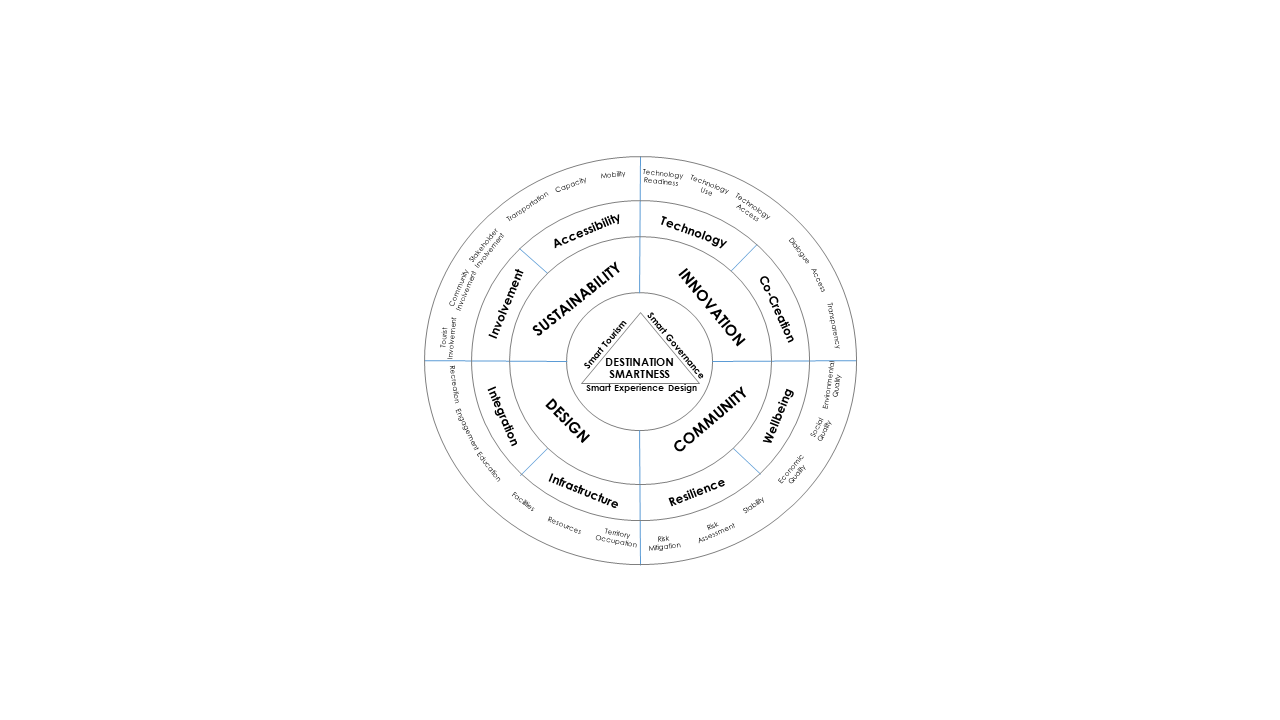
The Destination Smartness framework emphasises the integration of innovation, sustainability, design, and community in technology-based tourism development . Each element, from accessibility, technology, welfare, to infrastructure, contributes to the creation of a smart and sustainable tourism experience. In the context of Community-Based Tourism (CBT), this concept is closely related because it places the local community at the centre of destination governance and innovation. Through a smart governance and smart experience design approach, CBT can utilise technology to strengthen community capacity, improve access to information, and optimise collaboration between tourists, businesses, and the community . Thus, the application of the Destination Smartness principle in CBT not only increases tourism efficiency and appeal but also ensures active community participation in maintaining the social, economic, and environmental sustainability of the destination.
Methodology
This study uses qualitative research methods with the aim of analysing the level of digital inclusivity in the implementation of Community-Based Tourism (CBT) in Ciamis Regency. This method was chosen because it is able to describe in depth the involvement of local communities in the use of digital technology for community-based tourism development. Data was collected through in-depth interviews with tourism destination managers, local government officials, and tourism business actors, as well as direct observation of the use of digital platforms in the field. In addition, a documentation study was conducted to trace policies, government programmes, and digital activities that support tourism at the community level.
Data analysis was carried out through the stages of reduction, presentation, and conclusion drawing using thematic analysis techniques to identify patterns of digital inclusiveness in the context of the research focus . The main focus of the analysis was directed at how digital technology increases community participation, expands access to tourism information, and strengthens community capacity in destination management . The results of this study are expected to provide an overview of the digital readiness of the tourism community in Ciamis Regency as well as a basis for formulating strategies to strengthen a smart and inclusive tourism ecosystem at the regional level. The stages of this research are as follows: (1) identification of problems and formulation of research objectives; (2) literature review; (3) determination of research location and subjects; (4) data collection; (5) data analysis; (6) data validation; and (7) conclusion drawing.
Results And Discussion
Regional Tourism Development
Regional tourism development in Ciamis Regency is increasingly moving towards the Community-Based Tourism (CBT) model, which is largely initiated by tourism villages. The local government, through the Tourism Office, has encouraged the establishment of various tourism villages that emphasise the active participation of the local community as the main actors in destination management. The community plays a role not only as a provider of tourism services but also as a manager of attractions, cuisine, and creative products based on local potential. Several villages, such as Sukahurip, Ciomas, and Dewasari Tourism Villages, have become concrete examples of how collaboration between the community, government, and tourism awareness groups (Pokdarwis) can drive the local economy in an inclusive and sustainable manner. Digital technology support has begun to be utilised, such as promotion through social media, online reservation systems, and the creation of digital content to attract tourists.
The CBT model in Ciamis Regency not only strengthens the economic independence of villages but also fosters a sense of ownership of local tourism assets. However, there are still challenges in the form of limited digital literacy, supporting infrastructure, and the managerial capacity of communities in managing technology-based tourism . Therefore, development strategies oriented towards increasing community capacity, strengthening digital networks, and cross-sector synergy are key to accelerating the transformation towards inclusive and sustainable regional tourism . By strengthening community-based governance and digital innovation, Ciamis Regency has the potential to become a model for CBT development that is adaptive to the era of smart tourism at the regional and national levels.
Smart Tourism Initiative
Regional tourism development in Ciamis Regency is increasingly moving towards the Community-Based Tourism (CBT) model, which has been initiated by many tourist villages. The local government, through the Tourism Office, has encouraged the establishment of various tourist villages that emphasise the active participation of local communities as the main actors in destination management. The community plays a role not only as a provider of tourism services but also as a manager of attractions, culinary offerings, and creative products based on local potential. Several villages, such as Sukahurip, Ciomas, and Dewasari, have become concrete examples of how collaboration between the community, government, and tourism awareness groups (Pokdarwis) can drive the local economy in an inclusive and sustainable manner. Digital technology support has begun to be utilised, such as promotion through social media, online reservation systems, and the creation of digital content to attract tourists.
The CBT model in Ciamis Regency not only strengthens the economic independence of villages but also fosters a sense of ownership of local tourism assets. However, there are still challenges in the form of limited digital literacy, supporting infrastructure, and the managerial capacity of communities in managing technology-based tourism . Therefore, development strategies oriented towards increasing community capacity, strengthening digital networks, and cross-sector synergy are key to accelerating the transformation towards inclusive and sustainable regional tourism. By strengthening community-based governance and digital innovation, Ciamis Regency has the potential to become a model for CBT development that is adaptive to the era of smart tourism at the regional and national levels.
The Impact of Digital Community-Based Tourism
The implementation of Digital Community-Based Tourism (DCBT) in Ciamis Regency has had a significant positive impact on tourism development and local community empowerment. Through the use of digital technology, tourism village communities have been able to expand their promotional reach, increase tourist visits, and introduce their cultural and natural potential more widely through online platforms.
Digitalisation also promotes efficiency in destination management, such as application-based reservation and tourist information systems, making it easier for tourists to plan their visits. In addition to having an economic impact through increased community income, DCBT also strengthens collaborative networks between tourism stakeholders and opens up opportunities for partnerships with the private sector and government. The impacts of DCBT in Ciamis Regency are as follows:
Table 1.Impact of Digital Community-Based Tourism on the Community in Ciamis District
| No | Aspect | Key Indicators | Key Findings | Interpretation |
| 1 | Local Economy | Increase in income from the tourism sector | 78% of respondents experienced an increase | Digitalisation of tourism promotion and transactions has increased the turnover of local businesses. |
| 2 | Community Participation | Community involvement in digital management | 65% are active in digital CBT activities | Communities are beginning to utilise social media and applications for tourism promotion. |
| 3 | Accessibility of Tourism Information | Availability of digital-based tourism information | 82% of destinations have digital channels | Destination information is easily accessible through websites and social media. |
| 4 | Digital Literacy | The public's ability to manage online platforms | 58% have basic skills | Further training is still needed to improve digital competence. |
Source: Research Results, 2025.
The implementation of Digital Community-Based Tourism in Ciamis Regency has had a significant positive impact on regional tourism development. A total of 78% of tourism operators have experienced an increase in income through digital promotion and online reservation systems, while 65% of communities actively participate in technology-based tourism content management. Access to tourism information has also become more open, with 82% of destinations now having official digital channels. However, the digital literacy of the community still needs to be improved, as only 58% have basic skills in managing online platforms. Overall, the digital collaboration established between tourist villages, the government, and private partners shows great potential for the realisation of inclusive and sustainable tourism in Ciamis.
Community Participation
Community participation in the development of Community-Based Tourism (CBT) in Ciamis Regency is a key factor in the successful management of local-based tourist destinations. The community not only plays a role as beneficiaries, but also as the main drivers in planning, managing, and promoting the tourism potential of their villages. This participation is evident in the active involvement of residents in tourism awareness groups (Pokdarwis), the creation of cultural attractions, and the management of homestays and local cuisine. Through a digital approach, the community has also begun to adapt to the use of social media and online platforms to introduce tourism products to a wider audience. This shows a paradigm shift from consumption-based tourism to collaboration- and empowerment-based tourism.
However, the level of community participation still varies between tourism villages, depending on the available human resources and institutional support. Some communities have shown a high degree of independence in managing destinations and digital innovation, while others still need assistance to improve their technical and managerial competencies. The involvement of the younger generation is a strategic opportunity to strengthen community digital participation, especially the digital native generation in the field of technology-based promotion and marketing. Therefore, capacity building, training support, and policies that encourage cross-sector collaboration need to be continuously strengthened so that community participation in CBT in Ciamis Regency becomes more inclusive, adaptive, and sustainable.
Conclusion
The implementation of Digital Community-Based Tourism (DCBT) in Ciamis Regency has had a positive impact on regional tourism development, particularly in terms of improving the local economy, community involvement, and expanding access to tourism information. Through the use of digital technologies such as social media, online reservation systems, and creative content-based promotion, the tourism village community has been able to introduce its cultural and natural potential, as well as local products, to a wider audience. Initiatives driven by the local government, Pokdarwis, and the community have strengthened the synergy between stakeholders in creating a more inclusive and independent tourism ecosystem.
However, this study also found that the level of digital literacy and managerial capacity of the community still needs to be improved so that the benefits of digitalisation can be felt evenly. The gap in access to technology, infrastructure limitations, and suboptimal digital training are the main challenges that need to be overcome. Therefore, strategies to strengthen community capacity, cross-sector collaboration, and policies based on digital inclusivity are urgently needed to strengthen the sustainability of Community-Based Tourism in Ciamis Regency. Thus, regional tourism development should not only focus on increasing the number of tourist visits but also on empowering local communities as key actors in the transformation towards smart and sustainable tourism.
References
- Abreu, L. A. de, Walkowski, M. da C., Perinotto, A. R. C., & Fonseca, J. F. da. (2024). Community-Based Tourism and Best Practices with the Sustainable Development Goals. Administrative Sciences, 14(2). DOI ↗ Google Scholar ↗
- Ali, A., Rasoolimanesh, C., & S Mostafa, C. (2020). Technology in Tourism and Hospitality to Achieve Sustainable Development Goals (SDGs)(Editorial). http://orcid.org/0000-0002-7667-4293 DOI ↗ Google Scholar ↗
- Alsharif, A., Isa, S. M., & Alqudah, M. N. (2024). Smart Tourism, Hospitality, and Destination: A Systematic Review and Future Directions. In Journal of Tourism and Services (Vol. 15, Issue 29, pp. 72–110). Center for International Scientific Research of VSO and VSPP. DOI ↗ Google Scholar ↗
- Astawa, I. P. M., Wardana, I. M., Sukaatmadja, I. P. G., & Sukawati, T. G. R. (2024). Inclusive tourism: A driving force for collaborative governance in advancing sustainable village tourism. Asian Journal of Business Research, 14(2), 41–59. DOI ↗ Google Scholar ↗
- Atisa, G., Zemrani, A., & Weiss, M. (2021). Decentralized governments: local empowerment and sustainable development challenges in Africa. Environment, Development and Sustainability, 23(3), 3349–3367. DOI ↗ Google Scholar ↗
- Azwar, H., Hafiz Hanafiah, M., Ghani, A. A., Azinuddin, M., Shahirah, N., & Shariffuddin, M. (2023). Community-Based Tourism (Cbt) Moving Forward: Penta Helix Development Strategy Through Community Local Wisdom Empowerment. In Journal of the Malaysian Institute of Planners VOLUME (Vol. 21). DOI ↗ Google Scholar ↗
- Balakrishnan, J., Dwivedi, Y. K., Malik, F. T., & Baabdullah, A. M. (2023). Role of smart tourism technology in heritage tourism development. Journal of Sustainable Tourism, 31(11), 2506–2525. DOI ↗ Google Scholar ↗
- Bulilan, C. M. R. (2021). From governing to selling tourism: Changing role of local government in the tourism development of Bohol, Philippines. Southeast Asian Studies, 10(2), 273–293. DOI ↗ Google Scholar ↗
- Cordova-Buiza, F., Medina-Viruel, M. J., & Pérez-Gálvez, J. C. (2025). Community-based rural tourism: a mapping technique analysis study from 2005 to 2023. In Humanities and Social Sciences Communications (Vol. 12, Issue 1). Springer Nature. DOI ↗ Google Scholar ↗
- Escamis, J. E., & Hinlayagan, K. R. (2024). Community-Based Tourism Implementation as Mediator on the Relationship between Community Participation and Socio-Economic Sustainability of Tourism. American Journal of Tourism and Hospitality, 2(1), 93–104. DOI ↗ Google Scholar ↗
- Giampiccoli, A. (2020). A conceptual justification and a strategy to advance community-based tourism development. DOI ↗ Google Scholar ↗
- Gumilang, A. S. P., Gandhy, A., & Prasetyo, B. D. (2024). Digital Marketing Development Strategy to Increase the Number of Tourists. Jurnal Ilmiah Manajemen Kesatuan, 12(6), 2165–2176. DOI ↗ Google Scholar ↗
- Havadi Nagy, K. X., & Espinosa Segui, A. (2020). Experiences of community-based tourism in Romania: chances and challenges. Journal of Tourism Analysis, 27(2), 143–163. DOI ↗ Google Scholar ↗
- Ismail, A., & Jaafar, S. M. R. S. (2022). A Fuzzy Multi-Criteria Framework For The Development Of Sustainable Community-Based Tourism In Malaysia. Journal of Sustainability Science and Management, 17(9), 114–125. DOI ↗ Google Scholar ↗
- Jeong, Y. (2020). Measuring Community-based Tourism Governance. DOI ↗ Google Scholar ↗
- Križaj, D., Bratec, M., Kopić, P., & Rogelja, T. (2021). A technology-based innovation adoption and implementation analysis of european smart tourism projects: Towards a smart actionable classification model (sacm). Sustainability (Switzerland), 13(18), 1–9. DOI ↗ Google Scholar ↗
- Laeeq Khan, M., Ittefaq, Y., Ixchel, M., Pantoja, M. M., Raziq, A., Malik, ), Laeeq Khan, M., Ittefaq, M., Ixchel, Y., Pantoja, M., Raziq, M. M., Khan, M. L., & Malik, A. (2021). Public Engagement Model to Analyze Digital Diplomacy on Twitter: A Social Media Analytics Framework. In International Journal of Communication (Vol. 15). DOI ↗ Google Scholar ↗
- Lailatul Maghfiroh, F., Zunaidi, A., Yusuf, M. A., & Syakur, A. (2024). Fostering Tolerance and Cultural Preservation Through Community Empowerment: The Role of Islamic Values in Kampung Tahu Educational Tourism. JoIE: Journal of Islamic Economics, 4(2), 164–181. DOI ↗ Google Scholar ↗
- Li, M., Yin, D., Qiu, H., & Bai, B. (2021). A systematic review of AI technology-based service encounters: Implications for hospitality and tourism operations. International Journal of Hospitality Management, 95, 1–10. DOI ↗ Google Scholar ↗
- Manara, R., & Weber, M. (2023). Cultural Identity in the Digital Age: Navigating Globalization in Local Communities. Journal of Humanities and Social Sciences (JHASS), 5(3), 114–120. DOI ↗ Google Scholar ↗
- Miletić, R., Lukić, V., & Miljanović, D. (2020). Deindustrialization and Structural Changes in Commuting Flows in Serbia. Forum Geografic, X(2), 244–254. DOI ↗ Google Scholar ↗
- Nair, V., & Hamzah, A. (2015). Successful community-based tourism approaches for rural destinations: The Asia Pacific experience. Worldwide Hospitality and Tourism Themes, 7(5), 429–439. DOI ↗ Google Scholar ↗
- Nugroho, A. W., Prasetyo, I., Candra, I. A., Saputra, R. A., & Putra, A. S. (2023). Community-Based Tourism: Strengthening understanding and assistance in establishing tourism awareness group. Indonesia Journal of Community Service and Empowerment, 4(2), 271–282. DOI ↗ Google Scholar ↗
- Nunthasiriphon, S. (2015). Application of Sustainable Tourism Development to Assess Community-based Tourism Performance. DOI ↗ Google Scholar ↗
- Oetomo, H. (2025). Smart Tourism Destination as a Community-based Tourism Resilience Effort in Indonesia. Review of Integrative Business and Economics Research, 14(3). http://buscompress.com/uploads/3/4/9/8/34980536/riber_14-3_05_k24-047_68-81.pdf DOI ↗ Google Scholar ↗
- Oluwafemi, I. O., Clement, T., Adanigbo, O. S., Gbenle, T. P., & Adekunle, B. I. (2023). A Conceptual Framework for AI-Driven Sustainability in Tourism Ecosystems. International Scientific Refereed Research Journal © 2023 SHISRRJ, 6. www.shisrrj.com DOI ↗ Google Scholar ↗
- Ramadhanti, A. (2020). Posdaya sebagai Media Pemberdayaan untuk Meningkatkan Kesejahteraan Keluarga. Journal Of Adult and Community Education, 2(1), 26–37. http://bappeda.jabarprov.go.id DOI ↗ Google Scholar ↗
- Rampin, R., & Rampin, V. (2021). Taguette: open-source qualitative data analysis. Journal of Open Source Software, 6(68), 3522. DOI ↗ Google Scholar ↗
- Rocca, L. H. D., & Zielinski, S. (2022). Community-based tourism, social capital, and governance of post-conflict rural tourism destinations: the case of Minca, Sierra Nevada de Santa Marta, Colombia. Tourism Management Perspectives, 43. DOI ↗ Google Scholar ↗
- Saba, F. Al, Mertzanis, C., & Kampouris, I. (2023). Employee empowerment and tourism sector employment around the world. Journal of Tourism, Heritage and Services Marketing, 9(2), 28–40. DOI ↗ Google Scholar ↗
- Sallja, E., Çaro (Kola), E., Hasrama, O., & Axhemi, S. (2025). E-Tourism as a Catalyst for Rural Destination Promotion: Digital Pathways for Sustainable Tourism Development in Belsh, Albania. ENTRENOVA - ENTerprise REsearch InNOVAtion, 11(1), 1–6. DOI ↗ Google Scholar ↗
- Shafieisabet, N., & Haratifard, S. (2020). The empowerment of local tourism stakeholders and their perceived environmental effects for participation in sustainable development of tourism. Journal of Hospitality and Tourism Management, 45, 486–498. DOI ↗ Google Scholar ↗
- Suriyankietkaew, S., Krittayaruangroj, K., Thinthan, S., & Lumlongrut, S. (2025). Creative tourism as a driver for sustainable development: A model for advancing SDGs through community-based tourism and environmental stewardship. Environmental and Sustainability Indicators, 27. DOI ↗ Google Scholar ↗
- Veseli, A., Bytyqi, L., Hasanaj, P., & Bajraktari, A. (2025). The Impact of Digital Marketing on Promotion and Sustainable Tourism Development. Tourism and Hospitality, 6(2). DOI ↗ Google Scholar ↗
- Yu, M., Ma, B., Liu, D., & Zhang, A. (2024). Is the digital economy empowering high-quality tourism development? A theoretical and empirical research from China. PLoS ONE, 19(5 May), 1–25. DOI ↗ Google Scholar ↗
- Zielinski, S., Jeong, Y., & Milanés, C. B. (2021). Factors that influence community-based tourism (CBT) in developing and developed countries. Tourism Geographies, 23(5–6), 1040–1072. DOI ↗ Google Scholar ↗