Abstract
The study aimed to measure intellectual capital on entrepreneurial organizations, an applied study in the Jordanian telecommunications sector, and the descriptive analytical method was used to analyze the data collected, and the researcher relied on a field survey to collect data from the members of the inspection unit who are the upper and middle management in Jordanian telecom companies And their number reached (270) employees. The questionnaire was distributed to all of them, and the valid questionnaires reached 248 (91.9%) of the total questionnaires distributed by the researcher to the members of the sample. The extent of the validity of these questionnaires has been confirmed for the statistical analysis process. The study concluded that many results, the most important of which was the presence of a statistically significant effect at the level of significance (α = 0.05) of intellectual capital with its dimensions (human capital, associative capital, and structural capital) on the pilot organizations (innovation, organizational structure, and culture) in the telecommunications sector in Jordan. This study also introduce series of recommendations the need to pay attention to the dimensions of leadership as it is considered one of the most important phenomena that directly affect the institutions and which may hinder the company's development and growth.
Introduction:
Entrepreneurial organizations serve as an essential foundation for the growth of new businesses, enabling them to adopt innovative ideas and create value in the marketplace. However, in an era characterized by rapid technological advances and ever-evolving market dynamics, entrepreneurs face significant challenges in identifying opportunities and implementing them effectively. Intellectual capital—encompassing human, relational, and structural capital—plays a crucial role in facilitating entrepreneurial success by providing the necessary resources and insights to adapt to these changes (Chaudhary et al., 2023; Grande et al., 2023).
The increasing global interest in entrepreneurship is evident, with surveys indicating that 110 million people, aged 18 to 64, are actively engaged in entrepreneurial ventures (Barringer & Ireland, 2012). Entrepreneurs are tasked not only with recognizing market gaps and customer needs but also with understanding their environmental context. This knowledge allows them to make informed decisions on which opportunities to pursue. Nevertheless, it is essential for entrepreneurs to evaluate business opportunities critically, as not every available prospect is suited for their goals.
Entrepreneurs must focus on identifying opportunities that solve problems, enhance products or services, and contribute to long-term sustainability and profitability, while ensuring their ventures stand out in a competitive market. In this regard, innovation is a cornerstone of entrepreneurial success. Research has shown that both human and organizational capital directly influence an organization’s innovative capacity (Yaseen et al., 2023; Hanifah et al., 2022). The management of intellectual capital, therefore, becomes increasingly important as it fosters creativity, drives organizational improvement, and enables long-term business success.
This study aims to explore the impact of intellectual capital on entrepreneurial organizations, focusing specifically on the telecommunications sector in Jordan. The sector’s dynamic and rapidly evolving nature presents a unique context for examining the relationship between intellectual capital and entrepreneurial performance. Through this research, we seek to understand how intellectual capital influences innovation, organizational structure, and culture within entrepreneurial ventures in this region.
In my view, nurturing entrepreneurial organizations is essential for ensuring their competitiveness and sustainability. By leveraging the power of intellectual capital, start-ups can navigate the challenges of the business environment more effectively, increasing their chances for long-term success and contributing to economic and social development.
Problem Statement
Entrepreneurial organizations, especially within rapidly evolving industries like telecommunications, are often confronted with significant challenges in navigating an increasingly competitive and dynamic business environment. As technology advances and market demands shift, the ability of entrepreneurs to adapt, innovate, and maintain a competitive edge becomes critical for their long-term success. One of the key resources that can drive such innovation and competitiveness is intellectual capital, which includes human, relational, and structural capital. These forms of intellectual capital have been identified as crucial assets that organizations can leverage to foster growth, creativity, and adaptability (Chaudhary et al., 2023; Yaseen et al., 2023).
While the positive influence of intellectual capital on organizational performance is well-established in the literature, particularly in relation to innovation and business development, there is still a significant gap in understanding how these elements specifically affect entrepreneurial outcomes within the telecommunications sector in Jordan. The telecommunications industry in Jordan is marked by rapid growth, technological advancements, and fierce competition, making it an ideal context to study the role of intellectual capital in shaping entrepreneurial organizations.
Despite the increasing recognition of intellectual capital as a strategic resource, empirical research examining its impact on entrepreneurial organizations in the Jordanian telecommunications sector remains scarce. Specifically, while the components of intellectual capital—human, relational, and structural—have been explored in broader contexts, their precise influence on entrepreneurial outcomes such as innovation, organizational structure, and culture within this specific industry is not well documented (Grande et al., 2023; Hanifah et al., 2022).
The existing literature primarily focuses on general entrepreneurship, small and medium-sized enterprises (SMEs), or specific industries outside of telecommunications, leaving a clear gap in understanding how intellectual capital specifically impacts entrepreneurial performance in the telecom sector in Jordan. Moreover, there is limited research on the direct relationship between the dimensions of intellectual capital and key entrepreneurial outcomes like organizational culture, structure, and innovation in this region.
Thus, this study seeks to address this research gap by investigating the effects of intellectual capital—specifically human, relational, and structural capital—on the entrepreneurial organizations' innovation capacity, organizational structure, and culture within the telecommunications sector in Jordan. By bridging this gap, the study will contribute to a deeper understanding of how intellectual capital can be leveraged by entrepreneurs to enhance their organizations' performance and sustainability in a competitive industry.
Significance of the Study
The significance of this study lies in its potential to contribute valuable insights to both academia and practice in the field of entrepreneurship, particularly within the context of the telecommunications sector in Jordan. By investigating the impact of intellectual capital—comprising human, relational, and structural capital—on the entrepreneurial outcomes of innovation, organizational structure, and culture, this study addresses several key gaps in existing research.
1. Theoretical Significance:
The theoretical significance of this study lies in its contribution to the existing body of knowledge on intellectual capital and entrepreneurship, particularly in the context of the telecommunications industry in Jordan. While there has been considerable research on intellectual capital in various industries, there is a gap in understanding how intellectual capital components (human, relational, and structural capital) specifically affect entrepreneurial outcomes such as innovation, organizational structure, and culture within the Jordanian telecommunications sector.
This study extends the existing theoretical frameworks of intellectual capital by applying them to the unique context of entrepreneurial organizations in an emerging market. Theoretical models of intellectual capital often focus on broader industries or established firms, but by investigating the telecommunications sector in Jordan, this research adds depth to our understanding of how intellectual capital operates in a developing economy. Furthermore, it helps to refine the application of existing theories to specific industries that require constant innovation, such as telecommunications.
2. Practical Significance:
The practical significance of this study is evident in its ability to provide actionable insights for entrepreneurs, managers, policymakers, and industry stakeholders within the Jordanian telecommunications sector and beyond. By examining the role of intellectual capital in driving innovation, the study provides actionable strategies for fostering creativity and technological advancements. In a fast-paced industry like telecommunications, innovation is crucial for maintaining a competitive edge. The research will show how effective management of intellectual capital can support continuous product development, service improvements, and the creation of new business models, all of which are critical for staying ahead in a competitive market. Additionally, understanding how intellectual capital affects organizational structure and culture will help leaders create more agile and adaptive organizations.
The telecommunications industry in Jordan, which is increasingly becoming a key sector of the economy, stands to benefit from the insights provided by this study. The findings will offer specific recommendations for how companies in this sector can manage their intellectual capital more effectively to drive innovation, improve organizational culture, and refine internal structures. By doing so, these companies will be better equipped to compete in both local and global markets, while also fostering a culture of continuous improvement.
Study objectives
The primary objective of this study is to examine the impact of intellectual capital on entrepreneurial organizations in the telecommunications sector in Jordan. The study seeks to investigate the role of intellectual capital, comprising human, relational, and structural capital, in enhancing entrepreneurial outcomes such as innovation, organizational structure, and culture. Specifically, the objectives of this study are as follows:
-
To Explore the Relationship Between Human Capital and Entrepreneurial Outcomes.
-
To Investigate the Impact of Relational Capital on Entrepreneurial Success.
-
To Analyze the Role of Structural Capital in Shaping Organizational Performance.
-
To Examine the Combined Impact of Intellectual Capital (Human, Relational, and Structural) on Entrepreneurial Innovation.
-
To Provide Practical Recommendations for Entrepreneurs and Policymakers in the Telecommunications Sector.
Research Hypothesis
The following null hypotheses will test in this study:
Ho1: There is no statistically significant impact of the effect of intellectual capital (Human Capital, Relational Capital and Structural Capital) on the entrepreneurial organizations (innovation, organizational structure and culture) in the telecommunication sector in Jordan.
This hypothesis is derived from the following sub-assumptions being:
Ho1-1: There is no statistically significant impact of the effect of the intellectual capital elements (Human Capital, Relational Capital and Structural Capital) on the innovation of the entrepreneurial organizations.
Ho1-2: There is no statistically significant impact of the effect of the intellectual capital elements on the organizational structure of the entrepreneurial organizations.
Ho1-3: There is no statistically significant impact of the effect of the intellectual capital elements on the culture of the entrepreneurial organizations.
Theoretical Framework
The relationships between the variables in this study are grounded in the concept of Intellectual Capital (IC), which is examined through its three main components: Human Capital, Relational Capital, and Structural Capital. These components are hypothesized to influence key entrepreneurial outcomes such as Innovation, Organizational Structure, and Organizational Culture within entrepreneurial organizations in the telecommunications sector in Jordan.
1. Human Capital and Entrepreneurial Outcomes
Human Capital refers to the knowledge, skills, expertise, and creativity that employees bring to the organization. It is one of the most critical components of intellectual capital, especially in entrepreneurial organizations where innovation and adaptability are key to survival and success (Chaudhary et al., 2023; Yaseen et al., 2023). The ability of employees to generate new ideas, solve complex problems, and adapt to changes directly impacts the innovation capacity and flexibility of the organization.
Human capital plays a crucial role in driving innovation in entrepreneurial organizations. Highly skilled and knowledgeable employees are more likely to generate new ideas and contribute to the development of innovative products, services, and business models (Hanifah et al., 2022). A skilled workforce can lead to the development of more efficient and effective organizational structures. Human capital influences decision-making processes, the allocation of resources, and the structuring of teams within an organization (Grande et al., 2023). Human capital also shapes the culture of the organization. Employees’ values, norms, and behaviors contribute to building a culture of collaboration, trust, and knowledge-sharing, which is essential for innovation and long-term success (Chaudhary et al., 2023).
2. Relational Capital and Entrepreneurial Outcomes
Relational Capital refers to the networks, partnerships, and relationships that an organization develops with external stakeholders, including customers, suppliers, investors, and other businesses. Strong relational capital allows entrepreneurial organizations to access valuable resources, information, and opportunities, all of which are essential for growth and innovation (Yaseen et al., 2023).
Strong relationships with external stakeholders can provide organizations with new insights, feedback, and resources that facilitate innovation. For instance, collaborations with research institutions, technology partners, or customers can lead to the development of new products and services (Rahman et al., 2022). Relational capital influences organizational structure by facilitating partnerships and alliances that can lead to new divisions, departments, or collaborations within the organization (Hakim et al., 2023). The ability to navigate and manage relationships effectively helps shape organizational processes and structures. Relational capital contributes to the development of an external-facing culture that values collaboration, customer satisfaction, and strategic alliances. This enhances the organization's ability to adapt and respond to market demands (Grande et al., 2023).
3. Structural Capital and Entrepreneurial Outcomes
Structural Capital refers to the internal systems, processes, organizational frameworks, and infrastructure that an organization has in place to support its operations, decision-making, and innovation. This component of intellectual capital enables an organization to efficiently manage its resources and adapt to changes in the environment (Paoloni et al., 2023).
Structural capital, including processes for idea generation, research and development, and project management, is essential for supporting innovation. Well-established structures can enable a systematic approach to innovation, making it more efficient and scalable (Abbas et al., 2022). Organizational design and the alignment of structure with strategy are heavily influenced by structural capital. The ability to create systems and processes that enable communication, coordination, and collaboration across different parts of the organization shapes its overall structure (Yaseen et al., 2023). The systems, rules, and procedures in place within an organization help shape its culture. Structural capital ensures that the organizational culture aligns with the company's goals, supports innovation, and maintains a strong focus on performance and adaptability (Hakim et al., 2023).
In summary the relationships between human, relational, and structural capital with entrepreneurial outcomes (innovation, organizational structure, and culture) suggest a complex interdependency that plays a key role in the success and sustainability of entrepreneurial organizations, particularly in the telecommunications sector in Jordan. This study will test these relationships through empirical analysis to provide a deeper understanding of how intellectual capital influences organizational performance.
Study Methodology
This study adopts a descriptive-analytical methodology to explore the impact of intellectual capital (human, relational, and structural) on entrepreneurial outcomes (innovation, organizational structure, and culture) in the telecommunications sector in Jordan. The descriptive-analytical approach is particularly suitable for this study as it allows for a comprehensive analysis of the relationships between various variables, with the goal of describing and interpreting the existing patterns, behaviors, and trends.
Population and Sample
The study population consists of Jordanian telecommunications companies, specifically the top and middle management teams of three major telecom companies in Jordan: Zain, Orange, and Umniah. These companies were selected due to their prominent role in the telecommunications sector in Jordan, their established market presence, and their relevance in the context of entrepreneurship and innovation. The study aims to assess the influence of intellectual capital (human, relational, and structural) on entrepreneurial outcomes within these organizations.
The study sample includes 270 participants, representing top and middle management within the selected telecommunications companies. These individuals were chosen because they are in positions that influence decision-making, strategic planning, and the overall direction of the organizations, making them key stakeholders for understanding the impact of intellectual capital on organizational outcomes.
Out of the 270 questionnaires distributed to the sample, 22 questionnaires were excluded from the analysis. These were deemed invalid for statistical analysis due to incomplete responses, inconsistencies, or errors in the data, which could skew the results. Therefore, the final number of valid questionnaires analyzed was 248, representing 91.9% of the total distributed questionnaires.
The sample includes a balanced representation of both top management and middle management from the selected telecom companies. These two management levels were targeted because they play crucial roles in the strategic decisions that influence the development and implementation of intellectual capital in the organization.
Validation and Reliability of the study instrument
To ensure that the study instrument (questionnaire) accurately measures the variables under investigation and is suitable for testing the hypotheses, the researcher conducted a thorough validation process. The following steps were undertaken to ensure the validity of the questionnaire:
Validity
To ensure the content validity of the questionnaire, it was presented to a group of academic experts and professors from Jordanian universities. These experts specialize in fields related to business administration, entrepreneurship, and intellectual capital. Their primary role was to assess whether the questions adequately cover the dimensions of the variables, such as human capital, relational capital, structural capital, innovation, organizational structure, and organizational culture.
Reliability
To assess the reliability of the questionnaire, the researcher used the Cronbach's Alpha coefficient. This statistic measures the internal consistency of the items within a scale, indicating how well the items are correlated to one another and whether the scale is consistent over time. According to Sekaran (2003) and Nunnally (1978), a Cronbach Alpha value of 0.70 or higher is considered reliable for research instruments. In this study, the Cronbach's Alpha values for each of the variables are as follows:
| Variables | Stability coefficient |
| Human Capital | 0.903 |
| Relational Capital | 0.856 |
| Structural Capital | 0.842 |
| Innovation | 0.761 |
| Organizational Structure | 0.839 |
| Culture | 0.901 |
| Total | 0.959 |
Table (1) demonstrates that Cronbach Alpha of 0.903 for Human Capital and 0.901 for Organizational Culture reflects excellent reliability. The values for Relational Capital (0.856), Structural Capital (0.842), and Organizational Structure (0.839) indicate good reliability. The overall Cronbach Alpha value for the entire instrument is 0.959, which is exceptionally high, indicating excellent internal consistency and stability.
Descriptive analysis of paragraphs
Table (2) demonstrates the example depiction dependent on the statistic factors of the sample.
Independent variables Intellectual capital
| Variables | Mean | standard deviation |
| Human Capital | 3.8370 | .75451 |
| Relational Capital | 3.8652 | .67456 |
| Structural Capital | 4.3528 | .44762 |
| Total | 4.0183 |
The results from Table (2) reveal that the level of application of Intellectual Capital dimensions in Jordanian telecommunications companies is high. Structural Capital received the highest mean of 4.35 with a standard deviation of 0.45, indicating strong consensus and effective implementation of internal systems and processes. Relational Capital followed with a mean of 3.87 and a standard deviation of 0.67, suggesting significant focus on maintaining relationships with stakeholders, though with slightly more variability in responses. Human Capital scored the lowest mean of 3.84 and a higher standard deviation of 0.75, indicating that while human capital is valued, there may be room for improvement in leveraging employee skills and knowledge more effectively. Overall, the findings suggest that intellectual capital is well-utilized across these companies, with Structural and Relational Capital being the most prominent.
Dependent variables Entrepreneurial Organizations
| Variables | Mean | standard deviation |
| Innovation | 4.1808 | .49890 |
| Organizational Structure | 3.9738 | .67178 |
| Culture | 3.8508 | .77952 |
| Total | 4.0018 |
The results from Table (3) indicate that the level of application of Entrepreneurial Organizations dimensions is high among the Jordanian telecommunications companies surveyed. Innovation received the highest mean of 4.18 with a standard deviation of 0.50, suggesting that these companies prioritize and effectively implement innovative practices. Organizational Structure followed with a mean of 3.97 and a standard deviation of 0.67, reflecting a solid application of organizational frameworks and decision-making processes, though with some variation in responses. Finally, Culture had a mean of 3.85 and a standard deviation of 0.78, indicating that while organizational culture is also highly rated, there is greater diversity in how respondents perceive its application. Overall, the data suggests that the dimensions of Entrepreneurial Organizations—Innovation, Organizational Structure, and Culture—are strongly implemented across the surveyed telecom companies in Jordan.
Indicator Reliability
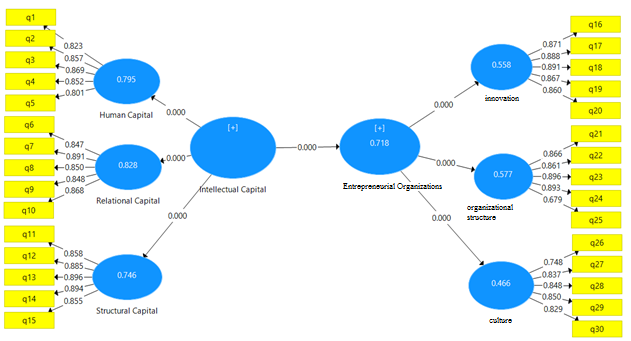
To establish the reliability of the measurement model, each indicator is required to exhibit a factor loading greater than 0.60, which indicates a strong relationship between the observed variable and its corresponding latent construct. Indicators with factor loadings ranging between 0.20 and 0.60 may be considered for removal; however, deletion is only justified when it leads to an improvement in the model’s overall reliability and validity (Leguina, 2015).
Following the initial assessment, the measurement model—comprising the study’s latent constructs, their respective indicators, and factor loadings—was evaluated using SmartPLS. The preliminary results revealed that several indicators failed to achieve the recommended minimum loading threshold of 0.60, thereby potentially compromising the adequacy of the measurement model.
Consistent with the methodological guidelines proposed by Hair et al. (2014), these low-loading indicators were removed to enhance the measurement model’s reliability and convergent validity. After these modifications, the revised measurement model demonstrated satisfactory indicator reliability, as illustrated in Figure 1.
Test hypotheses
This part deals with the hypotheses related to the path analysis test, which includes testing multiple paths such as the direct and the total effect in order to verify the hypotheses, reach the results and interpret the relationships (Hair et al., 2010).
Ho1: There is no statistically significant impact of the effect of intellectual capital (Human Capital, Relational Capital and Structural Capital) on the entrepreneurial organizations (innovation, organizational structure and culture) in the telecommunication sector in Jordan.
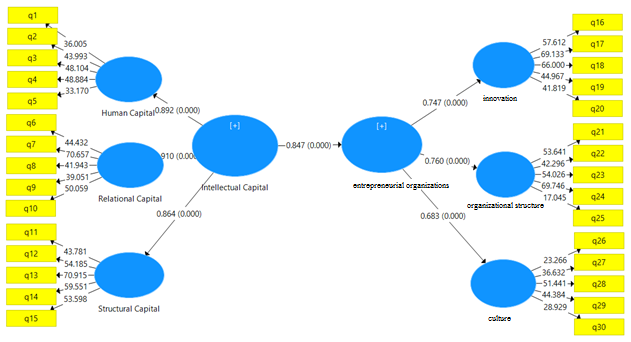
The researcher employed critical path analysis to test Null Hypothesis 1, examining the effect of the independent variable (intellectual capital) on the dependent variable (entrepreneurial organizations). Critical path analysis is a technique often associated with project management, but it seems to be adapted here for testing the relationship between intellectual capital and entrepreneurial organizations.
| Element | B | Mean | T | P | Result |
| intellectual capital -> entrepreneurial organizations | 0.847 | 0.846 | 41.302 | 0.000 | Supported |
Table 4 presents the results of the critical path analysis examining the effect of intellectual capital on entrepreneurial organizations. The findings indicate a strong and positive relationship between intellectual capital and entrepreneurial organizations, with a path coefficient (β = 0.847) and a mean value of 0.846. The result is statistically significant, as evidenced by a high t-value of 41.302, which exceeds the critical threshold, and a p-value of 0.000, which is well below the accepted significance level of 0.05. These results provide sufficient evidence to reject the null hypothesis (H₀₁), confirming that intellectual capital has a statistically significant effect on entrepreneurial organizations in the Jordanian telecommunication sector. Consequently, the alternative hypothesis is supported, indicating that investments in intellectual capital contribute positively to enhancing entrepreneurial organizational outcomes.
Ho1-1: There is no statistically significant impact of the effect of the intellectual capital elements (Human Capital, Relational Capital and Structural Capital) on the innovation of the entrepreneurial organizations.
Ho1-2: There is no statistically significant impact of the effect of the intellectual capital elements on the organizational structure of the entrepreneurial organizations.
Ho1-3: There is no statistically significant impact of the effect of the intellectual capital elements on the culture of the entrepreneurial organizations.
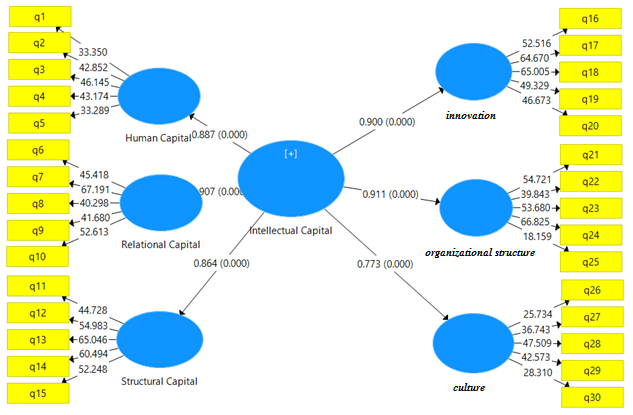
To test the sub-hypotheses related to Null Hypothesis 1, the researcher employed path analysis to examine the effect of intellectual capital on the individual dimensions of entrepreneurial organizations, namely innovation, organizational structure, and organizational culture.
| Element | B | Mean | T | P | Result |
| intellectual capital -> innovation | 0.900 | 0.900 | 62.843 | 0.000 | Supported |
| intellectual capital -> organizational structure | 0.911 | 0.911 | 72.178 | 0.000 | Supported |
| intellectual capital -> culture | 0.773 | 0.772 | 32.021 | 0.000 | Supported |
As shown in Table 5, intellectual capital has a positive and statistically significant effect on all three dimensions. Specifically, the effect of intellectual capital on innovation is strong (β = 0.900, mean = 0.900), with a very high t-value of 62.843 and a p-value of 0.000, indicating statistical significance at the 0.05 level. Therefore, the null hypothesis H₀₁-1 is rejected, and the alternative hypothesis is supported.
Similarly, intellectual capital demonstrates a significant positive effect on organizational structure, with a path coefficient of β = 0.911 (mean = 0.911), a t-value of 72.178, and a p-value of 0.000. This result leads to the rejection of H₀₁-2, confirming that intellectual capital significantly influences the organizational structure of entrepreneurial organizations.
Furthermore, the analysis reveals a significant positive effect of intellectual capital on organizational culture (β = 0.773, mean = 0.772), supported by a t-value of 32.021 and a p-value of 0.000. Accordingly, H₀₁-3 is also rejected, indicating that intellectual capital plays a crucial role in shaping the culture of entrepreneurial organizations.
Overall, the results provide strong empirical evidence that intellectual capital significantly enhances all key elements of entrepreneurial organizations in the Jordanian telecommunication sector.
Results and Conclusions
-
The result showed that there is an impact of Human Capital, Relational Capital and Structural Capital on Entrepreneurial Organizations of telecommunication sector in Jordan at the significant level (α=0.05).
These results are consistent with the study by Omari (2015), which demonstrated that knowledge management mechanisms and technologies significantly enrich intellectual capital and its components. They also align with Nasser and Al-Omari (2011), who found a statistically significant effect of leadership dimensions—such as creativity, innovation, risk-taking, and proactiveness—on organizational performance. The convergence of these findings suggests that intellectual capital and entrepreneurial characteristics are closely intertwined in knowledge-intensive industries.
Furthermore, the results support recent empirical evidence emphasizing the strategic importance of intellectual capital in entrepreneurial contexts (Chaudhary et al., 2023; Grande et al., 2023; Yaseen et al., 2023).
-
The result showed that there is an impact of Human Capital, and Structural Capital on the innovation at the significant level (α ≤ 0.05). But there is no impact of Relational Capital on the innovation at the significant level (α=0.05).
This result is in agreement with Al-Sayed (2016), who emphasized the role of knowledge capital in transforming intangible assets into sustainable competitive advantages through the enhancement of human capabilities. Similar conclusions were reached by Hanifah et al. (2022) and Ahmad et al. (2023), who highlighted the mediating role of organizational innovation and knowledge-sharing mechanisms in leveraging intellectual capital for performance outcomes.
However, the non-significant effect of relational capital on innovation contrasts with some recent studies (Rahman et al., 2022; Abbas et al., 2022), which reported a positive role of relational capital in opportunity recognition and SME growth. This discrepancy may be attributed to sectoral differences, as innovation in the telecommunication industry is more technology- and system-driven than relationship-driven.
-
The result showed that there is an impact of Human Capital, and Structural Capital on organizational structure at the significant level (α=0.05). But there is no impact of Relational Capital on organizational structure at the significant level (α=0.05).
This result aligns with Al-Omoush (2022) and Paoloni et al. (2023), who argued that intellectual capital—particularly its human and structural dimensions—plays a crucial role in organizational design, agility, and governance mechanisms. Conversely, the insignificant impact of relational capital differs from findings in hospital and SME contexts (Rafiei et al., 2023; Hariyono & Narsa, 2024), suggesting that relational capital may play a stronger structural role in service-oriented or community-based organizations than in large, regulated telecommunication firms.
-
The result showed that there is an impact of Human Capital, Relational Capital on the culture of the entrepreneurial organizations at the significant level (α=0.05). But there no an impact of Structural Capita on the culture of the entrepreneurial organizations at the significant level α=0.05).
This outcome is consistent with Al-Omari (2018), who reported high levels of intellectual capital—particularly customer and operational capital—and highlighted the influence of administrative intelligence on intellectual capital development. It also supports recent studies emphasizing the role of relational and human capital in fostering innovative and entrepreneurial cultures (Ataei et al., 2024; Khan et al., 2023).
The lack of a significant relationship between structural capital and organizational culture may be explained by the formalized nature of telecommunication companies, where systems and routines are often standardized and less influential in shaping shared values and entrepreneurial mindsets.
Overall, the findings reinforce contemporary research that calls for nurturing entrepreneurial capabilities through intellectual capital development (Mainela et al., 2014; Hakim et al., 2023). The study underscores the importance of investing in human competencies, knowledge systems, and strategic relationships to foster innovation, adaptability, and entrepreneurial behavior.
The results also highlight the importance of promoting a “productive creator” mindset among young professionals and employees, enabling them to actively contribute to economic growth. Entrepreneurship, as confirmed by this study, is not only about launching new ventures but also about efficiently managing resources, embracing risk, and creating innovative economic and administrative activities.
In conclusion, the study contributes to the growing body of literature by providing empirical evidence from the Jordanian telecommunication sector and confirms that intellectual capital remains a cornerstone for building and sustaining entrepreneurial organizations in dynamic and competitive environments.
Recommendations
1- The researcher recommends the necessity of paying attention to the dimensions of leadership as it is considered one of the important phenomena that directly affect the organizations, which may hinder the development and growth of the company. Therefore, it is necessary to increase the interest of the administrative leaders in studying and understanding the characteristics of the leadership dimensions through which companies develop and grow. And knowing how to manage these dimensions in a way that achieves them for growth and growth, and to avoid and avoid crises that may accompany the process of corporate development and growth.
2 - The researcher recommends the need to focus on developing the intellectual capital of the administrative leaderships in it by attracting individuals with competence and acquired and accumulated experiences through long years of specialized work. That enables them to carry out their duties and job responsibilities in a way that achieves these companies to enhance their position and competitiveness, by employing the internal strengths of companies in optimizing the opportunities available in the business environment, and seizing those opportunities before their competitors. Adopting a special system in order to prioritize the investment of opportunities generated by the environmental analysis process.
3- The researcher recommends the need to maintain leadership in the market by moving towards the creation of new products and services and commitment to continuous creativity, which requires knowledge of all aspects of creativity from theoretical to applied to the results of creativity.
4- The researcher recommends the necessity of planning creativity by providing incentives for creativity and establishing a friendly and creative policy and training on creativity and then discrimination in the process of managing ideas.
5- The researcher recommends that the company should pay attention to the customer’s capital and try to seek to achieve their loyalty and satisfaction and retain them and establish strong relationships with them by satisfying their needs and quickly responding to them.
6- The researcher recommends the necessity of working on developing the structural capital continuously and making it more flexible, in order to provide a supportive environment for the development of intellectual capital.
References
- Abbas, M. G., Wang, Z., Ullah, H., Mohsin, M., Abbas, H., & Mahmood, M. R. (2022). Do entrepreneurial orientation and intellectual capital influence SMEs’ growth? Evidence from Pakistan. Environmental Science and Pollution Research, 29(17), 25774-25789. DOI ↗ Google Scholar ↗
- Ahmad, M., Wu, Q., & Khattak, M. S. (2023). Intellectual capital, corporate social responsibility and sustainable competitive performance of small and medium-sized enterprises: mediating effects of organizational innovation. Kybernetes, 52(10), 4014-4040. DOI ↗ Google Scholar ↗
- Al-Omoush, K. S. (2022). Understanding the impact of intellectual capital on E-business entrepreneurial orientation and competitive agility: an empirical study. Information Systems Frontiers, 24(2), 549-562. DOI ↗ Google Scholar ↗
- Ataei, P., Karimi, H., & Zarei, R. (2024). The role of entrepreneurial leadership, intellectual capital, innovativeness culture, and entrepreneurial orientation in entrepreneurial opportunity recognition by students. Journal of Open Innovation: Technology, Market, and Complexity, 10(2), 100265. DOI ↗ Google Scholar ↗
- Barringer, Bruce R., and R. Duane (2012). Ireland. Entrepreneurship: Successfully Launching New Ventures. Pearson. DOI ↗ Google Scholar ↗
- Chaudhary, S., Dhir, A., Farronato, N., Nicotra, M., & Pironti, M. (2023). Nexus between entrepreneurial orientation and intellectual capital. Journal of Intellectual Capital, 24(1), 70-114. DOI ↗ Google Scholar ↗
- Grande, S., Bertello, A., De Bernardi, P., & Ricciardi, F. (2023). Enablers of explorative and exploitative intellectual capital in entrepreneurial ecosystems. Journal of Intellectual Capital, 24(1), 35-69. DOI ↗ Google Scholar ↗
- Hakim, C., Agustina, T., Rukmana, A. Y., Hendra, J., & Ramadhani, H. (2023). The influence of entrepreneurship intellectual capital in the contribution to economic growth in the city of bandung. Jurnal Ekonomi Dan Kewirausahaan West Science, 1(02), 68-76. DOI ↗ Google Scholar ↗
- Hanifah, H., Abd Halim, N., Vafaei-Zadeh, A., & Nawaser, K. (2022). Effect of intellectual capital and entrepreneurial orientation on innovation performance of manufacturing SMEs: mediating role of knowledge sharing. Journal of Intellectual Capital, 23(6), 1175-1198. DOI ↗ Google Scholar ↗
- Hariyono, A., & Narsa, I. M. (2024). The value of intellectual capital in improving MSMEs’ competitiveness, financial performance, and business sustainability. Cogent Economics & Finance, 12(1), 2325834. DOI ↗ Google Scholar ↗
- Khan, A., Hussain, S., & Sampene, A. K. (2023). Investing in green intellectual capital to enhance green corporate image under the Influence of green innovation climate: A Case of Chinese Entrepreneurial SMEs. Journal of Cleaner Production, 418, 138177. DOI ↗ Google Scholar ↗
- Nasser, M. & Al-Omari, G. (2011). Measuring the entrepreneurship characteristics of postgraduate students in business administration and their impact on entrepreneurship. Damascus University Journal of economic and legal sciences, 27(4), 139-168. DOI ↗ Google Scholar ↗
- Omari, A. (2015). Self-assessment of the degree of values among the students of Jordanian universities. Dirasat Educational Sciences, 42(3), 1063-1086. DOI ↗ Google Scholar ↗
- Paoloni, P., Modaffari, G., Ricci, F., & Della Corte, G. (2023). Intellectual capital between measurement and reporting: a structured literature review. Journal of Intellectual Capital, 24(1), 115-176. DOI ↗ Google Scholar ↗
- Rafiei, S., Mehrtak, M., Amerzadeh, M., Rafiei, S., Moosavi, S., & Kalhor, R. (2023). The relationship between succession and intellectual capital with entrepreneurship in hospitals. BMC Health Services Research, 23(1), 474. DOI ↗ Google Scholar ↗
- Rahman, S. A., Khan, G. M., AlAbri, S., & Taghizadeh, S. K. (2022). The role of intellectual capital on entrepreneurial opportunity recognition among SMEs in the Sultanate of Oman. Journal of Intellectual Capital, 23(4), 816-839. DOI ↗ Google Scholar ↗
- Yaseen, S. G., El Qirem, I., Nussair, M., & Sa'd, H. (2023). Intellectual capital components and entrepreneurial orientation: the mediating role of absorptive capacity. Business Process Management Journal, 29(7), 2129-2146. DOI ↗ Google Scholar ↗