Abstract
Effective communication lies at the heart of quality nursing care, serving as a fundamental component of the nurse-patient relationship and contributing significantly to patient outcomes and satisfaction worldwide. The World Health Organization (WHO) reports that poor communication is a significant contributor to medical errors, patient dissatisfaction, and inefficiencies in healthcare delivery. Literature review has shown paucity of data on effect of nurse led intervention that enhance nurse-patient relationship through active listening in Imo State. Due to these inefficiencies in healthcare, this study investigates the effect of intervention on enhancing nurse-patient relationship through active listening and communication principles in the rural primary health care centers in Imo state. One group pretest- posttest quasi experimental design was used for this study. The population of nurses in rural primary health care centers was 620. Multistage and convenience sampling techniques was used to select 326 nurses from selected rural primary health care centers in Imo State. Validated Structured questionnaire was adapted from Hand book on communication to improve quality and the Cronbach’s alpha coefficient for the questionnaire reliability was found to be 0.78 making the study reliable. Data Analysis was done using descriptive and inferential statistics at significant rate of 0.05% p<0.05. The finding revealed that before the intervention, a larger proportion of nurses, 209(64.1%), demonstrated a high level of effective communication principles
Keywords
communication enhance skills principles nurses training
Background
Nurses are integral members of the healthcare team, serving as primary caregivers and patient advocates in various healthcare settings worldwide. Their role encompasses a wide range of responsibilities, including assessing, planning, implementing, and evaluating patient care to ensure optimal health outcomes. At the core of these responsibilities lies effective communication, which is paramount for nurses to fulfill their duties competently and compassionately.
In every healthcare encounter, communication serves as the primary vehicle through which nurses convey information, provide support, and establish trust with patients (Kwame & Petrucka, 2021). Patients may feel neglected, misunderstood, or dissatisfied with the care they receive especially long waiting time, leading to distrust in the healthcare system and reluctance to seek timely medical attention. In these contexts, effective communication becomes even more critical as it can mitigate barriers to care and enhance patient satisfaction (Oche et al., 2020). This rapport-building process lays the foundation for therapeutic interactions and facilitates the exchange of information essential for delivering personalized and patient-centered care.
Furthermore, effective communication enables nurses to gather accurate and comprehensive information from patients. Through attentive listening, skilled questioning, and keen observation, nurses can obtain vital details about patients' symptoms, medical history, and psychosocial needs. This information serves as the basis for formulating tailored care plans that address patients' unique circumstances and promote holistic well-being (Toney-Butler & Unison-Pace, 2024). Despite the recognized importance of effective communication in healthcare, a significant problem exists in rural Nigerian primary health care centers, where poor attitudes of nurses towards patients, particularly in communication and care delivery, persist. Evidence supporting the existence of this problem includes numerous reports from patients in rural areas expressing dissatisfaction with the care they receive. These patients cite nurses' lack of empathy, frequent communication breakdowns, and perceived indifference as major concerns (Yakubu et al., 2023). The problem of poor nurse-patient communication in rural Nigerian primary health care centers is well-documented and supported by evidence (Adeyemo et al., 2022). This issue is exacerbated by trends such as staffing shortages and inadequate training, and is prevalent in resource-limited settings like those in Imo State. Addressing this problem, this study will explore a nurse led intervention enhancing nurse-patient relationship through active listening and communication principles in Imo State, Nigeria. This study assess the effect of intervention enhancing nurse patient relationship through active listening and communication principles in Imo state, Nigeria by;
-
assess pre and post intervention, nurses demonstration of principles of effective communication.
-
identify pre and post communication skills enhancing relationships with colleagues and patients
-
measure the level of skills encouraging active listening to patients.
Conceptual Review
Effective Communication in Healthcare
Effective communication is indispensable in healthcare due to its myriad benefits and implications for patient care. Firstly, it ensures the accurate transmission of medical information, which is essential for patient safety and treatment efficacy (Bramhall, 2014). Effective communication enables nurses to gather comprehensive health information from patients, including their medical history, symptoms, and treatment preferences. By engaging in open and respectful dialogue, nurses can elicit relevant information and identify patients' needs, facilitating tailored care plans and interventions (Yakubu, Nyengerai, & Reid, 2023).
Key Communication components in Nursing
Effective communication lies at the core of nursing practice, enabling nurses to establish rapport with patients, facilitate information exchange, and promote patient empowerment. Nurses employ a variety of communication strategies to engage with patients, families, and colleagues across diverse healthcare settings.
Active Listening:
Active listening is a foundational communication skill that enables nurses to fully engage with patients, demonstrate empathy, and gather relevant information. By attentively listening to patients' concerns, fears, and preferences, nurses create a supportive environment where patients feel valued and understood (ElShazly et al., 2017).
Empathy:
Empathy is a critical component of effective communication in nursing, allowing nurses to connect with patients on an emotional level and demonstrate compassion and understanding. Empathetic communication involves recognizing and acknowledging patients' emotions, validating their experiences, and conveying genuine concern for their well-being (Bramhall, 2014)..
Nonverbal Communication: Nonverbal communication, including gestures, facial expressions, and body language, plays a significant role in conveying messages and establishing rapport with patients. Nurses use nonverbal cues to convey empathy, warmth, and attentiveness, enhancing the effectiveness of their verbal communication (Hillen et al., 2016).
Verbal Communication:
Verbal communication encompasses spoken words, tone of voice, and language choice, all of which influence the clarity and effectiveness of communication. Nurses use clear and concise language to provide instructions, explain treatment plans, and educate patients about their health conditions (Bodenheimer & Pham, 2010). Moreover, nurses adapt their communication style and language to meet the diverse needs and preferences of patients from different cultural backgrounds, ensuring that information is conveyed in a manner that is easily understood and culturally sensitive (Oche et al., 2014).
Written Communication:
Written communication plays a crucial role in documenting patient information, conveying important instructions, and facilitating continuity of care. Nurses use written communication, such as medical records, care plans, and discharge instructions, to ensure that essential information is documented accurately and accessible to other members of the healthcare team (Adeyemo et al., 2022). Clear and comprehensive written communication promotes patient safety, minimizes errors, and enhances coordination of care across healthcare settings.
Shared Decision-Making:
Shared decision-making is a collaborative approach to care that involves patients as active participants in treatment decisions and care planning. Nurses engage patients in shared decision-making by providing information about treatment options, discussing risks and benefits, and considering patients' values and preferences (Street et al., 2009). By involving patients in care decisions, nurses empower individuals to take ownership of their health and well-being, leading to increased treatment adherence and patient satisfaction.
Clarity:
Clarity in communication is essential for ensuring that messages are conveyed accurately and understood by recipients. Nurses must communicate information in a clear, concise, and easily comprehensible manner, using language that is appropriate for the patient's level of understanding (Bodenheimer & Pham, 2010). Clear communication reduces the risk of misunderstandings, errors, and adverse events, promoting patient safety and satisfaction.
Cultural Competence:
Cultural competence is vital for effective communication in nursing, particularly in diverse healthcare settings with patients from various cultural backgrounds. Nurses must possess cultural awareness, sensitivity, and humility, respecting and valuing patients' cultural beliefs, values, and preferences (Oche et al., 2014).
Professionalism:
Professionalism in communication is essential for upholding ethical standards, maintaining confidentiality, and respecting patients' rights and dignity. Nurses must adhere to professional boundaries, maintain confidentiality of patient information, and communicate respectfully and ethically in all interactions (Adeyemo et al., 2022). Professional communication fosters trust, promotes mutual respect, and enhances the nurse-patient relationship, contributing to positive patient experiences and outcomes.
Strategies for Enhancing Communication Skills in Nursing
Communication skills are foundational to nursing practice, influencing patient outcomes, inter-professional collaboration, and overall quality of care. To ensure that nurses possess the necessary competencies to communicate effectively in diverse healthcare settings, various strategies and approaches can be employed within nursing education and professional development programs.
Curriculum-Based Communication Training: Integrating communication skills training into nursing curricula is essential for building foundational competencies early in students' academic journey. Structured courses or modules dedicated to communication skills development can cover topics such as active listening, empathy, therapeutic communication techniques, and cultural competence (Hillen et al., 2016). These courses may include didactic lectures, interactive workshops, role-playing exercises, and case-based discussions to provide students with practical knowledge and experiential learning opportunities.
Simulation-Based Learning Experiences: Simulation-based learning offers a valuable platform for nurses to practice and refine their communication skills in a safe and controlled environment. Simulated scenarios, such as patient consultations, inter-professional team meetings, and challenging communication encounters, allow nurses to apply theoretical knowledge to realistic clinical situations (Jeffries, 2015). Through guided debriefing sessions, nurses receive constructive feedback on their communication performance, identify areas for improvement, and develop confidence in their abilities.
Ongoing Professional Development: Lifelong learning is essential for nurses to stay abreast of emerging trends, best practices, and advancements in communication research and technology. Professional development opportunities, such as workshops, seminars, conferences, and online courses, offer nurses the chance to deepen their understanding of communication theories, refine their skills, and stay updated on evidence-based strategies for effective communication (Hillen et al., 2016). Additionally, participation in professional organizations and specialty certification programs can provide nurses with networking opportunities and access to resources for ongoing skill development.
Mentorship and Peer Support: Mentorship programs pair novice nurses with experienced mentors who can provide guidance, support, and role modeling in communication and other aspects of nursing practice. Mentors serve as trusted advisors, offering constructive feedback, sharing clinical insights, and fostering a supportive learning environment for mentees (Shin et al., 2015). Additionally, peer support networks enable nurses to engage in collaborative learning, share experiences, and exchange feedback on communication challenges and successes, enhancing their communication skills through mutual support and learning from peers.
Reflective Practice: Reflection is a powerful tool for promoting self-awareness and continuous improvement in communication skills. Encouraging nurses to engage in reflective practice, such as journaling, self-assessment exercises, and debriefing sessions, allows them to critically evaluate their communication interactions, identify strengths and areas for growth, and set goals for skill development (Atwal & Caldwell, 2002). By fostering a culture of reflection, healthcare organizations can support nurses in refining their communication competencies and enhancing the quality of care delivery.
Theoretical Review
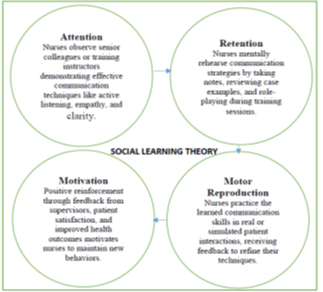
This study adopted Social Learning Theory
This theory posits that behavior is learned from the environment through the process of observational learning. According to Bandura, individuals acquire new behaviors by watching others (models), and the likelihood of adopting the behavior is influenced by several factors such as Attention, Retention, Reproduction , motivation
Application of social learning theory to effective communication skills in nursing pre and post test intervention.
Social Learning Theory is highly applicable to the objectives of this study, providing a strong framework for improving nurses' communication skills through observation, practice, and reinforcement. The components of the theory will guide the design of the training program, ensuring that nurses are engaged, able to retain what they learn, and motivated to apply effective communication strategies in their professional practice.
Methodology
One group pretest- posttest quasi experimental design was utilized for this study. This design was chosen to assess the effect of intervention on enhancing nurse-patient relationship through active listening and communication principles in the rural primary health care in Imo state. Participants were assessed before intervention training package on effective communication was administered, and post-test after the intervention. The study involved 326 nurses working in different rural primary healthcare centers in Imo state, Nigeria. The multistage sampling technique was adopted to select the sample 326 nurses working in the 563 primary health centers in Imo state. The instruments used for this study included a standard questionnaire by Silverman et al (2005). The questionnaire was designed to elicit information from nurses at the Primary Healthcare Centers in Imo state. 30 copies of the instruments were share to participants at joint hospital Mbano Imo state.
The Cronbach’s alpha coefficient for the questionnaire was found to be 0.78, exceeding the acceptable threshold of 0.70. Based on this analysis, questions that were unclear or difficult to understand were rephrased, while those deemed irrelevant were removed. The researcher and six research assistants administered the instruments to the respondent by hand in order to achieve a high rate of return of completed questionnaire. The data was carried out by the use of instruments designed for this study. The researcher used three phases of procedure to conduct the exercise. The first phase is the pre-intervention phase called the Base line data phase, the intervention phase and the post intervention phase.
The post intervention is 12weeks after the intervention phase has been administered. Six research assistance were duly trained to assist with the data collection throughout the period of study. The collected data was reviewed, coded, and analyzed using SPSS version 28.0. Descriptive statistics was used to summarize demographic variables, baseline communication skills, and patient perceptions.
Pre-intervention phase.
This the period where need assessment is done to know the areas nurses at the rural primary health centers need improvement on their communication skills. The baseline information gotten here was used to plan needed interventions that will bring solution to the problem. Gap is identified and effort to bridge them planned by the researcher. After this phase, the real intervention package is administered.
The main intervention phase: Nursing intervention packages were done here. The researcher based his training on the identified needs during the pre-intervention phase. The intervention raining package was adapted from the communicating to improve quality implementation handbook.
Mode of Intervention administration: The researcher and his six trained assistants facilitate the training exercise with the use of the training manual. Each of the session was organized at a time when participants at convince. Each training schedule is design to last 4 hours per module, per week, balancing both theoretical and practical learning. (introduction 30minutes, core communication competencies lecture 1hr, role play scenarios 2hrs and feedback reflection 30 minutes). This training lasted for six weeks.
Post intervention phase;
This data collection was done 12weeks after the intervention was done. The collected data was used to determine the effectiveness of the intervention on effective communication skills among nurses in rural primary health care centers in Imo state. This was done by comparing the pretest data scores with the post intervention scores.
| S/N | LOCAL GOVERNMENT AREAS IN IMO STAE. | NO OF PRIMARY HEALTH CARE CENTERS | NO OF NURSES SELECTED |
| 1 | Aboh Mbaise | 9 | 11 |
| 2 | Ahiazu Mbaise | 16 | 13 |
| 3 | Ehime Mbano | 7 | 12 |
| 4 | Ezinihite Mbaise | 15 | 13 |
| 5 | Ideato North | 6 | 10 |
| 6 | Ideato South | 15 | 11 |
| 7 | Ihitte/Uboma | 7 | 11 |
| 8 | Ikeduru | 17 | 14 |
| 9 | Isiala Mbano | 17 | 14 |
| 10 | Isu | 11 | 9 |
| 11 | Mbaitoli | 15 | 16 |
| 12 | Ngor- Okpala | 5 | 15 |
| 13 | Njaba | 16 | 12 |
| 14 | Nkwere | 15 | 12 |
| 15 | Nwangele | 6 | 11 |
| 16 | Obowo | 17 | 16 |
| 17 | Oguta | 5 | 12 |
| 18 | Ohaji/Egbema | 5 | 11 |
| 19 | Okigwe | 17 | 14 |
| 20 21 22 23 | Onuimo | 5 | 10 |
| Owerri North | 2 | 10 | |
| Orsu | 16 | 11 | |
| Orlu | 12 | 12 | |
| 24 | Oru East | 4 | 10 |
| 25 26 27 | Oru West | 10 | 6 |
| Owerri Municipal | 2 | 10 | |
| Owerri south | 10 | 10 | |
| Total | 282 | 326 |
| Yr | IM Steps | IM Tasks DONE | Development Deliverables |
| 1 | 1. Assess need and develop a logic model of the problem | Establish and work with a planning group. Describe the context for the intervention, including the population, setting, and community. Conduct a needs assessment to create a logic model of the problem. | Nurse at rural primary health care centers in Imo state Literature review – evidence Model |
| 2. Develop matrices of change objectives and a logic model of change | State expected outcomes for behavior and environment. Specify performance objectives for behavioral and environmental outcomes. Select determinants for behavioral and environmental outcomes. Create a logic model of change. Construct matrices one objectives. | Matrices for provider outcome behaviors comprising 1 performance objectives and 6 learning objectives. Conceptual model for the effective communication (model of change). | |
| 3. Identify theory based methods and practical applications for program design | Generate program themes, components, scope, and sequence. Choose theory- and evidence-based methods to create change. Select or design practical applications to deliver change methods. | • effective communication design document comprising specifications including: content, design features, functionality, language, logistics of use and implementation in the rural PHC setting, orientation needs, and evaluation specifications. | |
| 2 | 4. Produce program components and materials | Refine program structure and organization. Prepare plans for program materials. Draft messages, materials, and protocols. Pretest, refine, and produce materials. | webinars. review /literature Provider assessment and feedback reports. Provider continuing education module. Effective communication Best Practice Advisory for improve communication skills Handbook on communication to improve quality manual. Pilot test protocols and results: effective communication component feasibility testing. |
| 5. Plan for program adoption, implementation, and sustainability | Identify potential program implementers. State outcomes and performance objectives for implementation. Construct matrices of change objectives for implementation. Design implementation interventions. | Processes and channels for deployment of effective communication strategies. Matrix of key stakeholders for implementation. | |
| 6. Plan for evaluation | Write effect and process evaluation questions. Develop and measures for assessment. Specify evaluation design. | Evaluation Design Manual of Procedures, including: Study hypotheses and protocols. Measures for assessment. Baseline and follow-up surveys for nurses. |
The nurses at the primary health care centers in Imo state were duly informed and consents were signed b
those who were interested to participate in the study. They were given assurance that their information is strictly confidential and strictly for research purposes. No name and address were required. The respondents were duly educated on how to fill the questions. The research assistants were standby to assist the researcher.
Pre-intervention phase. This the period where need assessment is done to know the areas nurses at the rural primary health centers need improvement on their communication skills. The baseline information gotten here was used to plan needed interventions that will bring solution to the problem. Gap is identified and effort to bridge them planned by the researcher. After this phase, the real intervention package is administered.
The main intervention phase. Nursing intervention packages were done here. Mapping intervention strategies occurred here. The researcher based his training on the identified needs during the pre-intervention phase. The intervention raining package was adapted from the communicating to improve quality implementation handbook.
Post intervention phase; This data collection was done 12weeks after the intervention was done. The collected data was used to determine the effectiveness of the intervention on effective communication skills among nurses in rural primary health care centers in Imo state. This was done by comparing the pretest data scores with the post intervention scores.
Result
| Variables | Categories | n (%) |
| Age (in years) (Mean±SD = 44.94 ± 10.728) | 20-34 | 57 (17.5) |
| 35-49 | 144 (44.2) | |
| 50-64 | 115 (35.3) | |
| >64 | 10 (3.1) | |
| Gender | Male | 153 (46.9) |
| Female | 173 (53.1) | |
| Marital Status | Single | 52 (16.0) |
| Married | 221 (67.8) | |
| Divorced | 30 (9.2) | |
| Widowed | 23 (7.1) | |
| Nursing Qualification (RN) | Yes | 271 (83.1) |
| No | 55 (16.9) | |
| Registered Midwife (RM) | Yes | 166 (50.9) |
| No | 160 (49.1) | |
| Nurse Practitioner (NP) | Yes | 121 (37.1) |
| No | 205 (62.9) | |
| Other Qualifications (n=107) | BNSC | 39 (36.4) |
| RPHN | 68 (63.6) | |
| Years of Experience (Mean±SD = 20.99 ± 8.325) | <6 | 13 (4.0) |
| 6-15 | 59 (18.1) | |
| 16-25 | 179 (54.9) | |
| >25 | 75 (23.0) | |
| Previous Training in Communication Skills | Yes | 283 (86.8) |
| No | 43 (13.2) |
Source: Field Survey, 2024
Table 3 above presents the socio demographic characteristics of the respondents; the average age of participants was 44.94 years (standard deviation of 10.728), with the majority falling in the 35-49 age bracket at 144 (44.2%). The gender distribution showed a slight female majority, with 173 (53.1%) female participants. Regarding marital status, a significant majority were married at 221 (67.8%). In terms of professional qualifications, the majority 271 (83.1%) were registered nurses (RN), and exactly half of the participants, 166 (50.9%), were registered midwives (RM). Additionally, more than one-third 121 (37.1%) were nurse BNSC. Among the 107 respondents with other qualifications, majority 68 (63.6%) held RPHN qualifications, and 39 (36.4%) had BNSC credentials. The participants demonstrated extensive professional experience, with a mean of 20.99 years (standard deviation of 8.325). More than, 179 (54.9), had 16-25 years of experience. Notably, majority 283 (86.8%) of the participants reported inadequate training in communication skills.
Answers to Objectives one: Responses to pre and post intervention, on nurses demonstration of principles of effective communication
| Items | Pre-Intervention | Mean±SD | Post-Intervention | Mean±SD | ||||||||
| Always n(%) | Often n(%) | Sometimes n(%) | Rarely n(%) | Never n(%) | Always n(%) | Often n(%) | Sometimes n(%) | Rarely n(%) | Never n(%) | |||
| Maintain eye contact with patients | 210(64.4) | 89(27.3) | 21(6.4) | 6(1.8) | 0(0.0) | 4.54±0.70 | 326(100.0) | 0(0.0) | 0(0.0) | 0(0.0) | 0(0.0) | 5.00±0.00 |
| Use open-ended questions to encourage patients | 170(52.1) | 142(43.6) | 5(1.5) | 9(2.8) | 0(0.0) | 4.45±0.67 | 241(73.9) | 85(26.1) | 0(0.0) | 0(0.0) | 0(0.0) | 4.74±0.44 |
| Provide clear instructions while acknowledging emotions | 255(78.2) | 41(12.6) | 30(9.2) | 0(0.0) | 0(0.0) | 4.69±0.63 | 306(93.9) | 20(6.1) | 0(0.0) | 0(0.0) | 0(0.0) | 4.94±0.24 |
| Demonstrate empathy towards patients | 161(49.4) | 108(33.1) | 44(13.5) | 13(4.0) | 0(0.0) | 4.28±0.84 | 305(93.6) | 21(6.4) | 0(0.0) | 0(0.0) | 0(0.0) | 4.94±0.25 |
| Adapt communication style to cultural needs | 128(39.3) | 130(39.9) | 54(16.6) | 14(4.3) | 0(0.0) | 4.14±0.84 | 244(74.8) | 82(25.2) | 0(0.0) | 0(0.0) | 0(0.0) | 4.75±0.43 |
| Seek clarification from patients | 218(66.9) | 61(18.7) | 47(14.4) | 0(0.0) | 0(0.0) | 4.52±0.73 | 265(81.3) | 61(18.7) | 0(0.0) | 0(0.0) | 0(0.0) | 4.81±0.39 |
| Use appropriate non-verbal cues (e.g., nodding, smiling) | 179(54.9) | 117(35.9) | 26(8.0) | 4(1.2) | 0(0.0) | 4.44±0.69 | 240(73.6) | 86(26.4) | 0(0.0) | 0(0.0) | 0(0.0) | 4.74±0.44 |
| Engage in active listening (e.g., paraphrasing, summarizing) | 178(54.6) | 115(35.3) | 26(8.0) | 7(2.1) | 0(0.0) | 4.42±0.73 | 221(67.8) | 105(32.2) | 0(0.0) | 0(0.0) | 0(0.0) | 4.68±0.47 |
| Encourage patient participation in decision-making | 231(70.9) | 66(20.2) | 29(8.9) | 0(0.0) | 0(0.0) | 4.62±0.64 | 287(88.0) | 39(12.0) | 0(0.0) | 0(0.0) | 0(0.0) | 4.88±0.33 |
| Handle patient complaints with professionalism and empathy | 196(60.1) | 84(25.8) | 42(12.9) | 4(1.2) | 0(0.0) | 4.45±0.76 | 283(86.8) | 43(13.2) | 0(0.0) | 0(0.0) | 0(0.0) | 4.87±0.34 |
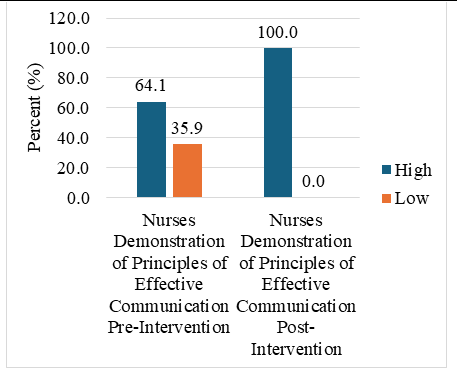
Table 4 and Figure 1 presents the overall nurses’ demonstration of principles of effective communication pre and post intervention. Before the intervention, a larger proportion of nurses, 209(64.1%), demonstrated a high level of effective communication principles, while 117(35.9%) had a low level. Following the intervention, all nurses, 326(100.0%), demonstrated a high level of practice of effective communication principles, indicating a complete improvement.
Overall demonstration of the principles was scored based on 10 Likert-scale questions: always-5, often-4, sometimes-3 rarely-2, and never-1 for positive statements. The total scores categorized using the pre-intervention mean score (45), participants were scored: low (15-44), and high (45-50).
Answers to objective two: Participants responses to pre and post communication skills enhancing relationships with colleagues and patient
| Items | Pre-Intervention | Mean±SD | Post-Intervention | Mean±SD | ||||||||
| Always n(%) | Often n(%) | Sometimes n(%) | Rarely n(%) | Never n(%) | Always n(%) | Often n(%) | Sometimes n(%) | Rarely n(%) | Never n(%) | |||
| I actively seek input from colleagues when making decisions about patient care. | 143(43.9) | 112(34.4) | 49(15.0) | 8(2.5) | 14(4.3) | 4.11±1.03 | 188(57.7) | 101(31.0) | 35(10.7) | 2(0.6) | 0(0.0) | 4.46±0.71 |
| I acknowledge patients’ emotions (e.g., “I understand this must be difficult for you”). | 81(24.8) | 173(53.1) | 45(13.8) | 19(5.8) | 8(2.5) | 3.92±0.92 | 136(41.7) | 157(48.2) | 31(9.5) | 1(0.3) | 1(0.3) | 4.31±0.68 |
| I use respectful language (e.g., avoiding interruptions, using titles like “Mr./Mrs.”). | 99(30.4) | 122(37.4) | 76(23.3) | 12(3.7) | 17(5.2) | 3.84±1.06 | 142(43.6) | 128(39.3) | 53(16.3) | 0(0.0) | 3(0.9) | 4.25±0.79 |
| I resolve conflicts with colleagues calmly and professionally. | 76(23.3) | 143(43.9) | 77(23.6) | 18(5.5) | 12(3.7) | 3.78±0.99 | 108(33.1) | 146(44.8) | 65(19.9) | 7(2.1) | 0(0.0) | 4.09±0.78 |
| I provide constructive feedback to colleagues to improve teamwork. | 109(33.4) | 84(25.8) | 72(22.1) | 47(14.4) | 14(4.3) | 3.70±1.20 | 187(57.4) | 102(31.3) | 32(9.8) | 4(1.2) | 1(0.3) | 4.44±0.75 |
| I adapt my communication style to suit the cultural background and literacy level of patients. | 116(35.6) | 90(27.6) | 87(26.7) | 27(8.3) | 6(1.8) | 3.87±1.05 | 211(64.7) | 99(30.4) | 7(2.1) | 0(0.0) | 9(2.8) | 4.54±0.79 |
| I build trust with patients by explaining procedures clearly and transparently. | 60(18.4) | 202(62.0) | 45(13.8) | 11(3.4) | 8(2.5) | 3.90±0.82 | 116(35.6) | 184(56.4) | 23(7.1) | 1(0.3) | 2(0.6) | 4.26±0.65 |
| I maintain a positive tone of voice when communicating with colleagues during stressful situations. | 77(23.6) | 118(36.2) | 96(29.4) | 21(6.4) | 14(4.3) | 3.68±1.04 | 170(52.1) | 115(35.3) | 36(11.0) | 5(1.5) | 0(0.0) | 4.38±0.74 |
| I collaborate with colleagues to ensure consistent messaging to patients. | 109(33.4) | 104(31.9) | 79(24.2) | 15(4.6) | 19(5.8) | 3.83±1.12 | 205(62.9) | 101(31.0) | 12(3.7) | 7(2.1) | 1(0.3) | 4.54±0.70 |
| I address patient concerns promptly to strengthen their confidence in my care. | 106(32.5) | 96(29.4) | 95(29.1) | 8(2.5) | 21(6.4) | 3.79±1.12 | 263(80.7) | 31(9.5) | 28(8.6) | 0(0.0) | 4(1.2) | 4.68±0.73 |
| I encourage teamwork by offering support and assistance to my colleagues. | 157(48.2) | 100(30.7) | 48(14.7) | 17(5.2) | 4(1.2) | 4.19±0.96 | 196(60.1) | 94(28.8) | 27(8.3) | 8(2.5) | 1(0.3) | 4.46±0.77 |
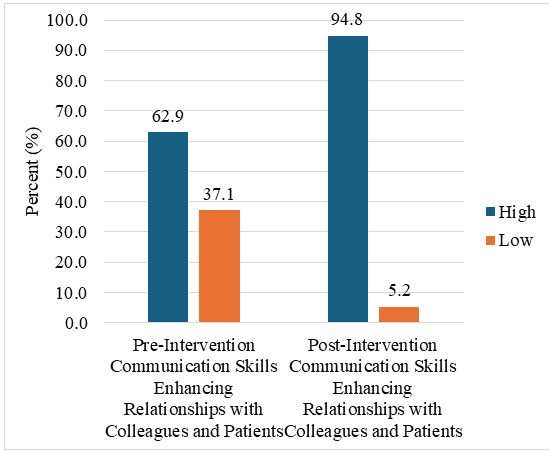
Overall communication skills enhancing relationships with colleagues and patients was scored based on 11 Likert-scale questions: always-5, often-4, sometimes-3 rarely-2, and never-1 for positive statements. The total scores were categorized using the pre-intervention mean score (42), participants were scored: low (11-41), and high (42-55).
Answer to objective 3:
Level of skills encouraging active listening to patients
| Items | Pre-Intervention | Mean±SD | Post-Intervention | Mean±SD | ||||||||
| Always n(%) | Often n(%) | Sometimes n(%) | Rarely n(%) | Never n(%) | Always n(%) | Often n(%) | Sometimes n(%) | Rarely n(%) | Never n(%) | |||
| I maintain eye contact and nod to show attentiveness while patients speak. | 140(42.9) | 126(38.7) | 38(11.7) | 8(2.5) | 14(4.3) | 4.13±1.008 | 207(63.5) | 94(28.8) | 23(7.1) | 2(0.6) | 0(0) | 4.55±0.653 |
| I paraphrase patients’ concerns to confirm understanding. | 114(35.0) | 166(50.9) | 20(6.1) | 18(5.5) | 8(2.5) | 4.10±0.919 | 166(50.9) | 141(43.3) | 19(5.8) | 0(0) | 0(0) | 4.45±0.604 |
| I let patients finish speaking before responding. | 128(39.3) | 132(40.5) | 41(12.6) | 8(2.5) | 17(5.2) | 4.06±1.042 | 166(50.9) | 114(35.0) | 46(14.1) | 0(0) | 0(0) | 4.37±0.719 |
| I minimize distractions during patient interactions. | 127(39.0) | 127(39.0) | 42(12.9) | 18(5.5) | 12(3.7) | 4.04±1.035 | 139(42.6) | 133(40.8) | 52(16.0) | 2(0.6) | 0(0) | 4.25±0.740 |
| I ask follow-up questions to clarify patients’ needs. | 146(44.8) | 84(25.8) | 43(13.2) | 39(12.0) | 14(4.3) | 3.95±1.203 | 215(66.0) | 83(25.5) | 26(8.0) | 1(0.3) | 1(0.3) | 4.56±0.680 |
| I summarize patients’ main concerns at the end of consultations. | 149(45.7) | 103(31.6) | 55(16.9) | 19(5.8) | 0(0) | 4.17±0.912 | 232(71.2) | 92(28.2) | 1(0.3) | 1(0.3) | 0(0) | 4.70±0.504 |
| I notice and respond to patients’ nonverbal cues. | 92(28.2) | 204(62.6) | 13(4.0) | 6(1.8) | 11(3.4) | 4.10±0.831 | 147(45.1) | 171(52.5) | 8(2.5) | 0(0) | 0(0) | 4.43±0.543 |
| I avoid interrupting patients. | 106(32.5) | 112(34.4) | 80(24.5) | 15(4.6) | 13(4.0) | 3.87±1.049 | 205(62.9) | 103(31.6) | 18(5.5) | 0(0) | 0(0) | 4.57±0.597 |
| I encourage patients to share their feelings. | 136(41.7) | 114(35.0) | 45(13.8) | 11(3.4) | 20(6.1) | 4.03±1.116 | 228(69.9) | 95(29.1) | 3(0.9) | 0(0) | 0(0) | 4.69±0.483 |
| I adjust my communication approach based on patients’ emotional state. | 157(48.2) | 96(29.4) | 53(16.3) | 8(2.5) | 12(3.7) | 4.16±1.025 | 275(84.4) | 29(8.9) | 20(6.1) | 0(0) | 2(0.6) | 4.76±0.615 |
| I use active listening techniques to reassure anxious patients. | 179(54.9) | 57(17.5) | 17(5.2) | 53(16.3) | 20(6.1) | 3.99±1.345 | 178(54.6) | 116(35.6) | 26(8.0) | 5(1.5) | 1(0.3) | 4.43±0.731 |
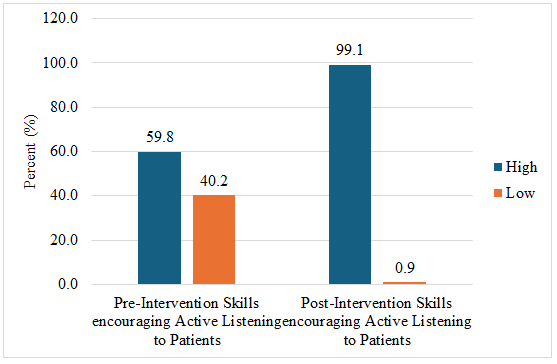
Overall communication skill encouraging active listening to patients was scored based on 11 Likert-scale questions: always-5, often-4, sometimes-3 rarely-2, and never-1 for positive statements. The total scores were categorized using the pre-intervention mean score (44), participants were scored: low (11-43), and high (44-55). The proportion of nurses demonstrating high proficiency rose sharply from 59.8% to 99.1%, supported by a significant increase in mean scores from 44.61 ±4.90 to 49.77±2.73. The intervention produced a substantial and statistically significant improvement in nurses’ active listening skills, markedly enhancing their ability to engage patients.
Discussion Of Finding
Demographic
Finding has revealed that majority of the respondents 86.8% had prior training in communication skills.is also revealed that majority of the respondents 83.1% were registered nurses, this is an evidence that profession is women dominant. However 88.1% of the respondents expressed willingness to participate, this an evidence that it was highly accepted by nurses in the rural areas of Imo state.
pre and post intervention, nurses demonstration of principles of effective communication
The findings indicate a significant improvement in nurses' demonstration of effective communication principles post-intervention as a larger proportion of nurses, 209(64.1%), demonstrated a high level of effective communication principles at the baseline. Following the intervention, all nurses, 326(100.0%), demonstrated a high level of practice of effective communication principles, indicating a complete improvement. The improvement was statistically significant (p < .001) with the mean score increasing from 44.56±3.21(pre-intervention) to 48.34±1.60(post-intervention), with a mean difference of 7.344. Finding is supported by Jones & White, (2021) who revealed that empathetic communication plays a crucial role in fostering therapeutic relationships and improving patient satisfaction. Laktarash et al. (2019) demonstrated the effectiveness of social competence training in improving communication skills, cultural competence and social adjustment among psychiatric nurses. Also, Kerr et al. (2019) found that communication skills training interventions generally led to improvements in nurses' facilitative communication behaviors, particularly in oncology and hospice care especially with respect to open-ended questions, patient-centered communication, and reduced inhibitory behaviors. Moreover, a more robust body of evidence according to a systematic review by Ardakani et al. (2018) showed a moderate but significant improvement in nurses' self-efficacy following communication skills training. Also, Kerr et al. (2019) found that communication skills training interventions generally led to improvements in nurses' facilitative communication behaviors, particularly in oncology and hospice care especially with respect to open-ended questions, patient-centered communication, and reduced inhibitory behaviors. Moreover, a more robust body of evidence according to a systematic review by Ardakani et al. (2018) showed a moderate but significant improvement in nurses' self-efficacy following communication skills training.
pre and post communication skills enhancing relationships with colleagues and patients
The study revealed the proportion of nurses demonstrating high communication competence rising from 62.9% to 94.8%. This improvement was statistically significant, as reflected in the increase in the mean communication skills score from 42.61±3.91 to 48.41±3.79 The intervention yielded a substantial and statistically significant enhancement in nurses' communication skills, markedly improving their ability to foster positive relationships with both colleagues and patients. Those in consistent with this finding include; Abdeen and Mohamed (2023) found that a communication skills training program for head nurses significantly improved their communication, interpersonal relations, and organizational commitment (p < 0.01). Wolderslund et al. (2024) reported that communication training significantly enhanced nurses’ self-efficacy and quality of care, with the psychosocial, communication, and physical dimensions of care improving substantially post-intervention (P<0.001). Wolderslund et al. (2024), who reported that communication training significantly enhanced nurses' ability to deliver high-quality patient care, as measured by increased self-efficacy and better communication practices (P<0.001). Laktarash et al. (2019), who found that social competence training based on the Felner model significantly improved nurses' social adjustment (P < 0.05), reinforcing the notion that interpersonal communication training enhances professional responsiveness and adaptability.
Level of skills encouraging active listening to patients pre and post intervention
The proportion of nurses demonstrating high proficiency rose sharply from 59.8% to 99.1%, supported by a significant increase in mean scores from 44.61 ±4.90to 49.77±2.73(mean gain = 5.16, t = 17.995, p < .001). The intervention produced a substantial and statistically significant improvement in nurses’ active listening skills, markedly enhancing their ability to engage patients. This finding is in agreement with the findings of Mahmoud and Hassan’s (2018) study, which demonstrated significant improvements in active listening, empathetic skills, and self-efficacy post-intervention. Smith and Jones (2018) who found that nurses who participated in communication training exhibited substantial improvements in active listening, empathy, and rapport-building skills. Similarly, Banerjee et al. (2017) reported a significant increase in self-efficacy after communication training, with post-training mean scores rising from 3.31 (SD = .88) to 4.05 (SD = .65). Ali et al. (2020) who also found statistically significant improvements in nurses’ communication skills post-training, with 91% of assessed skills showing enhancement. Kırca and Bademli (2019), which found that nurses' communication competence is positively correlated with patient care quality and professional self-efficacy. Similarly, Cannity et al. (2020) highlighted the importance of continuous professional development, as nurses who participated in communication training programs showed greater confidence and skill in handling complex patient interactions.
Conclusion And Recommendation
These findings highlight the effectiveness of the intervention in enhancing nurses' communication competencies, as a critical factor in patient care quality and professional collaboration. Thus to enhance a substantial improvements across multiple communication domains this study hereby suggest the following recommendations;
-
Healthcare administrators and nursing education institutions should implement regular, structured communication skills training programs for nurses, particularly those working in rural primary healthcare centers as the study demonstrated significant improvements in nurses' ability to convey and understand messages after targeted interventions.
-
Healthcare facility administrators should establish formal feedback mechanisms to regularly assess nurse-patient communication effectiveness
-
Nursing regulatory bodies and professional associations should mandate continuing education credits specifically focused on communication skills as part of license renewal requirements.
-
Academic institutions and healthcare research organizations should conduct longitudinal studies to assess the long-term impact of communication skills training on patient outcomes.
-
Funding is self sponsor
-
There is no conflicting interest in this study.
-
This study is novel in Imo state, primary health care centers.
References
- Abdeen, M. A., & Mohamed, W. M. (2021). Effect of communication skills training program for head nurses on interpersonal relations and nurses' organizational commitment. Egyptian Journal of Health Care, 12(3), 1574. DOI ↗ Google Scholar ↗
- Adeyemo, M., Olawale, S., Adeniyi, N., Popoola, O.,& Bello, T. (2022). Spiritual nursing care knowledge, perception, and practice among nurses in secondary health care facilities in Osun State, Nigeria. Research and Education in Health Sciences, 10(3), . 10.4314/rejhs.v10i3.10 DOI ↗ Google Scholar ↗
- Ali,S., Umair, M., Jawed, Z., Khan, A.A., & Mirza, A. (2020). Effect of a 2-DayHospital Wide Communication Skills Training on Self-Ratings of Nursing Staff. DOI ↗ Google Scholar ↗
- Ardakani, M. F., Sharifabad, M. A. M., Bahrami, M. A., & Abargouei, A. S. (2019). The effect of communication skills training on the self-efficacy of nurses: A systematic review and meta-analysis study. Bali Medical Journal, 8(1), 144–152. DOI ↗ Google Scholar ↗
- Banerjee, S. C., Manna, R., Coyle, N., Penn, S., Gallegos, T. E., Zaider, T., Krueger, C. A., Bialer, P. A., Bylund, C. L., & Parker, P. A. (2017). The implementation and evaluation of a communication skills training program for oncology nurses. Translational Behavioral Medicine, 7(4), 615–623. DOI ↗ Google Scholar ↗
- Cannity, K. M., Banerjee, S. C., Hichenberg, S., Leon-Nastasi, A. D., Howell, F., Coyle, N., Zaider, T., & Parker, P. A. (2021). Acceptability and efficacy of a communication skills training for nursing students: Building empathy and discussing complex situations. Nurse Education in Practice, 50(4), 102928. DOI ↗ Google Scholar ↗
- ElShazly, M., El Taweel, A., El Menshawy, M., &El-Sayed, R. (2020). Assessing nurses’ communication skills: Self-reported questionnaire versus observation. Journal of Nursing Education and Practice, 7(9), 77-85. DOI ↗ Google Scholar ↗
- Kerr, D., Ostaszkiewicz, J., Dunning, T., & Martin, P. (2020). The effectiveness of training interventions on nurses’ communication skills: A systematic review. Nurse Education Today, 89(1). DOI ↗ Google Scholar ↗
- Kirca, N., & Bademli, K. (2019). Relationship between Communication Skills and Care Behaviors of Nurses. Perspectives in Psychiatric Care, 55(4), 624–631. DOI ↗ Google Scholar ↗
- Kwame, A., & Petrucka, P. M. (2020a). Communication in nurse-patient interaction in healthcare settings: A scoping review. International Journal of Africa Nursing Sciences, 12, 100198. DOI ↗ Google Scholar ↗
- Laktarash, M., Kalrozi., F., & Pishgooie., S. (2019). The Effectiveness of Social Competence Training based on Felner Model on Communication Skills and Social Adjustment of Nurses in the Psychiatric ward of Selected Hospitals of Aja. Military Caring Sciences, 6(2), 116–126. DOI ↗ Google Scholar ↗
- Mahmoud, S., & Hassan, M. (2018). Effectiveness of communication skills training program on empathetic skill and communication self efficacy of pediatric oncology nurses. IOSR Journal of Nursing and Health Science (IOSR-JNHS), 7(2), 75-85. DOI ↗ Google Scholar ↗
- Oche, M. O., Adamu, H., & Abubakar, M. B. (2020). Perceived competence and attitude of primary healthcare workers regarding communication with mentally ill patients in Maiduguri, North-Eastern Nigeria. Nigerian Journal of Clinical Practice, 17(4), 439-445. DOI ↗ Google Scholar ↗
- Smith, K., & Jones, M. (2018). Longitudinal effects of communication skills training on nurses' competencies: A mixed-methods study. Nurse Education Today, 65, 102-115. DOI ↗ Google Scholar ↗
- Street, R. L., Makoul, G., Arora, N. K., & Epstein, R. M. (2009). How does communication heal? Pathways linking clinician–patient communication to health outcomes. Patient Education and Counseling, 74(3), 295–301. DOI ↗ Google Scholar ↗
- Wolderslund, M., Kofoed, P.-E., & Ammentorp, J. (2024). Investigating the Effectiveness of Communication Skills Training on Nurses’ Self-Efficacy and Quality of Care. Journal of Integrative Nursing and Palliative Care, 4(2-2024), 1–7. DOI ↗ Google Scholar ↗
- Yakubu, K., Shanthosh, J., Adebayo, K. O., Peiris, D., & Joshi, R. (2023). Scope of health worker migration governance and its impact on emigration intentions among skilled health workers in Nigeria. PLOS Global Public Health, 3(1), e0000717. DOI ↗ Google Scholar ↗