Abstract
This study identifies the relative priorities of consumption values in sports nutrition product spending decisions among young people in Vietnam. Drawing on the Theory of Consumption Values, it examines five values: functional, social, emotional, epistemic, and conditional. Data were collected from 11 experts with relevant knowledge and experience and analyzed using Fuzzy AHP. The pairwise comparison matrix satisfied the consistency requirement, with CR = 0.0845. Functional value ranked first, with a normalized weight of 0.4553, followed by conditional value at 0.1648. Emotional value (0.1426), epistemic value (0.1270), and social value (0.1100) ranked third, fourth, and fifth, respectively. This ranking reflects a tendency to prioritize product benefits, functionality, and practical spending conditions, while psychological, cognitive, and social values play supplementary roles. The findings provide a reference for businesses in product design, pricing, communication, and distribution planning suited to young consumers.
Keywords
consumption values spending decisions sports nutrition young people Vietnam Fuzzy AHP.
1. Introduction
Growing interest in health, physique, and exercise performance among people who participate in sports has increased demand for sports nutrition products. This trend extends beyond professional athletes to semi-professional athletes and recreational sports participants. The range of products has consequently expanded to include protein supplements, electrolyte drinks, nutrition bars, energy supplements, and recovery products. Carey et al. (2023) suggest that the development of the sports nutrition sector is associated with demand for scientifically supported products that serve both competitive goals and the maintenance of an active lifestyle. Among young people, interest is also shaped by the ways in which products convey images of sport, health, and self-improvement. Hu et al. (2025) found that sports-related cues on packaging can increase Generation Z consumers’ purchase intentions for protein powder.
Purchasing and using sports nutrition products serves health-related goals and directly involves the allocation of personal budgets. In a market offering diverse brands, ingredients, functions, and prices, consumers must consider multiple attributes simultaneously. Common considerations include support for exercise performance, nutritional composition, safety, scientific evidence, taste, convenience, and affordability (Carey et al., 2023; Reitano et al., 2024). Sports nutrition product choices are also influenced by knowledge, experience, and the social environment. Young people may seek advice from coaches, friends, exercise communities, or online information sources (Finamore et al., 2022; Espeño et al., 2024). Lopes et al. (2024) reported differences among exercisers in product types, frequency of use, reasons for consumption, and information sources. Doan et al. (2024) identified associations between online purchasing experience, Internet use habits, place of residence, and both the behavior of purchasing medicines and functional foods online and intentions to do so. These findings suggest that information, convenience, and the purchasing context play a role in decisions concerning health-related products.
The diversity of these factors can be explained through the Theory of Consumption Values proposed by Sheth et al. (1991). According to this theory, consumer choice is shaped by five categories of value: functional, social, emotional, epistemic, and conditional. Recent studies continue to support the applicability of the Theory of Consumption Values to the analysis of choices concerning foods and health-enhancing products. Sharma and Kushwah (2025) reviewed the development of the theory across various consumption contexts. Their review emphasizes that the contribution of each value may vary with the product, customer group, and choice situation. In the context of functional foods, Koay and Ngang (2026) identified distinct roles for conditional, social, and epistemic values in shaping purchase intentions. Goh et al. (2023) also applied the consumption values approach to explain customer acceptance of products characterized by advanced technology and specialized information.
Most existing studies have examined the relationship between individual factors and purchase intentions or behavior. This approach does not clearly establish which values consumers prioritize when considering multiple benefits simultaneously. This gap is particularly evident among young people in Vietnam, where income, exercise habits, nutritional knowledge, and product access vary considerably.
Accordingly, this study uses the Theory of Consumption Values to identify selection criteria and applies Fuzzy AHP (Arora et al., 2022) to rank these values in sports nutrition product spending decisions. Specifically, the study systematizes the theoretical foundations of sports nutrition products, spending decisions, and consumption values; calculates the weights of the five values using Fuzzy AHP; and establishes a priority ranking among functional, social, emotional, epistemic, and conditional values. The findings aim to contribute evidence on young people’s priorities regarding sports nutrition products, as assessed by experts. In practical terms, the ranking provides a reference for businesses when designing products, setting prices, developing communication messages, and selecting distribution channels suited to young consumers.
2. Theoretical Background
2.1. Definition and Characteristics of Sports Nutrition Products
Definition
Sports nutrition products comprise foods, beverages, and supplements designed or used to meet nutritional needs arising from exercise. These products may provide energy, protein, carbohydrates, vitamins, minerals, electrolytes, or certain bioactive ingredients. Their use is generally associated with maintaining physical fitness, improving performance, supporting adaptations to exercise, and promoting post-exercise recovery. Carey et al. (2023) conceptualize sports nutrition products as nutritional solutions that support performance, strength, endurance, recovery, and health maintenance among athletes and individuals with active lifestyles.
Sports nutrition products encompass a broad range and can be classified by composition, product form, or intended use. For the purposes of this study, sports nutrition products are limited to five main categories:
- Protein supplements, commonly available as powders, ready-to-drink beverages, or protein-rich foods.
- Electrolyte drinks, used to replenish fluids and electrolytes during or after exercise.
- Nutrition bars, which provide energy and nutrients in a convenient form.
- Energy supplements, such as gels, carbohydrate drinks, or products consumed before and during exercise.
- Recovery products, which typically combine protein, carbohydrates, and ingredients that support post-exercise recovery.
Characteristics of Sports Nutrition Products
- Product functionality and quality
These products are goal-oriented. Users generally select products to meet specific needs, such as muscle gain, improved endurance, energy supplementation, or shorter recovery times. Product value is therefore assessed through both nutritional composition and suitability for the type of physical activity and training goals. Pelly et al. (2022) identified health and performance as two prominent categories of motivation in athletes’ food choices. Finamore et al. (2022) likewise reported that increasing muscle mass and supporting muscle recovery are common reasons for supplement use among gym-goers. Moreover, the quality, safety, and actual effectiveness of sports nutrition products are difficult to assess fully before use. Their effects also depend on each individual’s diet, exercise intensity, physical condition, and pattern of use. Carey et al. (2023) discussed concerns about inaccurate labeling, contamination risks, and the reliability of scientific evidence in the sports nutrition market. Perceived quality is therefore often shaped by ingredient information, certifications, brand reputation, and experience with the product.
- Product information and the selection process
Products vary in composition, function, directions for use, and price. This diversity broadens consumer choice while making evaluation more complex. Buyers must simultaneously compare nutritional profiles, taste, accessibility, convenience, prices, and scientific evidence. Carey et al. (2023) found that nutritional profile ranked highest among the attributes influencing product choice, followed by taste, accessibility, ease of preparation, and price. Specialized information and advisers therefore play a relatively substantial role. Young people may receive guidance from nutrition professionals, coaches, sales staff, friends, or online communities. However, the quality of these information sources varies. Finamore et al. (2022) found that gym trainers were a preferred information source for many users, while some gym-goers had limited nutritional knowledge. Wesana et al. (2020) also found associations between sports nutrition advice, exercise frequency, and the likelihood of product use.
- Spending conditions and patterns for sports nutrition products
Price, income, affordability, availability, purchase location, and convenience can alter consumer decisions. Pelly et al. (2022) classified cost, convenience, and accessibility as situational factors in athletes’ food choices. Carey et al. (2023) also reported that individuals exercising for fewer than 10 hours per week assigned greater importance to price than those who exercised more. This suggests that budget constraints and commitment to exercise may alter the way consumers weigh benefits against costs.
Spending on sports nutrition products recurs in line with training cycles. Consumers must therefore consider both the price of an individual product unit and total expenditure over a given period. Spending decisions reflect trade-offs among expected effectiveness, safety, personal experience, acquired information, social influence, and affordability. This characteristic provides a basis for examining sports nutrition products through the lens of consumption values.
2.2. The Theory of Consumption Values
The Theory of Consumption Values (TCV), proposed by Sheth et al. (1991), explains why consumers choose to purchase or use one product over alternatives. The theory rests on three main propositions. First, consumer choice is the result of multiple consumption values. Second, the contribution of each value varies according to the product and the choice situation. Third, the values are relatively independent, although they may jointly contribute to a decision. Buyers therefore often make trade-offs among desired values when they cannot maximize all benefits within a single alternative.
According to TCV, consumption value derives from more than functionality or price. It also encompasses social benefits, emotional states, the desire for exploration, and conditions associated with the purchasing situation. This multidimensional approach helps explain why people with the same usage needs may choose different products. The review by Sharma and Kushwah (2025) confirms that TCV has been applied across various fields to analyze motivations, acceptance, and choice behavior. In the food sector, the theory is particularly relevant because purchasing decisions are often influenced simultaneously by quality, health, price, personal perceptions, and the social environment.
Functional value refers to the benefits derived from a product’s attributes, uses, and capacity to perform its functions. It is commonly associated with quality, reliability, usefulness, and outcomes of use. For sports nutrition products, functional value is expressed through nutritional composition, safety, and the ability to support training goals. Expected benefits may include energy supplementation, improved endurance, support for muscle development, weight management, and recovery (Carey et al., 2023; Finamore et al., 2022). In this study, functional value encompasses product functionality, quality, composition, safety, and effectiveness in supporting exercise.
Social value refers to the benefits arising from a product’s ability to help individuals connect with social groups or develop a desired image. Consumers may choose products to express a lifestyle, status, or compatibility with the communities in which they participate. In sports settings, decisions to use products may be influenced by friends, coaches, celebrities, and exercise communities. Wesana et al. (2020) found an association between sports nutrition advice and the likelihood of product use. Finamore et al. (2022) reported that gym trainers were a preferred information source for many exercisers seeking information about supplements. Accordingly, social value in this study is identified through a healthy-lifestyle image, recognition, a sense of community belonging, and influence from relevant others.
Emotional value concerns a product’s ability to evoke or sustain particular emotional states. A choice may provide satisfaction, enthusiasm, confidence, reassurance, or a greater sense of control over one’s health. When selecting sports nutrition products, users may experience positive emotions if they believe they are caring for their bodies appropriately or moving closer to their training goals. According to Hu et al. (2025), sports-related packaging can increase Generation Z consumers’ purchase intentions for protein powder.
Epistemic value refers to benefits arising from novelty, the capacity to arouse curiosity, and opportunities to expand knowledge. Consumers may choose a product because they wish to explore new ingredients, learn about its functions, or experience a different way of using it. The knowledge acquired may help young people select products that better suit their personal goals (Goh et al., 2023). Accordingly, epistemic value in this article encompasses access to knowledge about sports nutrition, product exploration, and an understanding of appropriate use.
Conditional value refers to benefits that arise in a specific situation. It depends on time, location, income, price, promotions, and product accessibility. Pelly et al. (2022) classified cost, convenience, and availability as situational factors influencing athletes’ food choices. Carey et al. (2023) likewise identified price, accessibility, and ease of preparation as attributes considered by exercisers. In this study, conditional value encompasses price, income, affordability, promotions, timing, purchase location, and convenience in storage or use.
These five categories of value form an analytical framework suited to the multidimensional nature of sports nutrition consumption decisions. Each value represents a type of benefit that young people may consider.
2.3. Sports Nutrition Product Spending Decisions among Young People
Sports nutrition product spending decisions are understood as the process through which consumers consider and allocate a portion of their financial resources to purchase, use, or continue using products that support physical activity. This process involves successive choices, including whether to buy a product, which product category to select, how much of a budget to allocate, how frequently to purchase, and which channel to use. Compared with purchase intentions, spending decisions place greater emphasis on trade-offs between expected benefits and individuals’ financial constraints.
For young people, spending decisions concerning sports nutrition products are often closely associated with training goals and habits. Needs also vary with training intensity, duration, and stage. Pelly et al. (2022) identified health, performance, sport-specific characteristics, experience, and conditions of use as influences on athletes’ food choices. Spending on sports nutrition products is also recurrent. Many products are consumed per training session or over extended cycles. Buyers must therefore consider total expenditure rather than only the price of an individual unit. A low price may ease budget constraints but does not guarantee that a product meets quality and safety requirements. Conversely, consumers may accept higher prices for products with specialized formulations or clear scientific evidence (Reitano et al., 2024).
In this study, young people are defined as individuals aged 18 to 30 who engage in exercise or sports and have an interest in sports nutrition products. This group has relatively diverse needs relating to health, physique, and exercise performance, while income and financial independence vary (Pelly et al., 2022; Carey et al., 2023). Their decision-making process has several distinctive features. Differences in income and financial independence may produce differences in price sensitivity. At the same time, young people tend to access new products, online information, and community-generated content rapidly. Brand image, user reviews, and packaging messages may influence perceptions before purchase. Hu et al. (2025) found that sports-related cues on packaging can increase Generation Z consumers’ purchase intentions for protein powder. However, positive intentions do not necessarily mean that buyers will sustain their spending if prices exceed their financial means or products fail to deliver the expected experience.
In Vietnam, online channels expand opportunities to search for, compare, and order products. This convenience is accompanied by difficulties in assessing the reliability of sellers and product information. Doan et al. (2024) identified associations between online purchasing experience, Internet use habits, place of residence, and Vietnamese consumers’ behavior and intentions regarding online purchases of medicines and functional foods. Although their study did not focus exclusively on sports nutrition, its findings provide a basis for considering the roles of information and purchasing conditions in the market for health-related products.
From the perspective of the Theory of Consumption Values, spending decisions result from weighing five types of value. Functional value represents benefits for health and exercise performance. Social value concerns community influence and personal image. Emotional value relates to confidence, satisfaction, and motivation. Epistemic value expresses the desire to explore and understand products. Conditional value reflects price, income, accessibility, and the circumstances of use. The priority assigned to each value may differ among individuals with different goals, experiences, and financial resources.
On this basis, the study identifies the relative priorities of the five consumption values in spending decisions. Fuzzy AHP is used to convert pairwise comparison judgments into weights. The resulting ranking identifies which values receive higher priority according to the assessments of the study participants.
2.4. Research Framework
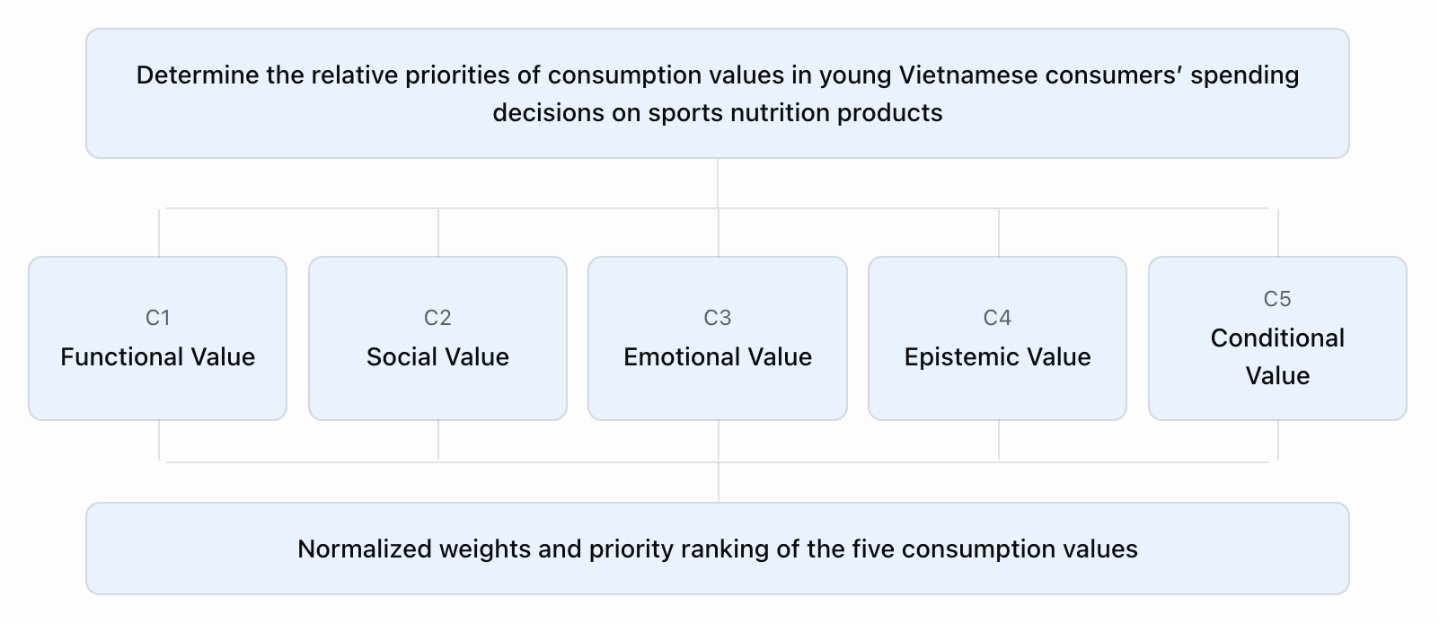
The research framework adopts a multicriteria decision-making approach. Its objective is to determine the relative priorities of the values considered by young people when spending on sports nutrition products. Under this approach, spending decisions establish the evaluation context and are not treated as a dependent variable in a causal model.
Selecting sports nutrition products often requires consumers to consider several dimensions simultaneously. These may include functionality, composition, safety, price, taste, accessibility, and scientific evidence. The selection process also depends on training goals, nutritional knowledge, and the circumstances of use. These characteristics make spending decisions suitable for a multicriteria approach (Pelly et al., 2022; Carey et al., 2023).
The research framework is developed from the Theory of Consumption Values proposed by Sheth et al. (1991). According to this theory, consumer choice is shaped by five types of value: functional, social, emotional, epistemic, and conditional. These values reflect the different benefits consumers seek when making choices. This structure has been applied across various product and service contexts, demonstrating the theory’s adaptability to multidimensional consumption issues (Sharma & Kushwah, 2025).
In this study, the five consumption values are organized as criteria at the same level of the hierarchy. The criteria are compared pairwise to determine their relative priorities. The aggregated results comprise normalized weights and a ranking for each value. These weights do not indicate the magnitude of effects on spending and are not used to infer causal relationships.
The structure of the research framework is presented in Figure 1.
Source: Proposed by the research team.
3. Research Methods
3.1. Data Collection
The study uses primary data collected through a pairwise comparison questionnaire. The questionnaire was designed to elicit judgments about the relative priorities of consumption values in the context of spending on sports nutrition products.
Participants were selected through purposive sampling. Selection criteria were based on specialized knowledge or practical experience in sports training, nutrition, product use, coaching, gym management, product sales, and physical education teaching. This selection approach is appropriate for Fuzzy AHP because the method requires evaluators who can assess and compare criteria within the same decision-making context.
The evaluation panel comprised 11 participants, including young people experienced in product use, athletes, coaches, sports nutrition product business operators, and physical education lecturers. This composition enabled the issue to be examined from both consumer and professional perspectives.
Participants conducted pairwise comparisons of the five consumption values: functional, social, emotional, epistemic, and conditional. With 5 criteria, the number of required comparisons is 5 × 4 / 2 = 10 pairs. These judgments were then converted into triangular fuzzy numbers and processed using Fuzzy AHP to determine the weights and priority rankings of the values.
3.2. Development of the Evaluation Criteria
The criteria were developed on three bases: (1) application of the Theory of Consumption Values proposed by Sheth et al. (1991); (2) a review of studies on food and nutrition product choices in sports; and (3) the relevance of each value to the spending context of young people in Vietnam. The criteria are organized at the same hierarchical level. Each criterion represents a dimension of benefit that young people may consider when allocating their budgets to these products. The criteria are detailed in Table 1.
| Code | Main criterion | Description in the context of sports nutrition products |
| C1 | Functional value | Practical product benefits, such as providing energy and nutrients, supporting recovery and muscle gain, and improving endurance and exercise performance; also reflected in product quality, composition, functionality, and safety. |
| C2 | Social value | The ability to express a healthy, active lifestyle and compatibility with the exercise community. |
| C3 | Emotional value | Emotional states arising when purchasing and using products, such as confidence, satisfaction, reassurance, enthusiasm, and greater motivation to maintain exercise. |
| C4 | Epistemic value | Benefits derived from acquiring new knowledge and exploring ingredients, technology, functions, and ways of using products that suit training goals. |
| C5 | Conditional value | Product suitability under specific conditions, including budget, income, affordability, promotions, purchase timing, availability, distribution locations, and convenience of use. |
Source: Proposed by the research team based on Sheth et al. (1991), Pelly et al. (2022), and Carey et al. (2023).
The criteria in Table 1 provide the basis for designing the questionnaire, constructing the pairwise comparison matrix, and calculating weights using Fuzzy AHP. The criteria are evaluated in terms of relative priority and are not treated as independent factors affecting an outcome variable.
3.3. The Fuzzy AHP Method
Rationale for Applying the Method
AHP is a multicriteria decision-making method that decomposes a problem into an objective and evaluation criteria. The priority of each criterion is determined through pairwise comparisons. Traditional AHP, however, represents judgments using crisp values. This representation does not fully capture the hesitation and uncertainty inherent in human judgments.
Fuzzy AHP combines the hierarchical structure and pairwise comparison principle of AHP with fuzzy set theory. The method converts linguistic judgments into triangular fuzzy numbers (l, m, u), where l is the lower bound, m is the value most representative of the judgment, and u is the upper bound. This interval reflects evaluators’ hesitation more effectively than a single precise number (Buckley, 1985).
In this study, Fuzzy AHP is used to aggregate the judgments of 11 participants, determine normalized weights, and rank the five consumption values. Buckley’s (1985) geometric mean method was selected to aggregate the pairwise comparison matrices and calculate fuzzy weights. This procedure is appropriate for consumption-related problems involving multiple criteria that must be considered simultaneously (Arora et al., 2022).
Table 2 presents the linguistic scale and corresponding triangular fuzzy numbers. The assessment levels were developed from Saaty’s (1980) comparison scale and Buckley’s (1985) representation of fuzzy judgments. The scale was adapted to the objective of determining the relative priorities of consumption values.
| Linguistic scale | Symbol | Triangular fuzzy number (l, m, u) | Reciprocal fuzzy number (1/u, 1/m, 1/l) |
| Generates equal value | E (Equal) | (1, 1, 1) | (1, 1, 1) |
| Generates slightly greater value | (SL) Slightly More Valuable | (2, 3, 4) | (1/4, 1/3, 1/2) |
| Generates greater value | (M) More Valuable | (4, 5, 6) | (1/6, 1/5, 1/4) |
| Generates much greater value | (VM) Much More Valuable | (6, 7, 8) | (1/8, 1/7, 1/6) |
| Generates outstandingly greater value | (O) Outstandingly More Valuable | (8, 9, 10) | (1/10, 1/9, 1/8) |
Source: Developed by the research team based on Saaty (1980) and Buckley (1985).
During the evaluation, if criterion i is judged to generate greater value than criterion j at a given linguistic level, the comparison value aᵢⱼ is assigned the corresponding triangular fuzzy number in Table 2. Conversely, aⱼᵢ is determined as the reciprocal fuzzy number of aᵢⱼ. Triangular fuzzy numbers capture uncertainty and differences in experts’ judgments when assessing the relative value generated by the criteria.
The Fuzzy AHP data processing procedure comprises the following steps:
Step 1: Define the research objective and evaluation criteria.
The objective is to identify the values prioritized in sports nutrition product spending decisions among young people in Vietnam. The criteria are C1, C2, C3, C4, and C5.
Step 2: Construct the pairwise comparison matrix.
Participants assess the relative importance of each pair of criteria.
Step 3: Convert judgments into triangular fuzzy numbers.
Pairwise comparison values are converted into triangular fuzzy numbers using the conversion table.
Step 4: Aggregate the judgments.
Participants’ judgments are aggregated using the fuzzy geometric mean.
Step 5: Calculate the fuzzy weight of each criterion.
Fuzzy weights are determined from the aggregated pairwise comparison matrix.
Step 6: Defuzzify and normalize the weights.
Fuzzy weights are defuzzified to obtain crisp weights and then normalized so that the weights sum to 1.
Step 7: Rank the values.
The criteria are ranked in descending order of their normalized weights.
4. Results
4.1. Consistency Assessment
The data for the Fuzzy AHP analysis were collected from 11 participants with knowledge or experience in exercise, coaching, nutrition, club management, product sales, and physical education teaching. The panel comprised 8 men and 3 women, aged 18 to 47, with experience ranging from 2 to 22 years.
| Code | Gender | Age | Field of expertise | Years of expertise |
| E1 | Male | 38 | Pickleball and tennis coach | 10 years |
| E2 | Male | 26 | Gym training; learning about nutrition and sports nutrition products | 16 years |
| E3 | Male | 25 | Basketball coach, Ex-professional basketball player | 6 years |
| E4 | Female | 18 | Semi-professional athlete; gym training | 2 years |
| E5 | Male | 18 | Bodybuilder | 2,5 years |
| E6 | Male | 30 | Production, sale, and distribution of sports nutrition products | 12 years |
| E7 | Male | 28 | Fitness coaching; production, sale, and distribution of sports nutrition products | 6 years |
| E8 | Male | 25 | Fitness club management; sale and distribution of sports nutrition products | 3 years |
| E9 | Female | 32 | Physical education lecturer | 11 years |
| E10 | Male | 47 | Physical education lecturer | 22 years |
| E11 | Female | 42 | Physical education lecturer | 18 years |
Source: Compiled from the research team’s survey results.
Before calculating the weights, the study assessed the consistency of the aggregated pairwise comparison matrix. This assessment determines whether the judgments maintain logical relationships among the five criteria. According to Saaty (1980), a matrix is acceptable when its consistency ratio satisfies CR < 0.10.
The calculations yielded a maximum eigenvalue of λmax = 5.38 and a consistency index of CI = 0.09. With RI = 1.12, the corresponding consistency ratio was CR = 0.0845, below the threshold of 0.10. The aggregated pairwise comparison matrix therefore satisfied the consistency requirement and could be used to calculate Fuzzy AHP weights. The results indicate that the aggregated matrix meets the consistency requirement and can be used for weight calculation.
4.2. Aggregated Pairwise Comparison Matrix
The judgments of the 11 participants were aggregated using the geometric mean method. This produced a fuzzy pairwise comparison matrix for the five consumption values. Each element aᵢⱼ is represented by a triangular fuzzy number (l, m, u), reflecting the relative priority of criterion i over criterion j. The main diagonal elements are (1.00, 1.00, 1.00), since each criterion is compared with itself. Elements on opposite sides of the diagonal are determined by the reciprocal relationship. The aggregated matrix is presented in Table 4.
| Criterion | C1 | C2 | C3 | C4 | C5 |
| C1 | (1.00, 1.00, 1.00) | (4.82, 5.65, 6.45) | (3.06, 3.76, 4.40) | (4.20, 4.84, 5.45) | (1.11, 1.34, 1.60) |
| C2 | (0.16, 0.18, 0.21) | (1.00, 1.00, 1.00) | (0.85, 1.13, 1.46) | (0.62, 0.69, 0.78) | (0.61, 0.78, 0.95) |
| C3 | (0.23, 0.27, 0.33) | (0.68, 0.88, 1.18) | (1.00, 1.00, 1.00) | (1.59, 1.92, 2.36) | (0.72, 0.83, 0.96) |
| C4 | (0.18, 0.21, 0.24) | (1.27, 1.45, 1.61) | (0.42, 0.52, 0.63) | (1.00, 1.00, 1.00) | (1.20, 1.46, 1.74) |
| C5 | (0.62, 0.75, 0.90) | (1.05, 1.29, 1.63) | (1.04, 1.20, 1.38) | (0.58, 0.69, 0.84) | (1.00, 1.00, 1.00) |
Source: Aggregated results from the research team’s survey data.
Note: Values are rounded to two decimal places; minor discrepancies in reciprocal relationships may result from rounding.
The central values (m) for the C1–C2, C1–C3, and C1–C4 comparisons are 5.65, 3.76, and 4.84, respectively. These results indicate that functional value is rated substantially higher than social, emotional, and epistemic values. For the C1–C5 comparison, the central value is 1.34. This is closer to 1 than the values for the other comparisons, indicating a relatively small preference for functional value over conditional value.
Comparisons among C2, C3, C4, and C5 have central values closer to 1, suggesting relatively small differences in priority among these criteria. For example, the central values for C2–C3, C3–C5, and C4–C5 are 1.13, 0.83, and 1.46, respectively.
4.3. Consumption Value Weights Determined Using Fuzzy AHP
Using the aggregated pairwise comparison matrix, the study calculated the fuzzy geometric mean (r) and fuzzy weight (w) of each criterion. The fuzzy weights were then defuzzified to obtain BNP values. These values were normalized to determine the relative priorities and ranking of the five consumption values.
| Code | Consumption value | r = (l, m, u) | w = (l, m, u) | BNP | Normalized BNP | Rank |
| C1 | Functional value | (2.33, 2.68, 3.01) | (0.35, 0.46, 0.59) | 0.467 | 0.4553 | 1 |
| C2 | Social value | (0.55, 0.64, 0.74) | (0.08, 0.11, 0.15) | 0.113 | 0.1100 | 5 |
| C3 | Emotional value | (0.71, 0.82, 0.97) | (0.11, 0.14, 0.19) | 0.146 | 0.1426 | 3 |
| C4 | Epistemic value | (0.65, 0.74, 0.84) | (0.10, 0.13, 0.17) | 0.130 | 0.1270 | 4 |
| C5 | Conditional value | (0.83, 0.95, 1.11) | (0.12, 0.16, 0.22) | 0.169 | 0.1648 | 2 |
| Total | 1.025 | 1.000 |
Source: Calculations based on the research team’s survey data.
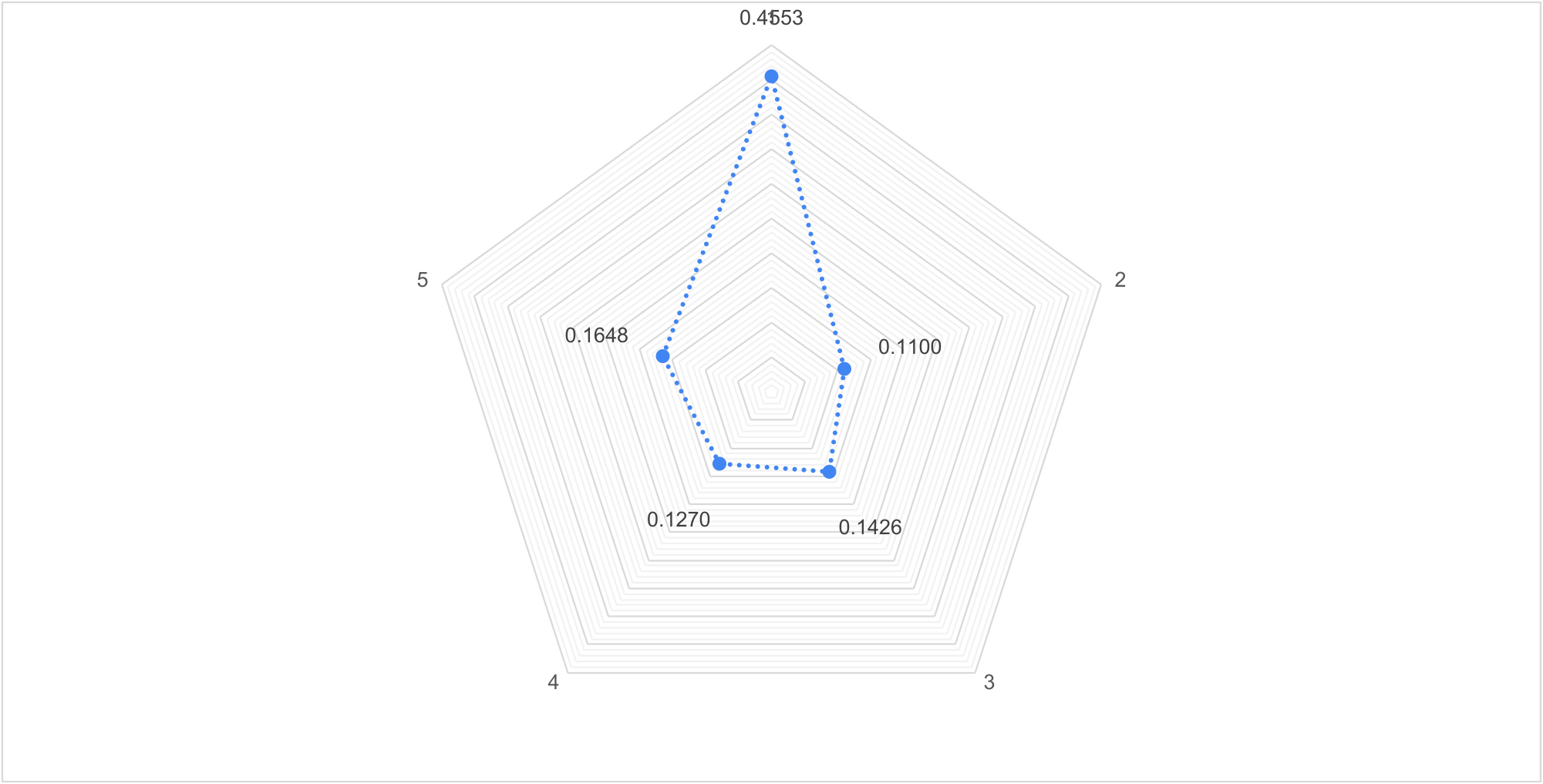
The normalized weights establish the following order of priority: functional, conditional, emotional, epistemic, and social value. Functional value has the highest normalized weight, at 0.4553, followed by conditional value at 0.1648. Together, functional and conditional values account for a weight of 0.6201. Emotional value ranks third, with a weight of 0.1426. Epistemic and social values follow, with weights of 0.1270 and 0.1100, respectively. The differences among the normalized weights of emotional, epistemic, and social values are relatively small.
Figure 2 illustrates the weight distribution and ranking of the five values.
Source: Compiled by the author from the Fuzzy AHP calculations.
5. Discussion
The priority ranking obtained through Fuzzy AHP reflects an evaluation structure oriented toward practical benefits and actual conditions. These results offer a perspective complementary to studies that use regression or structural models to explain purchase intentions. The resulting weights help identify the priorities of young people in Vietnam when making spending decisions concerning sports nutrition products.
- The leading position of functional value can be explained by the goal-oriented nature of sports nutrition products. Users generally expect products to support nutrient intake, recovery, muscle development, endurance, or exercise performance. Product functionality, composition, quality, safety, and scientific evidence therefore provide a direct basis for spending considerations. The review by Pelly et al. (2022) found that athletes frequently assign high priority to nutritional characteristics and performance support when choosing foods. Similarly, Carey et al. (2023) found that nutritional profile was the highest-rated product attribute. This convergence supports the interpretation that core product benefits are the primary basis of users’ evaluations.
The relationship between functionality and willingness to pay has also been documented in research on protein-rich foods. Reitano et al. (2024) found that athletes who were more concerned with nutrition and training needs tended to be willing to pay higher prices for protein-rich bread. However, the study also identified several consumer segments with different value systems and levels of willingness to pay. This suggests a direction for further research.
- The second-place ranking of conditional value indicates that young people consider product prices, income, promotions, availability, and convenience when deciding how to spend on sports nutrition products. This finding is consistent with Pelly et al. (2022), who classified cost, convenience, and accessibility as situational conditions relevant to athletes’ food choices, and with Carey et al. (2023), who identified accessibility and price as attributes considered in sports nutrition product selection.
In Vietnam, Doan et al. (2024) reported that 45.1% of respondents had purchased functional foods online in the year preceding the survey. When selecting where to purchase, consumers considered previous customers’ reviews, product transparency, and supplier reliability. Although that study examined a broader product scope than sports nutrition, its findings provide further grounds for considering accessibility, convenience, and sales-channel reliability as components of conditional value.
- Emotional and epistemic values rank third and fourth, respectively. Emotional value reflects the roles of confidence, satisfaction, reassurance, and motivation during the purchasing process, while epistemic value reflects the desire to learn about product ingredients, functions, technology, and appropriate use. In terms of emotional value, a product associated with an active image may evoke positive associations and increase motivation to exercise (Hu et al., 2025). Regarding epistemic value, the nature of nutrition products often makes it difficult for young people to assess their quality, effectiveness, and risks fully before use. Finamore et al. (2022) reported that only 47.3% of participants had adequate nutritional knowledge, while gym trainers were a commonly consulted source of supplement information. Similarly, Lopes et al. (2024) emphasized the need to improve awareness of dosages, interactions among substances, and adverse effects of supplements. Epistemic value thus often helps consumers assess functionality and safety.
- The lowest ranking of social value does not mean that influence from friends, coaches, or communities is absent. This result may reflect the distinctive nature of sports nutrition products, for which consumers prioritize benefits for health, physical fitness, and exercise performance over opportunities to express an image or gain community recognition. This finding is consistent with Carey et al. (2023), who reported that nutritional profiles and scientific evidence are highly valued in product selection, and with the present study’s finding that functional value receives priority with a high normalized weight of 0.4553. Nevertheless, coaches, friends, and exercise communities can still provide information, build trust, and guide product choices. Finamore et al. (2022) identified gym trainers as an information source consulted by many exercisers when using supplements. Businesses can therefore continue to develop social value by collaborating with coaches, building exercise communities, and communicating users’ actual experiences.
6. Conclusion
This study used Fuzzy AHP to determine the relative priorities of five consumption values in sports nutrition product spending decisions among young people in Vietnam. The pairwise comparison matrix satisfied the consistency requirement, with CR = 0.0845. The results establish the following priority ranking: functional, conditional, emotional, epistemic, and social value. Functional value has the highest weight, at 0.4553, followed by conditional value at 0.1648. Emotional, epistemic, and social values have weights of 0.1426, 0.1270, and 0.1100, respectively.
The study aggregated the judgments of 11 individuals with relevant knowledge and experience. This sample size is appropriate for Fuzzy AHP but does not permit generalization to all young people in Vietnam. The participants were relatively diverse, but differences among consumers, coaches, lecturers, and business operators were not analyzed separately. Furthermore, the model considered only five main criteria without distinguishing subcriteria. The study also did not conduct sensitivity analysis or use data on actual expenditure and purchasing behavior. The results therefore primarily reflect the priority structure at the time of the survey. Future studies could expand the sample of young people aged 18 to 30 across multiple regions and segment participants by income, type of exercise, product experience, or product category. The Fuzzy AHP model could be extended by adding subcriteria relating to functionality, safety, price, accessibility, and convenience. To assess ranking stability, future research could conduct sensitivity analysis and compare results across evaluator groups. In addition, Fuzzy AHP could be combined with structural equation modeling or methods for estimating willingness to pay to clarify the relationship between prioritized values and actual spending behavior.
References
- Arora, A., Rani, N., Devi, C., & Gupta, S. (2022). Factors affecting consumer purchase intentions of organic food through fuzzy AHP. International Journal of Quality & Reliability Management, 39(5), 1085–1103. DOI ↗ Google Scholar ↗
- Buckley, J. J. (1985). Fuzzy hierarchical analysis. Fuzzy Sets and Systems, 17(3), 233–247. DOI ↗ Google Scholar ↗
- Carey, C. C., Doyle, L., & Lucey, A. (2023). Nutritional priorities, practices and preferences of athletes and active individuals in the context of new product development in the sports nutrition sector. Frontiers in Sports and Active Living, 5, Article 1088979. DOI ↗ Google Scholar ↗
- Doan, D. A., Vu, N. H., Nguyen, P. L., & Dinh, D. X. (2024). Vietnamese people’s behavior and future intention to purchase medicines and functional foods on the internet: A cross-sectional study. Scientific Reports, 14, Article 24267. DOI ↗ Google Scholar ↗
- Espeño, P. R., Ong, A. K. S., German, J. D., Gumasing, M. J. J., & Casas, E. S. (2024). Analysis of actual fitness supplement consumption among health and fitness enthusiasts. Foods, 13(9), Article 1424. DOI ↗ Google Scholar ↗
- Finamore, A., Benvenuti, L., De Santis, A., Cinti, S., & Rossi, L. (2022). Sportsmen’s attitude towards dietary supplements and nutrition knowledge: An investigation in selected Roman area gyms. Nutrients, 14(5), Article 945. DOI ↗ Google Scholar ↗
- Goh, C. F., Long, C. M., Humaira Fedelis, N. A., Hamdan, H., Chuah, S. C., Yeo, S. F., Tan, C. L., & Wong, T. W. (2023). Critical insights of nano-based pharmaceutical, cosmeceutical and nutraceutical products: Empirical evidence from the consumption values perspective. Journal of Retailing and Consumer Services, 72, Article 103270. DOI ↗ Google Scholar ↗
- Hu, C., Bin, J., Zhang, W., & Huang, W. (2025). How sports-implied packaging of protein powder products enhances the purchase intention of Generation Z: Evidence from multiple experiments. Frontiers in Nutrition, 12, Article 1645614. DOI ↗ Google Scholar ↗
- Koay, K. Y., & Ngang, Y. M. (2026). Understanding consumers’ purchase intentions for functional foods from the perspective of the theory of consumption values: A multi-analytical approach. British Food Journal, 128(4), 1602–1621. DOI ↗ Google Scholar ↗
- Lopes, S., Cunha, M., Costa, J. G., & Ferreira-Pêgo, C. (2024). Analysis of food supplements and sports foods consumption patterns among a sample of gym-goers in Portugal. Journal of the International Society of Sports Nutrition, 21(1), Article 2388077. DOI ↗ Google Scholar ↗
- Pelly, F. E., Thurecht, R. L., & Slater, G. (2022). Determinants of food choice in athletes: A systematic scoping review. Sports Medicine - Open, 8(1), Article 77. DOI ↗ Google Scholar ↗
- Reitano, M., Selvaggi, R., Chinnici, G., Pappalardo, G., Yagi, K., & Pecorino, B. (2024). Athletes’ preferences and willingness to pay for innovative high-protein functional foods. Appetite, 203, Article 107687. DOI ↗ Google Scholar ↗
- Saaty, T. L. (1980). The analytic hierarchy process: Planning, priority setting, resource allocation. McGraw-Hill. DOI ↗ Google Scholar ↗
- Saaty, T. L. (2008). Decision making with the analytic hierarchy process. International Journal of Services Sciences, 1(1), 83–98. DOI ↗ Google Scholar ↗
- Sharma, C., & Kushwah, S. (2025). Mapping the theory of consumption values: A systematic review using the TCCM approach. Journal of Consumer Behaviour, 24(2), 562–610. DOI ↗ Google Scholar ↗
- Sheth, J. N., Newman, B. I., & Gross, B. L. (1991). Why we buy what we buy: A theory of consumption values. Journal of Business Research, 22(2), 159–170. DOI ↗ Google Scholar ↗
- Wesana, J., Schouteten, J. J., Van Acker, E., Gellynck, X., & De Steur, H. (2020). On consumers’ use, brand preference and equity of sports nutrition products. British Food Journal, 122(2), 635–654. DOI ↗ Google Scholar ↗