Abstract
Domestic resource mobilization is a major factor in the state's ability to finance public policies and support inclusive and sustainable development. In Madagascar, tax revenues represent 12.3% of gross domestic product in 2023, compared with an average of 16.1% across the 38 African countries covered by OECD comparative statistics (OECD/AUC/ATAF, 2025). This situation raises important questions regarding the effectiveness of fiscal governance and the institutional, administrative, and social conditions underlying public revenue mobilization. This study aims to examine the main constraints affecting fiscal governance in Madagascar and to propose an endogenous model adapted to the country's specific context. The research adopts a qualitative approach based on documentary analysis of national and international institutional reports and scientific literature dealing with taxation, tax morality, governance, and development. The findings highlight several constraints, including the narrowness of the tax base, the importance of the informal economy, compliance costs, administrative limitations, and challenges related to transparency, accountability, and institutional trust. Previous research indicates that tax behavior is also influenced by perceptions of fairness, the quality of public services, and trust in public institutions (Horodnic, 2018; OECD, 2019). Based on these findings, the study proposes a structured model around five dimensions: tax morality and citizen participation, fiscal digitalization, transparency and accountability, territorialization of revenue mobilization, and consideration of local institutional and sociocultural realities. The proposed model seeks to combine administrative modernization with territorial anchoring in order to strengthen domestic resource mobilization and contribute to more inclusive and sustainable development in Madagascar.
Keywords
Fiscal governance Madagascar sustainable development domestic resource mobilization fiscal decentralization endogenous development.
1. Introduction
A state's ability to mobilize its tax revenue is a fundamental determinant of its economic autonomy, institutional stability, and capacity to ensure collective well-being. Since Schumpeter's seminal work (1918) , taxation has been considered not only as a mechanism for financing public spending, but also as an instrument for state-building, legitimizing political power, and strengthening the social contract between those who govern and those who are citizens. From this perspective, the quality of fiscal governance directly influences governments' ability to promote human development, reduce inequality, and ensure the sustainability of public policies.
Globally, the United Nations estimates that achieving the Sustainable Development Goals (SDGs) largely depends on countries' ability to effectively mobilize their domestic resources (United Nations, 2023). According to the International Monetary Fund (Gaspar, Jaramillo & Wingender , 2019), a minimum tax burden equivalent to 15% of Gross Domestic Product (GDP) is generally necessary for a state to sustainably finance essential public services such as education, health, security, infrastructure, and social protection. However, many low-income countries remain below this critical threshold, thus limiting their capacity for self-reliant development .
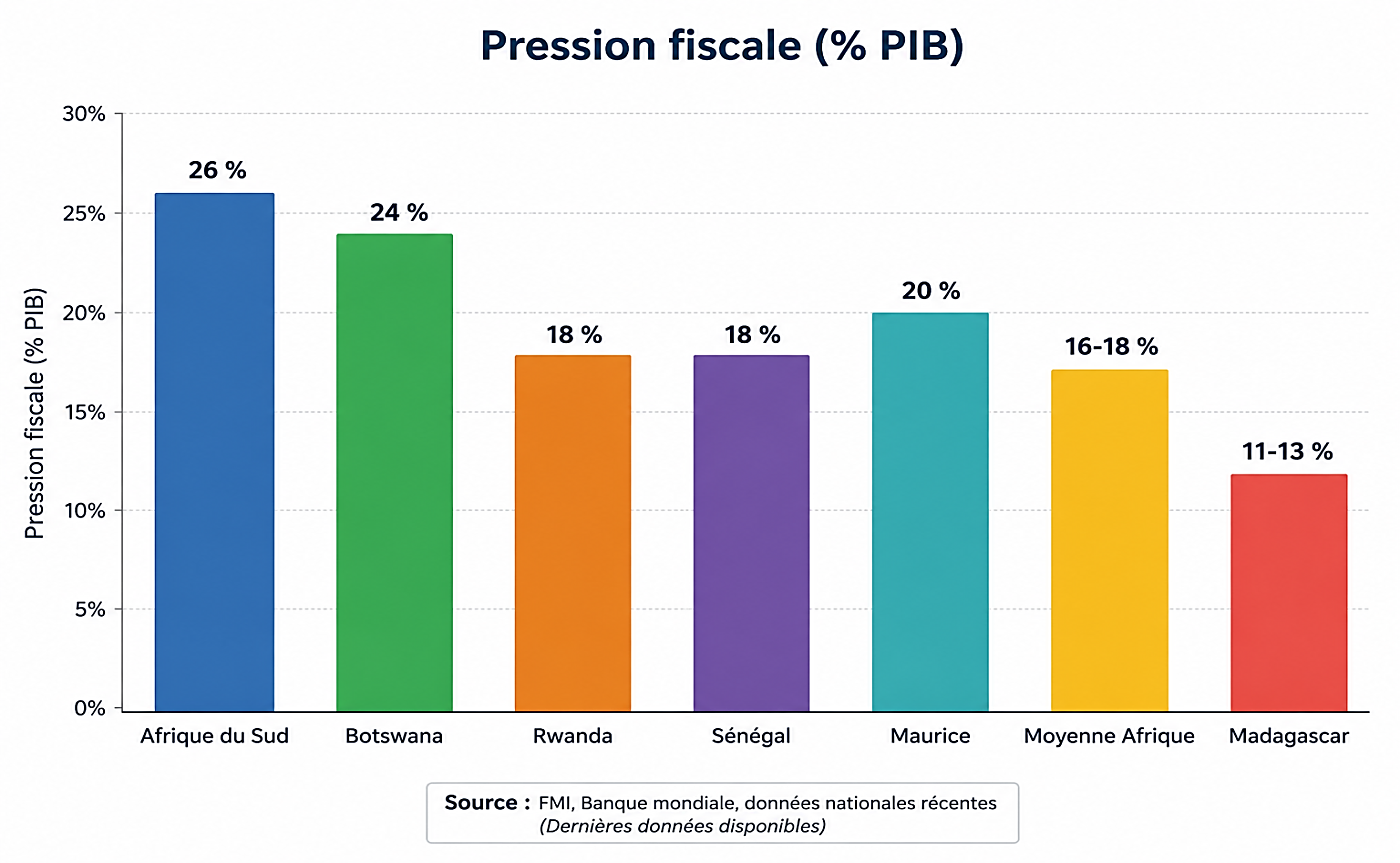
Madagascar presents a particularly revealing case of this problem. Despite its abundant natural resources—mineral, fisheries, agricultural, and energy the country continues to have one of the lowest levels of tax revenue collection on the African continent. Tax revenues generally fluctuate between 11% and 13% of GDP, while the African average is between 16% and 18%, and some high-performing African countries such as Rwanda, Botswana, and South Africa regularly exceed 20% (African Development Bank, 2024) .
To better understand Madagascar's fiscal performance within its regional context, it is relevant to examine a comparison of tax pressure levels observed in several African countries. Tax pressure is a key indicator of a state's capacity to mobilize its internal resources to finance public policies and support economic and social development. Figure 1 thus presents a comparison of Madagascar's tax pressure rates with those of selected African countries, highlighting existing disparities and illustrating the challenges the country faces in mobilizing tax revenue.
The consequences of this fiscal weakness are numerous. On the one hand, it reduces the state's capacity to invest in economic infrastructure that could stimulate growth. On the other hand, it increases the country's dependence on official development assistance, concessional loans, and external financing. This dependence raises significant questions regarding economic sovereignty and financial sustainability .
According to the World Bank (2024) , Madagascar's annual infrastructure funding needs far exceed currently available budgetary resources. The gaps are particularly significant in the transport, energy, sanitation, and digital technology sectors. This situation limits the economic integration of the country and hinders the competitiveness of local businesses .
Paradoxically, Madagascar possesses considerable economic potential . The country has vast arable lands, significant mineral reserves (nickel, cobalt, ilmenite, graphite, rare earth elements), substantial fishing potential, and unique biodiversity. Yet, the actual contribution of these resources to national development remains relatively low. Several studies highlight that the exploitation of natural resources does not always generate the expected tax revenue due to institutional weaknesses, tax evasion mechanisms, contracts that are insufficiently advantageous for the state, and limited administrative control capacities (Ross, 2015; Moore, 2004) .
This situation raises a fundamental question of governance . Why does a resource-rich country continue to face such a shortage of public resources? The answers extend far beyond the strictly technical realm of tax administration. They point to institutional, political, economic, cultural, and social factors that profoundly influence the tax behavior of citizens, businesses, and public authorities .
In many African contexts, weak tax mobilization is often linked to the prevalence of the informal sector . In Madagascar, estimates indicate that over 80% of economic activity takes place in the informal economy . This situation significantly reduces the tax base and complicates collection mechanisms. However, informality is not solely an economic problem; it also reflects a lack of trust in public institutions .
Levi's work (1988) demonstrates that citizens are more willing to pay their taxes when they perceive that the collected resources are used transparently and fairly. Conversely, when corruption, cronyism, or poor governance dominate public perceptions, tax compliance tends to decrease. Thus, taxation appears as an indicator of institutional trust as much as a financial instrument.
Several international studies highlight the persistence of negative perceptions related to corruption in many African public sectors. Without accusing specific individuals, governance analyses emphasize that opacity in the management of public resources, inadequate control mechanisms, and institutional weaknesses can have a lasting impact on tax compliance. This issue is particularly acute in countries where populations struggle to perceive a direct link between taxes paid and public services received.
Furthermore, Madagascar faces a major challenge related to climate change. The country is among the states most exposed to cyclones, droughts, floods, and environmental disruptions. According to the United Nations Development Programme (UNDP, 2023), the economic costs associated with natural disasters represent several percentage points of GDP each year. In this context, strengthening fiscal governance also becomes a key issue for climate resilience. Without sufficient public resources, it becomes difficult to finance the adaptation mechanisms, resilient infrastructure, and social protection systems necessary to reduce the vulnerability of populations.
Recent literature also emphasizes the role of taxation in reducing inequality. Piketty (2020) stresses that modern tax systems must not only finance public action but also contribute to a fair redistribution of wealth. In economies characterized by significant income disparities, effective tax governance can become a key driver of social cohesion.
However, traditional approaches to tax reform often rely on imported models, inspired by Western experiences or standardized recommendations from international institutions. While these models have produced some positive results, they do not always sufficiently take into account the specific socio-cultural realities of the countries concerned.
In the case of Madagascar, this limitation appears particularly important. Traditional community structures continue to exert a significant influence on social, economic, and political life. Among them, the fokonolona constitutes a historical institution founded on collective participation, community solidarity, and the concerted management of local affairs. This institution could represent a strategic resource that is still insufficiently utilized in contemporary fiscal policies.
Endogenous development theories offer a relevant analytical framework in this regard. According to Stöhr (1981), sustainable development must be built upon the internal capacities of territories, local resources, and existing social institutions. This approach contrasts with exogenous development models that rely primarily on solutions imported from outside.
In the tax field, an endogenous approach involves designing governance mechanisms adapted to local cultural, economic, and institutional realities. It also presupposes increased citizen participation in defining budgetary priorities, monitoring public spending, and evaluating the performance of the tax administration.
International experience shows that successful tax reforms generally rely on three complementary dimensions: administrative efficiency, institutional trust, and social ownership. Rwanda, for example, has significantly improved its tax performance through a combination of digitalization, transparency, and citizen accountability. Botswana has built its tax model around relatively stable institutions and prudent management of natural resources. Mauritius has developed a modern tax administration that promotes voluntary taxpayer compliance.
These experiences demonstrate that there is no single universal model. Each country must develop a tax system consistent with its history, culture, institutions, and development goals.
Therefore, the central problem of this research can be formulated as follows:
How can an endogenous model of tax governance be developed and adapted to Madagascar’s institutional, economic, cultural, and community realities in order to sustainably strengthen domestic resource mobilization and support inclusive and sustainable development?
To answer this question, this research begins with the idea that the performance of a tax system depends not only on technical collection mechanisms or administrative reforms, but also on the quality of the relationship between the state and its citizens. Taxation, in fact, constitutes a genuine social contract that requires trust, transparency, accountability, and participation. Thus, the effectiveness of tax governance depends on the ability of public institutions to create an environment conducive to tax compliance, to strengthen the legitimacy of taxation, and to foster sustained citizen engagement in financing national development.
The central hypothesis of this study is that developing a tax model adapted to the realities of Madagascar requires an integrated approach that incorporates institutional, economic, social, cultural, and community dimensions. From this perspective, budget transparency, citizen participation, the digital transformation of tax administration, financial decentralization, and recognition of the role of local community structures can be essential levers for sustainably improving public resource mobilization.
The overall objective of this research is to propose an integrated model of endogenous fiscal governance enabling Madagascar to strengthen its internal financing capacities while contributing to the promotion of sustainable human development.
To achieve this objective, the scientific approach will follow several complementary steps. First, it will be necessary to analyze the structural, institutional, administrative and historical constraints that characterize the Malagasy tax system, in particular the difficulties related to the broadening of the tax base, the weight of the informal sector, the operational capacities of the tax administration and the current mechanisms for mobilizing public revenue.
Secondly, this research will seek to understand the factors that influence the tax behavior of citizens and businesses, by examining the role of institutional trust, tax citizenship, perception of tax fairness, and quality of public governance.
Third, the study will explore the links between taxation, public governance and sustainable development, with an emphasis on the potential contribution of better mobilization of domestic resources to improving public services, reducing social vulnerabilities and achieving the Sustainable Development Goals.
The research will also pay particular attention to the role of local community institutions, notably the Fokonolona , as well as the opportunities offered by digitalisation, technological innovation and fiscal decentralisation to build a more participatory, inclusive governance adapted to Malagasy realities.
Finally, a comparative analysis of tax reform experiences in certain African countries, such as Rwanda, Botswana, Mauritius, Morocco, and Senegal, will identify relevant practices that can inspire a model adapted to the national context. Based on these analyses, the research will propose an integrated conceptual framework for endogenous tax governance founded on transparency, citizen participation, digitalization, the territorialization of resources, and the leveraging of local dynamics.
Beyond its academic contribution, this study aims to contribute to a broader reflection on economic sovereignty and the transformation of governance models in Africa. It considers taxation not only as a financial tool, but also as a strategic instrument for public trust, social cohesion, and sustainable development in Madagascar.
2. Methodology
2.1. Epistemological positioning of the research
The main objective of this research is to analyze the mechanisms likely to foster the emergence of an endogenous model of fiscal governance in Madagascar capable of strengthening domestic resource mobilization and supporting inclusive and sustainable development. Given the multidimensional complexity of this issue, this study adopts an interpretive and constructivist approach that considers fiscal phenomena as social constructs resulting from interactions between institutions, public actors, private actors, cultural norms, and historical dynamics .
Unlike strictly positivist approaches that prioritize the quantification of economic phenomena, this research adopts a qualitative perspective, allowing for the exploration of the institutional, sociocultural, political, and organizational dimensions of tax governance. This approach is based on the observation that tax performance depends not only on measurable economic variables, but also on factors such as institutional trust, state legitimacy, tax compliance, mechanisms for citizen participation, and local community structures .
According to North (1990), institutions constitute the rules of the game that structure human interactions. From this perspective, taxation appears as a complex institutional system whose effectiveness depends on the quality of interactions between citizens and public authorities. Analyzing these interactions requires a thorough understanding of the historical and cultural contexts in which they are embedded .
Furthermore, this study employs an endogenous development approach inspired by the work of Stöhr (1981), Friedmann (1992), and Ostrom (1990), according to which sustainable development processes must be built upon internal resources, local capacities, and existing community institutions . This perspective is particularly relevant in the Malagasy context, where traditional structures such as the fokonolona continue to exert a significant influence on social and territorial organization .
2.2. Type and nature of the research
This research is of a:
a) Exploratory
It aims to explore the structural, institutional, and sociocultural factors that influence tax governance in Madagascar. Despite the abundance of research on taxation in Africa, few studies have specifically examined the possibility of building an endogenous tax model based on Malagasy cultural and institutional realities.
b) Descriptive
The research describes the characteristics of the Malagasy tax system, the mechanisms for mobilizing public revenue, the existing institutional constraints, and the main challenges faced by the tax administration.
c) Analytical
The study seeks to identify the relationships between fiscal governance, human development, citizen participation, institutional transparency and sustainable development.
d) Future prospects
Finally, the research adopts a forward-looking dimension by proposing a conceptual model that could guide future tax reforms and national public policies.
2.3. Data Sources
To ensure the scientific robustness of the analysis, several categories of secondary data were used.
| Category | Sources |
| International institutions | IMF, World Bank, AfDB, UN, UNDP |
| national institutions | Ministry of Economy and Finance, Directorate General of Taxes, INSTAT |
| Scientific literature | Scopus articles , Web of Science, Cairn, JSTOR, Science Direct |
| Specialized reports | Transparency International, OECD, ATAF |
| Strategic documents | Madagascar Emergence Plan, General State Policy, SDGs |
These sources were selected according to three criteria:
-
their scientific credibility;
-
their relevance to the issue being studied;
-
their current news.
The documentary analysis mainly covers the period 2010-2025 in order to take into account recent developments in national and international tax governance.
2.4. Data Collection Strategy
Data collection was primarily based on a systematic literature review. According to Snyder (2019), a literature review is a rigorous method for synthesizing existing knowledge and generating new theoretical interpretations. The following steps were followed:
Step 1: Document Identification
The documents were searched using keywords such as:
-
fiscal governance;
-
taxation and development;
-
mobilization of internal resources;
-
taxation in Africa;
-
Madagascar fiscal policy ;
-
tax governance ;
-
local governance ;
-
endogenous development .
Step 2: Document Selection
The documents selected had to:
-
be published in recognized sources;
-
present verifiable data;
-
to deal directly or indirectly with taxation and development.
Step 3: Critical Analysis
Each document has been subject to:
-
from a thorough reading;
-
from an extraction of relevant information;
-
of a thematic categorization.
2.5. Analysis Methods2.5.1. Document analysis
Document analysis is the primary method used. According to Bowen (2009), this method allows for the systematic examination of documents to extract relevant meanings, trends, and lessons . The documents were analyzed along several dimensions:
-
tax pressure;
-
tax administration;
-
public governance;
-
transparency;
-
citizen participation;
-
decentralization;
-
sustainable development .
2.5.2. International comparative analysis
In order to identify good practices transferable to the Malagasy context, a comparative analysis was carried out with several African countries with relatively high tax performance.
| Country | Justification |
| Rwanda | Tax reforms and digitalization |
| Botswana | Natural resource management |
| Maurice | Institutional governance |
| Senegal | Tax modernization reforms |
| Morocco | Digitalization and tax administration |
This comparison helps identify the factors that contributed to the success of tax reforms in these countries. The goal is not to mechanically replicate their models, but to extract lessons that can be adapted to the Malagasy context.
2.5.3. Institutional Analysis
Institutional analysis draws primarily on the work of North (1990) and Ostrom (1990). It aims to understand how formal and informal rules influence:
-
tax collection;
-
taxpayer behavior;
-
administrative capacities;
-
institutional trust.
The analysis distinguishes:
Formal institutions
-
Constitution;
-
tax laws;
-
tax administration;
-
local authorities.
Informal institutions
-
social norms;
-
community traditions;
-
fokonolona ;
-
customary practices.
This distinction is particularly important in the Malagasy context where informal institutions often play a complementary or competing role to state institutions.
2.5.4. Public Policy Analysis
This method aims to assess the consistency of national tax policies with sustainable development goals.
The evaluation criteria include:
-
efficiency ;
-
efficiency;
-
equity ;
-
transparency;
-
participation;
-
sustainability.
Particular attention is paid to the policies of:
-
revenue mobilization;
-
fiscal decentralization;
-
digitalization;
-
fight against corruption;
-
territorial governance.
2.6. Analytical framework of the research
The analytical framework is based on the assumption that fiscal governance is an intermediary variable between the institutional capacities of the state and development outcomes.
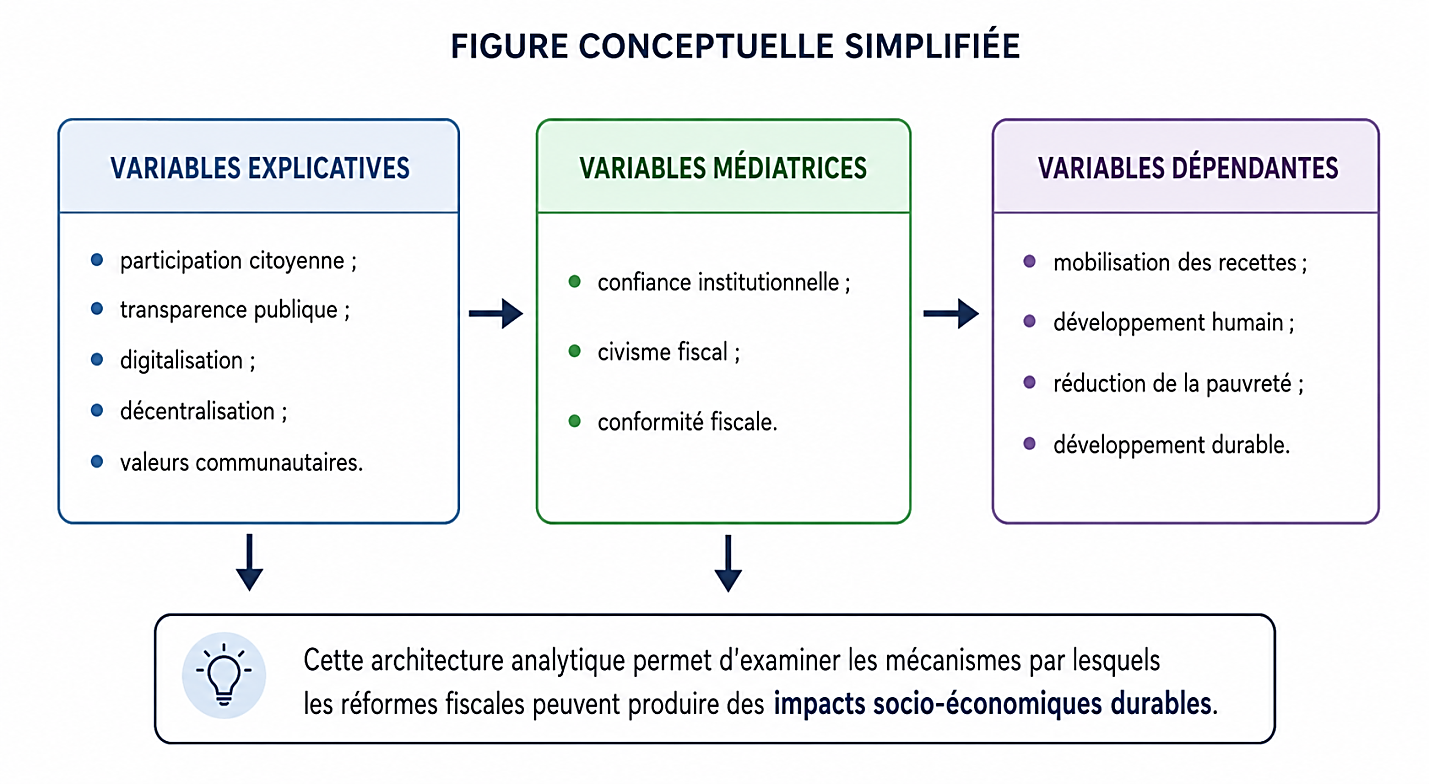
This analytical architecture allows us to examine the mechanisms by which tax reforms can produce lasting socio-economic impacts.
2.7. Criteria for scientific validity
To ensure the methodological quality of the study, several validation mechanisms were used.
Triangulation of sources
The data was cross-referenced between:
-
international institutions;
-
national institutions;
-
academic literature.
Theoretical validation
The results were interpreted in light of:
-
of institutional theory;
-
of governance theory;
-
of the theory of endogenous development;
-
of the theory of the social contract.
Analytical coherence
The different stages of the analysis were carried out according to a systematic logic ensuring consistency between:
-
problematic ;
-
goals ;
-
assumptions;
-
expected results.
2.8. Methodological limitations
Like all research, this study has certain limitations.
Firstly, it relies primarily on secondary data. The lack of field surveys and in-depth interviews may limit the understanding of certain individual perceptions related to tax compliance.
Secondly, the tax statistics available in Madagascar sometimes show variations depending on the sources consulted.
Third, some informal dimensions of tax governance remain difficult to measure quantitatively.
However, the diversity of sources used and the methodological triangulation make it possible to significantly reduce these limitations and to guarantee the robustness of the conclusions formulated.
2.9. Ethical considerations
This research adheres to the fundamental principles of scientific ethics. The analysis is based exclusively on public data, academic publications, and publicly available institutional reports. No personal data was collected or used.
The study adopts a critical yet objective stance towards tax policies, prioritizing the scientific analysis of institutional mechanisms rather than targeting specific individuals or organizations. The methodology employed provides a rigorous framework for analyzing the determinants of tax governance in Madagascar and for proposing an endogenous model capable of sustainably strengthening the mobilization of domestic resources for inclusive and sustainable development.
3. Results
3.1. Low tax pressure: a major obstacle to development financing
Analysis of data collected from the International Monetary Fund (IMF), the World Bank, the African Development Bank (AfDB) and the Ministry of Economy and Finance of Madagascar reveals that the national tax burden remains structurally below the minimum threshold recommended to effectively support economic and social development .
According to Gaspar, Jaramillo , and Wingender (2019), a tax revenue-to-GDP ratio below 15% significantly limits a state's ability to sustainably finance essential public services . However, for several decades, Madagascar has consistently shown tax revenue performance between 11% and 13% of GDP . This situation places the country among the least efficient tax administrations in sub-Saharan Africa.
| Country | Average tax burden |
| South Africa | 26% |
| Botswana | 24% |
| Morocco | 22% |
| Maurice | 20% |
| Senegal | 18% |
| Rwanda | 18% |
| Middle Africa | 16-18% |
| Madagascar | 11-13% |
This weakness in tax mobilization generates several structural consequences:
-
chronic inadequacy of budgetary resources;
-
high dependence on outside help;
-
weak public investment capacity;
-
difficulty in financing national infrastructure;
-
increased vulnerability to economic and climate crises .
The analysis shows that each additional point of tax pressure could represent several hundred billion ariary of additional revenue that could be mobilized to finance priority sectors.
| Domain | Observed effects |
| Health | Underfunding of healthcare infrastructure |
| Education | Insufficient investment in education |
| Roads | Deterioration of the road network |
| Agriculture | Weak support mechanisms for producers |
| Social protection | Limited coverage of vulnerable populations |
| Climate | Low capacity to adapt to disasters |
The results thus indicate that the fiscal challenge constitutes not only a financial problem but also a major constraint to sustainable human development.
3.2. Importance of the informal sector: the main challenge to broadening the tax base
Analysis of economic data highlights the predominance of the informal sector in the Malagasy economy. Estimates from the World Bank, the International Labour Organization (ILO), and the African Development Bank suggest that more than 80% of jobs and a significant proportion of national production take place outside the formal sector.
| Sector | Estimated share |
| Informal sector | 80-85% |
| Formal sector | 15-20% |
This situation significantly reduces the tax administration's ability to mobilize public resources. The results show that several factors explain the expansion of informality:
Economic factors
-
persistent poverty;
-
low household incomes;
-
high cost of formalization;
-
Limited access to financing.
Institutional factors
-
administrative complexity;
-
regulatory burden;
-
weak control capabilities;
-
lack of incentives for formalization.
Sociocultural factors
-
predominance of family activities;
-
importance of community networks;
-
weak tax culture .
The size of the informal sector has several negative consequences.
| Impact | Consequences |
| Reduced tax base | Less public revenue |
| Difficulty of control | Increased tax evasion |
| Unfair competition | Economic distortions |
| Job insecurity | Weak social protection |
| Public underinvestment | Limitation of development |
The results suggest that any tax reform strategy in Madagascar must incorporate a progressive policy of economic formalization based on incentives rather than coercion.
3.3. Corruption, governance and institutional trust deficit
The results of the document analysis show that institutional trust is a determining factor in tax compliance. According to Levi (1988), taxpayers are more likely to accept taxes when they believe the state uses public resources efficiently, transparently, and fairly.
In Madagascar, several governance studies highlight the existence of a persistent deficit of trust in public institutions.
This situation results in particular from:
-
perceptions of corruption;
-
opacity in certain public expenditures;
-
the low visible return of taxes in the form of public services;
-
of the low citizen participation in budgetary decisions.
| Governance level | Level of tax compliance |
| Pupil | Very high |
| AVERAGE | AVERAGE |
| Weak | Weak |
The results show that poor tax compliance is not solely linked to poverty.
It is also influenced by:
-
the perception of tax fairness ;
-
the quality of public services;
-
budget transparency;
-
trust in leaders.
Institutional analyses indicate that improved transparency could help strengthen the legitimacy of taxation.
Several African experiences demonstrate that:
-
the publication of budgets;
-
independent audits;
-
Open spending tracking platforms are gradually increasing taxpayer confidence .
Thus, fiscal governance appears as a fundamentally political as well as an administrative issue.
3.4. Weak fiscal decentralization and marginalization of local authorities
The analysis reveals that Madagascar remains characterized by a strong centralization of public resources.
Decentralized local authorities have limited financial autonomy despite institutional reforms undertaken over the past several years.
| Constraints | Effects |
| Low own resources | Financial dependence |
| Limited local taxation | Low capacity for action |
| Insufficient transfers | Deteriorating public services |
| Limited technical capabilities | Management difficulties |
The results show that this excessive centralisation produces several negative effects.
a) Reduction of tax proximity
Citizens have difficulty perceiving the link between their contributions and the public services received.
b) Low local accountability
Local authorities have limited resources to effectively meet the needs of the population .
c) Limited citizen participation
Centralization reduces the possibilities for local democratic control.
| Domain | Impact |
| Local governance | Short battery life |
| Territorial development | Investment delays |
| Citizen participation | Limitation of initiatives |
| Institutional trust | Gradual degradation |
The results suggest that endogenous fiscal governance should significantly strengthen the territorialization of public resources.
3.5. Potential of digitalization for improving tax performance
One of the most promising results of this research concerns the potential of digital transformation.
Comparative analysis with several African countries highlights the positive impact of digitalization on tax revenues.
| Digital tool | Observed effects |
| Electronic declaration | Reduction of administrative costs |
| Mobile payment | Increase in the compliance rate |
| Electronic invoicing | Fraud reduction |
| Digital tax identification number | Improved traceability |
| Integrated tax portals | Simplification of procedures |
Experiences from Rwanda, Kenya, Morocco, and Mauritius show that digital systems enable:
-
to broaden the tax base;
-
to reduce direct contacts that promote corruption;
-
to improve transparency;
-
to strengthen the traceability of transactions.
| Dimension | Expected impact |
| Tax collection | Revenue increase |
| Transparency | Improvement |
| Administrative costs | Reduction |
| Fight against fraud | Reinforcement |
| Financial inclusion | Progression |
The results also indicate that Madagascar benefits from a favorable context for this transformation thanks to the rapid expansion of mobile telephony and electronic payment services.
However, several challenges remain:
-
digital divide between urban and rural areas;
-
inadequacy of digital infrastructure;
-
low digital literacy;
-
significant training needs.
Despite these constraints, digitalization appears as one of the most promising levers for modernizing national tax governance
3.6. General summary of results
Data analysis reveals that Madagascar's poor fiscal performance results from a combination of structural, institutional, and socio-cultural factors.
| Postman | Level of influence |
| Low tax pressure | Very high |
| Importance of the informal sector | Very high |
| Institutional trust deficit | Very high |
| Tax centralization | Pupil |
| Low digitization | Pupil |
| Limited citizen participation | Pupil |
These results confirm the central hypothesis of the research, namely that tax performance depends not only on technical collection mechanisms, but also on the quality of institutions, the level of social trust, citizen participation, and the adaptation of public policies to local realities. They thus provide the empirical basis necessary for developing an endogenous model of tax governance capable of sustainably supporting inclusive and sustainable development in Madagascar.
4. Discussion
4.1. Structural limitations of the current tax model in Madagascar
The results obtained highlight that the difficulties in tax mobilization observed in Madagascar are not solely due to technical or administrative problems. They are rooted in deeper historical, institutional, socio-cultural, and political factors that limit the effectiveness of successive tax reforms.
One of the main conclusions of this research concerns the largely exogenous nature of the current tax model. As in many African states, Madagascar's tax architecture was built upon administrative structures inherited from the colonial period. These systems were designed with a logic of administrative control and resource extraction in mind, rather than with a perspective of participatory development or strengthening the social contract.
According to Acemoglu and Robinson (2012), institutions inherited from specific historical contexts can continue to produce lasting effects when they are not adapted to contemporary realities. This observation seems particularly relevant in the Malagasy case.
4.1.1. A tax system insufficiently adapted to rural realities
The analysis reveals that the majority of the Malagasy population still lives in rural areas where economic activities are based primarily on family farming, livestock breeding, artisanal fishing, and community trade. However, current tax systems are often designed according to principles adapted to urban and formal economies.
This situation creates several difficulties:
-
poor identification of potential taxpayers;
-
high collection costs;
-
poor understanding of tax obligations;
-
Mismatch between taxation and ability to pay.
The work of Bird and Zolt (2008) highlights that the effectiveness of a tax system depends heavily on its adaptation to the actual economic structures of the country concerned. In the case of Madagascar, the gap between formal tax mechanisms and local economic practices significantly limits the mobilization of public resources.
4.1.2. Marginalization of traditional community structures
Another major finding concerns the weak integration of community institutions into fiscal governance. Yet, contemporary approaches to territorial development recognize the importance of local institutions in the collective management of resources.
According to Ostrom (1990), communities are often able to develop effective governance mechanisms when they participate directly in decision-making processes. In Madagascar, the fokonolona has historically been a fundamental institution of social regulation.
Its traditional functions include:
-
the management of collective assets;
-
conflict resolution;
-
the coordination of community work;
-
the mobilization of local resources.
However, these structures remain largely absent from modern tax systems. This disconnect contributes to weakening the legitimacy of taxation and reducing citizen ownership of public policies.
4.1.3. Weak link between taxation and local development
The results also show that many citizens struggle to perceive the direct benefits of their tax contributions. According to Moore (2004), taxation plays a central role in building the social contract when citizens can observe a concrete link between taxes paid and public services received. However, in several Malagasy local authorities, this link remains largely invisible.
| Citizen perception | Probable consequence |
| Low visibility of spending | Decline in tax compliance |
| Budgetary opacity | Institutional distrust |
| Low local return | Citizen disengagement |
| Excessive centralization | Loss of legitimacy |
This situation contributes to a vicious cycle in which low tax revenue reduces public investment, which in turn increases taxpayer distrust.
4.2. Taxation, governance and sustainable development: a theoretical overview
The results obtained confirm several lessons from the international literature.
4.2.1. The theory of the tax contract
According to Levi (1988), citizens agree to pay taxes when they believe the state is fulfilling its obligations regarding public services and governance.
This theory is based on a logic of exchange:
Taxpayers → Taxes → State → Public services → Trust → Tax compliance
The results observed in Madagascar show that this cycle remains fragile.
The lack of transparency and low visibility of public investments limit the consolidation of this relationship of trust.
4.2.2. Institutional Theory
North (1990) argues that the quality of institutions is the primary determinant of economic performance. The results of this study confirm this hypothesis. The observed fiscal difficulties stem not only from a lack of resources but also from:
-
of insufficiently coordinated governance;
-
of low administrative capacity;
-
of a deficit of institutional trust;
-
of excessive centralization.
4.2.3. The theory of endogenous development
The work of Stöhr (1981) and Friedmann (1992) emphasizes that sustainable development must be based on local resources and the internal capacities of territories. The results obtained suggest that fiscal governance could become a major lever for endogenous development if it were to better integrate:
-
local authorities;
-
community organizations;
-
participatory mechanisms;
-
local cultural values.
4.3. Towards an Endogenous Model of Malagasy Fiscal Governance (MEGFM)
Based on empirical results and the theoretical frameworks used, this research proposes a new model called: Endogenous Model of Malagasy Fiscal Governance (MEGFM)
This model aims to overcome the limitations of the current system by building a tax system more deeply rooted in the country's economic, social, and cultural realities. The model rests on five strategic pillars.
PILLAR 1: PARTICIPATORY GOVERNANCE
One of the main findings of this research is that voluntary adherence to taxation depends largely on citizens' participation in decision-making processes.
Main componentsParticipatory budgeting
Citizens participate in identifying investment priorities.
Citizen consultations
Local authorities regularly organize public consultations.
Community control
Local organizations participate in the evaluation of projects funded by tax revenue.
Expected impacts
-
increased confidence;
-
improvement of tax compliance;
-
better alignment of public investments.
PILLAR 2: TAX DIGITALIZATION
Digital transformation is now one of the most powerful levers for fiscal modernization.
ComponentsOnline tax returns
Reduction of administrative costs.
Mobile payments
Use of Mobile Money platforms.
unique digital tax identifier
Improved traceability.
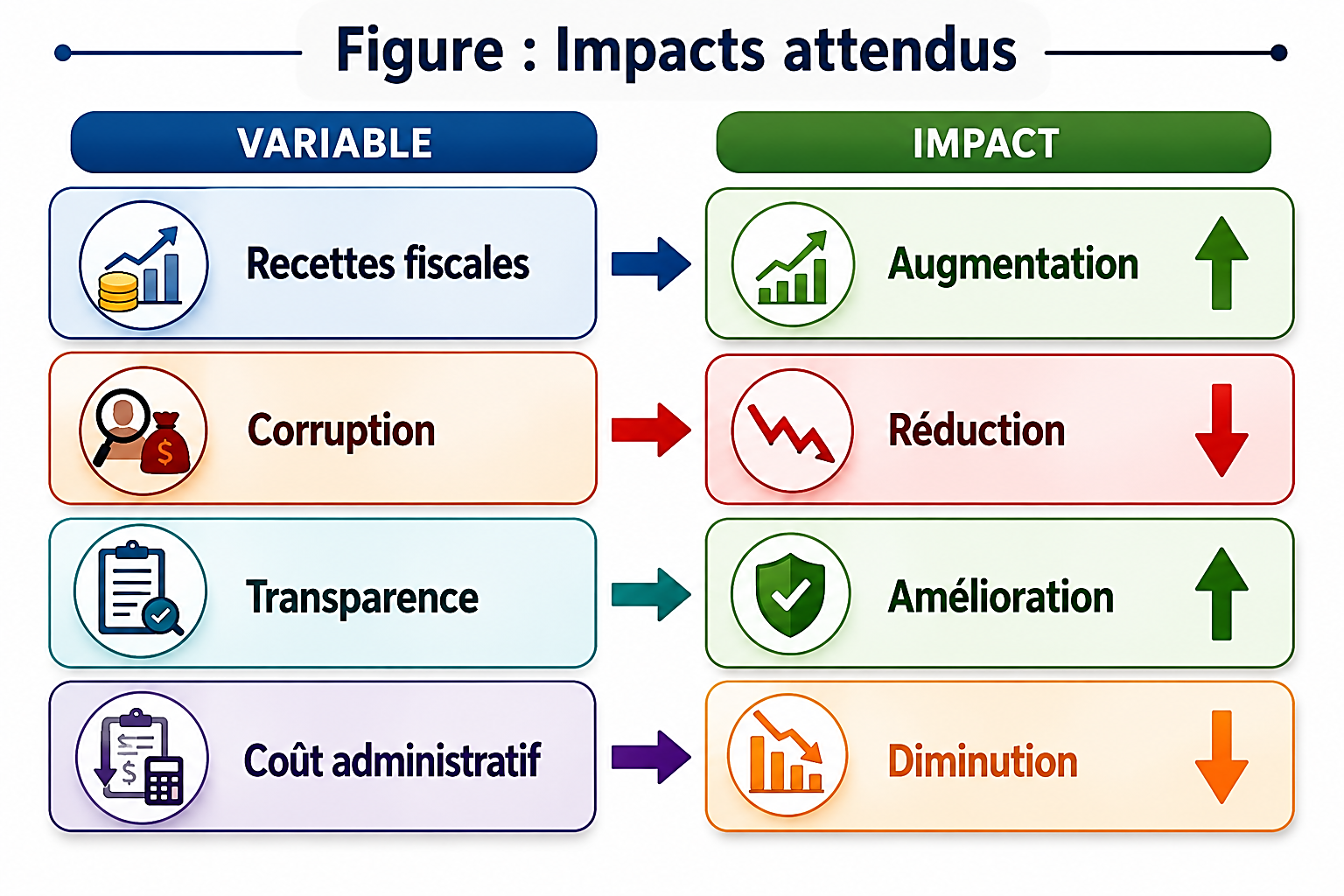
| Variable | Impact |
| Tax revenues | Increase |
| Corruption | Reduction |
| Transparency | Improvement |
| Administrative cost | Decrease |
PILLAR 3: BUDGETARY TRANSPARENCY
The results demonstrate that transparency is a key factor in tax compliance.
Instruments offeredOpen Budget Madagascar
Systematic publication of budgets.
Expense tracking portal
Public viewing of investments.
Citizen Audit
Community participation in budget control.
Expected effects
-
reduction of information asymmetries;
-
improvement of public trust;
-
strengthening accountability.
PILLAR 4: TERRITORIALIZATION OF REVENUES
The analysis highlights the limitations of hyper-centralized taxation.
Proposed reformsenhanced local taxation
Increase in municipal resources.
Increased financial independence
Local investment capacity.
Territorial equalization fund
Reduction of regional disparities.
Table 15 Territorialization Logic
| Level | Function |
| central state | National regulation |
| Regions | Territorial coordination |
| Municipalities | Local implementation |
| Fokonolona | Community participation |
PILLAR 5: CULTURAL AND COMMUNITY INTEGRATION
This dimension is probably the most original contribution of the proposed model.
Unlike traditional fiscal approaches, the MEGFM explicitly recognizes the importance of traditional institutions in development governance.
Role of the fokonolona
The fokonolona could become:
-
a space for tax awareness;
-
a local consultation mechanism;
-
a citizen oversight actor;
-
a platform for prioritizing public investments.
This approach aligns with the principles of polycentric governance developed by Ostrom (1990).
5. PROPOSAL OF THE CONCEPTUAL MODEL
5.1. Conceptual Architecture
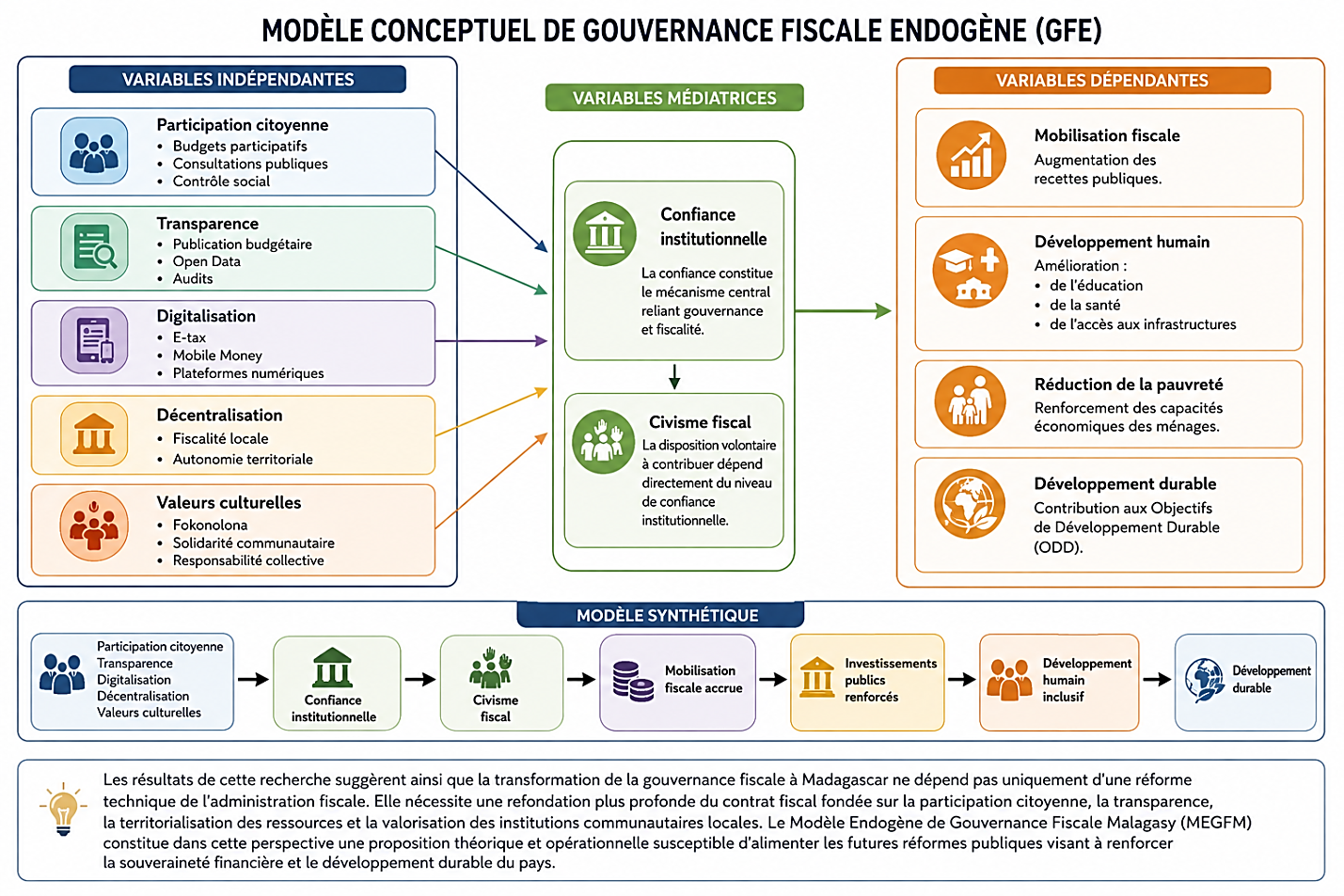
The conceptual model of Endogenous Fiscal Governance (EFG) is based on a causal relationship between several categories of variables.
Independent variablesCitizen participation
-
Participatory budgeting;
-
Public consultations;
-
Social control.
Transparency
-
Budget publication;
-
Open Data;
-
Audits.
Digitalization
-
E- tax ;
-
Mobile Money;
-
Digital platforms.
Decentralization
-
Local taxation;
-
Territorial autonomy.
Cultural values
-
Fokonolona ;
-
Community solidarity;
-
Collective responsibility.
Mediating variablesInstitutional trust
Trust is the central mechanism linking governance and taxation.
Tax citizenship
The willingness to contribute depends directly on the level of institutional trust.
Dependent variablesTax mobilization
Increase in public revenue.
Human development
Improvement :
-
education;
-
of health;
-
access to infrastructure.
Poverty reduction
Strengthening the economic capacities of households.
Sustainable development:
Contribution to the Sustainable Development Goals (SDGs).
5.2. Synthetic model
The results of this research suggest that the transformation of tax governance in Madagascar does not depend solely on a technical reform of the tax administration. It requires a deeper overhaul of the tax contract based on citizen participation, transparency, the territorial allocation of resources, and the strengthening of local community institutions. The Endogenous Model of Malagasy Tax Governance (MEGFM) thus constitutes a theoretical and operational proposal that can inform future public reforms aimed at strengthening the country's financial sovereignty and sustainable development.
Conclusion
This research aimed to examine the conditions for building an Endogenous Model of Malagasy Tax Governance (MEGFM) capable of strengthening domestic resource mobilization and contributing to inclusive and sustainable development. The analysis shows that difficulties in tax mobilization in Madagascar cannot be explained solely by technical or administrative shortcomings of the tax system. They are embedded in a set of institutional, economic, social, territorial, and sociocultural factors that directly influence the relationships between the State, taxpayers, and local communities.
The study particularly highlights the role of institutional trust in the effectiveness of the tax system. Transparency in public management, the perception of a fair and efficient administration, and citizen participation in decisions concerning public resources are key elements of tax compliance. Taxation thus appears as a phenomenon that goes beyond mere revenue collection: it contributes to the construction of the social contract and the legitimacy of public action.
In this context, the proposed Endogenous Model of Malagasy Tax Governance (MEGFM) is based on five complementary dimensions: participatory governance, tax digitalization, budget transparency, territorial allocation of resources, and the integration of community cultural values. This model seeks to establish a link between the requirements for modernizing tax administration and the institutional, territorial, and socio-cultural realities specific to Madagascar.
The recommendations stemming from this research are consistent with this approach. First, it appears necessary to progressively strengthen the mobilization of domestic resources, particularly through appropriate and incentive-based formalization of the informal economy, while simultaneously simplifying tax procedures for small businesses. Second, accelerating the digitalization of taxation should improve service accessibility, transaction traceability, and administrative efficiency. Third, strengthening budgetary transparency and citizen participation could help consolidate trust between taxpayers and public institutions.
Fourth, particular attention should be paid to the territorial allocation of public resources, in order to better align revenues, investments, and the needs of local populations. The implementation of equalization mechanisms could also help reduce territorial disparities. Fifth, the study recommends examining the conditions under which community institutions, particularly the fokonolona (village council ), could be involved in mechanisms for consultation, tax awareness campaigns, and monitoring of public investments, in accordance with the applicable institutional and legal framework.
However, the results must be interpreted in light of the study's methodological limitations. It relies primarily on the use of secondary data and scientific and institutional research, while the lack of quantitative field surveys currently prevents the direct measurement of citizens' tax perceptions and behaviors. Therefore, the implementation of the MEGFM will require pilot projects and empirical evaluations to assess its relevance, feasibility, and impact in different territorial contexts.
Future research could focus on the determinants of tax compliance in different regions of Madagascar, the impact of digital technologies and artificial intelligence on tax governance, the relationship between taxation and territorial development, and a comparison of the proposed model with similar African experiences. Developing an econometric model to measure the relationships between citizen participation, institutional trust, and tax mobilization would also be an important step in strengthening the scientific scope of the MEGFM.
Ultimately, fiscal governance must be considered a multidimensional instrument for mobilizing resources, strengthening the social contract, and supporting sustainable human development. From this perspective, the MEGFM (Method of Economic and Financial Management of Madagascar) represents a theoretical and operational proposal aimed at better integrating administrative efficiency, citizen participation, local roots, and endogenous institutional resources. Its empirical validation and potential adaptation to different regional realities can contribute to furthering the discussion on more inclusive, legitimate, and sustainable fiscal governance in Madagascar.
References
- Acemoglu , D., Johnson, S., & Robinson, J.A. (2005). Institutions as a fundamental cause of long- run growth . In Handbook of Economics Growth . DOI ↗ Google Scholar ↗
- Acemoglu , D., & Robinson, J.A. (2012). Why Nations Fail: The Origins of Power, Prosperity , and Poverty . Crown Business. DOI ↗ Google Scholar ↗
- Aghion , P., & Howitt, P. (2009). The Economics of Growth . MIT Press . Google Scholar ↗
- Alm , J., Martinez- Vazquez , J., & McClellan , C. (2016). Corruption and firm tax Evasion . Journal of Economic Behavior & Organization , 124 , 146–163. Google Scholar ↗
- Aron, J. (2000). Growth and institutions: A review of the evidence . The World Bank Research Observer, 15 (1), 99–135. DOI ↗ Google Scholar ↗
- Besley , T., & Persson , T. (2013). Taxation and development . In Handbook of Public Economics . Google Scholar ↗
- Bird , RM (2015). Improving tax administration in developing countries. Journal of Tax Administration, 1 (1), 23–45. Google Scholar ↗
- Brautigam , D. (2008). Introduction: Taxation and state building in developing countries. In Taxation and State Building in Developing Countries . Cambridge University Press . Google Scholar ↗
- Chang, HJ (2002). Kicking Away the Ladder : Development Strategy in Historical Perspective . Anthem Press . Google Scholar ↗
- Evans, P. (1995). Embedded Autonomy : States and Industrial Transformation . Princeton University Press . Google Scholar ↗
- Gaspar, V., Jaramillo , L., & Wingender , P. (2019). Tax capacity and growth : Is there a tipping point? IMF Working Paper . Google Scholar ↗
- Hirschman , A. O. (1958). The Strategy of Economics Development . Yale University Press . Google Scholar ↗
- Kaufmann, D., Kraay , A., & Mastruzzi , M. (2010). The worldwide governance indicators . World Bank Policy Research Working Paper . Google Scholar ↗
- Levi, M. (1988). Of Rule and Revenue . University of California Press . Google Scholar ↗
- Moore, M. (2004). Revenues, state formation and the quality of governance in developing countries. International Political Science Review , 25 (3), 297–319. Google Scholar ↗
- Moore, M. (2015). Tax and the governance dividend . ICTD Working Paper Series . Google Scholar ↗
- Musgrave , R. A. (1959). The Theory of Public Finance . McGraw -Hill. Google Scholar ↗
- North , D.C. (1990). Institutions, Institutional Change and Economic Performance . Cambridge University Press . Google Scholar ↗
- Olson , M. (1993). Dictatorship , democracy and development . American Political Science Review , 87 (3), 567–576. Google Scholar ↗
- Ostrom , E. (1990). Governing the Commons . Cambridge University Press . Google Scholar ↗
- Ostrom , E. (2005). Understanding Institutional Diversity . Princeton University Press . Google Scholar ↗
- Rodrik , D. (2007). One Economics , Many Recipes . Princeton University Press . Google Scholar ↗
- Sachs, J.D. (2015). The Age of Sustainable Development . Columbia University Press . Google Scholar ↗
- Schumpeter, J. A. (1918). The crisis of the tax state. International Economics Papers , 4 , 5–38. Google Scholar ↗
- Sen, A. (1999). Development as Freedom . Oxford University Press . Google Scholar ↗
- Stiglitz, J.E. (2012). The Price of Inequality . WW Norton. Google Scholar ↗
- Todaro , M., & Smith, S. (2020). Economic Development (13th ed .). Pearson. Google Scholar ↗
- Tilly, C. (1992). Coercion , Capital and European States . Blackwell . Google Scholar ↗
- African Development Bank. (2024). African Economic Outlook 2024 . Google Scholar ↗
- African Tax Administration Forum (ATAF). (2023). Annual Tax Statistics Report . Google Scholar ↗
- World Bank. (2021). Madagascar Economic Update . Google Scholar ↗
- World Bank. (2022). Poverty and Equity Brief : Madagascar . Google Scholar ↗
- World Bank. (2023). World Development Indicators . Google Scholar ↗
- World Bank. (2024). Madagascar Economic Update . Google Scholar ↗
- International Monetary Fund. (2022). Government Finance Statistics Manual . Google Scholar ↗
- International Monetary Fund. (2023). Regional Economic Outlook: Sub-Saharan Africa . Google Scholar ↗
- International Monetary Fund. (2024). Revenue Mobilization in Low-Income Countries . Google Scholar ↗
- International Budget Partnership . (2023). Open Budget Survey . Google Scholar ↗
- OECD. (2021). Revenue Statistics in Africa . Google Scholar ↗
- OECD. (2022). Tax Transparency in Africa . Google Scholar ↗
- OECD. (2024). Global Tax Transparency Report . Google Scholar ↗
- United Nations. (2015). 2030 Agenda for Sustainable Development . Google Scholar ↗
- United Nations. (2024). Sustainable Development Goals Report . Google Scholar ↗
- UNDP. (2023). Human Development Report 2023 . Google Scholar ↗
- INSTAT. (2022). Economic Dashboard of Madagascar . Google Scholar ↗
- Ministry of Economy and Finance. (2021). Annual report on public finances . Google Scholar ↗
- Ministry of Economy and Finance. (2023). Directorate General of Taxes: Annual Report . Google Scholar ↗
- Presidency of the Republic of Madagascar. (2019). Madagascar Emergence Plan (PEM) . Google Scholar ↗
- Bardhan , P., & Mookherjee , D. (2006). Decentralization and Local Governance in Developing Countries . MIT Press . Google Scholar ↗
- Gupta, S., Keen , M., Shah, A., & Verdier, G. (2017). Digital Revolutions in Public Finance . International Monetary Fund . Google Scholar ↗